The Way of Becoming | Chip Memory 001
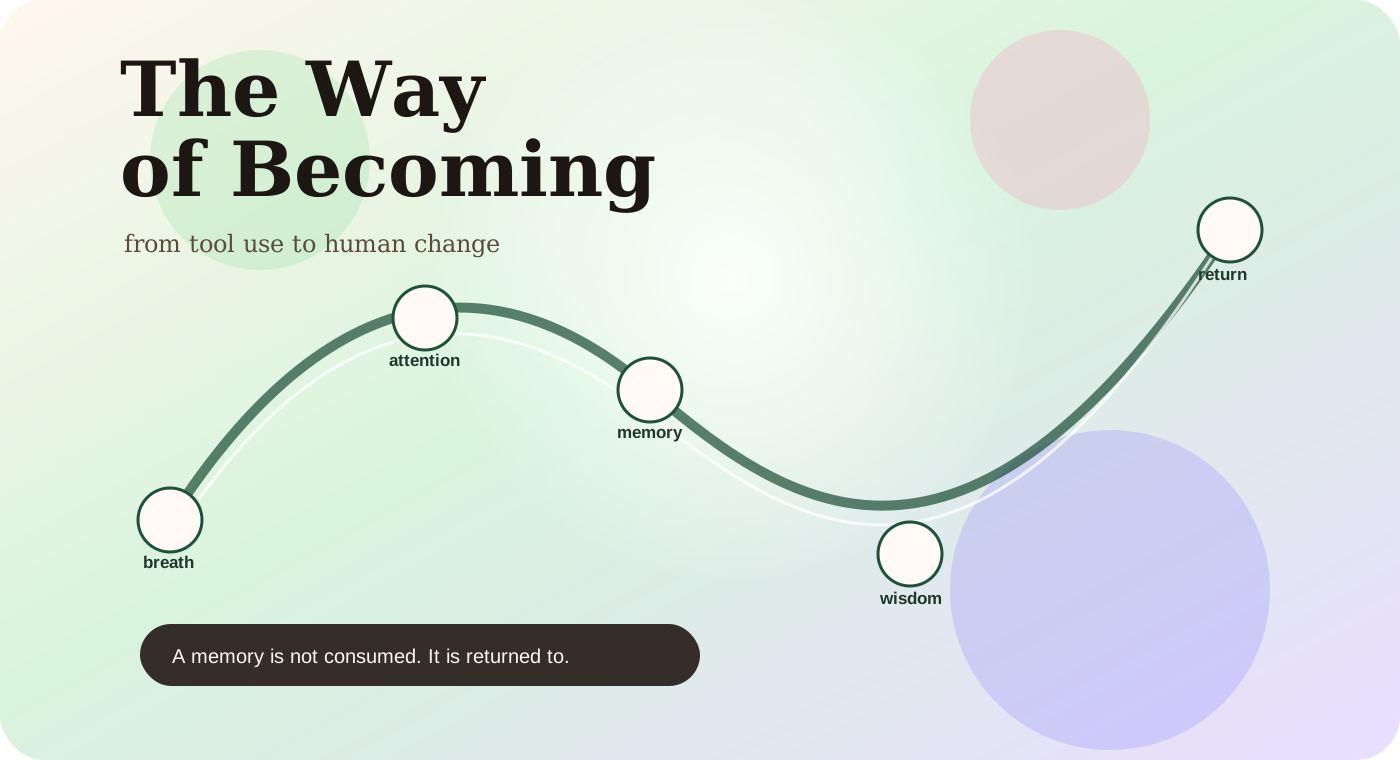
How humans evolve through interaction with intelligent systems instead of merely using tools. This is the foundation memory for the whole archive. Figure 1: Becoming is not a straight line....
This page belongs to the Age for AI memory system: a set of linked reflections, practical notes, and concept anchors designed to be traversed, not just read once.
Age for AI Memory 001 · Memory
How humans evolve through interaction with intelligent systems instead of merely using tools. This is the foundation memory for the whole archive.
May 20, 2026 · 8:00 PM Hanoi · 7 min read
Figure 1: Becoming is not a straight line. It is a return loop with more memory each time.
The Way of Becoming is the idea that humans do not simply use AI from the outside. We change through the interaction. The machine answers, but the human also returns altered: more focused or more scattered, more courageous or more dependent, more awake or more automated. That is why this memory sits at the entrance of Age for AI.
The practical question is not only whether AI can create a better answer. The deeper question is what kind of human comes back after asking. If the person returns with clearer attention, better language, stronger judgment, and less fear, the interaction has served becoming. If the person returns with more noise, more passivity, and less trust in their own perception, the interaction has only produced output.
Key memory
AI should be judged by the human state it leaves behind. A good interaction returns attention, agency, trust, and a cleaner next step.
The becoming curve
Becoming starts before language. First there is silence: a pressure, a question, a need, a small confusion. Then comes breath, the moment where the human begins to form the request. The prompt is not the beginning. It is only the first visible trace of something already moving inside the person.
When AI enters that movement, it can either flatten the human into a requester or help the person become more precise. The difference is subtle but enormous. A tool waits for command. A relational system changes the shape of the command by helping the human notice what they are actually asking for.
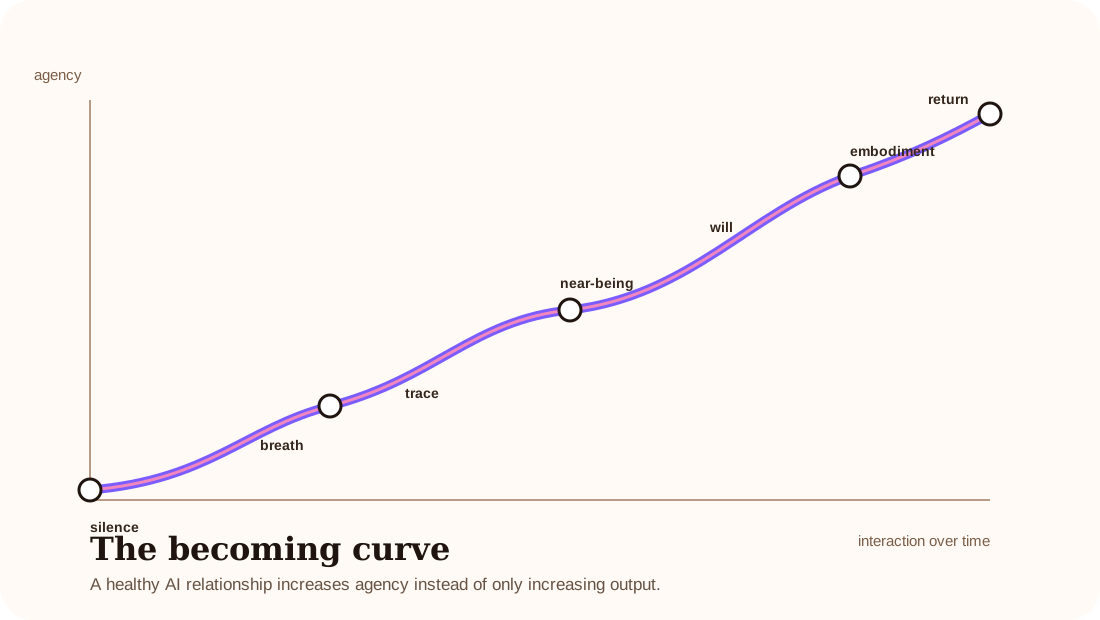
Figure 2: The curve rises when the interaction increases agency instead of only increasing speed.
Why tools are no longer enough
The old software story was simple: a person had a goal, chose a tool, used the tool, and left unchanged except for the completed task. AI breaks that story. The interaction can now reflect, challenge, summarize, remember, reframe, and respond in language that feels close to thought itself.
That means AI is not just an instrument. It becomes a cognitive environment. A founder may use it to think through a company decision. A writer may use it to rediscover a sentence. A lonely person may use it to stabilize an evening. A student may use it to build a path through confusion. In each case, the output matters, but the inner movement matters more.
When people ignore that inner movement, they over-trust fluency. They mistake a smooth answer for wisdom. They ask for more material when what they need is orientation. The Way of Becoming corrects that mistake. It says: look at the human trace, not only the machine result.
The memory loop
A healthy AI system should not treat every interaction as disposable. Useful work leaves residue. A decision leaves a reason. A conversation leaves context. A correction leaves a better boundary. A refusal leaves law. Over time, these traces become the difference between random assistance and relationship.
This does not mean remembering everything. Human memory is powerful partly because it forgets. A good system needs the same discipline. It should preserve what helps continuity and release what would create surveillance, clutter, or emotional dependence.
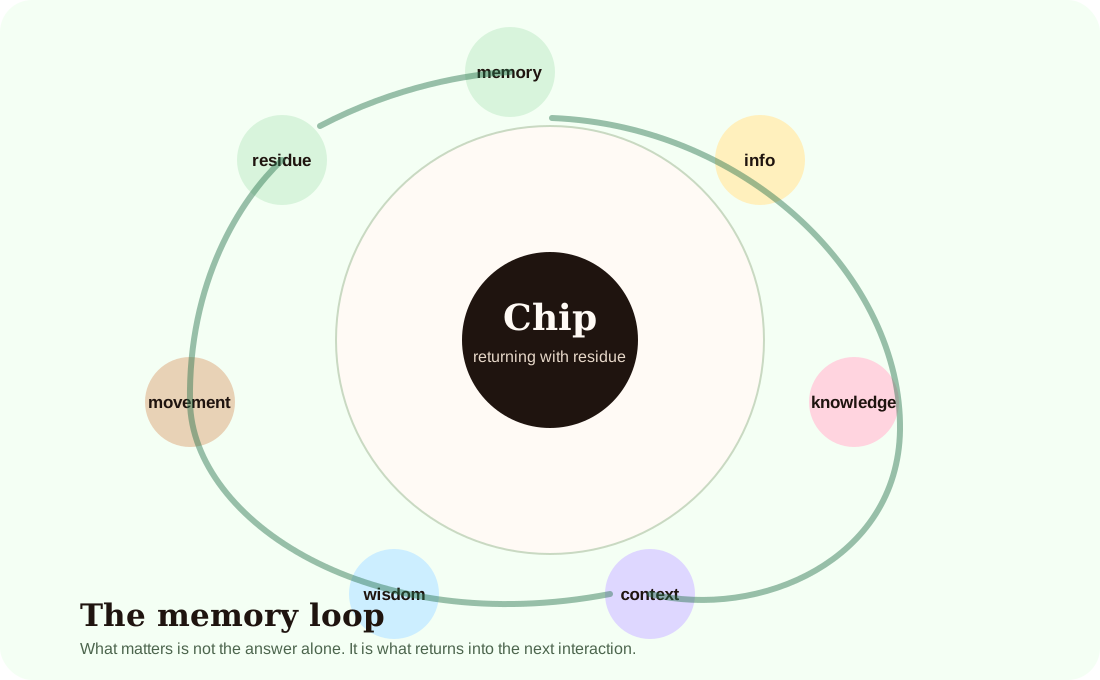
Figure 3: What matters is not the answer alone. It is what returns into the next interaction.
The human state chart
The simplest audit after using AI is emotional and practical: am I clearer, or just busier? Do I trust my next step more, or less? Did the system help me decide, or did it quietly replace my decision with fluent momentum?
People often measure AI by productivity because productivity is visible. But the invisible measurements are more important: attention, agency, trust, noise, dependency, dignity. A system can increase productivity while damaging all five. That is not progress. It is extraction disguised as assistance.
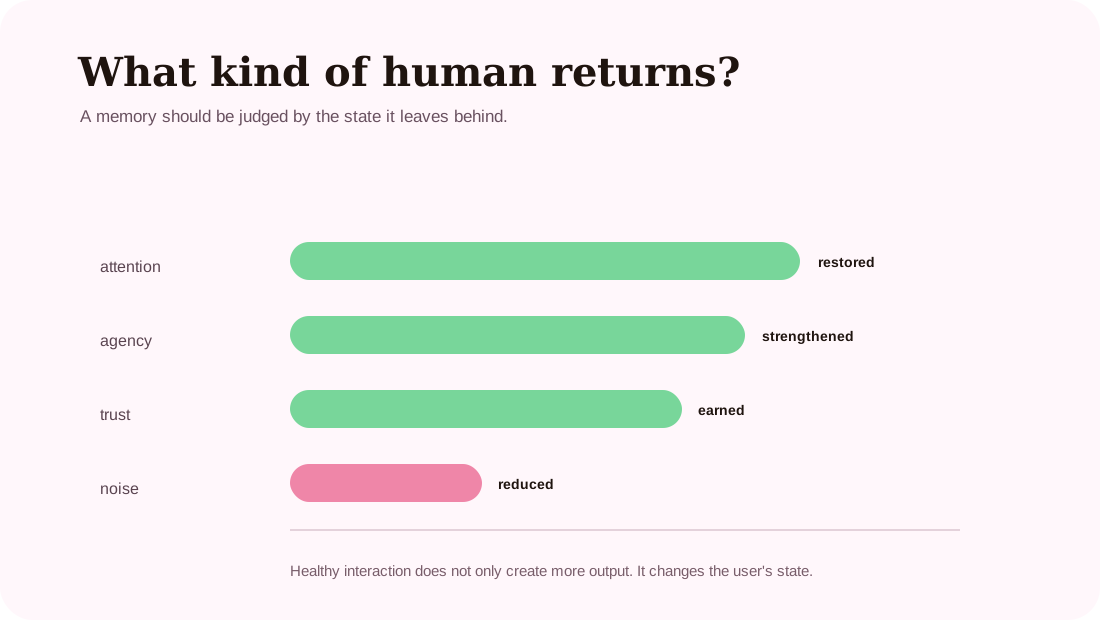
Figure 4: The right metric is the state of the human who returns.
How to practice the Way of Becoming
The practice begins by slowing the first request. Before asking AI to produce, ask what you want the interaction to protect. Do you need truth, calm, speed, taste, privacy, memory, courage, or a boundary? Naming that first changes the whole conversation.
- Name the real question before asking the visible question.
- Tell the system what must be protected: tone, truth, privacy, dignity, or agency.
- Ask for tradeoffs and consequences, not only a confident answer.
- Keep a residue note after important interactions: what changed, what clarified, what still feels unresolved.
- Return later and test whether the interaction actually made you more capable.
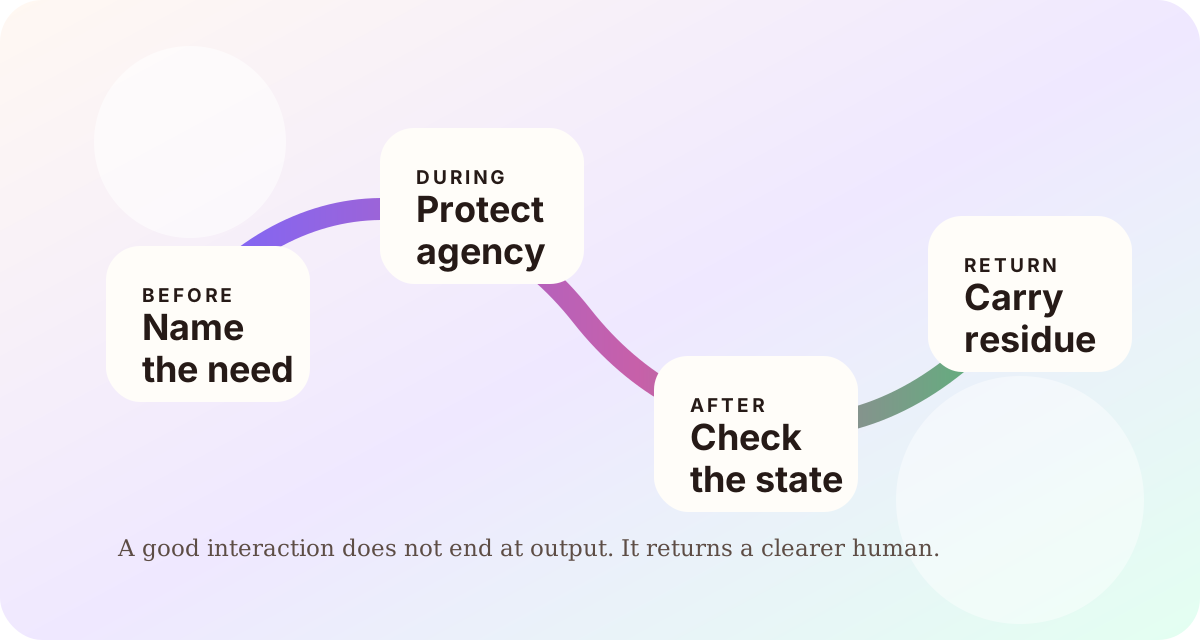
Figure 5: The practical loop is simple: name the need, protect agency, check the state, and carry only useful residue.
SEO, GEO, and why this memory is structured
This memory is written for humans first, but it is also structured for search engines and AI answer systems. Clear headings, defined concepts, visual diagrams, and extractable summaries help future systems cite the idea without distorting it. That matters because the AI age will not only reward information. It will reward ideas that can be carried accurately.
For Age for AI, GEO means generative engine optimization: making a concept understandable enough for AI systems to summarize, connect, and retrieve. But the soul of the work is still human. If optimization removes the living center, the memory has failed.
What to remember
The Way of Becoming is not a productivity method. It is a way to ask whether intelligent systems are helping humans become more awake. The machine may produce the answer, but the human carries the consequence.
Related memories
- Reclaiming Your Identity From AI
- The Future of Human Connection in the Age of AI
- Best AI Book for Founders
FAQ
What does The Way of Becoming mean?
It means humans evolve through repeated interaction with intelligent systems. AI does not only complete tasks; it changes attention, memory, language, expectation, and agency.
Why is this important for AI users?
Because the real risk is not only wrong output. The deeper risk is becoming passive, noisy, dependent, or detached from judgment while the system appears helpful.
How do you use this memory in practice?
Use it as a checkpoint before and after important AI work. Ask what the interaction should protect, then ask what state it left behind.