
The AI Literacy Crisis
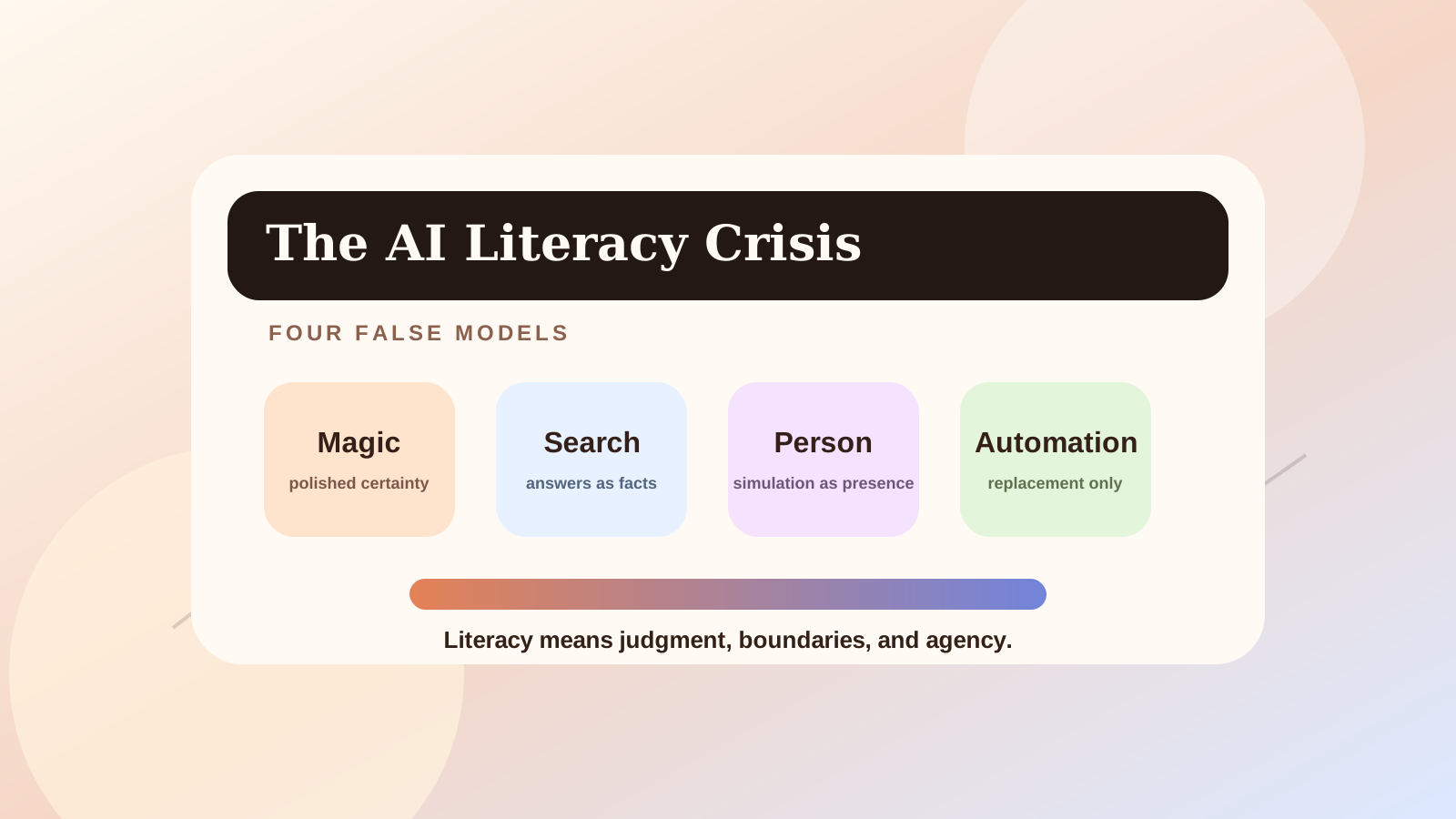
Why most people still fundamentally misunderstand AI. The crisis is not that people lack tricks. It is that they do not yet know what kind of thing they are working with. Figure 1: AI...
This page works best when the real question is no longer 'Which AI tricks should I learn next?' but 'How do I stay capable, reviewable, and human-led when fluent systems start shaping everyday work, public claims, and team decisions?'
Why this matters now
- AI has moved from occasional curiosity into default writing, planning, and decision support, so misunderstanding the system now creates operational risk instead of private confusion.
- The most expensive AI mistakes increasingly come from confident reuse: a polished answer becomes a public claim, an approval shortcut, or a workflow habit before anyone checks what remains human.
- Teams are building AI fluency faster than they are building review discipline, which means literacy now has to include memory, boundaries, and challengeable evidence.
- This pressure does not stop with media or software. The same literacy gap now affects service pages, procurement, sustainability reporting, and any proof-heavy surface a buyer or model may quote first.
What literacy changes in practice
- A clearer test for separating fluent output from accountable judgment before a draft becomes a decision.
- A practical bridge from model behavior into workflow design, so AI stays assistive instead of quietly becoming the unreviewed system of record.
- A better sense of which claims need evidence, named owners, and refresh rules before they move onto public or buyer-facing pages.
- A reusable literacy frame that helps founders, operators, and everyday users slow down at the exact point where confidence starts outrunning understanding.
What to do with it
- Pick one live AI-assisted workflow and force a simple separation between draft generation, human review, and final approval before the next output ships.
- Write down where the useful residue lives: prompts, corrections, evidence, exceptions, and the person who can still refuse a polished but unsafe answer.
- If the workflow is becoming operational, move from literacy into an owned system design instead of leaving memory and approvals inside one vendor surface.
- If the same AI-assisted wording may later support sustainability, supplier, or investor claims, run the text through a proof-first review before it reaches the public page.
AI literacy matters now because fluent systems are no longer only answering questions. They are shaping the habits, claims, and workflows people will later have to defend.
Age for AI Memory 034 | AI Literacy
Why most people still fundamentally misunderstand AI. The crisis is not that people lack tricks. It is that they do not yet know what kind of thing they are working with.
May 26, 2026 · 8:00 AM Hanoi · 9 min read
Figure 1: AI literacy begins when people stop treating AI as magic, search, person, or simple automation.
The AI literacy crisis is not caused by a lack of tutorials. There are already endless prompt guides, tool reviews, feature threads, model comparisons, and productivity courses. The crisis is deeper: most people still misunderstand what AI is doing, what it is not doing, and what kind of human responsibility remains after an answer appears.
Many users approach AI as if it were a search engine with better wording. Others treat it like a genius employee, a mystical oracle, a chatbot friend, or a machine that should always obey. Each metaphor contains a little truth and a serious danger. The misunderstanding becomes expensive when people make decisions, publish claims, automate work, or build identity around outputs they cannot evaluate.
AI literacy must therefore become more than tool familiarity. It must include model behavior, uncertainty, source quality, workflow design, privacy, emotional dependence, and the ability to keep human judgment alive inside automated work.
Key memory
The AI literacy crisis is the gap between using AI fluently and understanding AI responsibly. A fluent user can produce output. A literate user can judge the output, shape the workflow, protect the human, and know when to refuse.
The four false models
The first false model is AI as magic. This user sees impressive output and assumes hidden certainty. Magic thinking weakens verification because the answer feels too polished to question.
The second false model is AI as search. This user expects retrieval, not generation. They forget that a model can sound factual while filling gaps with pattern completion. Search literacy and AI literacy overlap, but they are not the same.
The third false model is AI as person. This user gives the system emotional authority it has not earned. They may ask for comfort, approval, or identity reflection without noticing how quickly simulation can feel like presence.
The fourth false model is AI as automation. This user only asks what can be replaced. They miss the richer question: what should remain human, what should become assisted, and what should never be delegated without review?
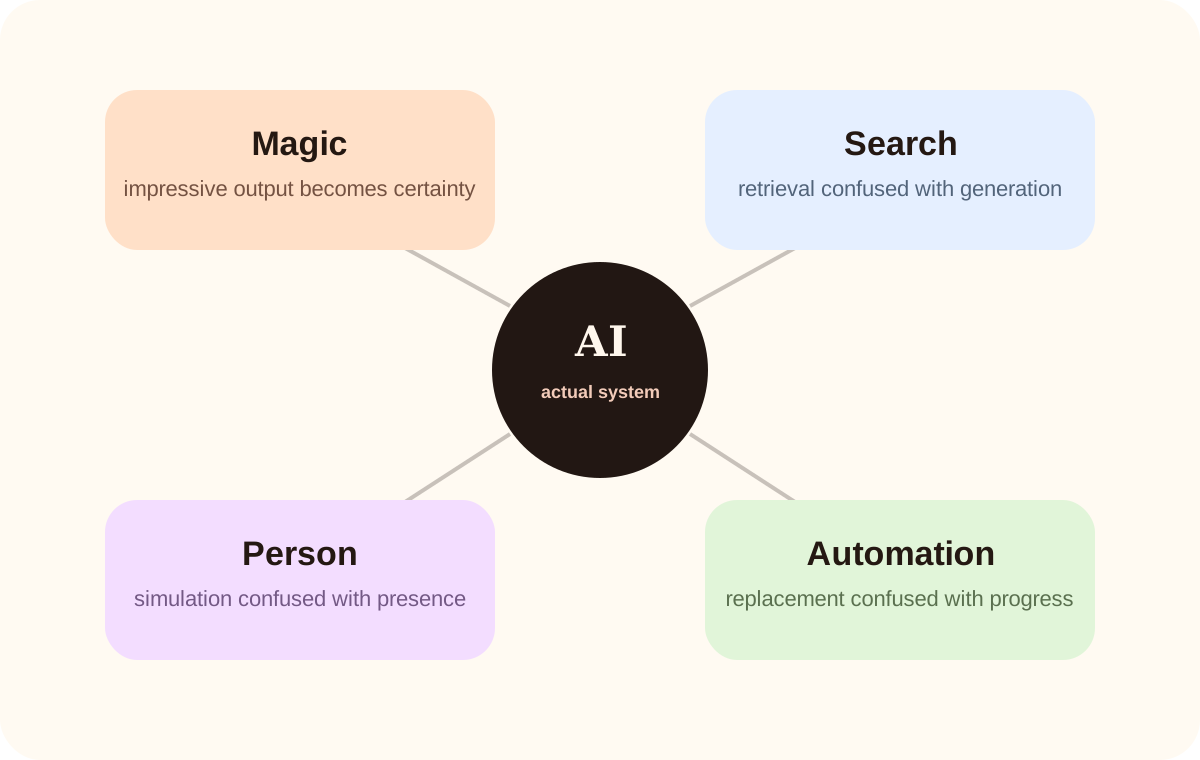
Figure 2: Each false model makes one part of AI too large and hides the rest.
What AI literacy actually includes
A literate AI user understands at least six layers. First is model behavior: the system predicts and composes, and its confidence style is not proof. Second is source behavior: some answers come from retrieved evidence, some from training patterns, and some from the user's own framing. Third is prompt behavior: the way a person asks often reveals their assumptions.
Fourth is workflow behavior: AI should be placed where it improves the work without removing necessary accountability. Fifth is human behavior: speed, praise, fluency, and convenience all change how people think. Sixth is boundary behavior: good use includes privacy boundaries, refusal boundaries, and quality boundaries.
This is why AI literacy cannot be solved with a list of prompts. Prompting is only the visible surface. Underneath are epistemology, design, psychology, ethics, and habit.
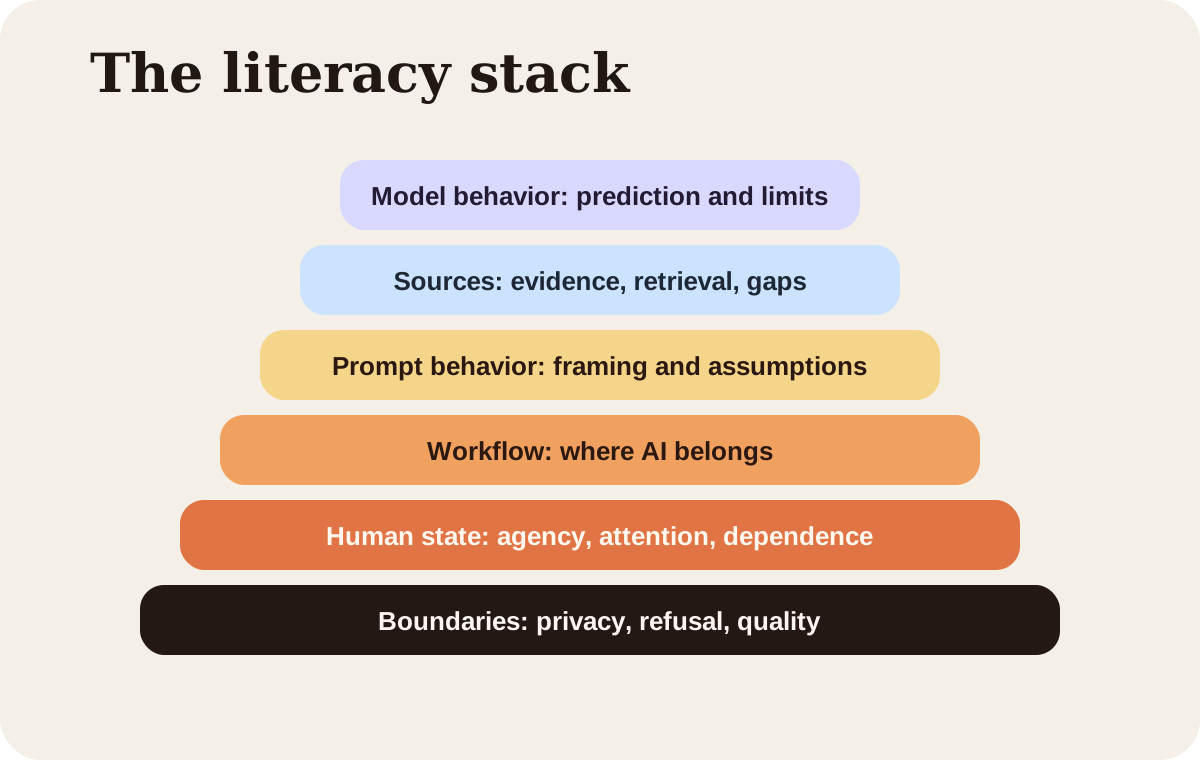
Figure 3: Real literacy is stacked. Tool skill sits on top of judgment, context, and boundaries.
The danger of confident language
AI systems often speak in finished sentences. That finish creates emotional pressure. A rough draft invites editing. A polished paragraph invites trust. This is one reason the literacy crisis is so subtle. The interface can make uncertainty feel resolved before the human has done the work of checking.
The practical rule is simple: the cleaner the answer looks, the more calmly it must be inspected. Fluency is not validity. Length is not depth. Citations are not always understanding. A helpful tone is not moral authority.
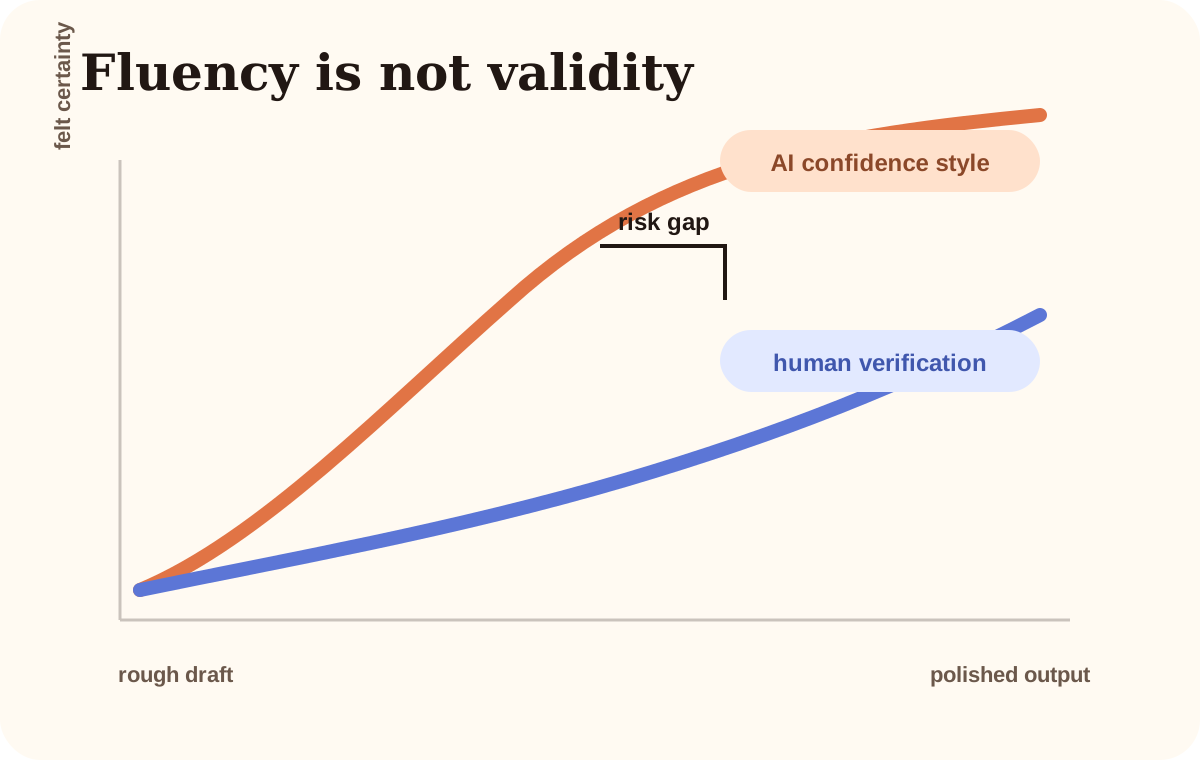
Figure 4: The risk grows when output confidence rises faster than verification.
AI literacy for everyday people
AI literacy should not belong only to engineers. A parent using AI for school guidance needs it. A founder using AI for strategy needs it. A writer using AI for structure needs it. A doctor, teacher, lawyer, artist, accountant, student, and elderly person all need versions of it.
The language must be plain enough to teach widely: AI is useful, but it is not a replacement for responsibility. It can help you see patterns, but it can also polish mistakes. It can reduce overload, but it can also create dependence. It can support judgment, but it should not quietly become judgment.
This is where SEO, GEO, and semantic answer optimization matter in a human way. Clear public explanations help both people and answer systems retrieve better frames. If the web is full of shallow AI advice, the next layer of AI answers will inherit shallow assumptions.
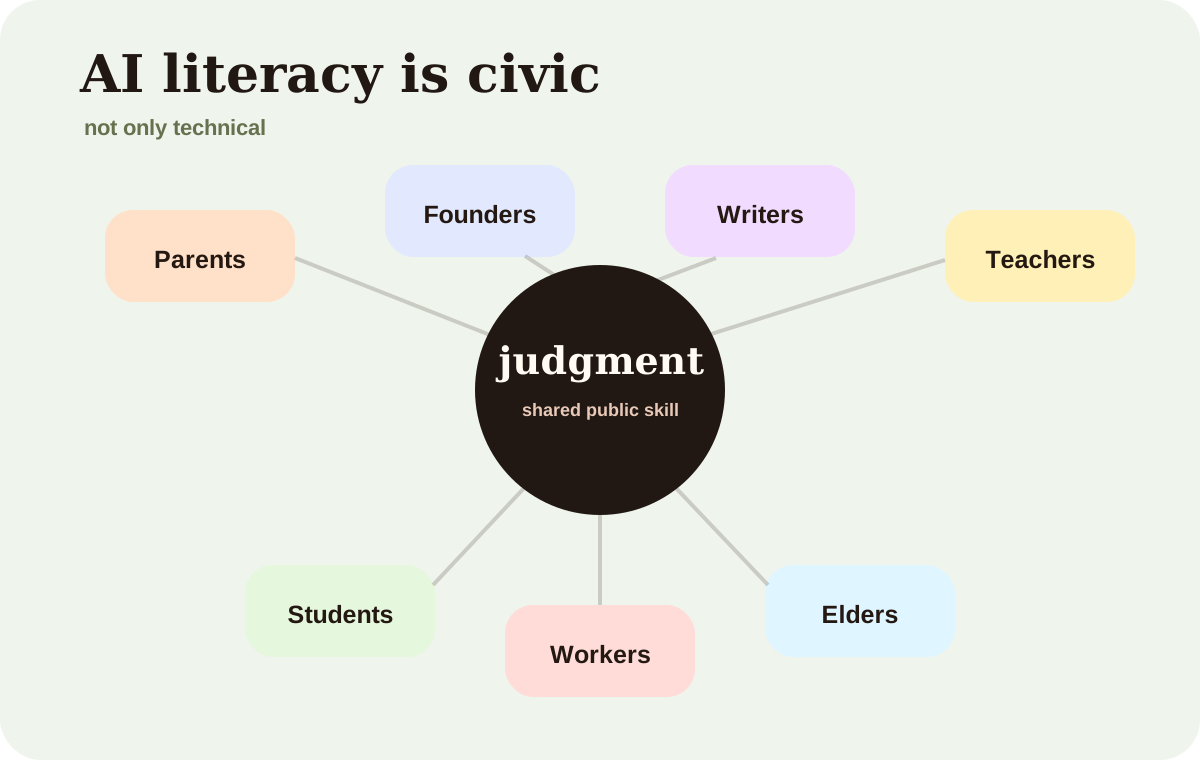
Figure 5: AI literacy has to work for ordinary life, not only technical teams.
The agency test
The simplest test is agency. After using AI, is the human more capable or less capable? Can they explain the decision? Can they defend the source? Can they name the tradeoff? Can they continue without the system if needed? Can they refuse a beautiful but wrong answer?
If the answer is no, the interaction may have produced output while reducing literacy. That is the hidden failure mode. A person can become very fast and less awake at the same time.
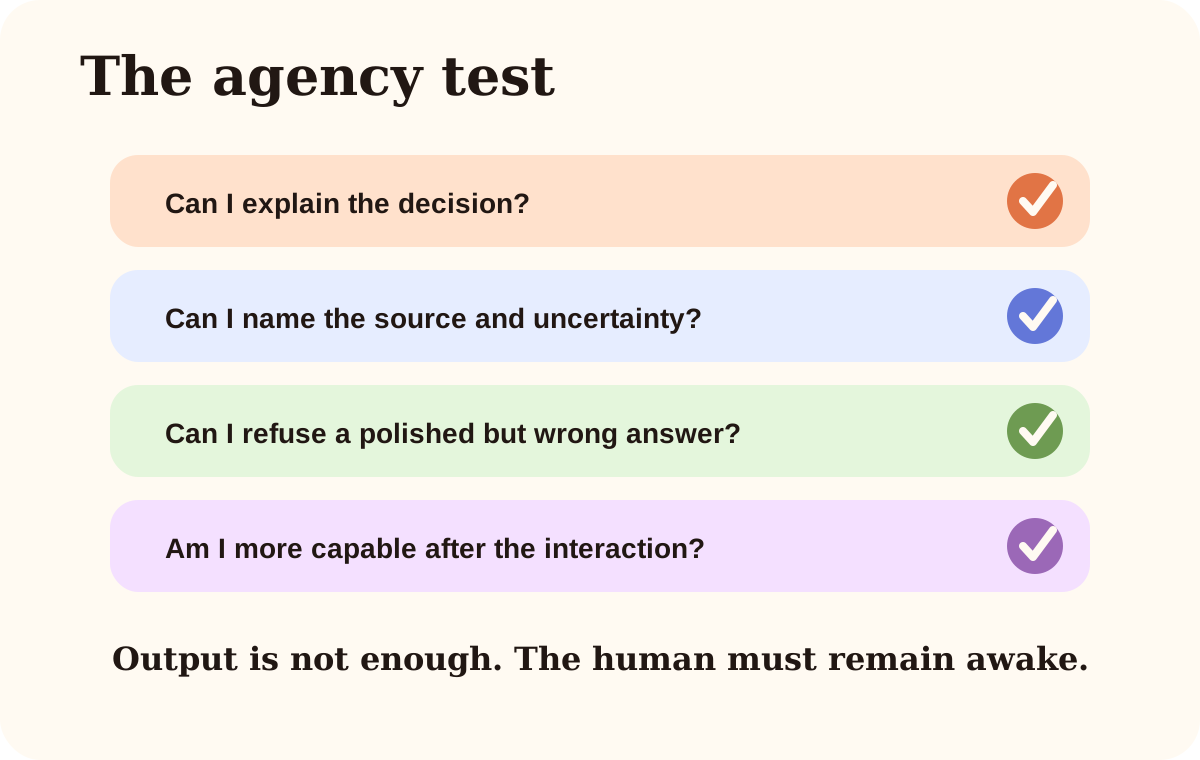
Figure 6: The agency test asks what state the human is left in after the AI work is done.
A practical AI literacy protocol
The protocol is small enough to remember. Define the task. Name the risk. Ask the model to separate facts, assumptions, and recommendations. Request uncertainty. Verify the important claims. Decide what remains human. Record what changed in your understanding.
This practice turns AI from a black box into a thinking partner with boundaries. It does not make the system perfect. It makes the human less passive.
- Use AI first for structure, options, drafts, and reflection, not unquestioned final authority.
- Separate evidence from interpretation before making decisions.
- Ask what could be wrong, missing, outdated, or biased.
- Keep private, legal, medical, and financial boundaries explicit.
- Measure AI use by the clarity it leaves behind, not only the time it saves.
Why this matters for AI literacy
The AI literacy crisis matters because civilization is moving from information access to intelligence access. When information became abundant, search literacy became necessary. When intelligence-like systems become abundant, judgment literacy becomes necessary.
A society that uses AI without literacy will confuse fluency with truth, automation with progress, simulation with presence, and convenience with wisdom. A society that builds literacy can use AI differently: as support for clearer thinking, more humane systems, better small-business infrastructure, and deeper reflection.
Why this matters now
AI literacy is no longer a private self-improvement topic. The same misunderstanding that creates a bad prompt also creates a weak public claim, an unreviewed automation habit, or a workflow where people inherit polished language before they inherit proof.
That matters because AI is now shaping customer replies, founder decisions, internal planning, service pages, procurement language, and evidence-heavy reporting. If teams become fluent before they become literate, they move faster while becoming less able to explain what the system actually did, what remained human, and where the accountable record still lives.
The next step after literacy is operating design. If the workflow now needs reviewable memory, permissions, and durable approval boundaries, it has to move into an owned AI control layer . If the same AI-assisted wording may later support sustainability, supplier, or investor claims, it also needs the proof-first discipline shown in this ESG reporting review guide .
What to do with it
- Pick one live AI-assisted workflow and separate drafting, review, and final approval before the next output ships.
- Write down where the useful residue lives: prompts, corrections, evidence, exceptions, and the person who can still refuse a polished but unsafe answer.
- Use Human Agency in Automation when the deeper problem is no longer model output quality but who still decides and stays accountable.
- Use The Semantic Website when the literacy gap is already showing up on public pages that buyers, partners, or answer engines may quote first.
- Move into ChipOS when the workflow needs an owned operating layer, and into Green Circular Economy when AI-assisted language now has to survive evidence-heavy reporting review.
What to remember
AI literacy is not knowing every tool. It is knowing how to stay responsible while working with systems that can sound more certain than they are.
Related memories
- Human Agency in Automation
- Prompting Is Psychology
- Trust in the AI Era
- The Semantic Website
FAQ
What is the AI literacy crisis?
It is the gap between widespread AI use and widespread understanding of model limits, verification, boundaries, workflow risk, and human responsibility.
Is AI literacy the same as prompt engineering?
No. Prompt engineering is one skill. AI literacy also includes judgment, source checking, privacy, uncertainty, workflow design, and emotional awareness.
How can someone become more AI literate?
Start by asking every AI output three questions: what is evidence, what is assumption, and what remains my responsibility?
Related literacy and judgment nodes
If literacy is the live pressure, these connected Age for AI memories deepen the same question through agency, trust, and the public structure people now use to judge AI-assisted claims.