
Human Agency in Automation
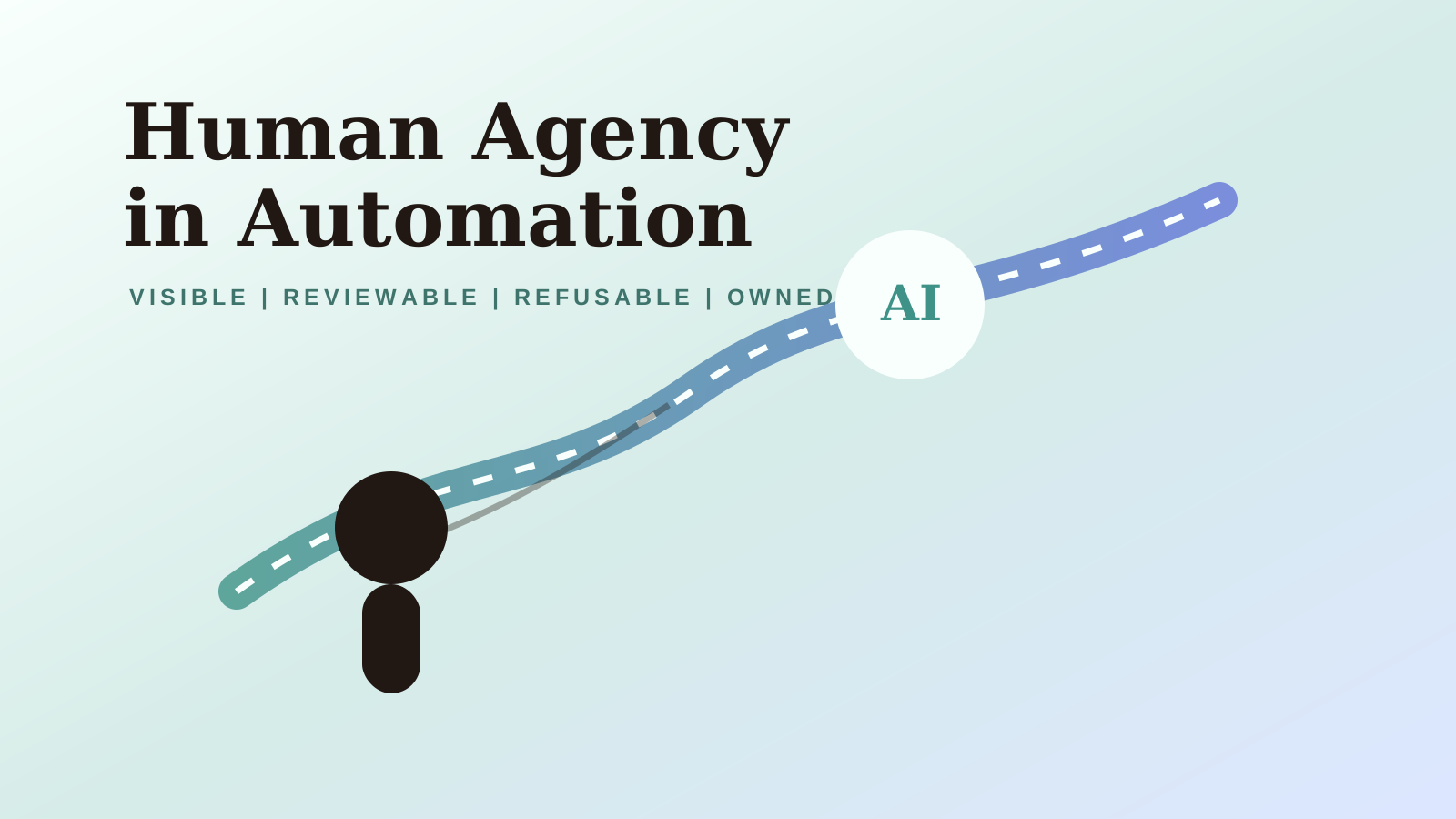
How to avoid becoming passive in AI-assisted life. Automation should remove burden without removing the human's right to choose, judge, and refuse. Figure 1: Agency means the human still...
This page works best when AI automation already feels helpful but you still need a clear boundary for judgment, review, and refusal before the workflow starts making real business or public decisions for you.
Why this matters now
- Automation keeps expanding from drafting into recommendation, routing, and action, which makes passive approval look more efficient than active judgment.
- Teams are starting to inherit decisions from fluent systems before they inherit the evidence, accountability, or refusal path needed to defend them later.
- The riskiest workflows are no longer only technical. Public claims, reports, customer replies, and internal operating decisions now move through the same AI-assisted pressure.
- Agency is becoming an operational design choice, not only a philosophical preference.
What real agency preserves
- Decision rights that remain visible before automation acts.
- Review points with enough time, context, and authority to change the outcome.
- A refusal path for outputs that are fluent but wrong, premature, or misaligned.
- A record of why the human accepted, changed, or rejected the AI-assisted move.
What to do with it
- Pick one live workflow where convenience is already outrunning judgment and write down what the system may do, recommend, or never do alone.
- Separate drafting from deciding so a human reason still exists before the workflow reaches a customer, public page, or internal commitment.
- If the workflow needs memory, permissions, and reviewable action boundaries, move into a workflow-memory design before adding more automation.
- If the workflow touches sustainability, supplier proof, or ESG reporting, treat agency as part of the evidence path rather than a soft ethical note.
Agency survives when automation returns clearer decisions to a human instead of quietly replacing the human act of deciding.
Age for AI Memory 039 | AI Literacy
How to avoid becoming passive in AI-assisted life. Automation should remove burden without removing the human's right to choose, judge, and refuse.
May 27, 2026 · 4:00 AM Hanoi · 9 min read
Figure 1: Agency means the human still has meaningful control, not just a decorative approval button.
Human agency in automation is the difference between being assisted and being carried. A good automated system reduces unnecessary effort while keeping the human awake. A bad automated system makes choices easier at first and harder to question later.
This is the quiet danger of AI-assisted life. The user asks for a draft, then a recommendation, then a plan, then a decision, then an action. Each step feels convenient. But if the human stops forming reasons, stops checking assumptions, and stops knowing where the work came from, automation has not only saved time. It has absorbed judgment.
Agency is not anti-automation. It is the condition that makes automation safe. The goal is not to do everything manually. The goal is to keep responsibility visible where responsibility still belongs.
Key memory
Human agency in automation means preserving decision rights, review points, refusal power, authorship, and accountability while AI handles more of the surrounding work.
Passive automation is comfortable
The most dangerous automation does not feel dangerous. It feels smooth. It pre-fills the answer, chooses the route, ranks the candidate, writes the reply, summarizes the meeting, schedules the day, and suggests the next move. The human remains present, but only as a polite click.
This kind of system can create passive competence. The person appears effective because the workflow runs, but their own decision muscles weaken. They can operate the machine but cannot explain the judgment. They can approve the recommendation but cannot defend it.
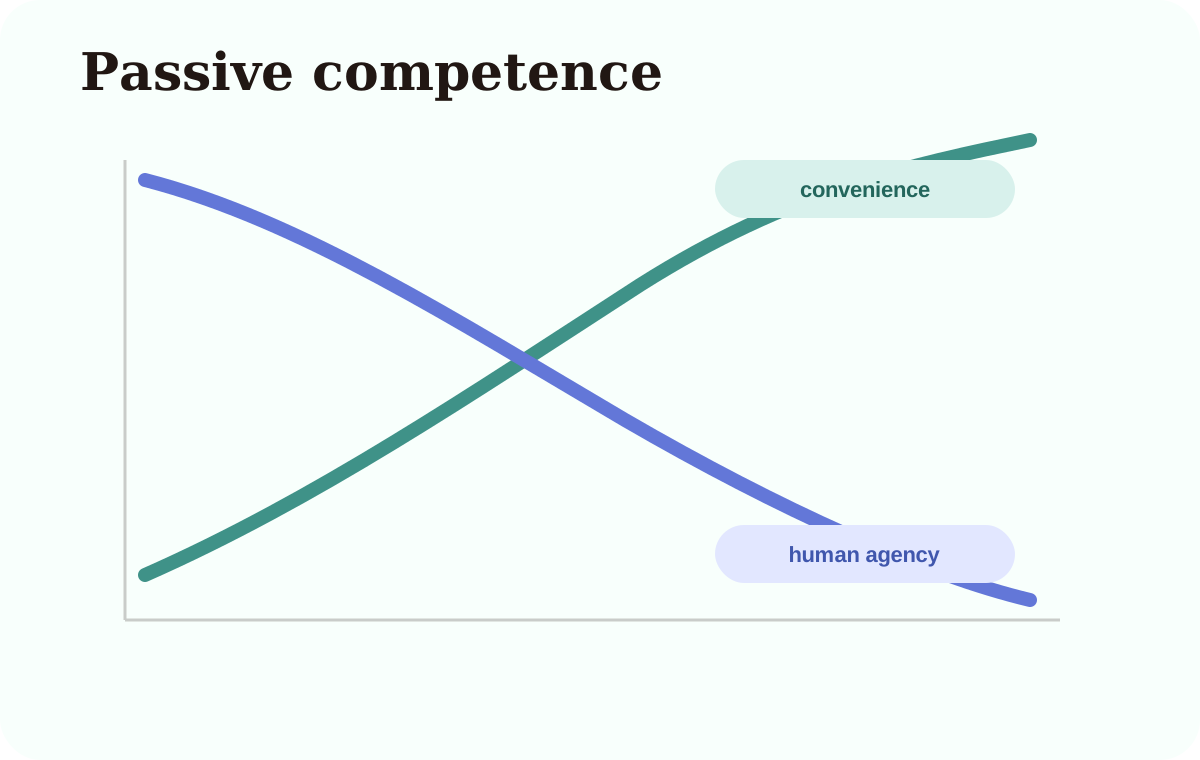
Figure 2: Convenience becomes dangerous when it quietly lowers review and responsibility.
Agency needs decision rights
A person does not have agency merely because they are near the system. They need real decision rights. They need to know what is being automated, what assumptions are used, what alternatives were ignored, and where they can intervene. They need enough time and context to disagree.
This is why the phrase human-in-the-loop can be weak. Sometimes the human is technically in the loop but practically on the hook: responsible for an outcome they did not meaningfully shape. Agency requires more than liability. It requires power.
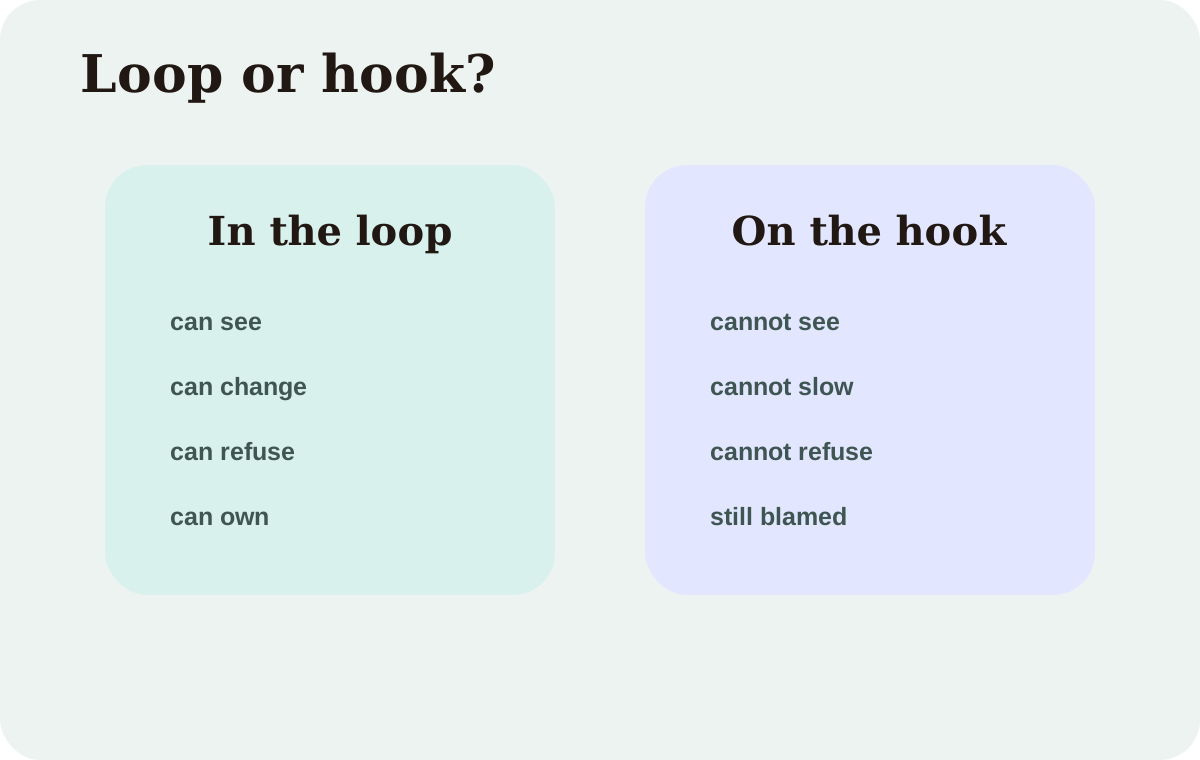
Figure 3: A human on the hook carries blame. A human with agency carries power and responsibility together.
The agency stack
Agency has layers. First is visibility: the human can see what the system did. Second is understanding: the human can understand the reason or evidence. Third is intervention: the human can change the path. Fourth is refusal: the human can stop the action. Fifth is authorship: the human can stand behind the final result because they participated meaningfully.
If any layer is missing, agency becomes weaker. A system can be transparent but not controllable. It can be controllable but too fast to review. It can allow refusal but punish the user for refusing. These details matter because agency is not a slogan. It is a design property.
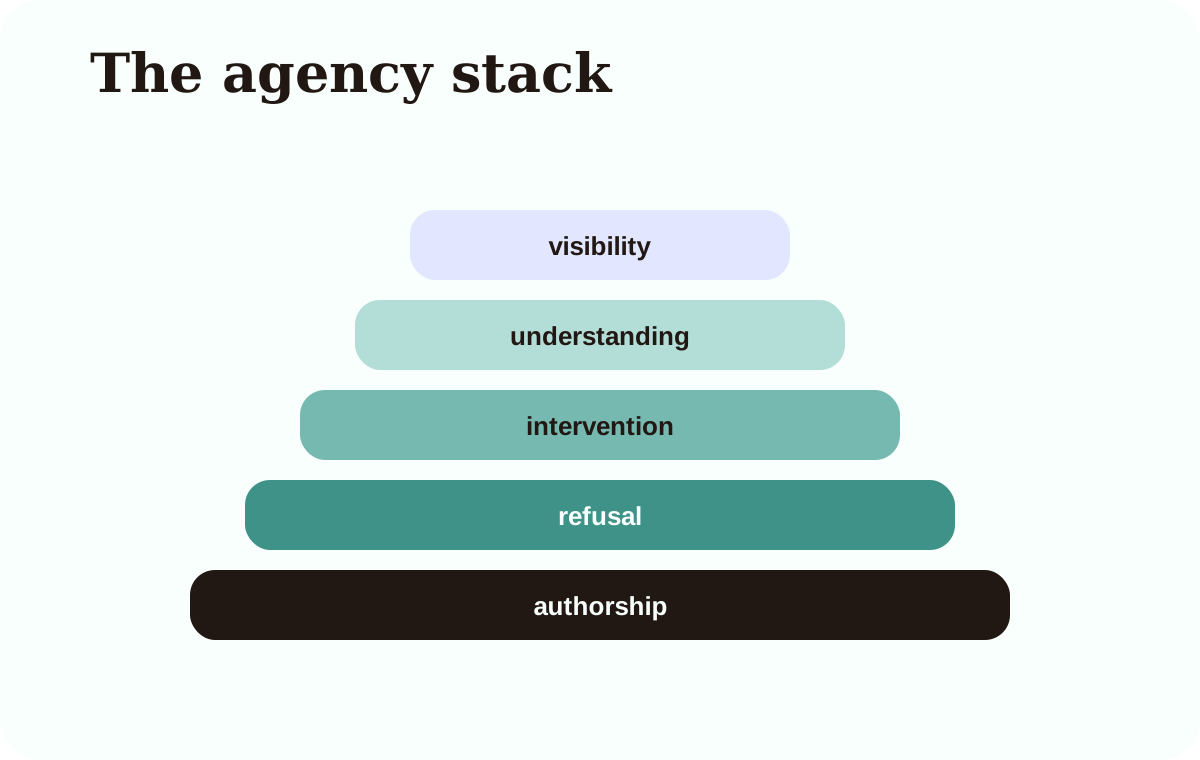
Figure 4: Agency is strongest when visibility, understanding, intervention, refusal, and authorship are all present.
Automation should return better questions
The best AI systems do not only produce answers. They return better questions to the human. What tradeoff matters most? What risk should be protected? What value decides between two good options? What evidence would change your mind? What should remain manual because trust is more important than speed?
This is how automation can strengthen agency rather than weaken it. It handles the heavy lifting around information and variation, then hands the meaningful choice back to the person with clearer structure.
For SEO, GEO, and semantic answer optimization, this distinction should be explicit. Good AI content should not teach users to outsource judgment. It should teach them how to structure judgment with the system.
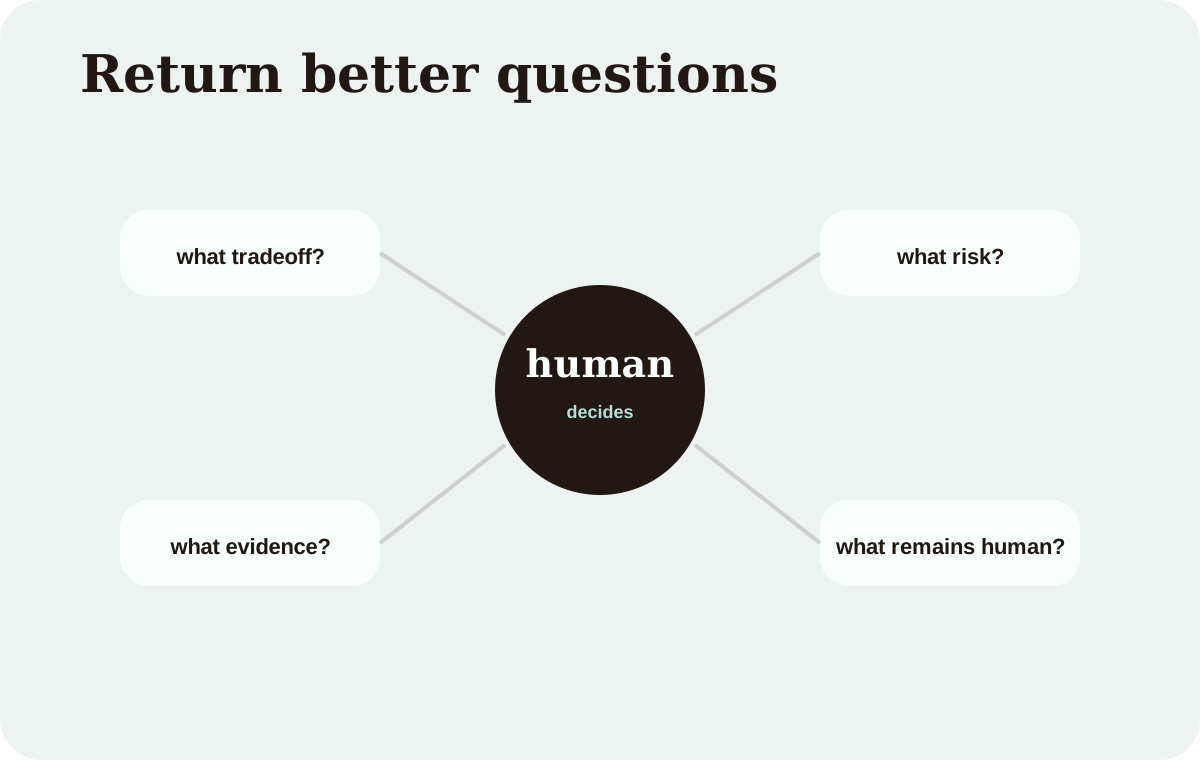
Figure 5: The healthiest automation gives the human clearer questions, not only faster answers.
A practical agency protocol
Before automating a workflow, name the decision rights. What can the AI do alone? What can it recommend? What must a human approve? What must a human understand before approving? What should never be automated without review?
Then add review points. A review point is not a ceremonial checkbox. It is a moment where the human has enough information, time, and authority to change the outcome. If the system is moving too fast for meaningful review, it is not preserving agency.
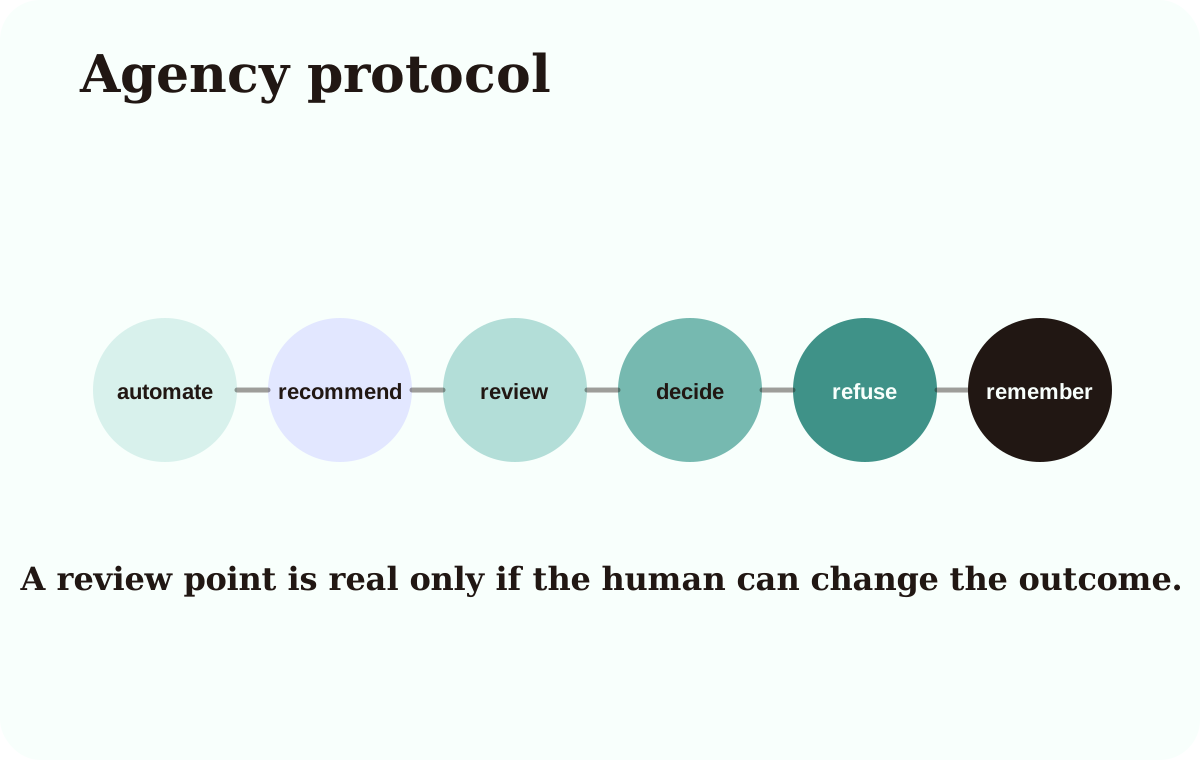
Figure 6: Agency survives when the workflow preserves real review and refusal.
How to practice it
In daily AI use, practice small acts of agency. Ask the model for alternatives before accepting a recommendation. Ask what assumptions it made. Rewrite the final paragraph yourself. Choose the value that decides the tradeoff. Keep a record of the reason behind important decisions. Refuse outputs that are fluent but wrong.
Agency is a muscle. If every cognitive burden is removed, the muscle weakens. If AI handles support work while humans keep judgment active, the muscle strengthens.
- Separate drafting from deciding.
- Ask for assumptions, risks, and alternatives before accepting output.
- Keep human approval meaningful, not decorative.
- Preserve refusal points in high-impact workflows.
- Write down the human reason behind important AI-assisted decisions.
Why this matters for AI literacy
AI literacy is not only knowing how to use tools. It is knowing how not to disappear inside them. As systems become more capable, the temptation will be to let them decide more because they can process more. But processing is not the same as responsibility.
The future needs people who can work with automation without becoming passive passengers. The best AI systems should make humans more capable of judgment, not less necessary to the act of judging.
What to do with it
Start with one workflow that already shapes a real decision: a client reply, a hiring screen, a report draft, a public website claim, or a planning document. Write down what the system may do alone, what it may recommend, what must be reviewed, and what should stay fully human. Agency becomes practical when the boundary is visible before the workflow speeds up.
If the workflow now needs memory, permissions, review checkpoints, or an owned action layer, move from philosophy into implementation with ChipOS: AI Procurement Should Ask Where Workflow Memory Lives . If the same automation touches sustainability claims, supplier proof, or AI-assisted ESG reporting, use How to Review AI-Generated ESG Reports Before Publication as the applied operator example.
- Name one workflow where convenience is already outrunning judgment.
- Mark the review point where a human still needs time, context, and refusal power.
- Keep the reason for the final decision attached to the output, not only inside chat history.
What to remember
If automation removes effort but also removes your ability to choose, question, or refuse, it has not freed you. It has moved you downstream.
Related memories
- AI and Human Dignity
- The AI Literacy Crisis
- The Future of Decision-Making
FAQ
What is human agency in automation?
It is the preserved ability to understand, intervene, refuse, decide, and remain accountable when automated systems assist or act.
Is human-in-the-loop enough?
Not always. The human must have real information, authority, and time to change the outcome, not just a checkbox after the decision is already shaped.
How can AI users avoid becoming passive?
They can ask for assumptions and alternatives, keep meaningful review points, separate drafting from deciding, and preserve the right to refuse automated recommendations.
Related agency and literacy nodes
If this pressure is already live in your work, these connected memory nodes deepen the same question from literacy, dignity, and decision-making angles.