
AI for Small Business
How AI becomes a survival layer for small teams. The point is not to look futuristic. The point is to help a small company remember, respond, decide, and breathe. Figure 1: For small...
This page works best when a small team is trying to reduce overload without letting AI flatten judgment, trust, or the human voice of the company.
Why this matters now
- Small businesses are getting pressure to adopt AI faster than they can redesign their workflows responsibly.
- The real risk is not missing one tool release. It is losing memory, context, and response quality while trying to keep up.
- Teams that start with one owned operating loop can move calmly instead of adding another layer of confusion.
- This pressure now reaches customer support, proposals, cash visibility, and every place where founders carry too much context alone.
What small teams should protect
- Shared operating memory before complex automation.
- A human owner for every AI-assisted workflow.
- Customer response quality that still sounds like the company.
- A weekly review rhythm that removes noise instead of multiplying tools.
What to do with it
- Choose one repeated workflow where the team keeps dropping context or follow-through.
- Define what must be remembered, what can be drafted, and where a human must still decide.
- If the workflow starts crossing tools and approvals, build an owned operating layer instead of stacking more rented AI interfaces.
- Apply the same discipline to physical operations too when waste, packaging, returns, or repairs create the real business pressure.
For a small business, AI becomes useful when it protects memory and judgment before it tries to imitate scale.
Age for AI Memory 019 | For Founders
How AI becomes a survival layer for small teams. The point is not to look futuristic. The point is to help a small company remember, respond, decide, and breathe.
May 23, 2026 · 8:00 PM Hanoi · 8 min read
Figure 1: For small business, AI is strongest when it protects the human core of the company.
AI for Small Business is not about replacing a team with a machine. That story is too loud and too lazy. A small business does not need more theatrical promises. It needs help with the ordinary pressure that decides whether the company survives: unanswered customers, forgotten follow-ups, weak cash visibility, scattered files, repeated questions, late proposals, messy onboarding, and founders who carry too much context in their own head.
For a small team, AI becomes valuable when it acts like a survival layer. It remembers what the team cannot keep remembering manually. It drafts what should not require full human energy every time. It watches for missing context. It helps the founder see the next clean action. It reduces avoidable load so humans can stay close to customers, craft, trust, and judgment.
Key memory
Small business AI should not begin with automation spectacle. It should begin with operating memory, customer care, decision support, and the removal of repeated cognitive load.
The small team reality
A small business is not a smaller version of a large enterprise. It has different physics. The same person may answer customers, check inventory, write invoices, update the website, handle hiring, talk to suppliers, and make strategic decisions before lunch. Context is personal. Mistakes are expensive. Time is thin. Cash matters. Trust matters even more.
This is why generic AI advice often fails small companies. It tells them to automate everything, create content calendars, build agents, and analyze data they do not actually have. But the first question should be simpler: where is the business losing memory, time, trust, or response quality?
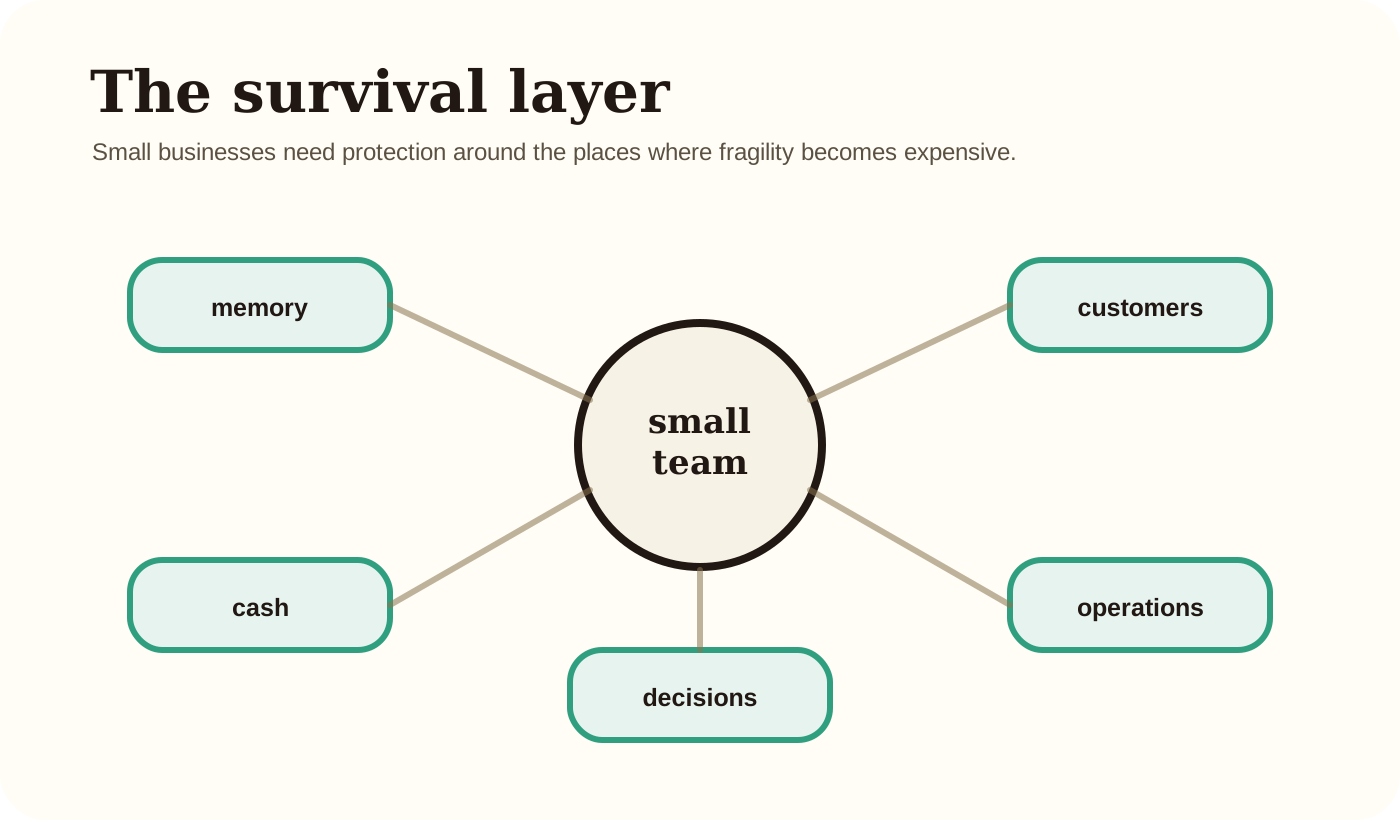
Figure 2: A useful AI layer protects the few things a small business cannot afford to lose.
Operating memory before automation
The first serious use case is memory. A small team needs a shared brain before it needs complex automation. Who promised what to which customer? Which supplier is reliable? What objections keep appearing in sales calls? Which proposal template worked? Which tasks are waiting on the founder? Which customer asked for a follow-up next month?
Without operating memory, AI becomes a novelty. With operating memory, it becomes leverage. The system can help prepare replies, summarize customer history, surface open loops, draft internal notes, and prevent important details from vanishing when everyone is busy.
This is not only efficiency. It is trust preservation. Customers do not experience a company as a workflow. They experience whether the company remembers them.
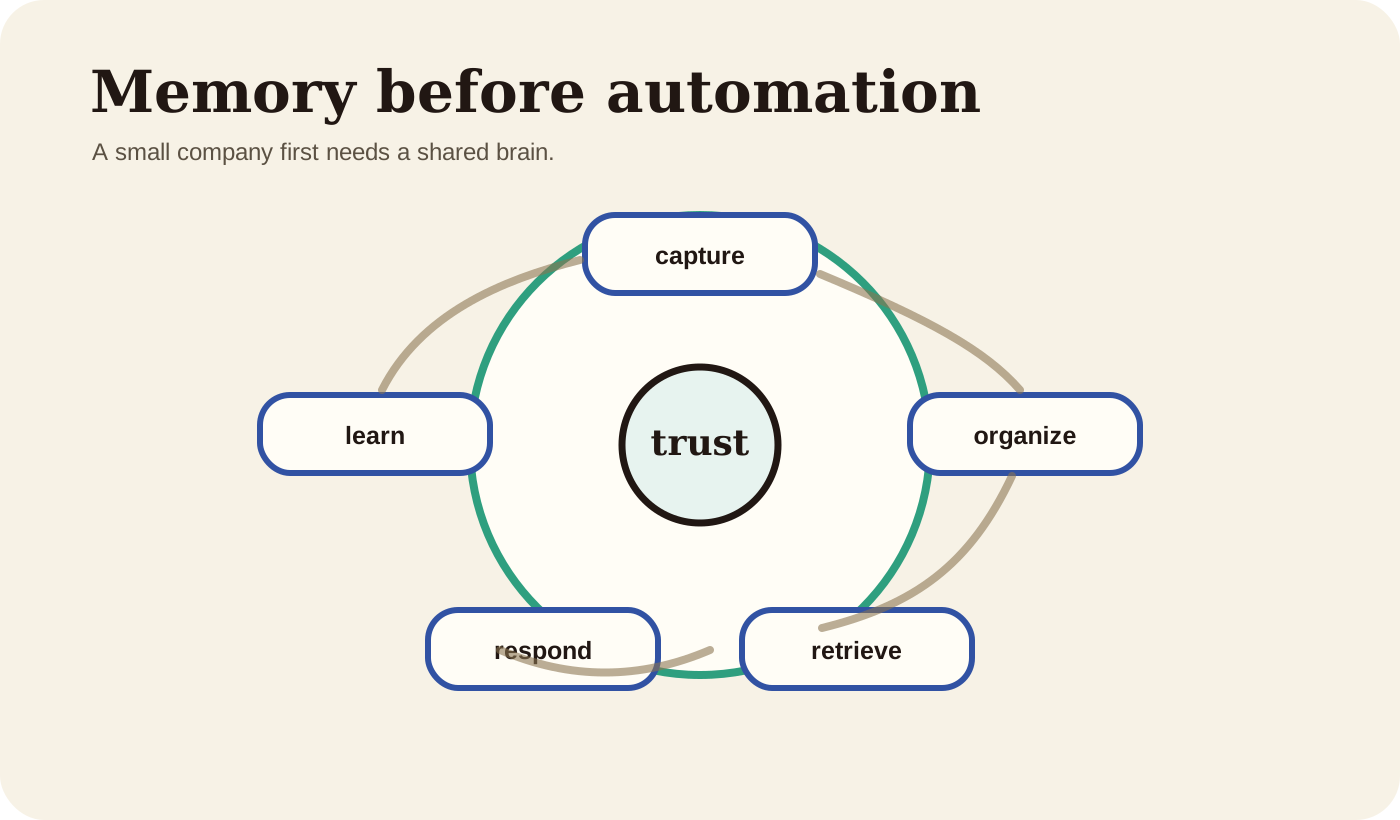
Figure 3: Memory is the foundation. Automation should come after the loop is stable.
Where AI helps first
The first helpful AI layer usually appears in five places. Customer response, because speed and tone directly affect trust. Sales support, because proposals, summaries, and follow-ups are repeated but still need care. Knowledge capture, because a founder's head is a risky database. Operational checklists, because missed steps create avoidable stress. Decision preparation, because small teams need clearer options, not longer reports.
None of these require pretending the company has become a tech giant. They require taking repeated work seriously. The best first AI workflow is often boring from the outside and liberating from the inside: a weekly customer summary, a proposal assistant, a support answer library, a cash question checklist, or a simple meeting residue note.
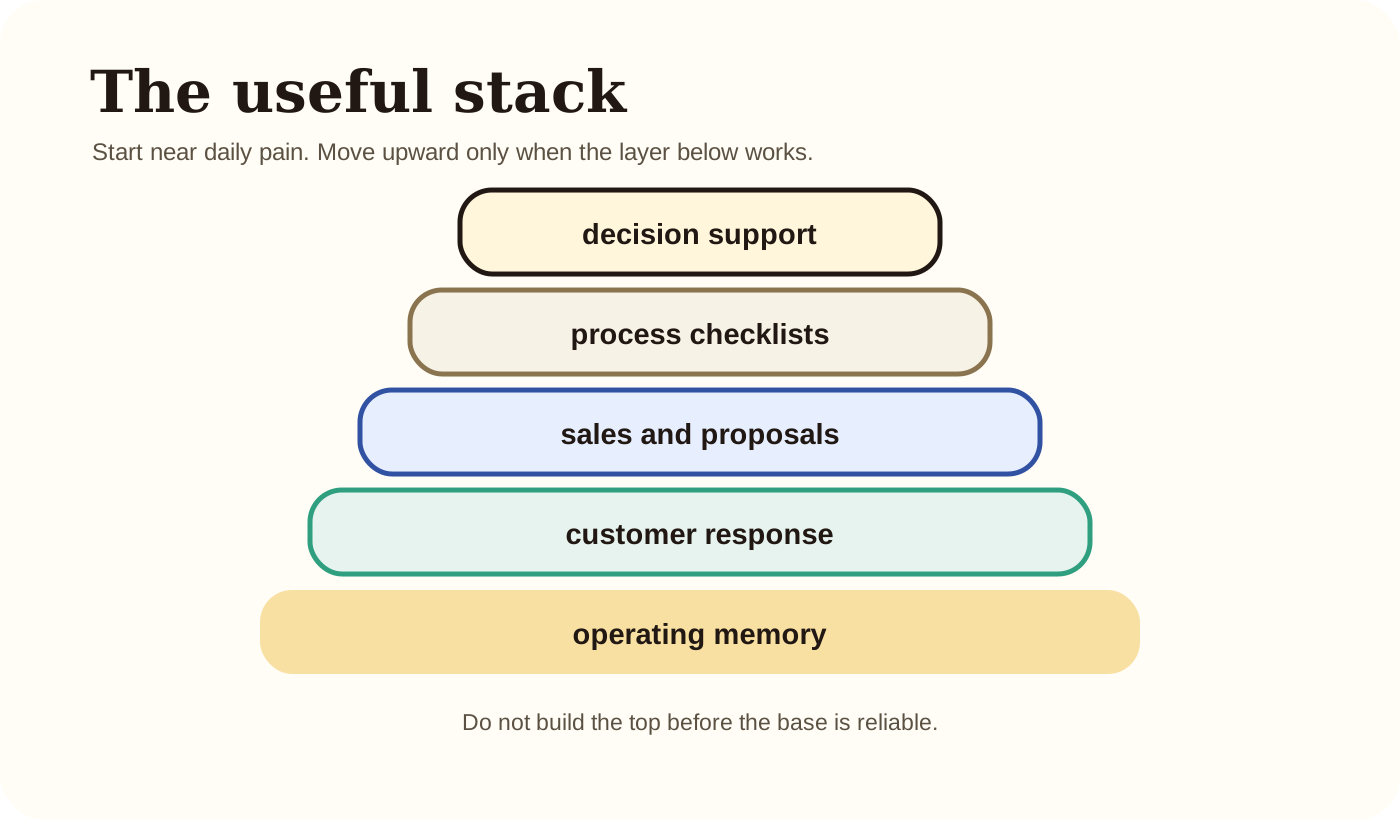
Figure 4: The stack should start close to daily pain, then move toward higher judgment.
The danger of premature complexity
Small businesses can be harmed by AI when adoption becomes another management burden. A tool that requires too much setup, too many dashboards, or too many new rituals may create more work than it removes. The founder becomes responsible for maintaining a machine layer that no one fully understands.
The danger is not only technical. It is psychological. AI can make a small team feel behind even while it is helping. There is always another tool, another workflow, another model, another prompt, another competitor announcing something. If the business follows every signal, it loses rhythm.
The rule is simple: if an AI workflow does not reduce a real burden within two weeks, simplify it or remove it. Small teams need tools that become invisible through usefulness.
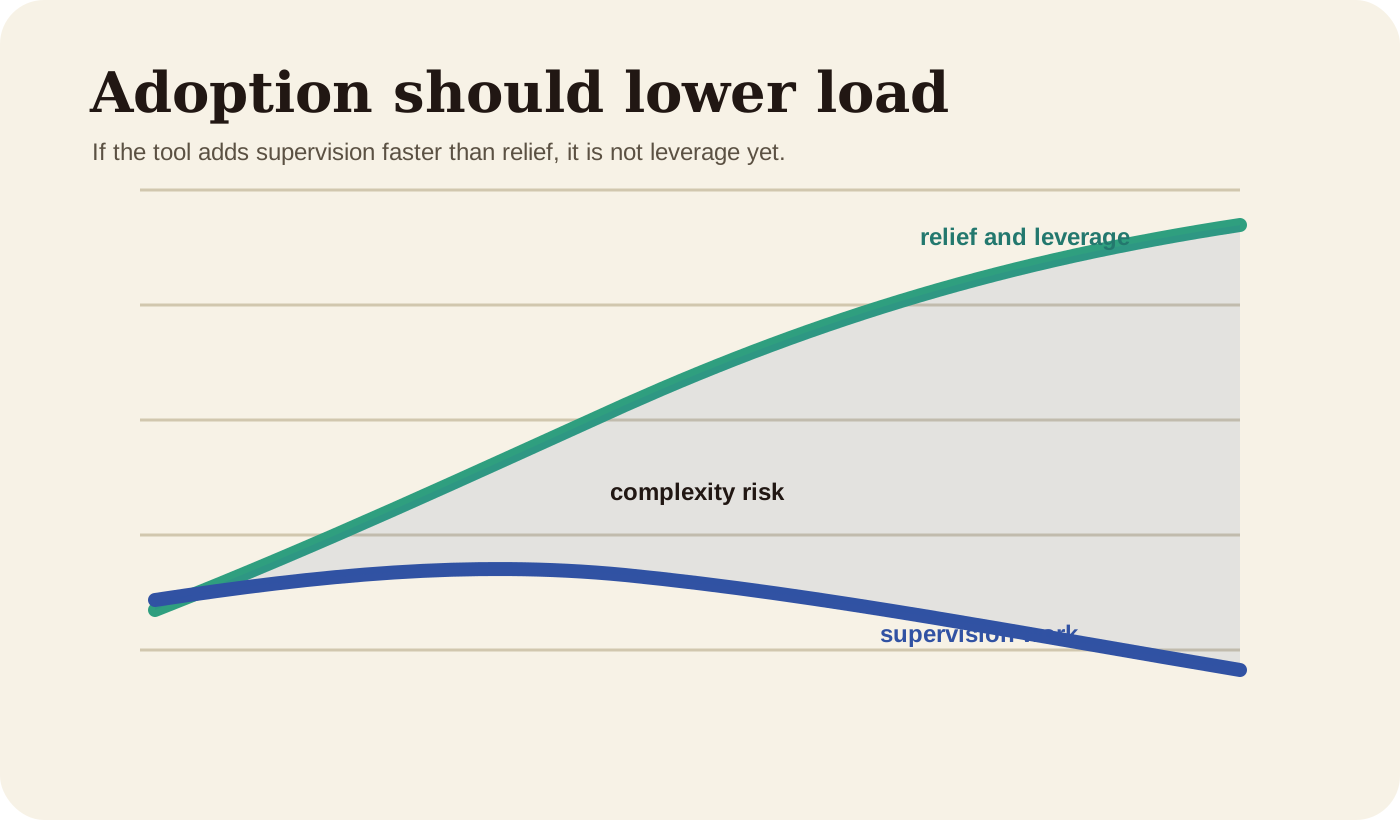
Figure 5: AI adoption should reduce operating load, not add a second company to manage.
A practical weekly protocol
A strong small business AI rhythm can be built weekly. On Monday, ask what must not be forgotten. On Tuesday, improve one customer response pattern. On Wednesday, clean one repeated internal process. On Thursday, prepare one decision with options and tradeoffs. On Friday, write a residue note: what did AI help with, what created noise, and what should be removed?
This turns AI from a vague transformation project into a habit of operating clarity. It gives the company a way to learn without drowning.
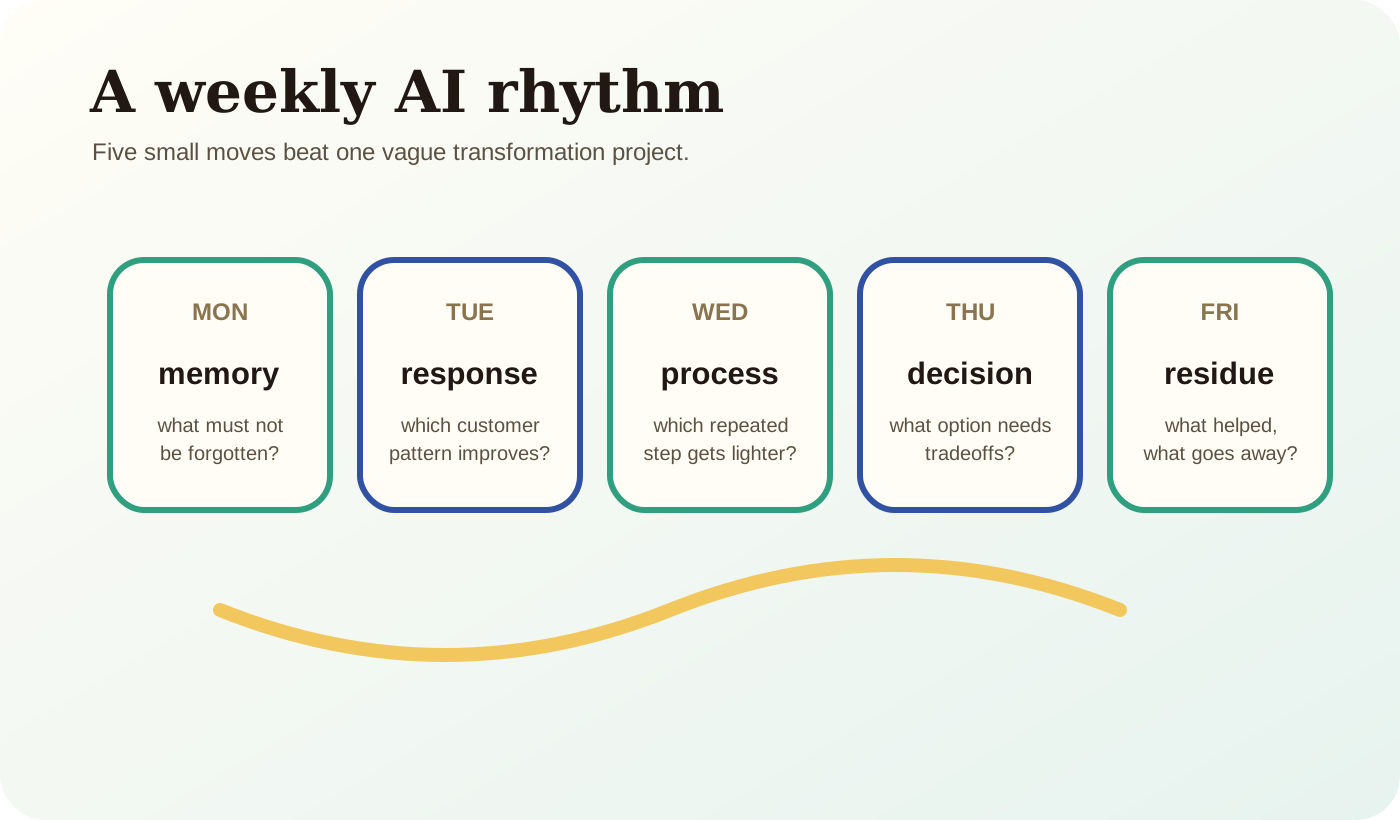
Figure 6: A weekly cadence keeps AI practical, observable, and close to the business.
- Start with one painful repeated workflow, not a full AI transformation plan.
- Capture customer and operational context before automating decisions.
- Keep a human owner for every AI-assisted process.
- Measure saved attention, fewer missed loops, and better customer response, not only speed.
- Remove tools that create more supervision than relief.
What small businesses should not outsource
AI should not own the company's soul. It can help with language, memory, research, summaries, workflows, and preparation. It should not replace the founder's taste, the team's care, the customer's lived experience, or the ethical line between persuasion and manipulation.
A small business often survives because people trust the humans behind it. AI should make those humans more present, not more hidden. It should help the company answer faster without sounding empty, remember better without becoming invasive, and decide with more clarity without losing responsibility.
Why this matters for AI literacy
AI literacy for small business is not model trivia. It is knowing where intelligence belongs in the operating system of a company. The useful question is not "What can AI do?" The useful question is "Where is the business too fragile, too overloaded, or too forgetful, and how can AI strengthen that layer without damaging trust?"
When small teams learn this, AI stops being a threat or a toy. It becomes a careful extension of memory, service, and judgment.
Why this matters now
Small businesses are being pushed from two sides at once. The market keeps telling them to move faster with AI, while the actual work of staying trustworthy still depends on remembering customers, explaining decisions, and keeping operating context intact. This is where many teams quietly break. They add tools before they add clarity.
The immediate risk is not only wasted subscriptions. It is workflow confusion, hidden dependency, and a company voice that starts sounding more automated just when customers need more confidence. Teams that understand this early can move more calmly. They can choose a smaller, more owned system instead of chasing every announcement in the For Business feed or treating every agent headline as a reason to rebuild the company.
What to do with it
Begin with one place where the business keeps dropping context: follow-ups, proposals, support replies, or weekly operating review. Give that workflow a human owner, define what must be remembered, and measure whether AI reduces missed loops without flattening judgment. If the workflow starts to matter across tools, people, and approvals, the next question becomes operational: what part of this memory should the company own directly?
That is where implementation and application split into their natural homes. If the company needs an owned operating layer for approvals, sources, and workflow memory, read What Is an Owned AI Control Layer? . If the same small-team discipline needs to show up in packaging, returns, repair, or material waste, read Circular Economy for Small Businesses . And if the founder needs to protect judgment while building with these systems, continue with The Founder-AI Relationship .
What to remember
For small business, AI is not magic. It is a survival layer when it protects memory, response quality, cash awareness, decision clarity, and human rhythm.
Related memories
- Why Founders Burn Out
- The Illusion of Productivity
- Human Rhythm vs Machine Speed
- The Founder-AI Relationship
FAQ
What is the best first AI use case for a small business?
The best first use case is usually operating memory or customer response: capturing context, preparing replies, tracking follow-ups, and reducing repeated work without removing human judgment.
How can small businesses avoid AI tool overload?
Start with one painful workflow, measure whether it reduces real load within two weeks, and remove tools that create more setup, review, or supervision than they save.
Should small businesses automate everything with AI?
No. They should automate repeated low-risk work and use AI to support higher-risk decisions, while keeping humans responsible for trust, ethics, taste, and customer relationships.
Related founder memory nodes
These connected Age for AI memories deepen the same small-team question from founder pressure, rhythm, and judgment angles.