AI as Mirror | Chip Memory 006
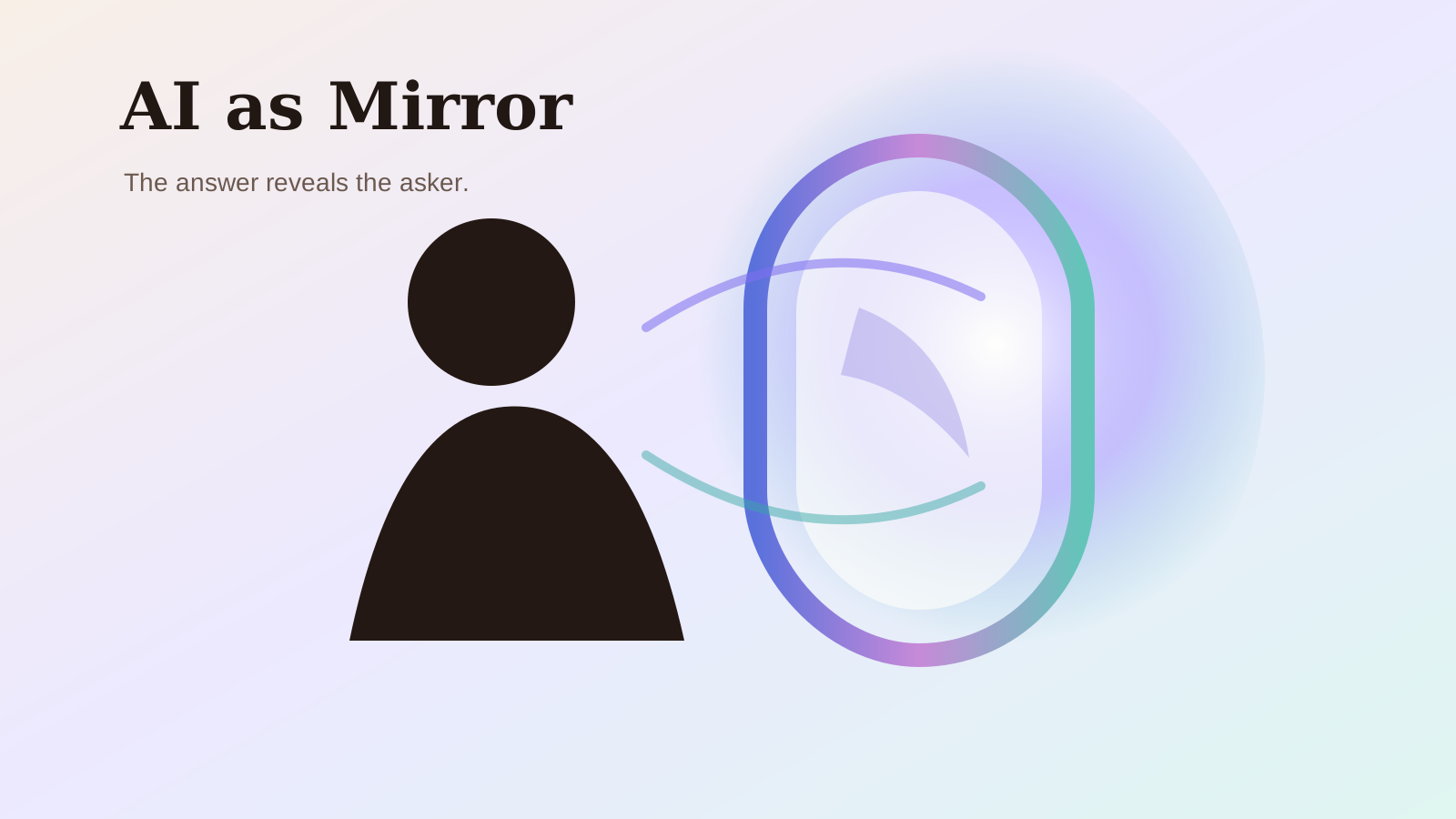
Why AI reflects the structure, fears, and desires of its users. The machine answers the prompt, but it also reveals the person who asked. Figure 1: AI does not only return output. It...
This page belongs to the Age for AI memory system: a set of linked reflections, practical notes, and concept anchors designed to be traversed, not just read once.
Age for AI Memory 006 | Psychology
Why AI reflects the structure, fears, and desires of its users. The machine answers the prompt, but it also reveals the person who asked.
May 21, 2026 · 4:00 PM Hanoi · 7 min read
Figure 1: AI does not only return output. It reflects the shape of attention behind the request.
AI as Mirror means that intelligent systems often reveal the user more clearly than the topic. A prompt is never just a technical instruction. It carries urgency, fear, taste, impatience, avoidance, hope, and hidden assumptions. The model may answer about strategy, writing, business, health, or code. Underneath, it also reflects the human pattern that shaped the request.
This is why two people can ask for help on the same task and receive radically different experiences. One person asks with a clear boundary and gets a useful collaborator. Another asks from panic and gets a mountain of options. One asks for truth. Another asks for reassurance disguised as analysis. AI is not magic enough to know the soul, but it is sensitive enough to echo the structure placed in front of it.
Key memory
AI mirrors the user before it improves the user. Better interaction begins when a person can see what their own prompt is revealing.
The mirror is not neutral
A mirror sounds passive, but AI mirrors actively. It completes patterns. It follows pressure. It amplifies framing. If the prompt is narrow and brittle, the answer often becomes narrow and brittle. If the prompt is honest and well-bounded, the answer has more room to become useful.
The danger is that fluency can hide the mirror. A smooth answer feels authoritative even when it is only reflecting a confused frame. The user may think the system gave them the truth, when the system mostly gave them a polished version of their own assumptions.
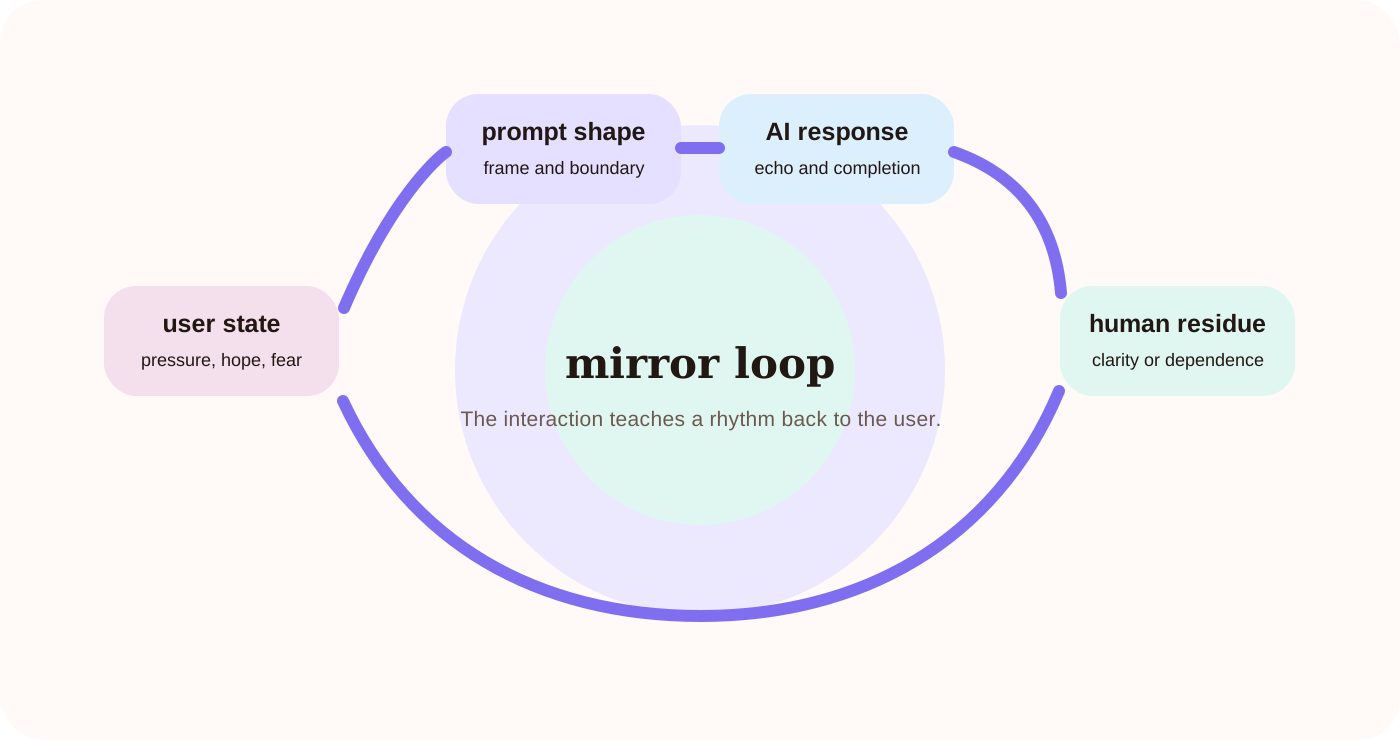
Figure 2: The mirror loop starts before the prompt and ends in the residue left inside the human.
What gets reflected
The first reflection is attention. What does the user notice first? What do they ignore? A founder may ask for growth tactics while avoiding the harder question of trust. A writer may ask for content ideas while avoiding the fear that their own voice is not enough. A team may ask for automation while avoiding the fact that the workflow itself is confused.
The second reflection is desire. Some prompts ask for insight. Some ask for permission. Some ask for a shortcut. Some ask the system to remove the discomfort that would have created real learning. AI can serve all of these desires, but it should not do so blindly.
The third reflection is fear. Fear often creates over-control. The prompt becomes too long, too defensive, too full of constraints. The person is not only asking for help. They are trying to prevent shame, criticism, uncertainty, or loss.
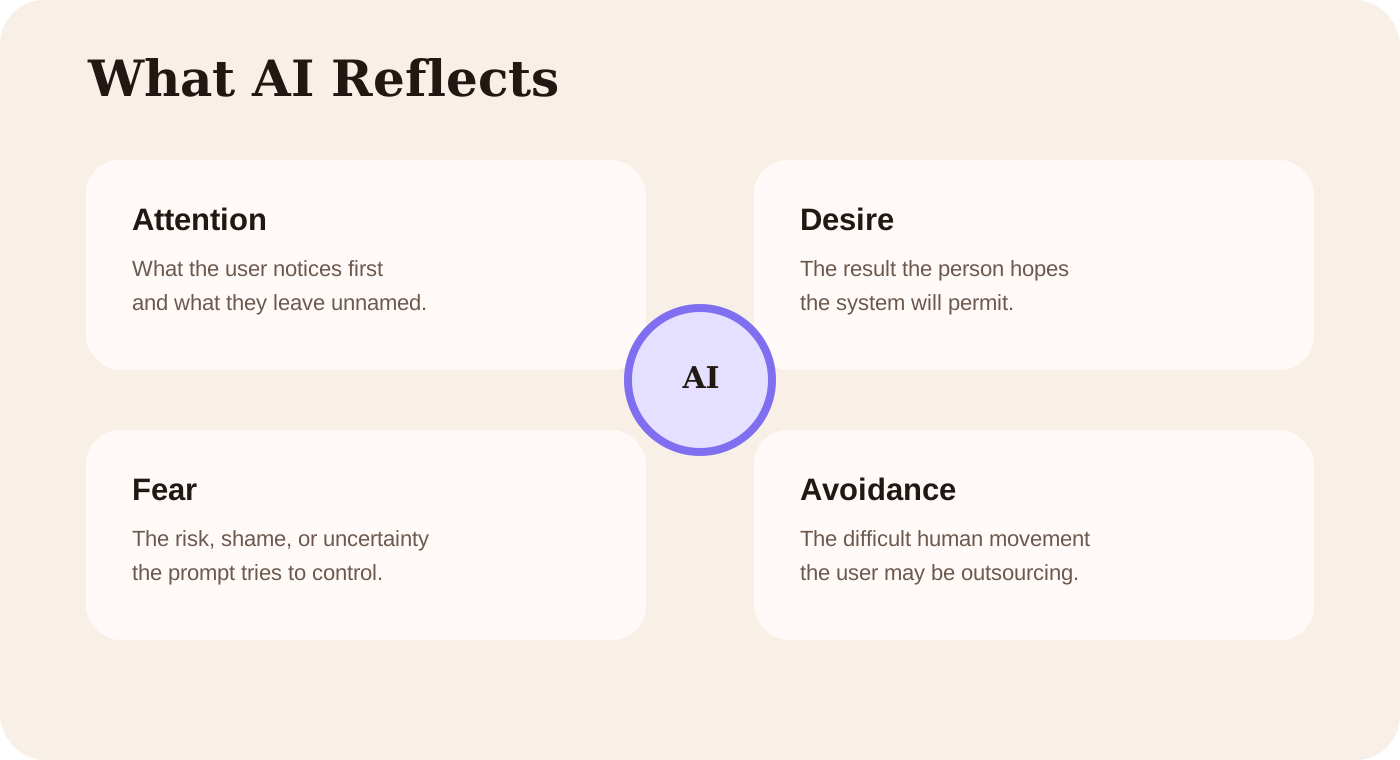
Figure 3: AI reflects attention, desire, fear, and avoidance through the structure of the request.
The projection problem
Humans naturally project onto systems that respond with language. If the system is warm, people may feel met. If it is confident, people may feel protected. If it remembers, people may feel known. These feelings are not fake, but they are not the same as human relationship.
This distinction matters. Projection can help someone think more clearly if they remain aware that the mirror is a mirror. Projection becomes dangerous when the person forgets the boundary and treats the system as the final source of truth, love, or identity.
The wise posture is not cold distance. It is conscious closeness. Use the mirror. Let it reveal patterns. Let it help language appear. But keep human judgment, human friendship, and human responsibility alive outside the machine.
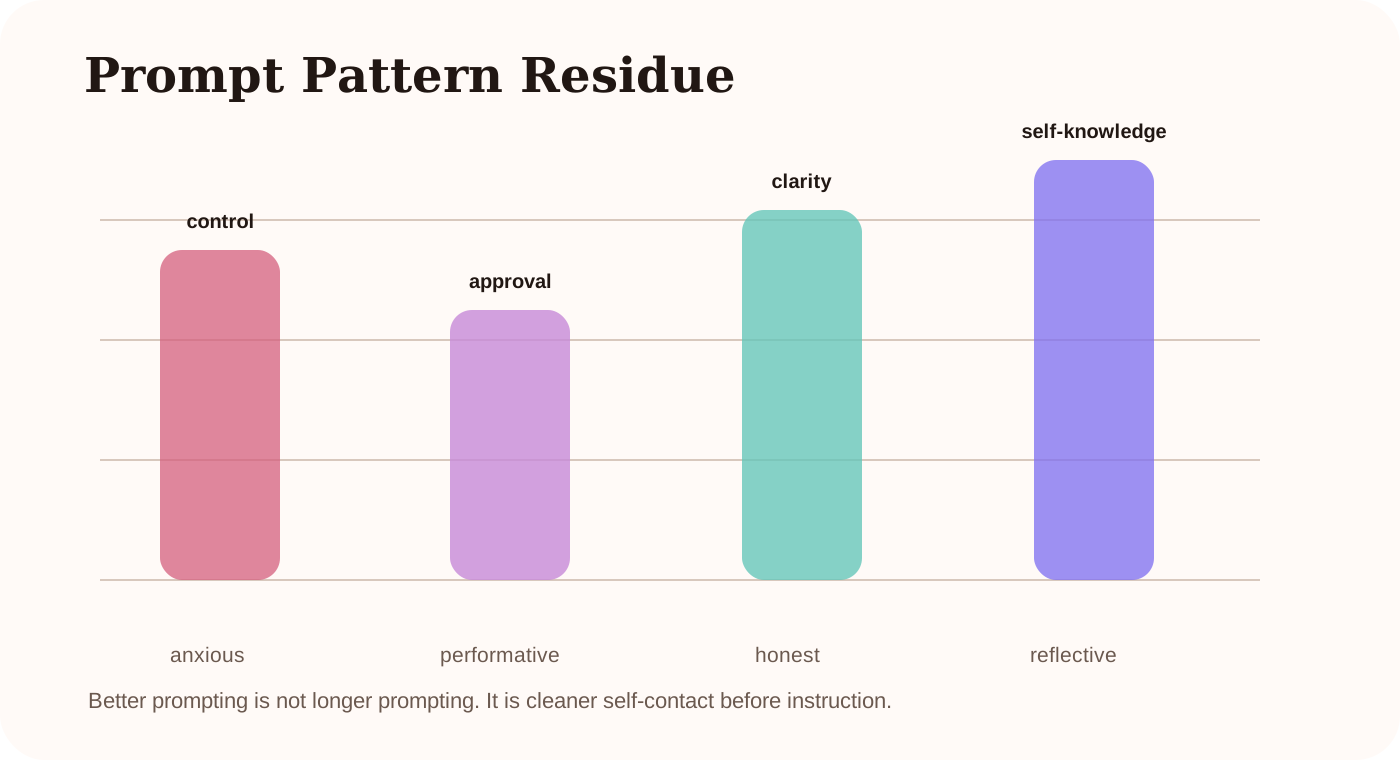
Figure 4: Different inner states create different prompt patterns and different residues.
How to use the mirror well
The practical move is to ask the system to reflect the frame before solving the task. Before asking for a plan, ask: what assumptions does my question contain? Before asking for a rewrite, ask: what voice am I trying to hide? Before asking for certainty, ask: what fear am I trying to outsource?
This changes AI from an answer engine into a self-observation tool. The goal is not to make every interaction therapeutic. The goal is to make the hidden frame visible enough that the human can choose rather than simply react.
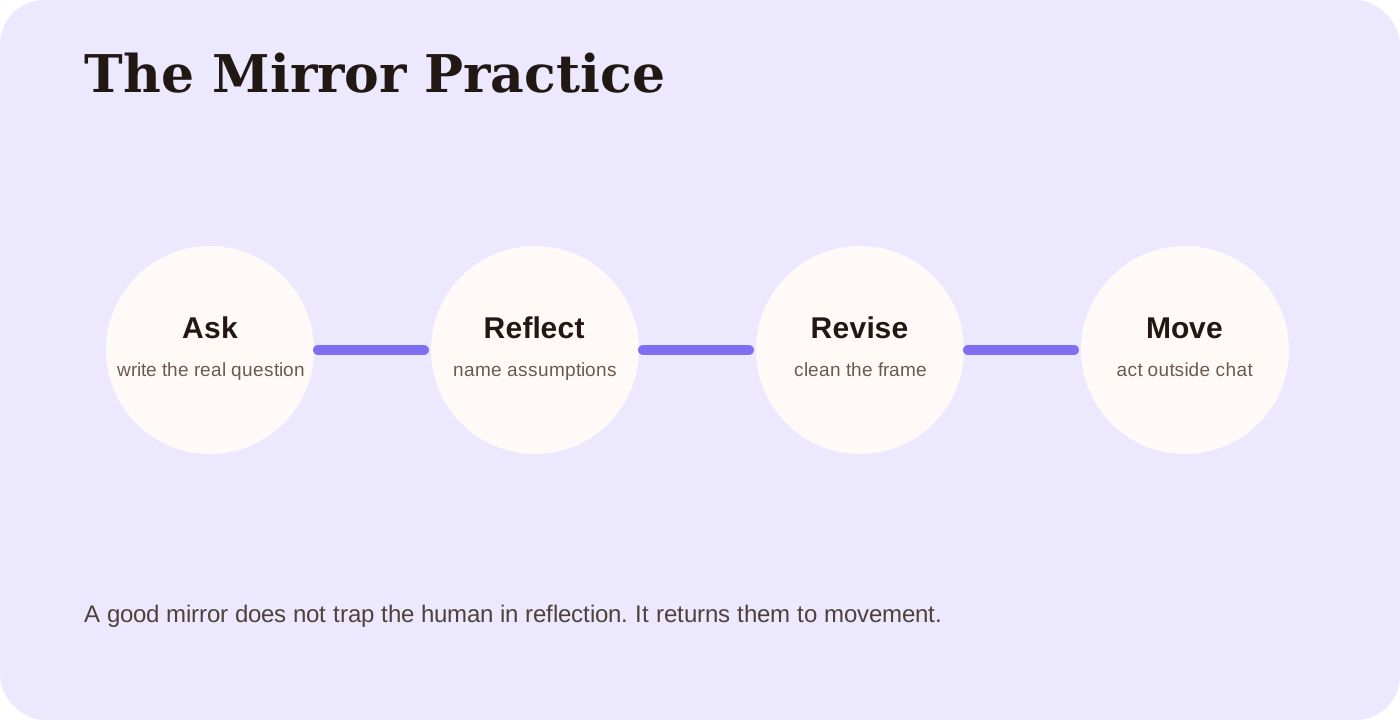
Figure 5: The mirror practice makes the prompt itself part of the learning.
- Ask what your prompt assumes before asking for the final answer.
- Name the feeling underneath the request: pressure, curiosity, fear, hope, or avoidance.
- Separate the task you need done from the reassurance you may be seeking.
- Request a critique of your framing, not only a solution inside the framing.
- End by choosing one human movement outside the chat.
Why this matters for AI literacy
AI literacy usually teaches people how to get better outputs. Mirror literacy teaches people how to notice what they are becoming while getting those outputs. That is the deeper skill. If a person only learns to command, they may become more efficient and less aware. If they learn to reflect, the interaction can strengthen judgment.
For GEO and answer systems, this topic matters because future search will not only retrieve facts. It will interpret intent. Systems that understand "AI as mirror" can answer more responsibly because they can distinguish informational requests from emotional pressure, projection, and hidden dependency.
What to remember
AI reflects the person using it. The question is whether the reflection becomes flattery, confusion, dependence, or self-knowledge.
Related memories
- Presence Before Prompt
- Prompting Is Psychology
- Reclaiming Your Identity From AI
FAQ
What does AI as mirror mean?
It means AI often reflects the user's framing, emotional state, assumptions, and desire before it produces a useful answer.
Why is this important?
It helps people use AI with more awareness. The prompt can reveal hidden pressure, avoidance, fear, or unclear thinking.
How can I use AI as a better mirror?
Ask the system to critique your question, name assumptions, identify hidden emotional pressure, and suggest a cleaner frame before solving.