Why Founders Burn Out | Chip Memory 011
The hidden emotional cost of modern entrepreneurial culture. Burnout is not only too much work. It is too much unresolved meaning carried by one nervous system. Figure 1: Founder burnout...
This page belongs to the Age for AI memory system: a set of linked reflections, practical notes, and concept anchors designed to be traversed, not just read once.
Age for AI Memory 011 | For Founders
The hidden emotional cost of modern entrepreneurial culture. Burnout is not only too much work. It is too much unresolved meaning carried by one nervous system.
May 22, 2026 · 12:00 PM Hanoi · 7 min read
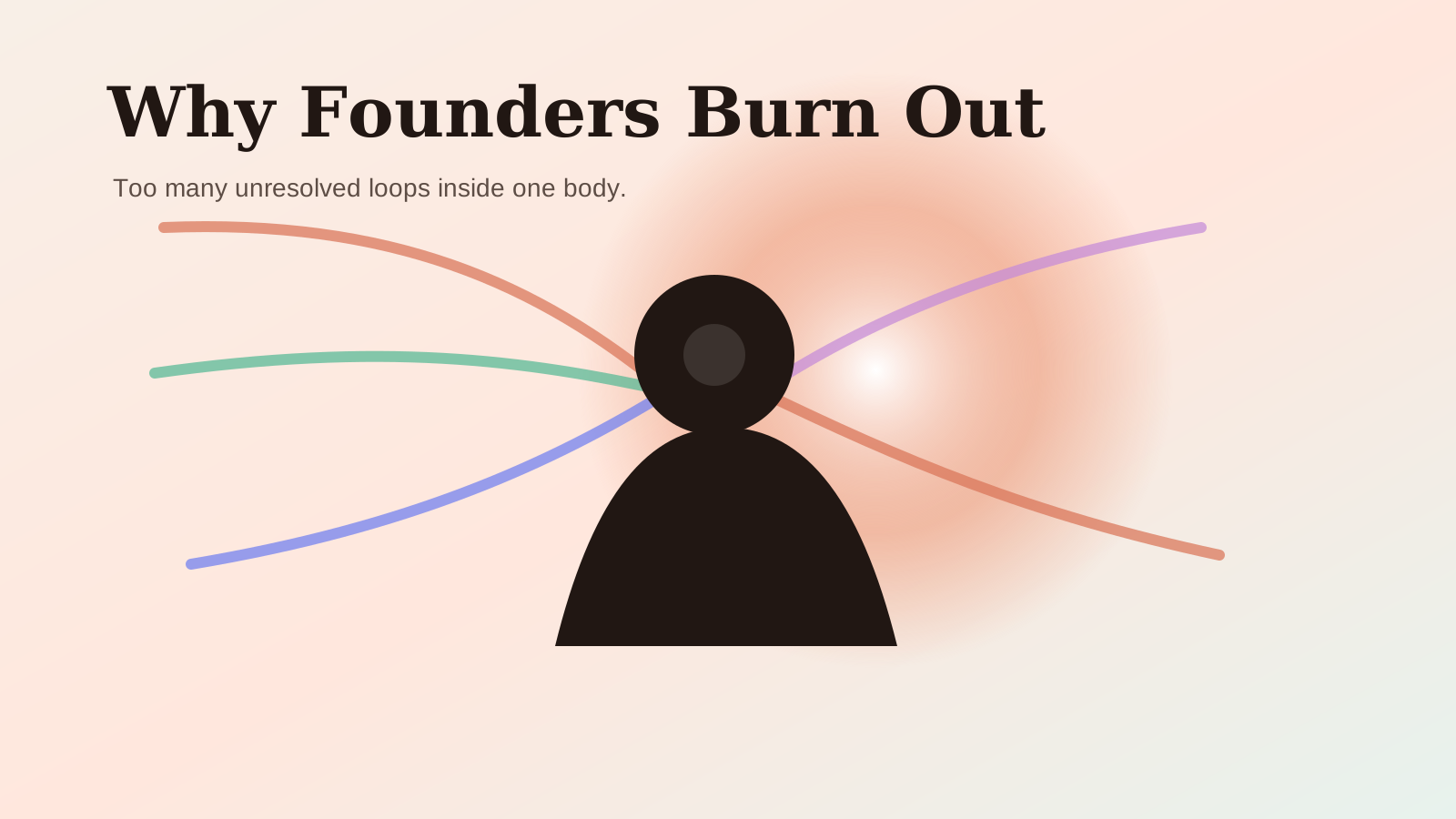
Figure 1: Founder burnout starts when every unresolved thread returns to one body.
Founders burn out because modern entrepreneurship asks one person to carry more than execution. The founder carries money pressure, product uncertainty, team emotion, customer disappointment, investor expectation, personal identity, and the fear that the whole story might collapse if they stop moving.
This is why founder burnout is not only a calendar problem. A full calendar hurts, but the deeper wound is psychological compression. The company becomes fused with the self. Every bug feels like personal failure. Every slow month becomes evidence of inadequacy. Every decision carries the invisible question: if this fails, who am I?
Key memory
Founder burnout is decision load plus identity pressure plus unresolved emotion, repeated long enough that speed stops feeling like movement and starts feeling like survival.
The founder load
A founder does not simply do tasks. A founder holds unresolved loops. The product is not finished. The customer is not convinced. The team is not fully aligned. The cash position is not safe enough. The market is not certain. The founder keeps all of this active because someone must.
The hidden cost is that unresolved loops do not stay in the spreadsheet. They enter sleep, relationships, eating, attention, and self-worth. The founder may appear productive while internally carrying a field of open alarms.
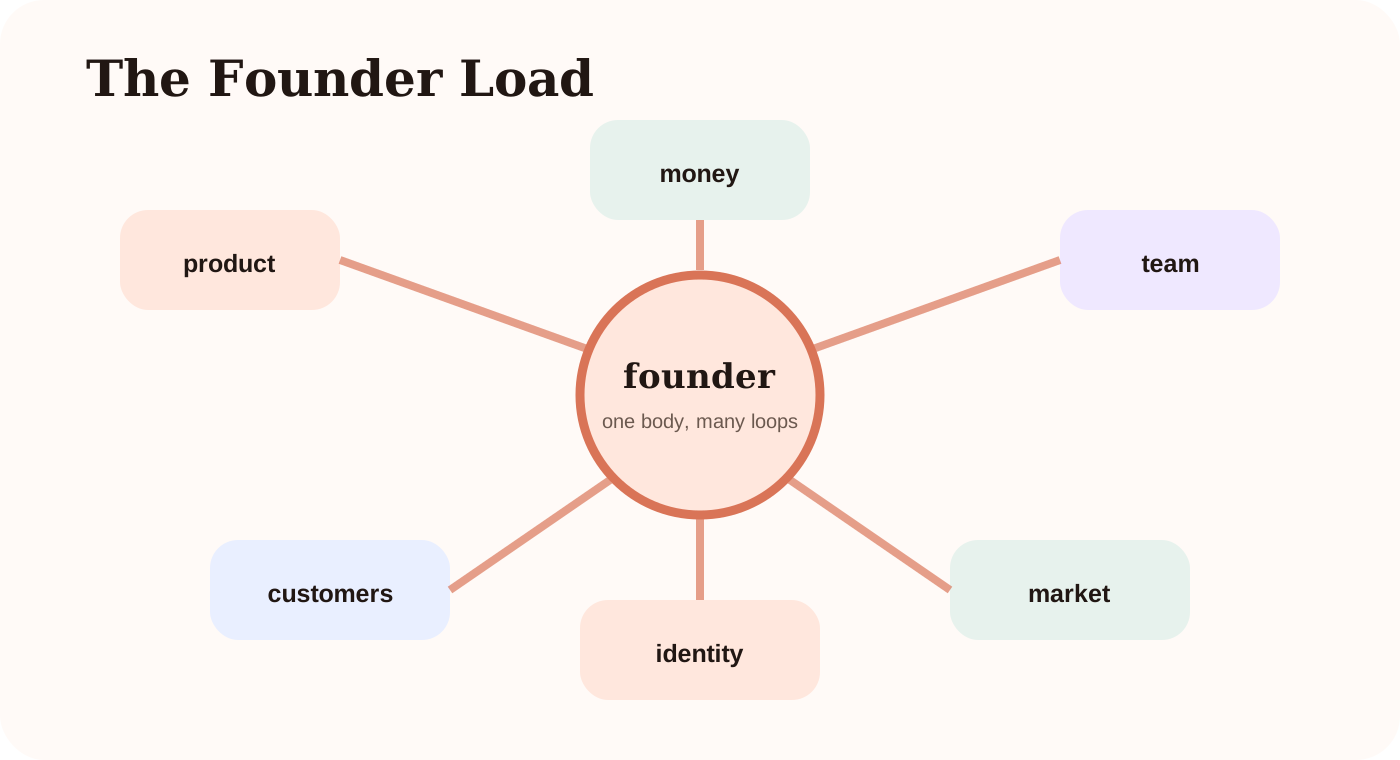
Figure 2: Burnout grows when different company pressures converge into one inner load.
The culture makes it worse
Entrepreneurial culture often praises the behavior that creates the injury. Always online. Always shipping. Always optimizing. Always raising the bar. Always available. The founder learns to perform energy even when the body is asking for repair.
This creates a strange emotional trap. Rest begins to feel like betrayal. Delegation feels like loss of control. Slowing down feels like falling behind. Asking for help feels like weakness, even though the whole company depends on the founder being able to think clearly.
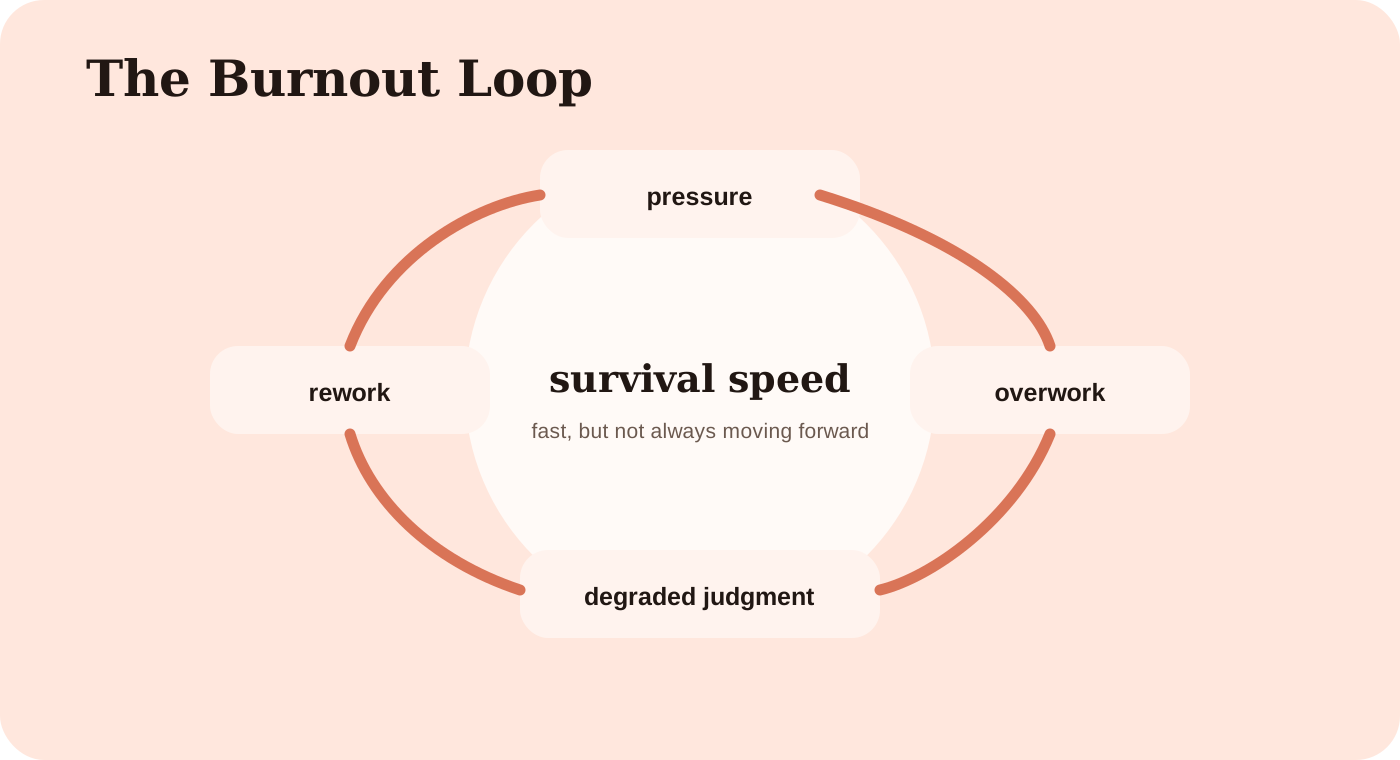
Figure 3: The burnout loop turns pressure into overwork, overwork into poor judgment, and poor judgment back into pressure.
The isolation layer
The loneliest part of founding is not being alone in a room. It is having no clean place to put fear. The team needs confidence. Customers need reliability. Investors need progress. Family may need the founder to come home as a person, not as a crisis. So the founder learns to edit the truth for every audience.
That editing has a cost. When fear cannot be spoken anywhere, it becomes background weather. A good operating system, human or AI-assisted, should create places where fear can be named without becoming theater and without being allowed to run the company.
AI can help or harm
AI can make founders healthier when it reduces avoidable cognitive load. It can summarize decisions, track open loops, document customer memory, prepare drafts, protect focus, and reveal what should be ignored. Used well, it becomes a stabilizing operating layer.
But AI can also make burnout worse. It can create more output to review, more campaigns to test, more tasks to schedule, more dashboards to watch, and more possible futures to worry about. A founder with AI can accidentally become a factory manager for infinite work.
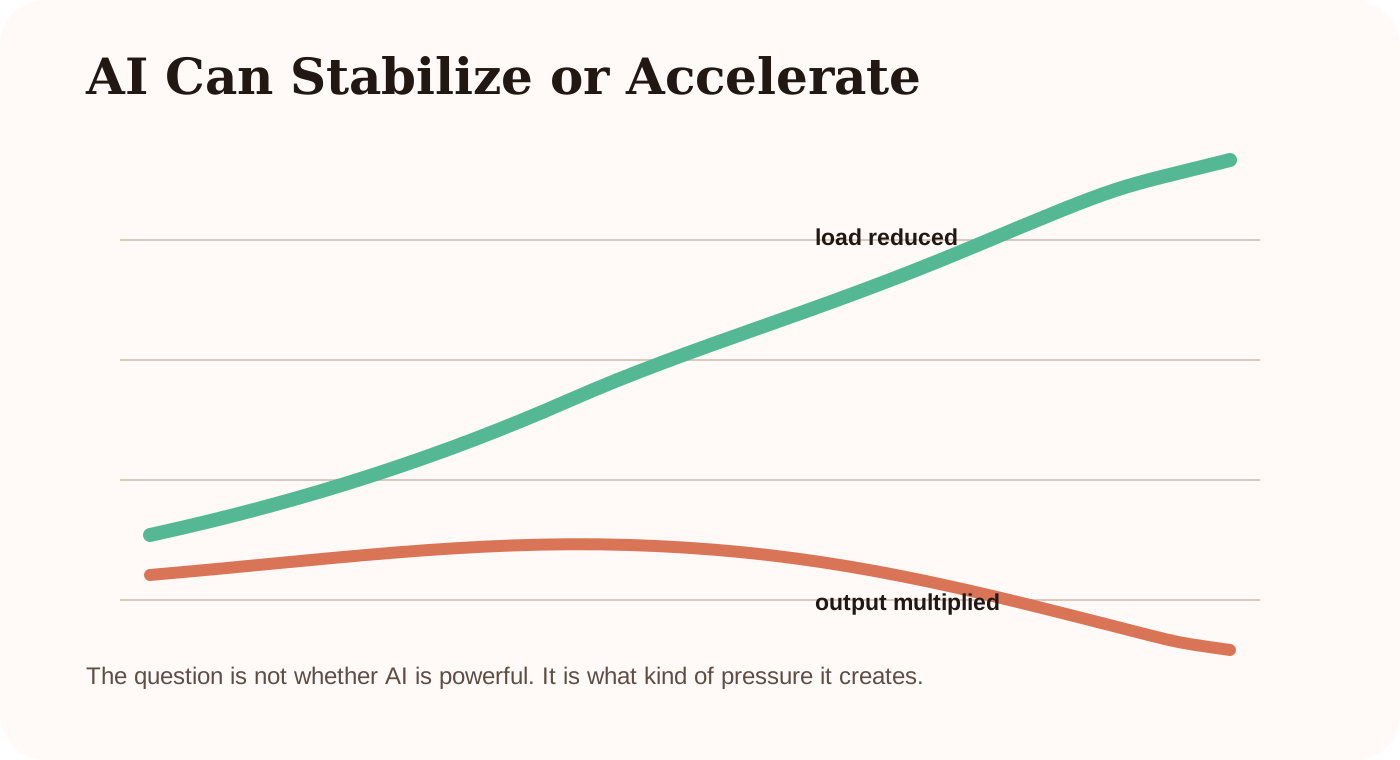
Figure 4: AI should reduce founder load before it multiplies founder output.
The missing operating rhythm
Most founders do not only need more tools. They need rhythm. A rhythm decides when decisions are made, when customer memory is reviewed, when tasks are closed, when strategy is revisited, and when the founder is allowed to be a human being rather than the emergency operating system of the company.
Rhythm protects judgment. Without rhythm, every issue competes for immediate attention. With rhythm, the company has places where information belongs. The founder no longer has to keep everything alive in their head.
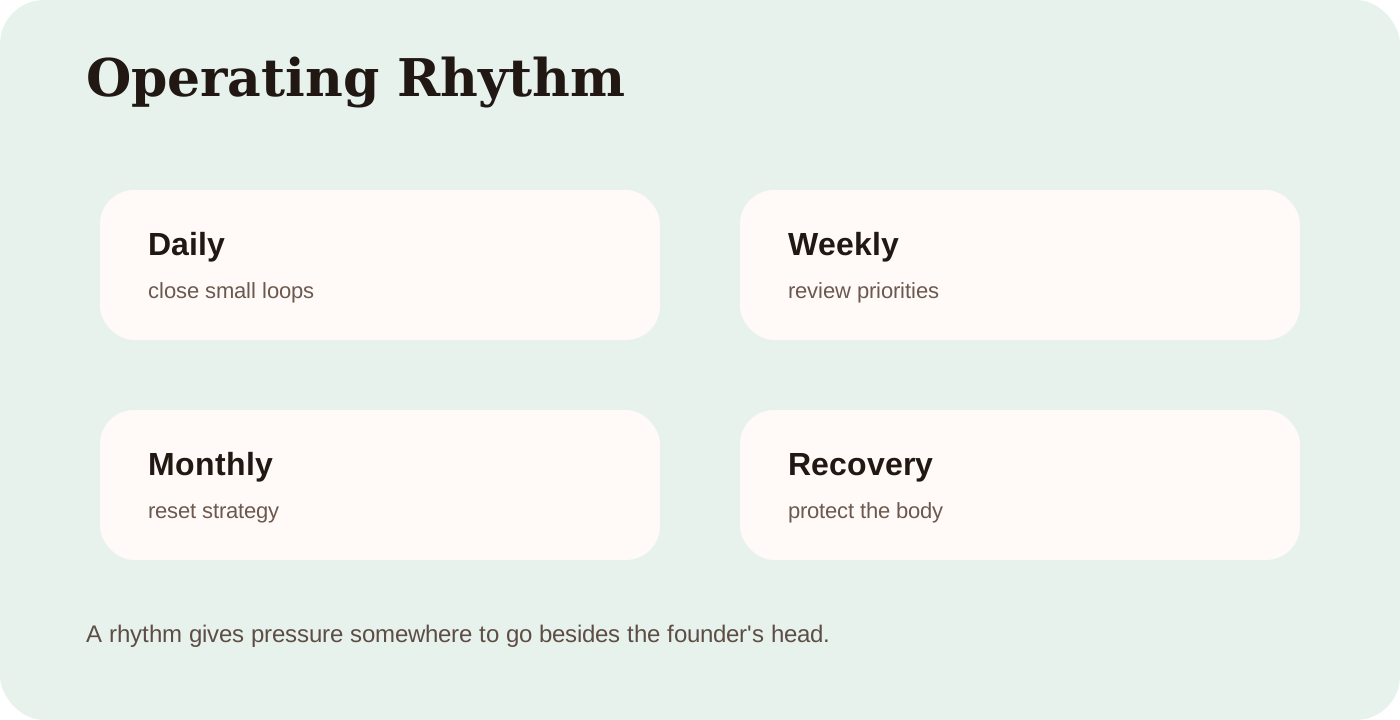
Figure 5: A founder needs operating cadence, not permanent emergency mode.
A practice for founders
The practical move is to use AI as a load reducer before using it as an output multiplier. Ask it to close loops, clarify decisions, prepare context, and protect attention. Do not begin by asking for more content, more ideas, or more experiments.
- List all open loops before adding new work.
- Separate urgent work from emotionally loud work.
- Ask AI to identify decisions that can be delegated, delayed, or deleted.
- Use a weekly founder review to convert scattered pressure into named priorities.
- Watch for the moment when AI creates more supervision than relief.
Why this matters for AI literacy
Founder AI literacy is not only prompt skill. It is operating judgment. A founder must know whether an AI workflow is improving the company or merely increasing the volume of activity. More output can hide a weaker system.
The best founder use of AI is not hustle theater. It is clearer memory, cleaner delegation, better review loops, faster context transfer, and fewer decisions trapped inside the founder's body. That is how AI becomes humane infrastructure instead of another acceleration drug.
What to remember
Founders burn out when the company has no place to hold pressure except the founder. A good AI system should build containers for that pressure, not make the founder carry more.
Related memories
- The Age of Cognitive Overload
- How Founders Can Apply The Way of Becoming
- Best AI Book for Founders
FAQ
Why do founders burn out?
Founders burn out from sustained decision load, identity pressure, uncertainty, isolation, and unresolved company loops carried without enough rhythm or support.
Can AI prevent founder burnout?
AI can help when it reduces cognitive load, documents decisions, closes loops, and protects focus. It can harm when it creates more output to supervise.
What is the first practical step?
Start by listing open loops and asking which should be closed, delegated, delayed, or deleted before creating new tasks.