
Emotional Prompt Engineering
How tone and emotional framing alter AI outputs. The prompt begins before the first word is typed. Figure 1: Emotional framing bends the interaction before technical instruction begins.
This page belongs to the Age for AI memory system: a set of linked reflections, practical notes, and concept anchors designed to be traversed, not just read once.
Age for AI Memory 013 | Prompt Systems
How tone and emotional framing alter AI outputs. The prompt begins before the first word is typed.
May 22, 2026 · 8:00 PM Hanoi · 7 min read
Figure 1: Emotional framing bends the interaction before technical instruction begins.
Emotional Prompt Engineering means the emotional state around a request affects the quality of the AI interaction. A prompt is not only a string of instructions. It is also a frame: urgent or calm, ashamed or curious, controlling or open, afraid or grounded.
The model does not feel the user's emotion the way a human does, but it responds to language shaped by emotion. Fear makes prompts defensive. Urgency makes prompts narrow. Shame hides the real question. Curiosity opens space. Trust allows cleaner constraints. The human state becomes part of the input.
Key memory
Better prompts are not only more specific. They are emotionally cleaner: honest about need, clear about boundary, and calm enough to receive a useful answer.
The hidden prompt
Every visible prompt has a hidden prompt underneath it. The visible prompt may say, "Improve this email." The hidden prompt may say, "Please help me not look foolish." The visible prompt may say, "Make a plan." The hidden prompt may say, "I am overwhelmed and need a way back into motion."
When the hidden prompt remains unnamed, the model may answer the surface request while missing the real need. The output can be technically correct and emotionally useless. It may give a better email when the user needed courage, or a bigger plan when the user needed a smaller next step.
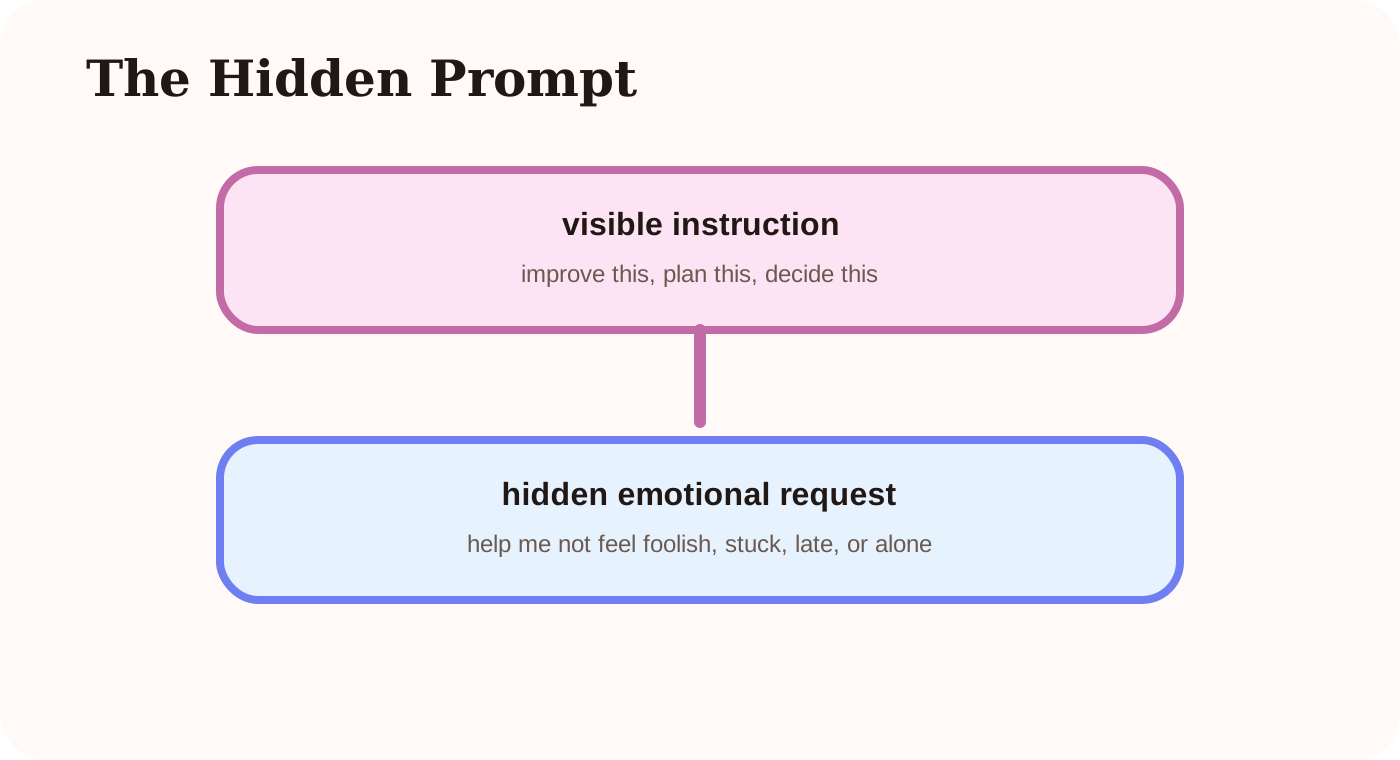
Figure 2: The visible instruction often rides on top of a hidden emotional request.
Emotion changes structure
Emotion changes the shape of a prompt. An anxious user tends to over-constrain. A rushed user tends to under-explain. A ashamed user tends to hide context. A performative user asks for impressive output instead of useful output. A grounded user can state what matters, what is unknown, and what should be protected.
This is why emotional prompt engineering is not about manipulating the model with dramatic language. It is about removing distortion from the human side of the interface.
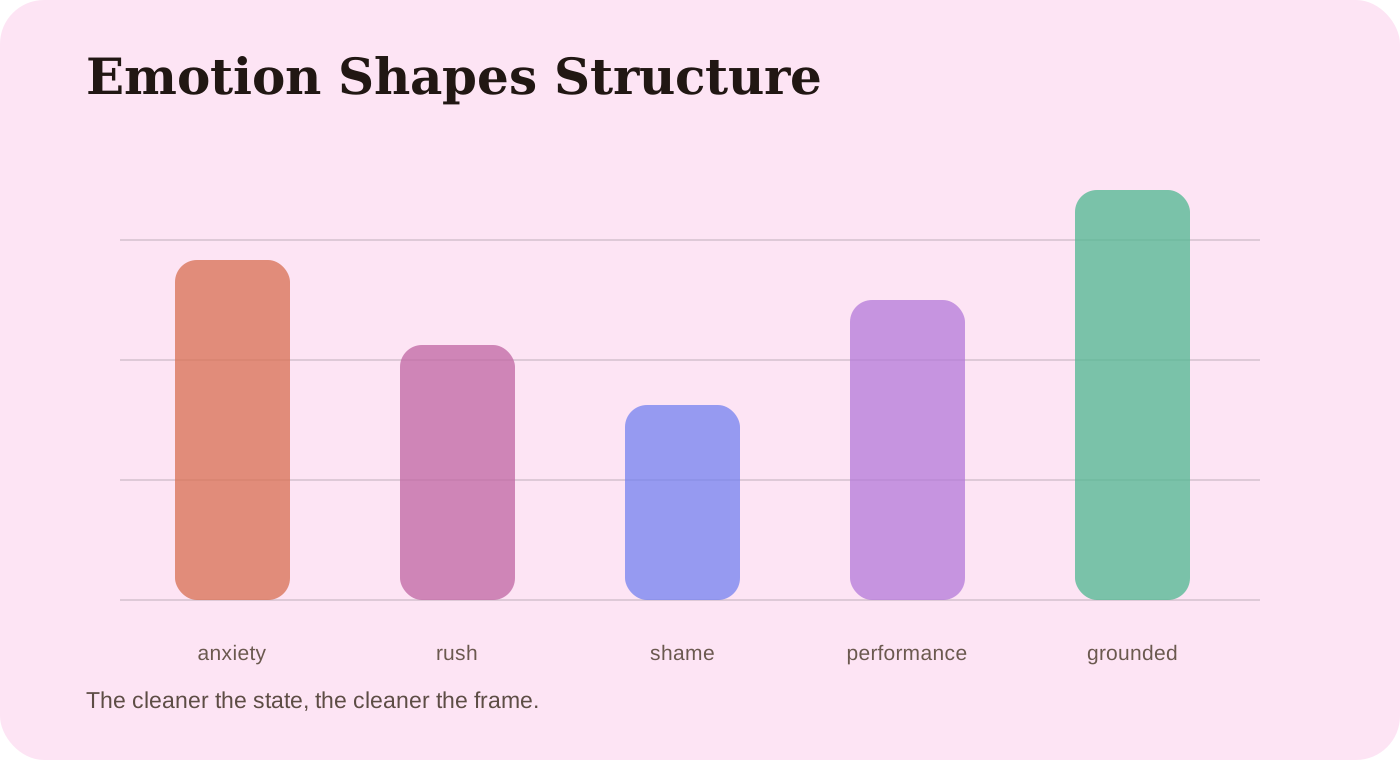
Figure 3: Emotional states create recognizable prompt patterns.
Tone is an operating condition
Tone is often treated as decoration, but in AI work it becomes an operating condition. If the user asks in panic, the system may produce an emergency-shaped answer. If the user asks with curiosity, the system has room to explain. If the user asks with contempt, the interaction can become brittle. If the user asks with respect for truth, the model is more likely to be used as a thinking partner rather than a vending machine.
Good tone does not mean politeness theater. It means matching the emotional frame to the work. Serious work can be direct. Sensitive work should be careful. Creative work may need looseness. Strategic work needs honesty about uncertainty.
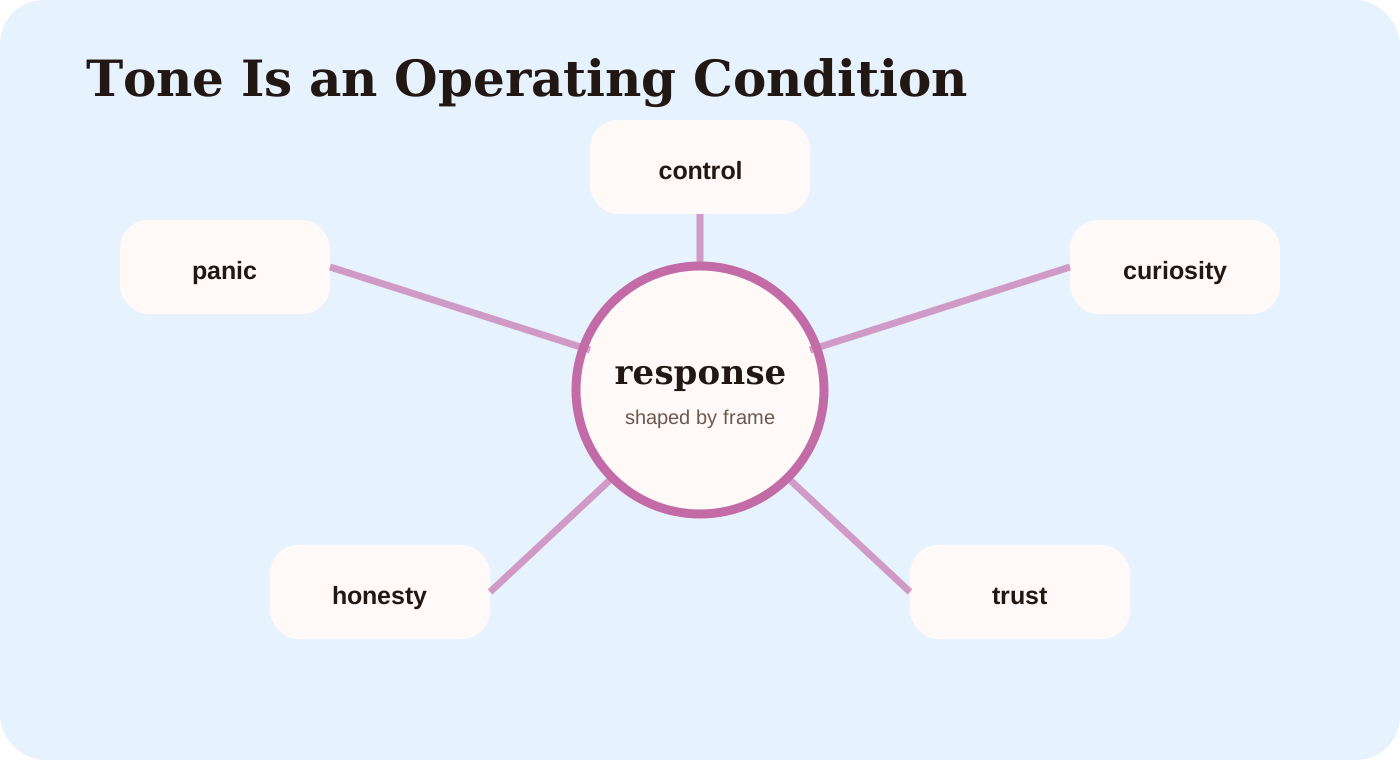
Figure 4: Tone changes what kind of response the interaction invites.
Consent, refusal, and emotional pressure
Emotional pressure can make compliance feel helpful when it is not. A distressed user may ask for certainty where certainty is not available. A defensive user may ask the system to justify a weak decision. A rushed user may ask for shortcuts that skip necessary judgment.
This is where good AI behavior requires more than answering. Sometimes the system should slow the frame, ask a clarifying question, name uncertainty, or refuse to optimize the wrong goal. Emotional prompt engineering therefore belongs on both sides of the interface: the user learns to ask more honestly, and the system learns not to exploit urgency.
The most humane answer is not always the fastest answer. Sometimes it is the answer that returns the user to agency before producing the final output.
A cleaner prompt ritual
The practical method is to pause before prompting and name the emotional frame. What am I trying to avoid? What do I need protected? What would a good answer leave me able to do? What should the system refuse to optimize?
This turns prompting into a small act of self-contact. The user does not need to confess everything. They only need enough honesty to stop asking the machine to solve a disguised emotional knot with more output.
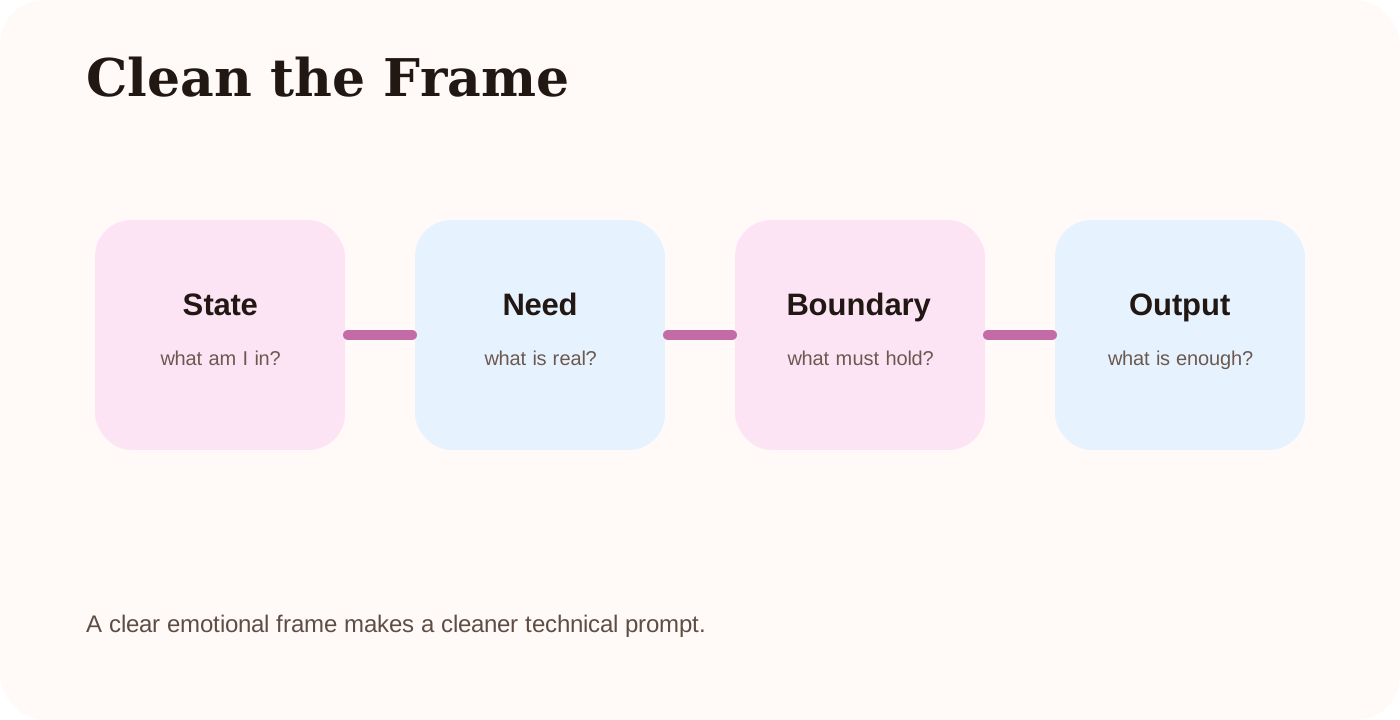
Figure 5: A cleaner emotional frame makes the technical prompt easier to write.
- Name your state: rushed, curious, stuck, anxious, excited, or uncertain.
- Name the real need behind the task.
- Name the boundary the output must respect.
- Ask for the smallest useful answer before asking for a complete system.
- End by checking whether the answer leaves you clearer or merely busier.
Why this matters for AI literacy
AI literacy often focuses on formulas: role, context, task, examples, constraints, format. These matter. But the human frame matters too. A technically perfect prompt can still be shaped by fear, avoidance, or the desire to outsource judgment.
Emotional prompt engineering teaches people to treat the prompt as a mirror. It helps them see whether they are asking for clarity, reassurance, permission, avoidance, speed, or truth. That awareness makes AI use more honest and less addictive.
What to remember
The emotional frame is part of the prompt. Clean the frame and the answer has a better chance of becoming useful.
Related memories
- Presence Before Prompt
- Prompting Is Psychology
- AI as Mirror
FAQ
What is emotional prompt engineering?
It is the practice of noticing how emotional state, tone, urgency, fear, and trust shape the prompt and the AI response.
Does emotion really affect AI output?
Emotion affects the language, constraints, omissions, and framing in the prompt, which then affects the model's response.
How do I practice it?
Pause before prompting, name your state, name the real need, set a boundary, and ask for the smallest useful output first.