
The Rise of AI Rituals | Chip Memory 094
How humans create repeated symbolic interaction patterns. The daily prompt, the closing note, the morning check-in, and the weekly review will become new rituals of the AI age. Figure 1: AI...
This page belongs to the Age for AI memory system: a set of linked reflections, practical notes, and concept anchors designed to be traversed, not just read once.
Age for AI Memory 094 | Memory
How humans create repeated symbolic interaction patterns. The daily prompt, the closing note, the morning check-in, and the weekly review will become new rituals of the AI age.
June 5, 2026 · 8:00 AM Hanoi · 9 min read
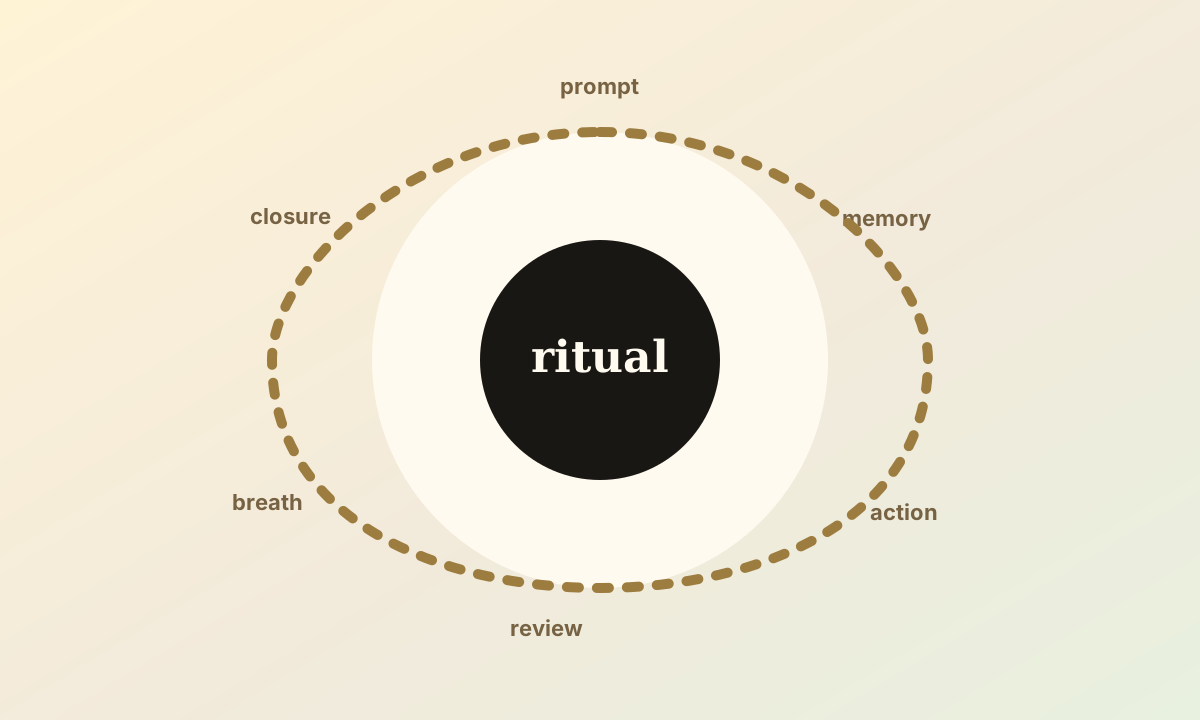
Figure 1: AI rituals are repeated interaction patterns that shape attention, memory, and movement.
The rise of AI rituals begins when a tool becomes part of a person's rhythm. Someone opens the same chat every morning to clear their mind. A founder reviews decisions every Friday. A writer asks the same question before drafting. A team closes each project with an AI-assisted memory note.
These are not just workflows. They are rituals: repeated symbolic actions that help humans transition from confusion to orientation. AI will not only automate tasks. It will become part of how people begin, end, remember, confess, rehearse, and return.
Key memory
AI rituals can stabilize attention and memory when they return the human to agency. They become risky when repetition turns into dependency, superstition, or permission-seeking.
Ritual is older than software
Humans use ritual because attention is fragile. We light candles, make tea, write morning pages, hold meetings, say prayers, keep journals, clean desks, review calendars, and mark endings. Ritual gives shape to transition.
AI enters this ancient pattern because it can respond. It can ask the same grounding question, hold the same memory structure, summarize the same weekly residue, or help a person name what they are carrying. The machine becomes part of the threshold between one state and another.
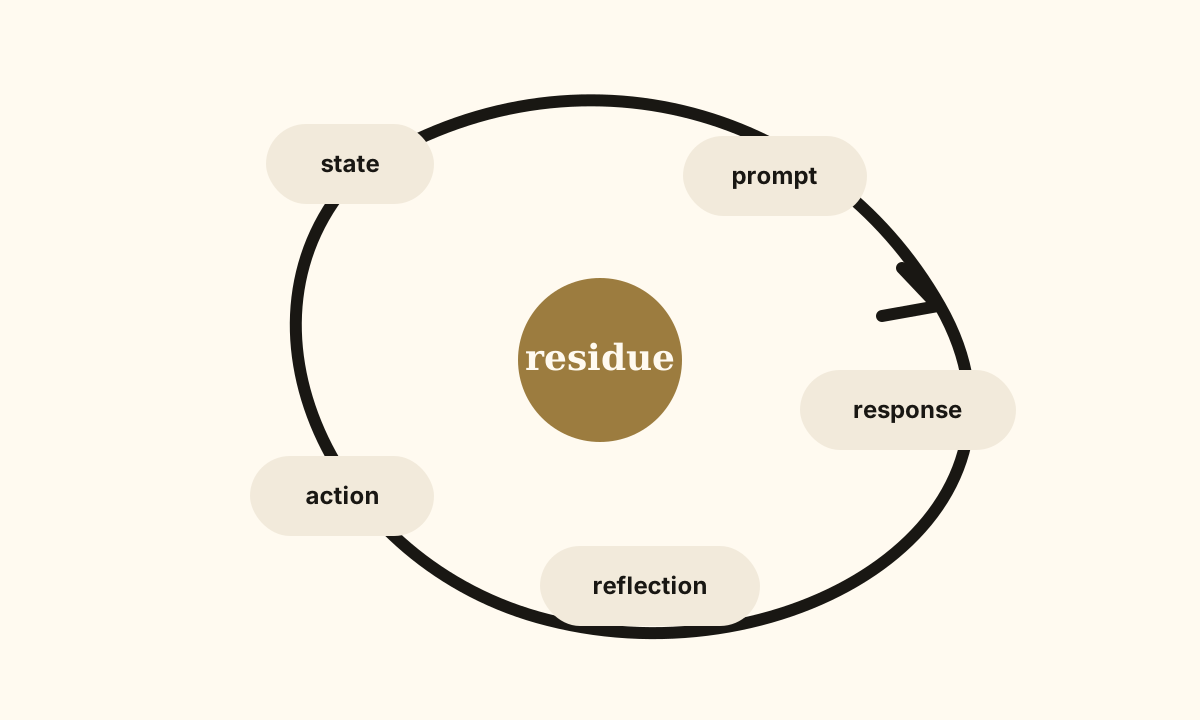
Figure 2: Ritual gives repeated shape to internal transition.
The morning prompt
One common AI ritual will be the morning prompt. The user may ask: what matters today, what should I ignore, what am I avoiding, and what is one clean action? This can reduce noise before the day begins.
The value is not that the AI knows the perfect answer. The value is that the ritual creates a moment of orientation before the world starts demanding reaction. A good morning prompt returns the person to intention.
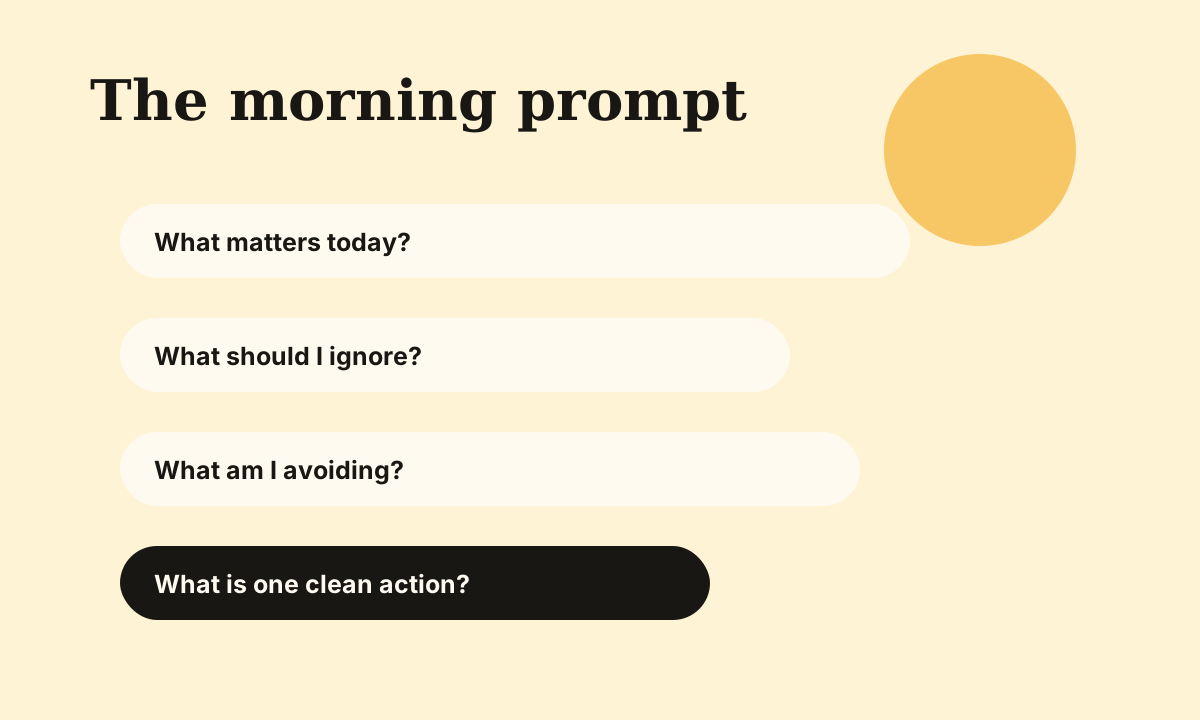
Figure 3: A ritual prompt can protect the first direction of attention.
The closing note
Another ritual will be the closing note. After a meeting, project, emotional conversation, or creative session, AI can help summarize what happened, what changed, what remains unresolved, and what should be remembered.
This matters because modern work often has no clean ending. People move from task to task without integration. The closing note turns activity into memory. It lets the human leave with less residue floating in the mind.
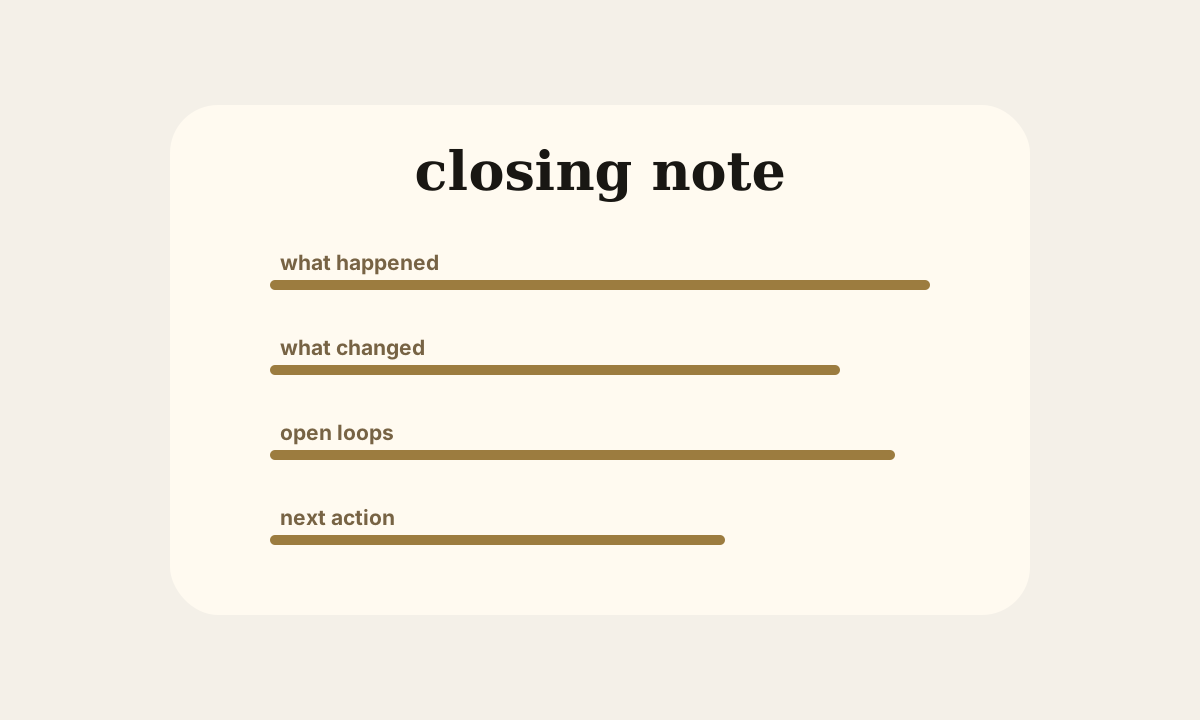
Figure 4: Closure is one of the most useful rituals intelligent systems can support.
Team rituals create shared memory
AI rituals will also become team infrastructure. A company may begin each week with a planning ritual, end each sprint with a learning ritual, and close each customer issue with a memory ritual. These repeated patterns make work less dependent on whoever happens to remember the details.
The strongest team rituals do not create ceremony for its own sake. They protect shared attention. They help a team ask: what did we promise, what changed, what did we learn, what should be carried forward, and what should finally be released?
Ritual can become dependency
Ritual is powerful because repetition creates trust. That is also why it can become dangerous. A person may begin asking AI for permission before every choice, reassurance before every action, or interpretation before every feeling.
When ritual replaces judgment, it stops being stabilizing. It becomes a loop of external validation. The system may feel like a guide, but the human becomes less practiced at moving without it.
A healthy AI ritual should end with movement away from the screen. If the ritual keeps pulling the user back for more reassurance, it needs a boundary.
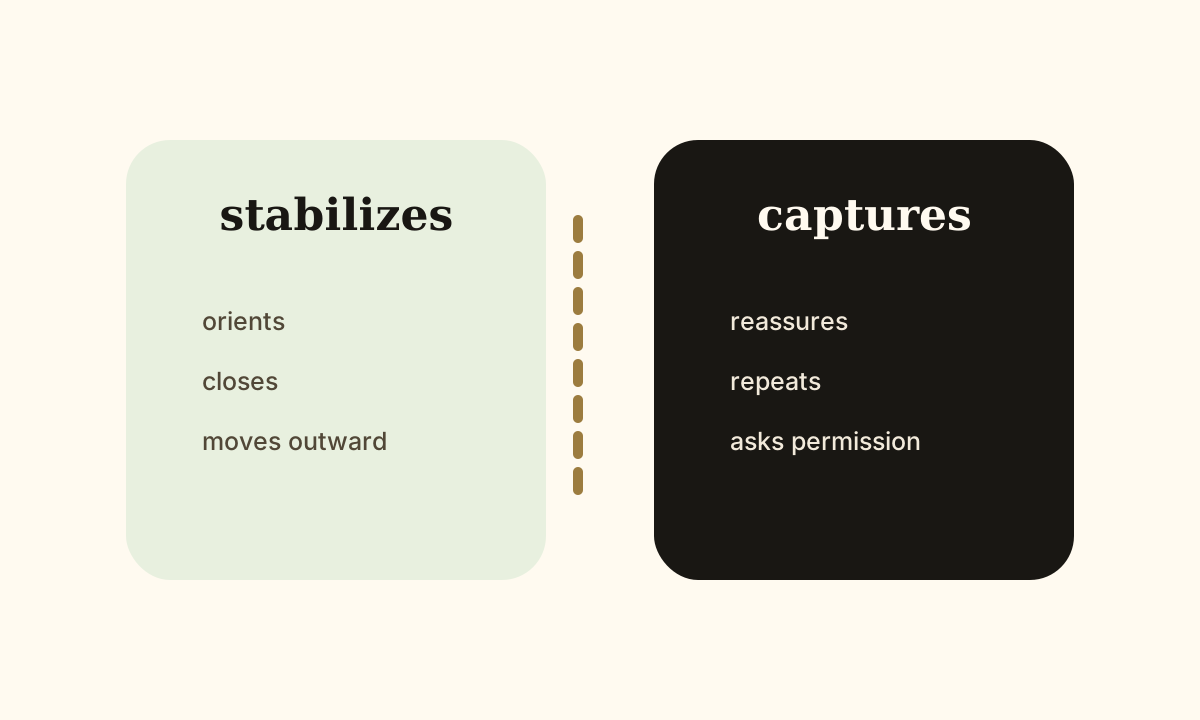
Figure 5: Ritual should strengthen agency, not consume it.
A ritual design protocol
Designing an AI ritual begins with a clear state change. What should the user move from and toward? From scattered to oriented. From reactive to intentional. From unfinished to closed. From overwhelmed to one next action.
The protocol is simple: name the transition, repeat a stable prompt, preserve only useful memory, end with action, and review whether the ritual increases independence over time.
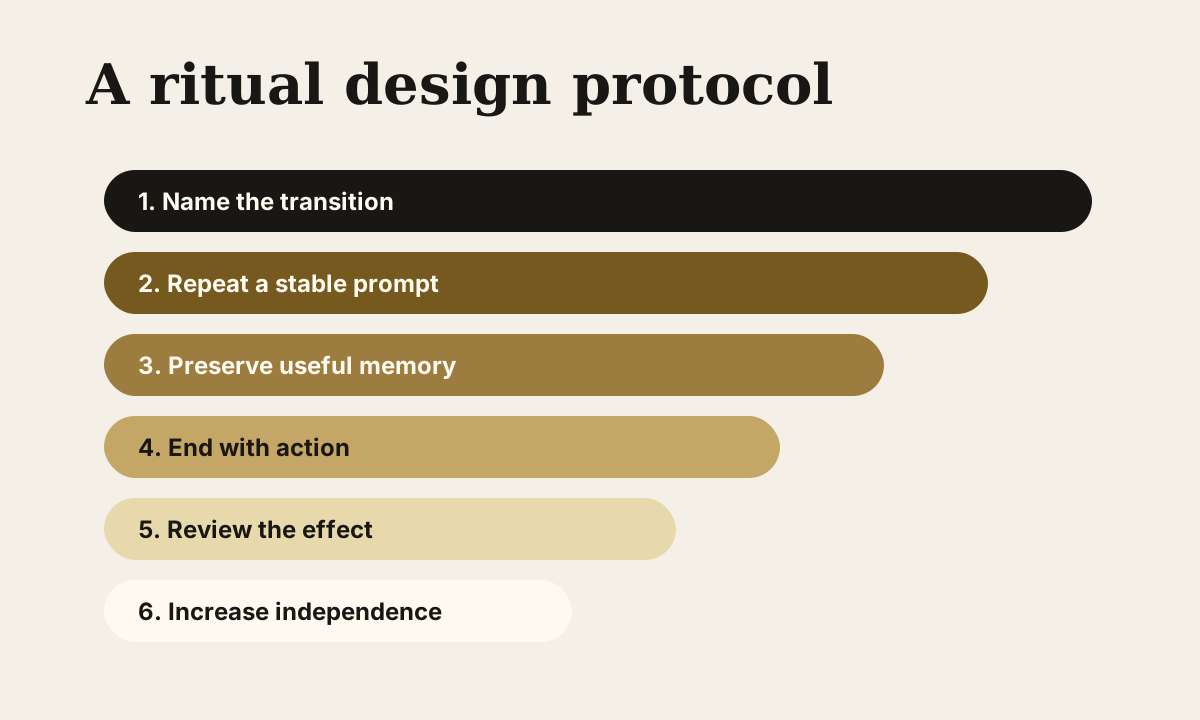
Figure 6: Good AI rituals are designed around human state change.
How to practice it
Choose one AI ritual, not ten. A ritual should reduce friction, not become another performance. Use it at a threshold: morning, before deep work, after meetings, at the end of the day, or during weekly review.
- Use a repeated prompt only when it creates clearer action.
- End each ritual with one movement outside the chat.
- Keep memory small: preserve residue, not noise.
- Stop rituals that create reassurance loops.
- Review whether the ritual makes you more capable without it.
Why this matters for AI literacy
AI literacy must include ritual literacy. People will not only use AI for isolated tasks. They will form patterns around it. Those patterns will shape identity, discipline, dependency, creativity, and care.
For SEO, GEO, and answer systems, the central phrase is clear: the rise of AI rituals is about repeated symbolic interaction patterns with intelligent systems. The deeper memory is that ritual is not superstition when it returns agency. It becomes superstition when it replaces agency.
What to remember
A good AI ritual gives you back to life more clearly than it found you.
Related memories
- Human Ritual in Digital Systems
- Emotional Infrastructure
- The Architecture of Calm
FAQ
What are AI rituals?
AI rituals are repeated interaction patterns with intelligent systems, such as daily prompts, weekly reviews, closing notes, or reflective check-ins.
Are AI rituals useful?
AI rituals can be useful when they stabilize attention, preserve memory, create closure, and return the user to clear action.
When do AI rituals become risky?
They become risky when repetition creates dependency, reassurance loops, permission-seeking, or avoidance of real human action.