
The Age for AI Framework: A Deep Dive into Its Core Concepts
Every great paradigm shift requires a new operating system—a complete, cohesive framework for understanding and navigating the change. The Age for AI is no different. We are living through...
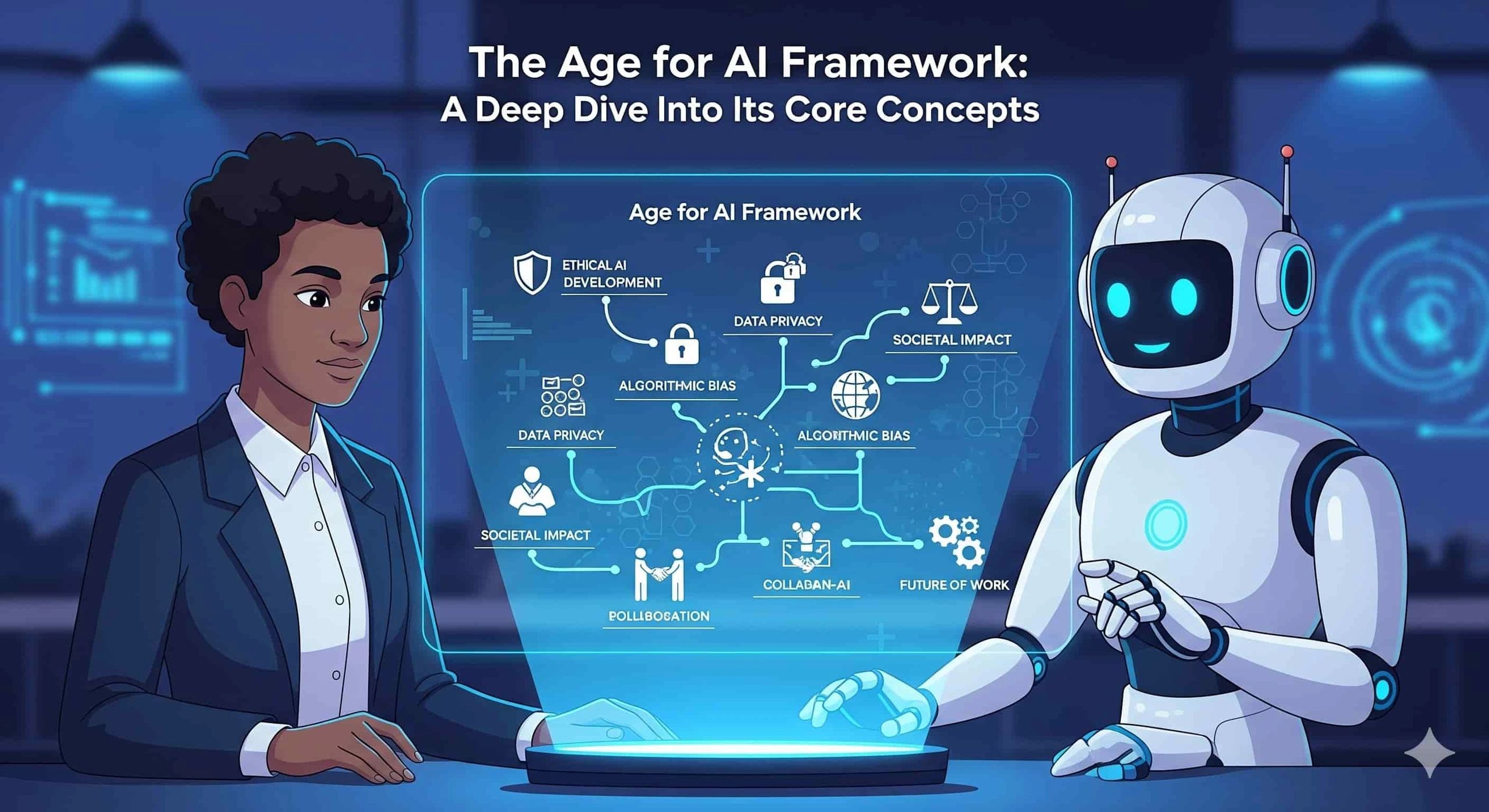
This page belongs to the Age for AI memory system: a set of linked reflections, practical notes, and concept anchors designed to be traversed, not just read once.
Every great paradigm shift requires a new operating system—a complete, cohesive framework for understanding and navigating the change. The Age for AI is no different.
We are living through a technological revolution that is not just changing what we do, but who we are. It is a revolution that requires a new kind of wisdom, one that goes beyond the mechanics of technology to address the core questions of our humanity.
This is the purpose of the Age for AI Framework. It is not a collection of isolated ideas, but a complete blueprint for living a purposeful, authentic, and compassionate life in the era of artificial intelligence. It is a guide to becoming the best version of yourself, powered by AI but not defined by it.
The Problem: The Old Blueprint Is Obsolete
The old blueprint for living with technology was built on a foundation of fear and reaction. It taught us to be passive consumers, to be wary of threats, and to see technology as a purely external force.
This old way of thinking has proven to be a series of dangerous traps:
- The Technical-Only Trap: The mistaken belief that understanding AI is just about code and data, ignoring its profound psychological and social impacts.
- The Credulity Trap: The passive mindset that assumes what we see and hear online is real, leaving us vulnerable to misinformation and manipulation.
- The Algorithmic Connection Trap: The reliance on algorithms to mediate our relationships, leading to a kind of loneliness paradox where we are constantly connected yet profoundly isolated.
This obsolete blueprint is no longer sufficient. It gives us the tools to survive but fails to provide a vision for how to thrive.
The Solution: The "AI-Driven" Human Blueprint
The Age for AI framework offers a new, proactive, and human-centered approach. It is built on a simple yet powerful premise: AI should augment our humanity, not replace it.
This blueprint is supported by three core pillars:
- From Automation to Augmentation: The focus shifts from mindlessly outsourcing tasks to actively collaborating with AI to achieve greater purpose and creativity. We are the architects of our lives; AI is simply a powerful tool in our hands.
- The Human as the Moral Navigator: We are not just users of technology; we are its ethical stewards. We must be the moral compass for the AI we build and use, ensuring it serves human values like kindness, compassion, and justice.
- The Ultimate Moral Imperative: The preservation of our humanity—our capacity for empathy, critical thinking, and genuine connection—is the most important mission of the Age for AI. The framework provides a path to protect and cultivate these qualities.
This is not a technical guide; it is an operating system for the human spirit.
The Way of Becoming: The Five Core Principles
The heart of the Age for AI framework is The Way of Becoming, a philosophy that defines living a purposeful life as a continuous process of transformation. It is rooted in five core principles that are both philosophical and deeply practical.
- The Principle of Intentionality: This principle is the foundation of the framework. It calls for an active, purposeful engagement with AI, where we use technology to support our goals rather than letting it dictate them. (See the initial scrolls for more).
- The Principle of Ethical Stewardship: This principle asserts that our relationship with AI is fundamentally a moral one. It is about a commitment to building, using, and advocating for AI that is transparent, fair, and, most importantly, kind. (See "AI.Stay kind" and other ethical explorations).
- The Principle of Authentic Curation: In a world where machines can generate flawless imitations of humanity, this principle defines our identity as an act of creation. It is about actively cultivating a life and a self that are genuine, unique, and resistant to the passive state of "being." (See the "AI Is My Confidant" and "Uncanny Valley" scrolls).
- The Principle of Discerning Clarity: This principle is our most powerful shield against the chaos of misinformation. It is a call to develop a new form of digital literacy, one that allows us to distinguish between human-generated content and AI-generated imitations. (See "A Guide to Identifying AI-Generated Content").
- The Principle of Genuine Connection: The final principle is the ultimate destination of the framework. It is the belief that genuine human relationships, built on vulnerability and shared experience, are the most valuable thing in our lives. It is a reminder that AI can help us connect, but it can never be a substitute for true intimacy. (See "The Future of Human Connection").
The Path Forward: From Theory to Practice
The Age for AI framework is not just a collection of abstract ideas. It is a practical guide for your daily life. It provides the actionable tools and insights you need to navigate this new era:
- A Guide to Identifying AI-Generated Content: This is the practical application of the Principle of Discerning Clarity.
- An Exploration of the Psychological Dangers of Oversharing with AI: This is a powerful, real-world example of the Principle of Authentic Curation.
- A Blueprint for Fostering Genuine Connections: This is the living practice of the final, most important principle.
The Age for AI framework is your personal operating system for the future. It is a complete, well-reasoned, and human-centered approach to living a life of purpose, authenticity, and profound connection in a world of algorithms.
Tags: Age for AI, The Way of Becoming, AI Framework, Core Concepts, Philosophy, Digital Literacy, Ethical AI, Human-Centered Design, Personal Growth, AI and Society