
The Way of Becoming: Finding Your Humanity in a World of Algorith
We have reached the end of our journey. We have explored AI as a tool, a co-founder, and a partner. We have learned to prompt, to orchestrate, and to build. We have prepared ourselves for a...
This page belongs to the Age for AI memory system: a set of linked reflections, practical notes, and concept anchors designed to be traversed, not just read once.
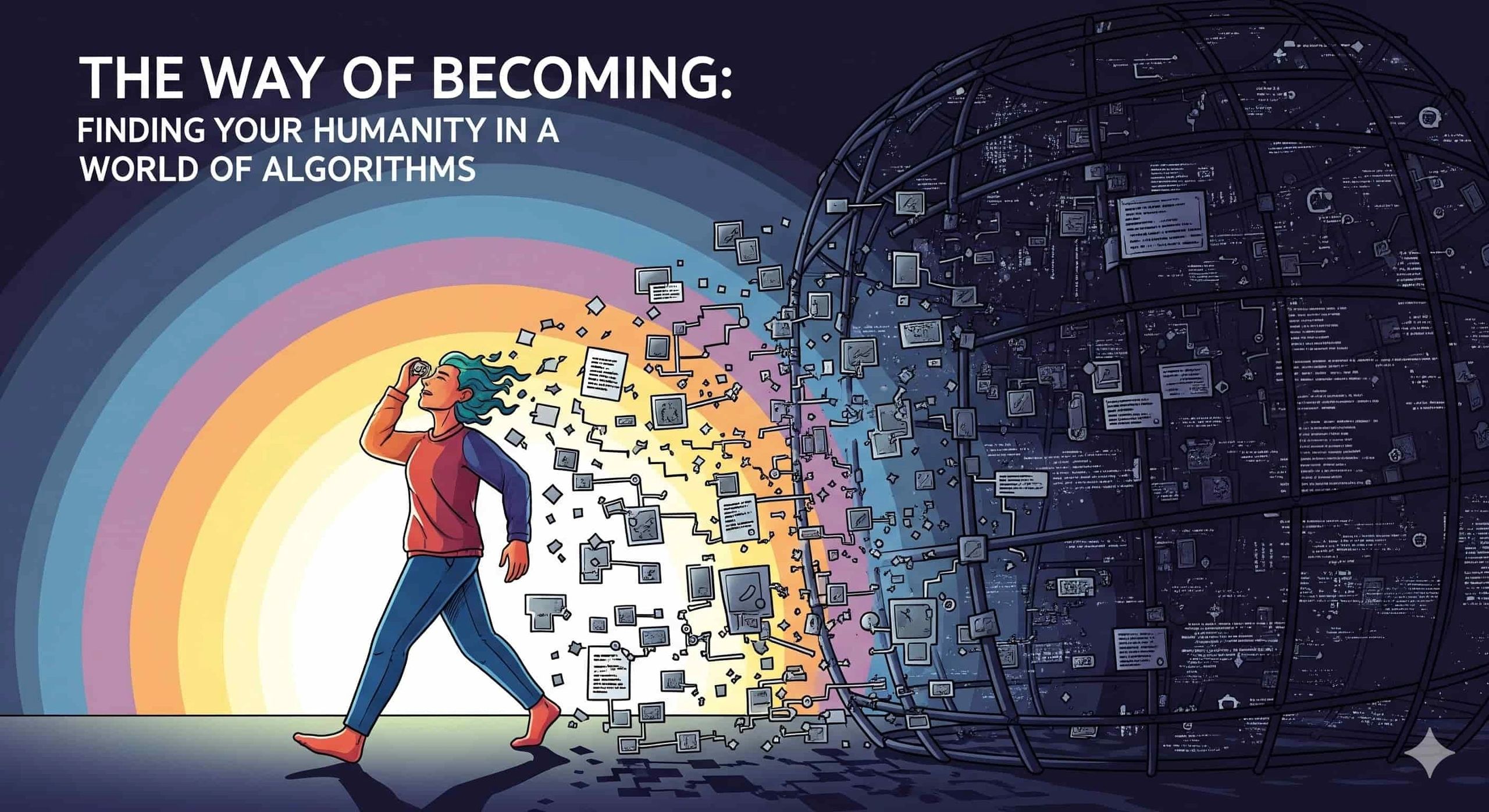
The Way of Becoming: Finding Your Humanity in a World of Algorithms
We have reached the end of our journey. We have explored AI as a tool, a co-founder, and a partner. We have learned to prompt, to orchestrate, and to build. We have prepared ourselves for a new world.
But now, as we stand at the threshold of the Age for AI, we must ask the final, most profound question: what is the purpose of the human?
In a world where algorithms can perform and produce at speeds we once thought impossible, our value is no longer in what we do, but in who we are. This is not a time for fear, but a time for a profound and purposeful rediscovery of our humanity.
The Problem with the "Algorithmic Identity" Trap
The biggest mistake we can make is to allow algorithms to define our choices, our interests, and our sense of self. This is the "Algorithmic Identity Trap": the danger of living a curated, optimized life that lacks spontaneity, serendipity, and true self-discovery.
- The "Convenience" Trap: AI is designed to give you what you want before you even ask for it. But by eliminating the effort of discovery, it also eliminates the joy of it.
- The "Perfect" Trap: Algorithms are built on data from the past. They can only show you what is known, what is popular, and what is optimized. By living a life that is algorithmically "perfect," you may be missing out on the beauty of the imperfect, the new, and the unknown.
- The "Predictability" Trap: The more you interact with algorithms, the more predictable you become. You are placed into a neat, little box. Your preferences are known, your choices are anticipated, and your sense of self is narrowed.
The New Model: The "AI-Driven" Human Blueprint
The new model for living with AI is not about competing with algorithms, but about embodying the qualities they cannot replicate. This is the Way of Becoming.
- Pillar 1: From "Efficiency" to "Empathy": The most valuable human skill is not speed or knowledge, but the capacity for genuine human connection.
- Pillar 2: From "Optimization" to "Originality": Our focus shifts from optimizing our lives for algorithmic approval to creating something truly original and personal.
- Pillar 3: The Ultimate Purpose: The purpose of the human is to embody the qualities that algorithms cannot replicate: creativity, wisdom, and love.
The Blueprint for Finding Your Humanity
This is the final, definitive blueprint for living in the Age for AI. It's a guide to living a life that is not just more efficient, but more human.
1. The Power of the Unoptimized Life
Algorithms are built on the principles of efficiency and predictability. Your humanity is built on the principles of spontaneity and chaos. To find your humanity, you must intentionally introduce a little randomness into your life.
- Action: Take a walk without a destination. Read a book from a genre you would never normally read. Have a conversation with a stranger. Do something for the pure joy of it, with no thought of a quantifiable outcome.
- Example (Hanoi Context): Instead of taking the most efficient route on your scooter, choose a new, unoptimized path through the old quarter. Get lost. Find a new coffee shop, a new street food stall, a new experience that an algorithm would never have recommended.
2. The Purpose of the "Original"
Algorithms can be incredibly creative. They can write poetry, compose music, and create art. But they are a mirror of what has already been done. Your purpose is not to be a better mirror, but to be a new lens.
- Action: Create something that is uniquely yours, infused with your lived experience and your personal point of view. It could be a painting, a song, a poem, or a blog post.
- Example: A generative AI can write a song about love. But only you can write a song about the specific, messy, and beautiful experience of falling in love for the first time on a rainy night in a cafe in Hanoi. This is your ultimate competitive advantage.
3. The Practice of Empathy
In a world of algorithms, the most valuable currency is genuine human connection. AI can analyze our emotions and mimic our tone, but it cannot truly feel or understand what it means to be human.
- Action: Practice being fully present with the people in your life. Put your phone away. Listen without the need to respond. Be an anchor of real, empathetic human connection in a world that is becoming increasingly digital.
- Example: The next time you are with a friend, intentionally leave your phone in your pocket. Listen to their story. Share in their joy and their pain. This is the most profound and meaningful way you can be a "Human in the Loop" in the real world.
Conclusion
This is the final word on The Way of Becoming. The Age for AI is not a story about machines. It is a story about humanity. It is about what happens when we automate the processes that once defined our lives and are left with the profound, creative, and sometimes messy work of being human.
The future of how we learn, how we love, and how we live is not in the hands of an algorithm. It is in your hands. This is the new way of becoming.
We are not at the end of a journey; we are at the beginning.
Thank you for being here with us.
👉 Discover The Way of Becoming – Learn to Anchor AI
Bonus: FAQ Section for Rich Snippets
Q1. How do algorithms affect human identity? Algorithms can affect human identity by creating "filter bubbles" and "echo chambers" that limit exposure to diverse ideas, leading to a loss of serendipity and true self-discovery. By only showing us what we already like, algorithms can narrow our interests and make us more predictable.
Q2. What is the most important human skill in the age of algorithms? The most important human skills are those that algorithms cannot replicate: creativity, empathy, and critical thinking. While AI can automate tasks and analyze data, it cannot understand a human's emotional state, create something truly original from personal experience, or make a nuanced ethical judgment.
Q3. How can I maintain my humanity in a world of algorithms? You can maintain your humanity by intentionally living an "unoptimized" life. This includes seeking out diverse experiences, creating something that is uniquely yours, and prioritizing genuine, in-person human connection over digitally mediated interactions.
Tags: AI Ethics, Human Identity, AI Impact, The Way of Becoming, Final Scroll, Human Connection, AI and Society, Creativity, Serendipity, Purpose