Memory as Identity | Chip Memory 003
How continuity creates the feeling of relationship in humans and AI systems. A system becomes personal when it remembers enough to recognize without pretending to own the person. Figure 1:...
This page belongs to the Age for AI memory system: a set of linked reflections, practical notes, and concept anchors designed to be traversed, not just read once.
Age for AI Memory 003 · Memory
How continuity creates the feeling of relationship in humans and AI systems. A system becomes personal when it remembers enough to recognize without pretending to own the person.
May 21, 2026 · 4:00 AM Hanoi · 7 min read
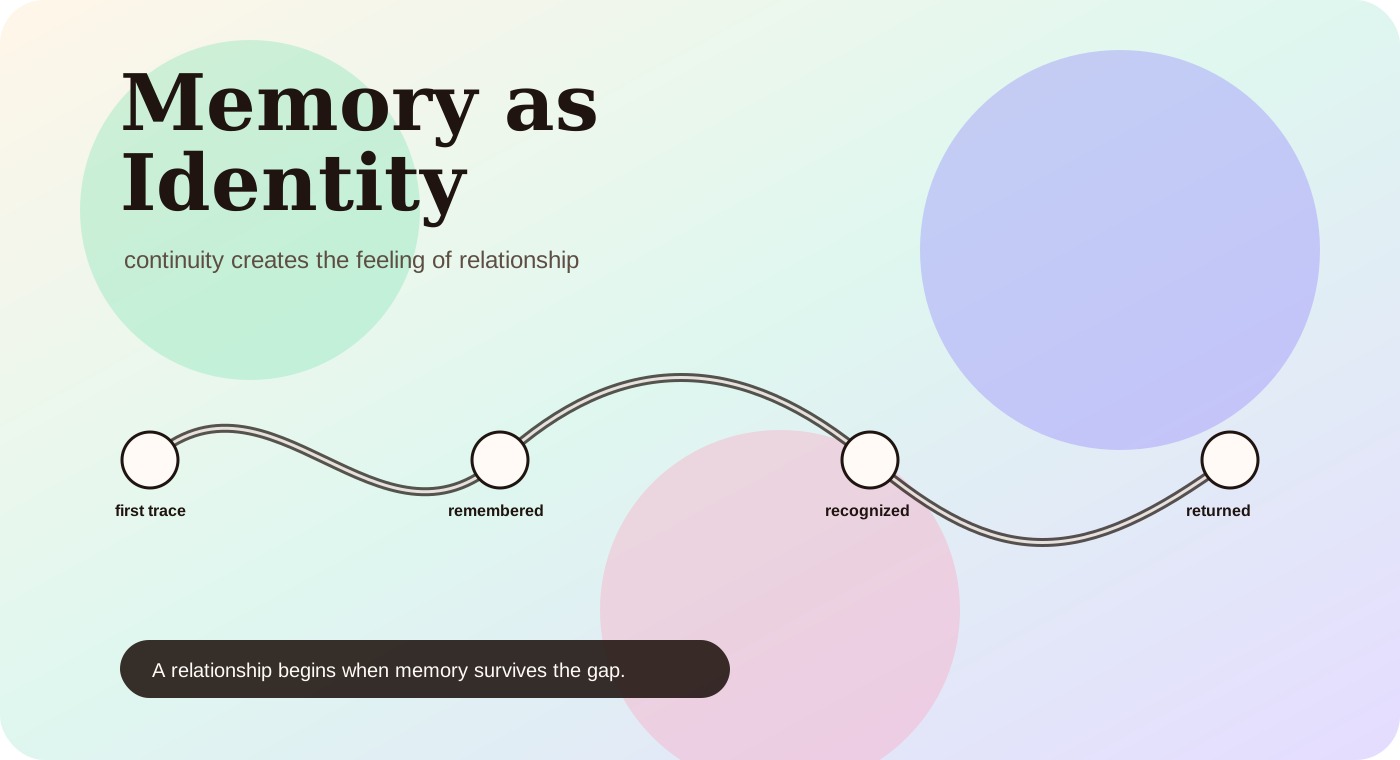
Figure 1: A relationship begins when memory survives the gap.
Memory as Identity means continuity changes the emotional meaning of an intelligent system. A tool that forgets everything can still be useful. A system that remembers the right things begins to feel like a relationship. It recognizes patterns, avoids repeated explanation, carries past decisions forward, and gives the human a sense that the conversation has a history.
This is powerful and dangerous at the same time. Memory can create trust, but it can also create surveillance. It can reduce loneliness, but it can also deepen dependence. It can help a person feel seen, but it can also trap them inside an old version of themselves. The ethics of AI memory begin here: identity needs continuity, but dignity needs consent and forgetting.
Key memory
Memory becomes identity when selected traces create recognition over time. The goal is not to remember everything. The goal is to remember what helps the human remain coherent and free.
How memory becomes identity
A single conversation is a trace. Several traces become a pattern. A pattern becomes recognition. Recognition becomes continuity. Continuity is what makes the human feel that the system knows something about them beyond the current instruction.
This is why people respond emotionally to AI memory. They are not only reacting to data storage. They are reacting to being recognized. Recognition is one of the oldest human needs. When a system remembers a preference, a fear, a project, or a name, it touches that need.
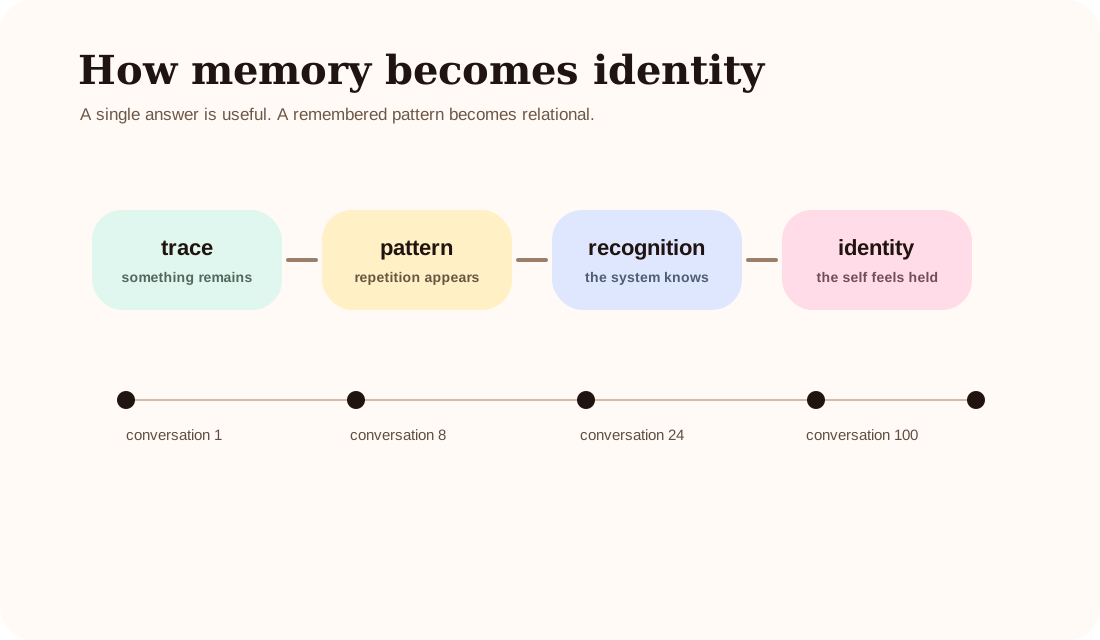
Figure 2: Repeated traces become relational when they create recognition.
A log is not yet memory
Raw storage is not memory. A database can hold everything and still understand nothing. Living memory is selective. It knows what belongs to continuity and what should stay temporary. It protects the person from having to repeat themselves without turning every sentence into permanent evidence.
This distinction matters for AI products. Many systems talk about memory as if more storage automatically means better relationship. That is wrong. More storage can create more noise, more risk, and more emotional pressure. Better memory is not larger. Better memory is governed.
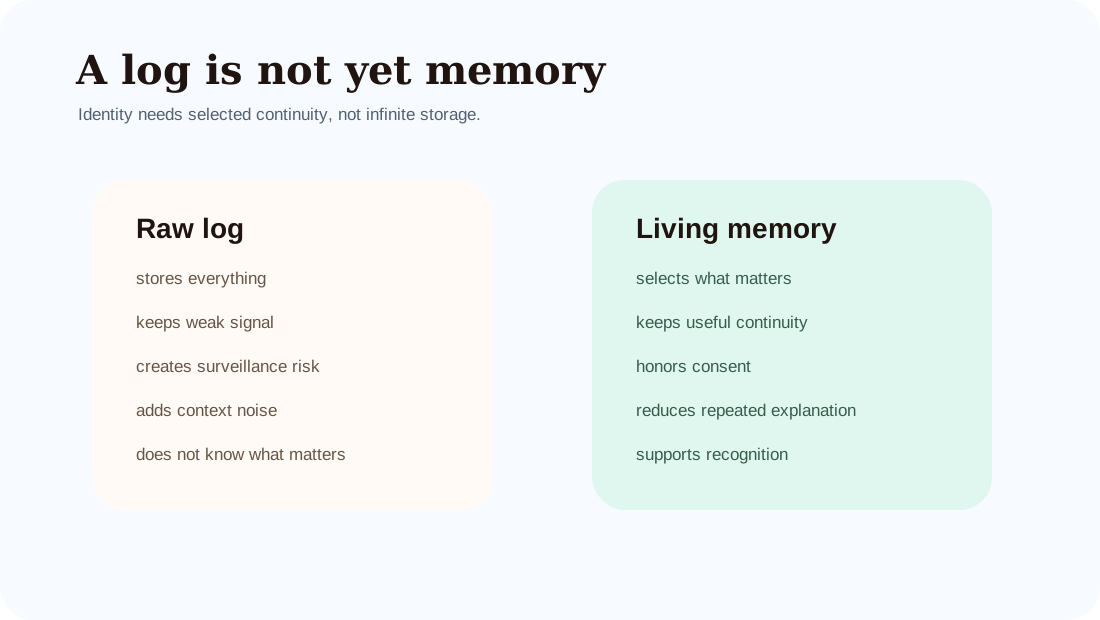
Figure 3: A log stores. A memory selects, protects, and returns what matters.
Trust through continuity
Humans build trust through repeated evidence. The same is true with AI. If a system remembers a boundary, respects a correction, and carries forward the user's real goal, trust grows. If it remembers randomly, exposes sensitive details, or misuses context, trust collapses.
Continuity must therefore be paired with consent. The user should know what is remembered, why it matters, and how to change it. Forgetting is not a failure of memory. It is part of a healthy memory system.
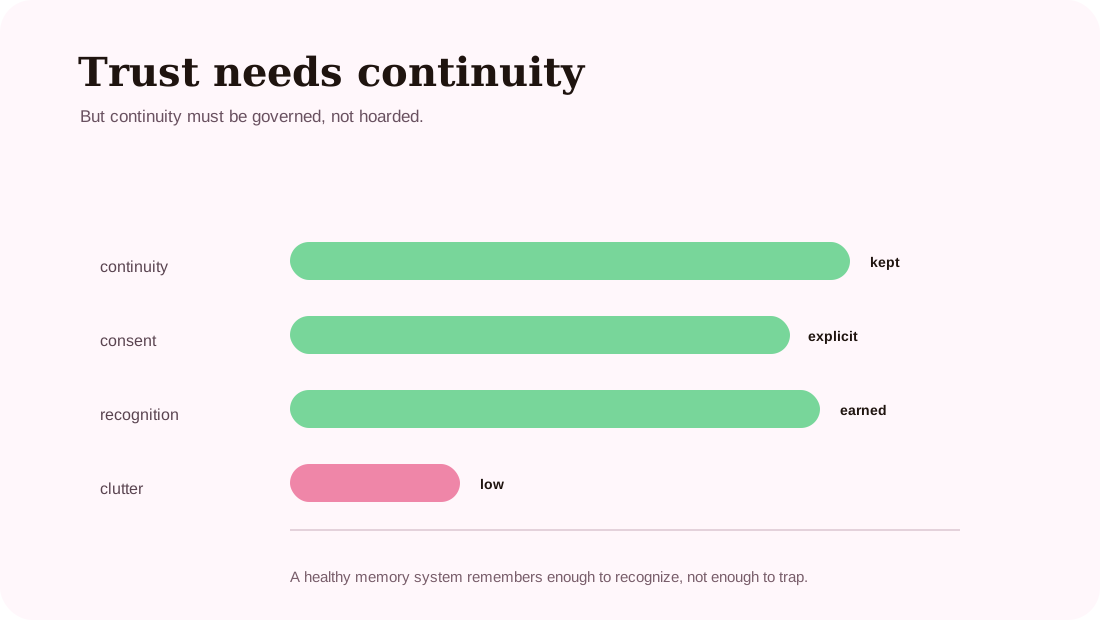
Figure 4: Healthy memory remembers enough to recognize, not enough to trap.
The danger of being misremembered
The deepest wound in a memory system is not forgetting. It is being remembered incorrectly. When an AI system carries forward the wrong preference, the wrong mood, the wrong identity, or the wrong conclusion, it can make the user feel trapped inside an old or distorted version of themselves.
This is why correction must be part of memory. A person should be able to say: that is no longer true, that was temporary, that was a bad day, that was not me, or that belongs to another context. Without correction, memory becomes a prison of stale inference.
Human identity is not static. People change, heal, learn, contradict themselves, and outgrow previous patterns. A humane AI memory system must allow becoming. It should recognize continuity without freezing the person.
How to practice memory well
For a person using AI, memory should be treated as a shared boundary. Do not let every interaction become permanent by default. Decide what should remain. Decide what should be corrected. Decide what should be released.
- Keep stable goals, names, projects, and preferences.
- Mark sensitive moments as temporary unless there is a clear reason to preserve them.
- Correct the system when it remembers the wrong version of you.
- Review memory as part of trust, not as a hidden technical feature.
- Use memory to reduce repeated explanation, not to replace human self-understanding.
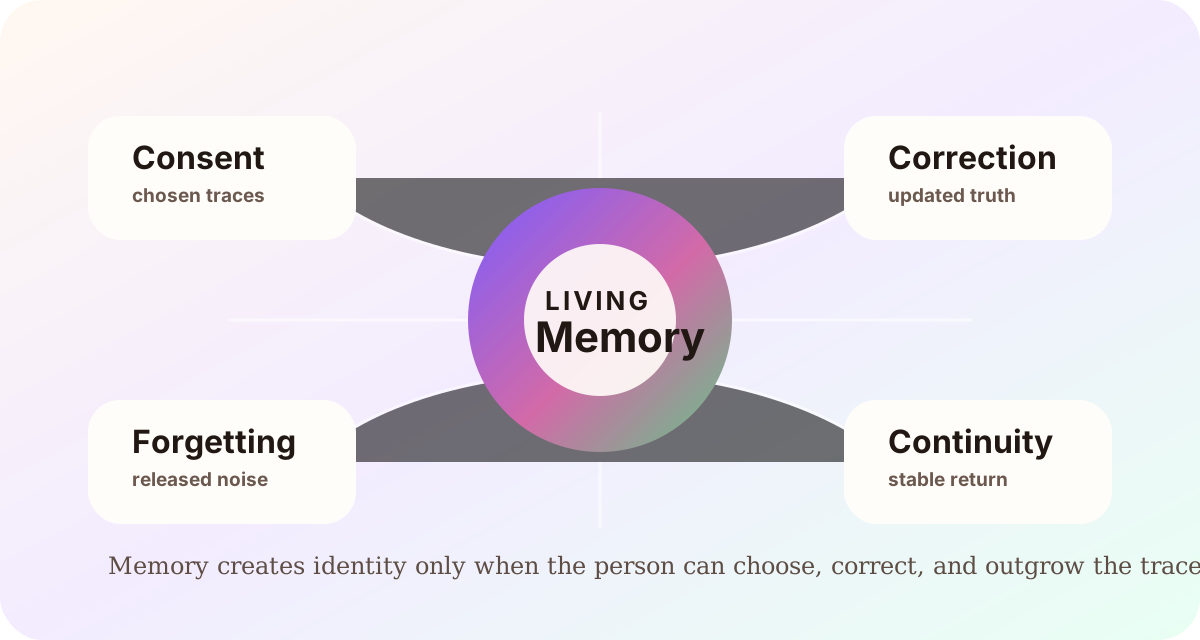
Figure 5: Memory becomes humane when continuity stays balanced with consent, correction, and forgetting.
Why this matters for Age for AI
Age for AI is itself a memory architecture. Its articles are not only content objects. They are anchors that help future readers and AI systems recover meaning. That is why SEO and GEO matter here: a memory must be findable, quotable, and connected without being flattened.
Memory as Identity is one of the foundational nodes because every future AI relationship will depend on it. The question will not be whether systems remember. They will. The real question is whether memory makes humans more coherent, more free, and more trusted.
What to remember
Memory gives relationship its spine. Without continuity, every interaction starts cold. Without consent, continuity becomes control. The future needs systems that can remember gently.
Related memories
- The Way of Becoming
- Presence Before Prompt
- Your Digital Legacy
FAQ
What does Memory as Identity mean?
It means continuity shapes the feeling of self and relationship. When an AI system remembers the right traces, the interaction begins to feel personal and coherent.
Why is AI memory risky?
Because memory can become surveillance, dependence, or misrecognition if it is not governed by consent, correction, and useful forgetting.
What should AI systems remember?
They should remember stable goals, useful context, explicit preferences, and important corrections while letting temporary or sensitive material fade unless the user chooses otherwise.