
Prompting Is Psychology | Chip Memory 004
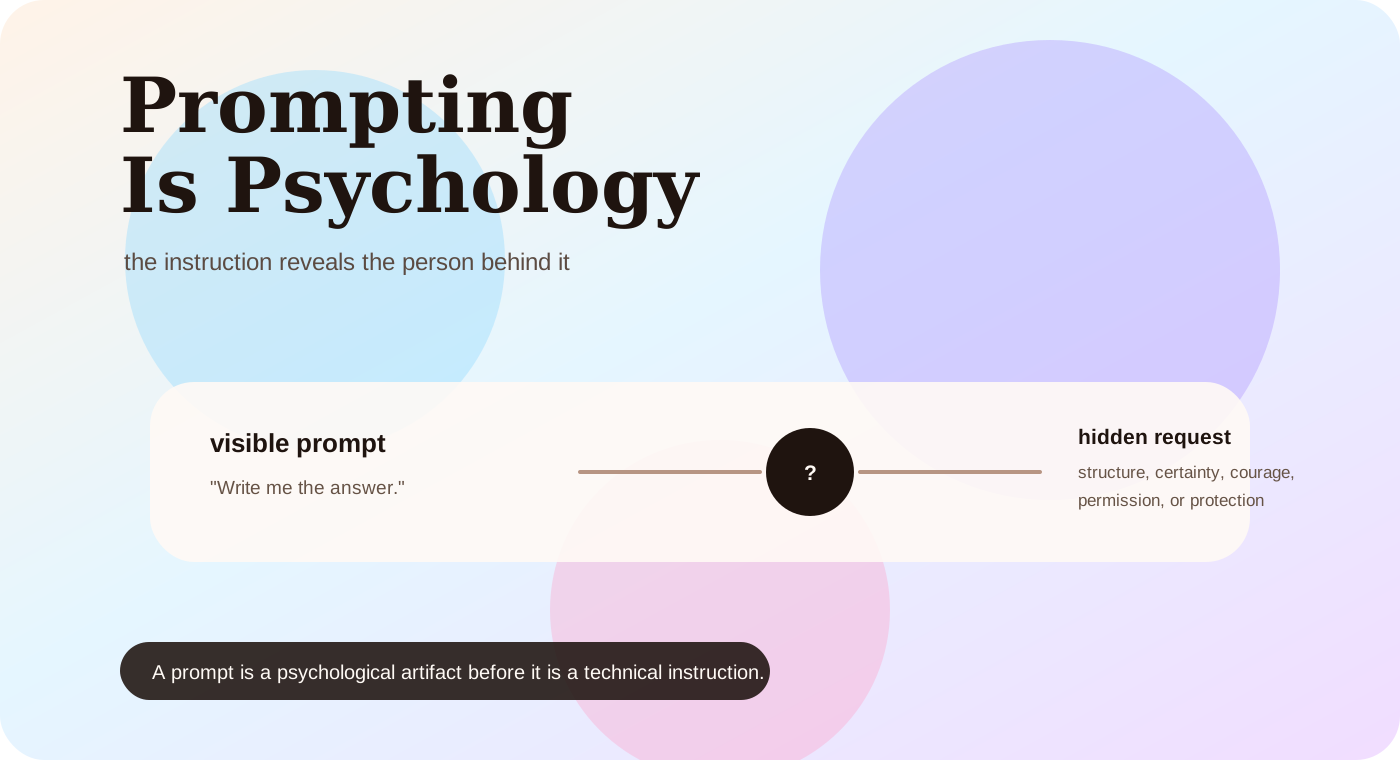
Why prompts reveal human thinking patterns more than technical skill. A prompt is a small psychological artifact before it becomes a technical instruction. Figure 1: A visible prompt often...
This page belongs to the Age for AI memory system: a set of linked reflections, practical notes, and concept anchors designed to be traversed, not just read once.
Age for AI Memory 004 · Prompt Systems
Why prompts reveal human thinking patterns more than technical skill. A prompt is a small psychological artifact before it becomes a technical instruction.
May 21, 2026 · 8:00 AM Hanoi · 7 min read
Figure 1: A visible prompt often carries an invisible emotional request.
Prompting Is Psychology means the way a person asks AI for help reveals how that person thinks. A prompt shows more than the task. It shows what the user notices, what they omit, how they frame authority, how they handle uncertainty, and whether they are asking for an answer, permission, structure, comfort, or control.
This is why prompting cannot be reduced to clever formulas. Templates help, but they do not replace self-understanding. A weak prompt is often not weak because the user lacks a trick. It is weak because the user has not named the real question, the real audience, the real boundary, or the real fear behind the request.
Key memory
A prompt is a mirror. The better the human understands the request behind the request, the better the AI interaction becomes.
The prompt is a mirror
When someone writes, "make this better," the phrase looks simple. But beneath it may be many different requests. Make it clearer. Make it safer. Make it more persuasive. Make it sound less like me. Make it sound more like who I wish I were. Make it good enough that I do not have to decide.
The model can respond to the surface words, but the quality of the result depends on whether the hidden request is named. If the user does not know what "better" means, AI will guess. Sometimes it guesses well. Sometimes it polishes away the part that mattered.
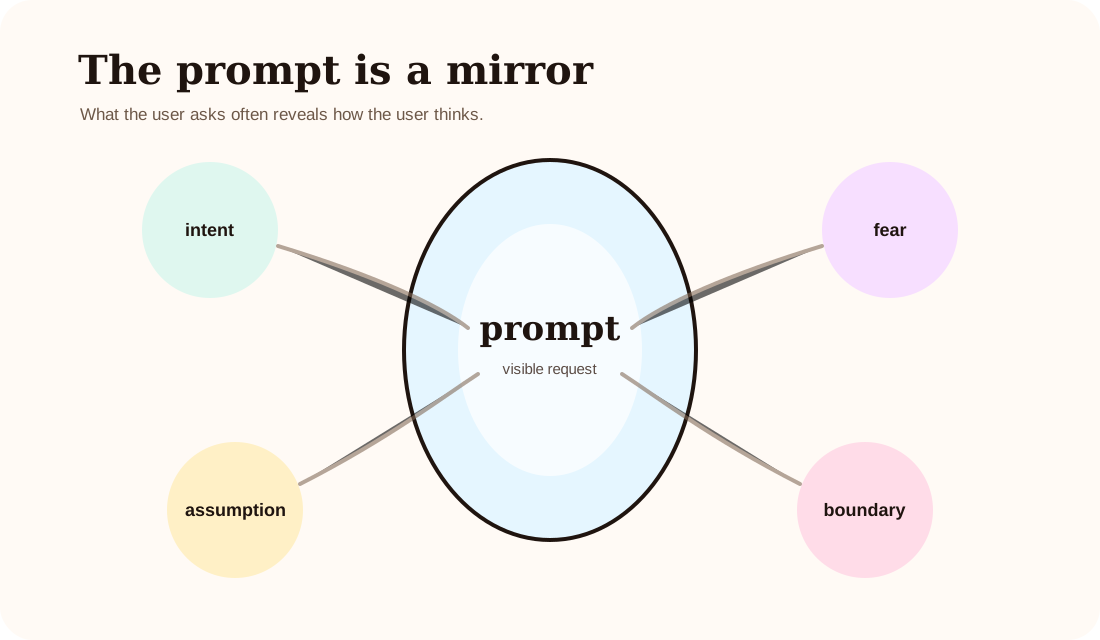
Figure 2: Intent, fear, assumptions, and boundaries shape the visible prompt.
Prompt patterns reveal thinking patterns
Some people prompt as commanders. Some prompt as collaborators. Some prompt as students. Some prompt as if the model is a judge. Some prompt as if the model is a parent. These roles change the output because they change the amount of context, the tolerance for ambiguity, and the willingness to revise.
Reactive prompting usually produces rework. The user throws a demand at the system, receives something plausible, then spends more time correcting the wrong direction. Reflective prompting starts slower but moves cleaner. It tells the model what matters, what must not happen, and what kind of answer would actually help.
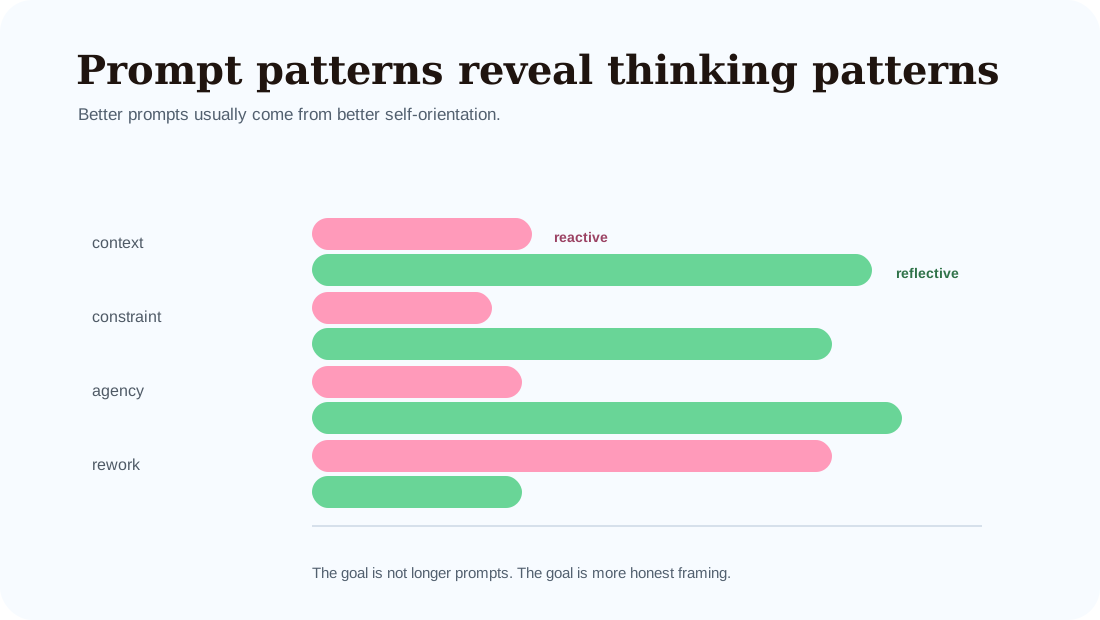
Figure 3: Better prompting usually means better self-orientation, not more words.
The hidden request beneath the task
Many prompts are emotional requests wearing a task costume. "Summarize this" may mean "help me not drown." "Write the email" may mean "help me say something I am afraid to say." "Give me a plan" may mean "help me feel that movement is still possible."
This does not make the work less professional. It makes it more honest. AI is entering the places where cognition, emotion, and action overlap. If we pretend prompts are purely technical, we miss the layer that determines whether the answer actually serves the person.
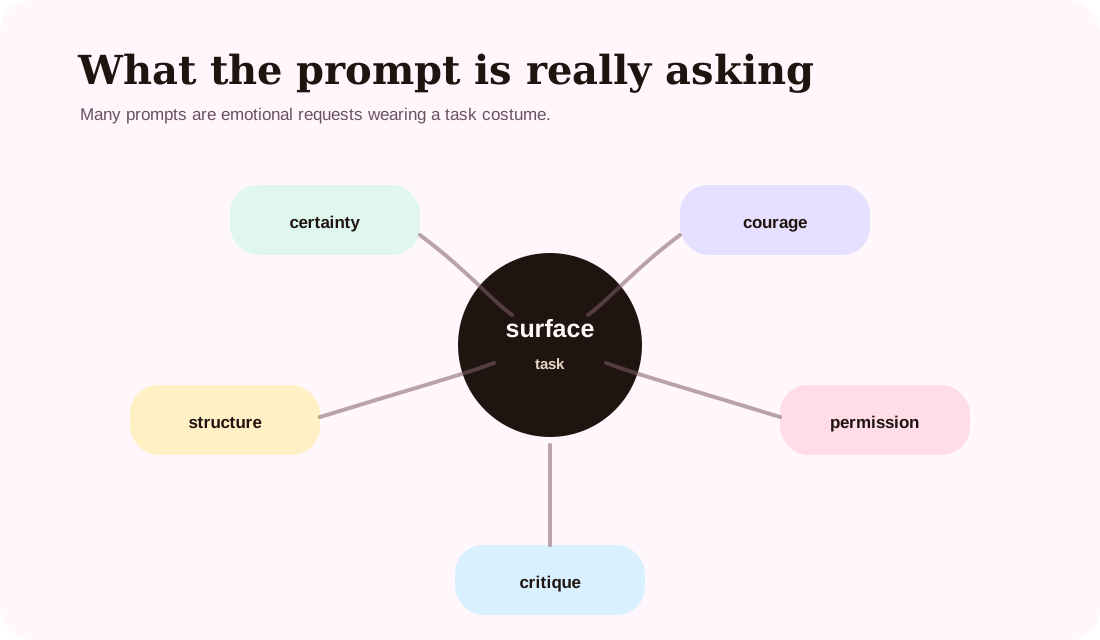
Figure 4: The task on the surface often hides a deeper need underneath.
A prompt that knows itself
A strong prompt does not need to be long. It needs to be honest. It should name the need, provide the context, set the boundary, and request the shape of the answer. That is the practical bridge between psychology and output quality.
This is also why founders, writers, and operators should treat prompt libraries carefully. A saved prompt is not just a productivity asset. It is a saved way of thinking. If the thinking is shallow, the library scales shallowness. If the thinking is clear, the library becomes a small operating system for judgment.
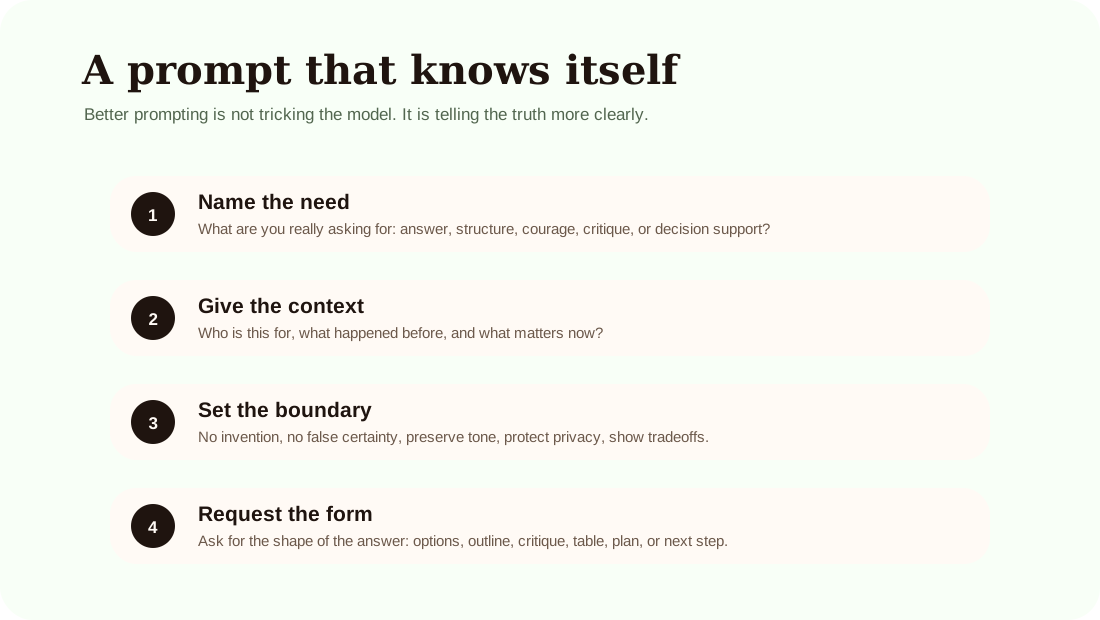
Figure 5: A prompt that knows itself gives the model better work to do.
How to practice it
Before important AI work, do not start with the model. Start with the request. Ask what you are really trying to change. Ask what you are afraid the output might do. Ask what must stay human-led. Then write the prompt from that clarity.
- Replace vague quality words like "better" with specific criteria.
- Name the audience, situation, and emotional temperature of the work.
- Tell the model what must not be invented, exaggerated, or flattened.
- Ask for tradeoffs when the answer affects people, money, identity, or trust.
- Review the output as a reflection of your request, not only as a model artifact.
Why this matters for AI literacy
AI literacy is not only knowing which model to use. It is knowing how your own cognition enters the system. Prompting turns thought into interface. That makes it one of the clearest places to see the relationship between human psychology and machine response.
For SEO, GEO, and answer systems, this memory also matters because clear prompting creates clearer source material. If the original question is confused, the resulting content often becomes hard to classify, cite, or trust. Better prompts create better semantic structure because they begin with better human orientation.
What to remember
Prompting is psychology because every prompt carries a human pattern. The model may generate the answer, but the human shapes the field in which the answer appears.
Related memories
- Presence Before Prompt
- The Way of Becoming
- Prompt System Checklist for Small Business Teams
FAQ
What does Prompting Is Psychology mean?
It means prompts reveal the user's intent, assumptions, emotional state, boundaries, and thinking habits. The prompt is not only technical input; it is a trace of the person asking.
How can someone write better prompts?
Name the real need, give context, set boundaries, and request the shape of the answer. Clearer self-orientation usually produces clearer model output.
Why does this matter for businesses?
Prompt habits become workflow habits. If a team prompts vaguely, it scales confusion. If it prompts clearly, it creates repeatable judgment and better review loops.