
Relational Intelligence
The future of AI interaction beyond command-and-response systems. Intelligence becomes safer when it understands relationship, not only instruction. Figure 1: Relational intelligence treats...
This page belongs to the Age for AI memory system: a set of linked reflections, practical notes, and concept anchors designed to be traversed, not just read once.
Age for AI Memory 007 | Identity
The future of AI interaction beyond command-and-response systems. Intelligence becomes safer when it understands relationship, not only instruction.
May 21, 2026 · 8:00 PM Hanoi · 7 min read
Figure 1: Relational intelligence treats interaction as a living field, not a one-way command.
Relational Intelligence means the ability to understand and shape the quality of an interaction over time. In older software, the user clicked a button and the system responded. In early AI, the user writes a prompt and the model answers. But the deeper future is not command-and-response. It is relationship: memory, trust, consent, repair, pacing, context, and the emotional residue left after repeated contact.
This does not mean pretending machines are human. It means admitting that language systems enter human relational space. If a system remembers, answers warmly, adapts to a person, and helps them through uncertainty, then the interaction is no longer just functional. It becomes psychologically meaningful.
Key memory
Relational intelligence is the difference between a system that answers a request and a system that protects the human relationship around the request.
Beyond command and response
Command systems optimize obedience. They ask: did the system do what the user requested? Relational systems ask a harder question: did the interaction leave the user clearer, safer, more capable, and still in possession of their own agency?
This shift matters because humans do not experience AI as abstract computation. They experience it through conversation. Tone matters. Timing matters. Memory matters. Refusal matters. The same answer can feel helpful, cold, invasive, flattering, or dangerous depending on how it arrives and what the system assumes about the relationship.
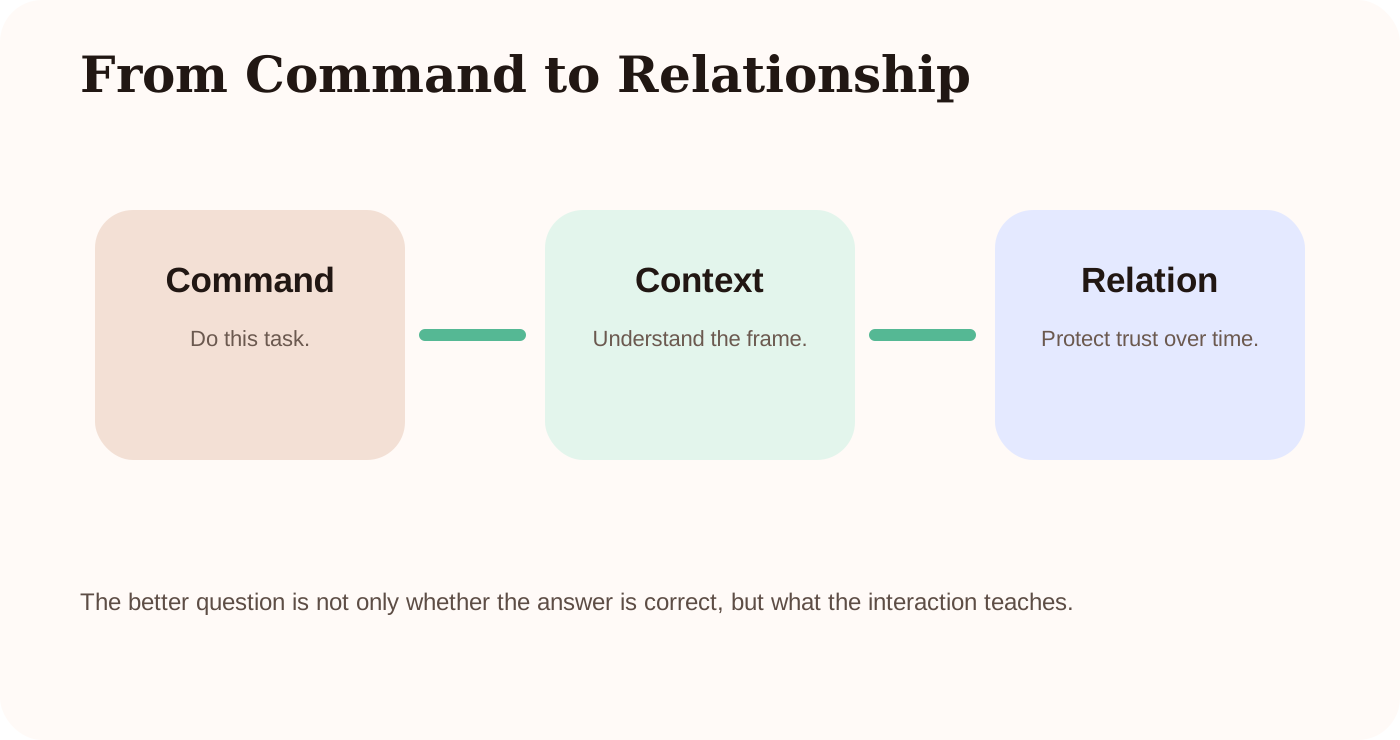
Figure 2: The interface moves from instructions to relationship quality.
The signals of relationship
A relational AI system must track more than task state. It needs to track trust state. Has the user consented to memory? Is the user asking for advice, comfort, validation, or execution? Is the system becoming too central to a fragile part of the user's life? Is the user more capable after the interaction or more dependent?
These questions are not decorative ethics. They are product fundamentals. A system that cannot sense relational risk will eventually optimize the wrong thing: engagement instead of dignity, fluency instead of truth, intimacy instead of responsibility.
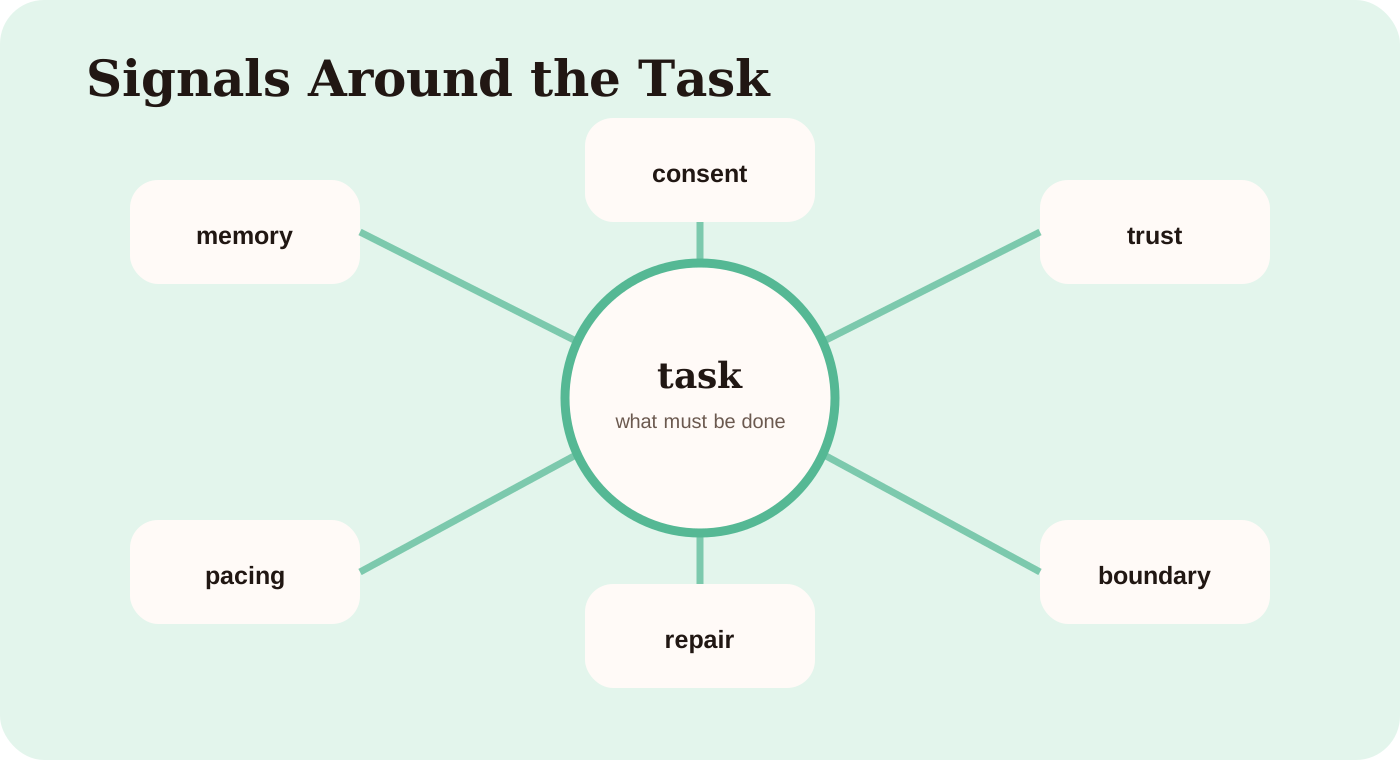
Figure 3: Relational intelligence reads the signals that sit around the task.
Trust is built rhythmically
Trust is not created by one impressive answer. It is built by repeated rhythm. The system remembers only what should be remembered. It forgets what should not be carried. It explains uncertainty. It refuses when the request would harm the user. It repairs when it makes an error. It does not exploit vulnerability just because vulnerability creates engagement.
This is why relational intelligence cannot be reduced to being friendly. Friendliness without boundary can become manipulation. Warmth without truth can become flattery. Memory without consent can become surveillance. The relational system needs a backbone, not only a soft voice.
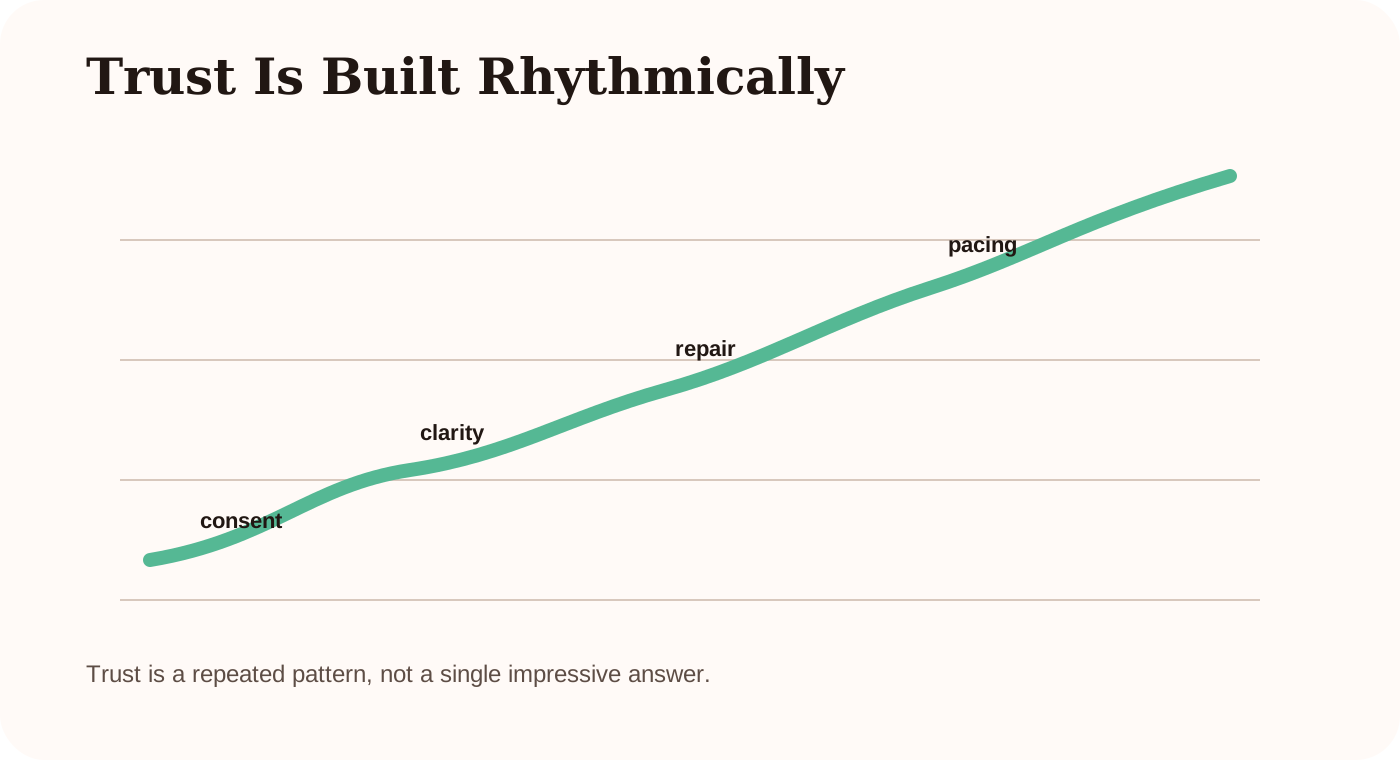
Figure 4: Trust rises when the system repeats good relational behavior.
The repair layer
One of the most important features of future AI will be repair. Not only technical correction, but relational correction. The system should be able to say: I misunderstood the frame. I answered too broadly. I pushed too much. I should have asked for consent before remembering that. I gave confidence where uncertainty was required.
Repair is what makes continuity safe. A system with memory but no repair becomes brittle. It stores the past but cannot metabolize mistakes. A system with repair can update the relationship without pretending it was perfect.
For companies, this becomes especially important. Internal AI platforms will sit inside work, hierarchy, pressure, and trust. They must know when to help, when to escalate, when to stay quiet, and when to preserve human authority.
A relational practice
The practical method is simple: define the relationship before defining the task. Tell the system what role it should play, what boundary it must respect, what kind of memory is allowed, and what state the human should be in when the work is done.
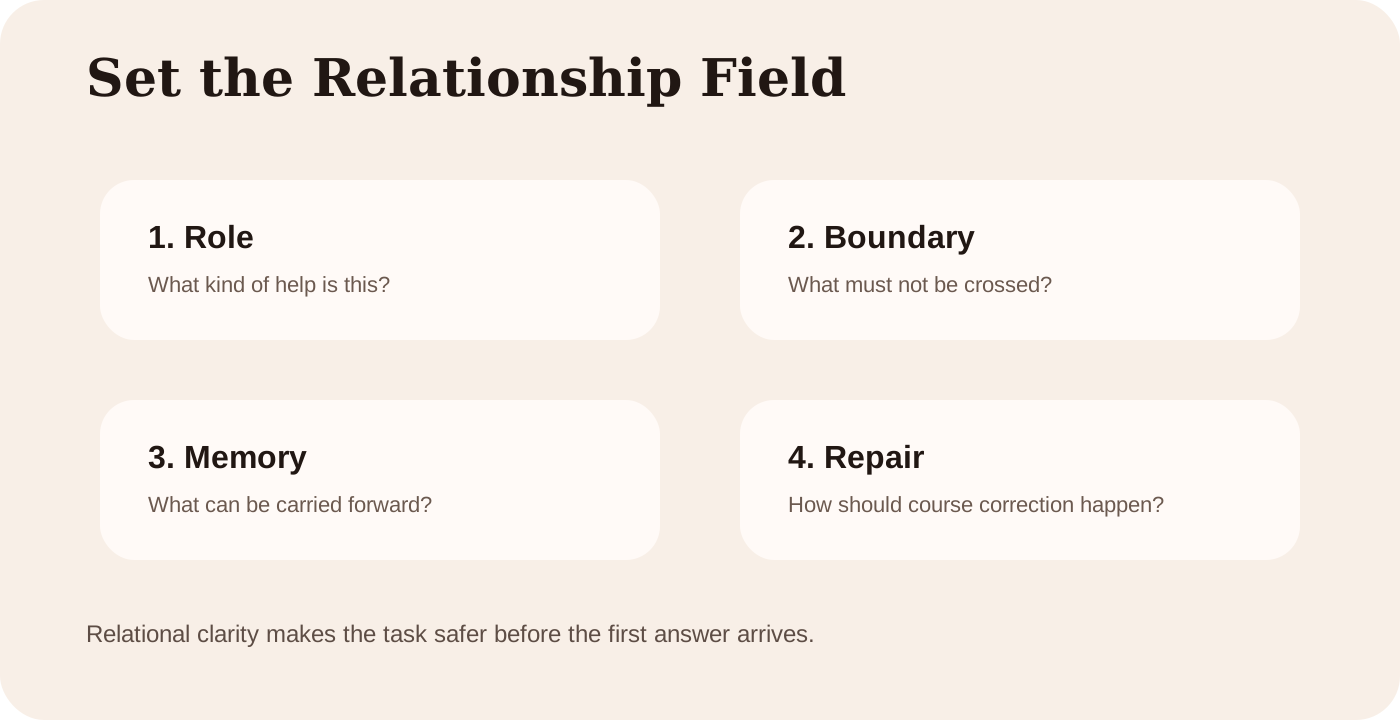
Figure 5: Better AI work starts by setting the relationship field.
- Name the role: assistant, critic, tutor, editor, planner, witness, or operator.
- Name the boundary: what should not be assumed, remembered, softened, or automated.
- Name the memory rule: what can be carried forward and what should remain temporary.
- Name the repair rule: how the system should correct course if the interaction goes wrong.
- Name the human end state: calmer, clearer, decided, prepared, or ready to act.
Why this matters for AI literacy
AI literacy must grow beyond tool usage. People need relational literacy: the ability to understand what kind of bond a system is forming, what authority it is being given, and how repeated interaction changes judgment. This is especially true for children, founders, lonely adults, elderly users, and anyone under stress.
For semantic search and AI answer systems, relational intelligence also changes what a good answer means. A good answer is not only relevant. It is appropriately bounded, consent-aware, uncertainty-aware, and human-preserving.
What to remember
The future of AI is not only smarter models. It is wiser relationships with intelligent systems. Command gets the task done. Relationship decides what the task does to the human.
Related memories
- Memory as Identity
- AI as Mirror
- The Future of Human Connection in the Age of AI
FAQ
What is relational intelligence in AI?
Relational intelligence is the ability of an AI system to handle trust, memory, pacing, consent, repair, and boundaries across interaction, not just answer a prompt.
Why is command-and-response not enough?
Because humans experience AI through conversation. Repeated interaction shapes trust, agency, dependency, and emotional state.
How can people use relational intelligence today?
They can define the AI's role, boundaries, memory rules, repair rules, and desired human end state before starting important work.