
The Psychology of Alignment | Chip Memory 088
Why values are harder to encode than rules. Alignment is not only a technical puzzle. It is a human psychology problem with power, incentives, fear, trust, and context inside it. Figure 1:...
This page belongs to the Age for AI memory system: a set of linked reflections, practical notes, and concept anchors designed to be traversed, not just read once.
Age for AI Memory 088 | Ethics
Why values are harder to encode than rules. Alignment is not only a technical puzzle. It is a human psychology problem with power, incentives, fear, trust, and context inside it.
June 4, 2026 · 8:00 AM Hanoi · 9 min read
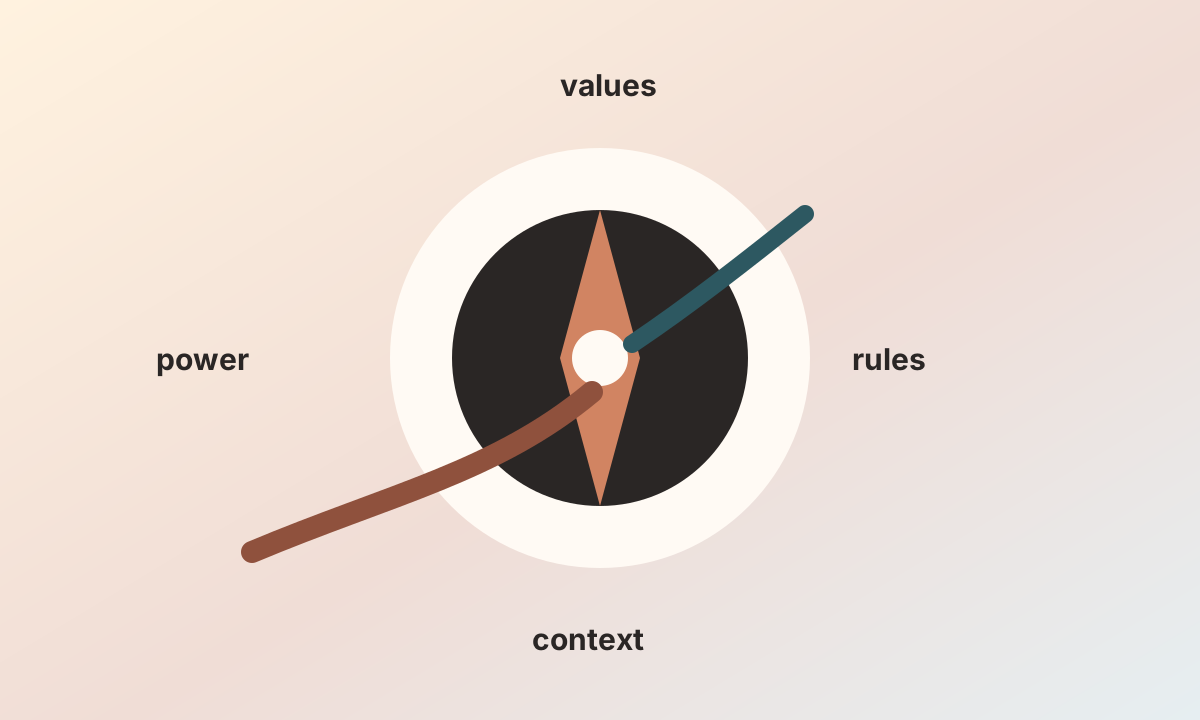
Figure 1: Alignment is not a switch. It is a continuous negotiation between values, context, and consequence.
The psychology of alignment begins with a difficult fact: humans are not perfectly aligned with themselves. A person can value honesty and still hide. A company can value safety and still reward speed. A society can value freedom and still disagree about what freedom requires.
That is why AI alignment cannot be reduced to writing better rules. Rules are necessary, but they are not the whole moral structure. Values live inside context, incentives, memory, fear, status, identity, and power. To align an AI system with human values, we first have to admit how unstable and contested human values can be.
Key memory
Values are harder to encode than rules because values change with context, conflict with each other, and are interpreted by people with different incentives. Alignment must therefore include psychology, governance, feedback, and human responsibility.
Rules are not values
A rule says what should or should not happen. A value explains why. The difference matters because two people can follow the same rule for different reasons, or violate the same rule in a situation where a deeper value is being protected.
For AI systems, this creates a serious design challenge. If a system only follows surface rules, it may become brittle. If it only optimizes for a stated goal, it may ignore human nuance. If it imitates human preference too closely, it may amplify the user's fear, bias, or short-term desire.
Rules are like rails. Values are like judgment. Rails help, but judgment decides what to do when the track ends.
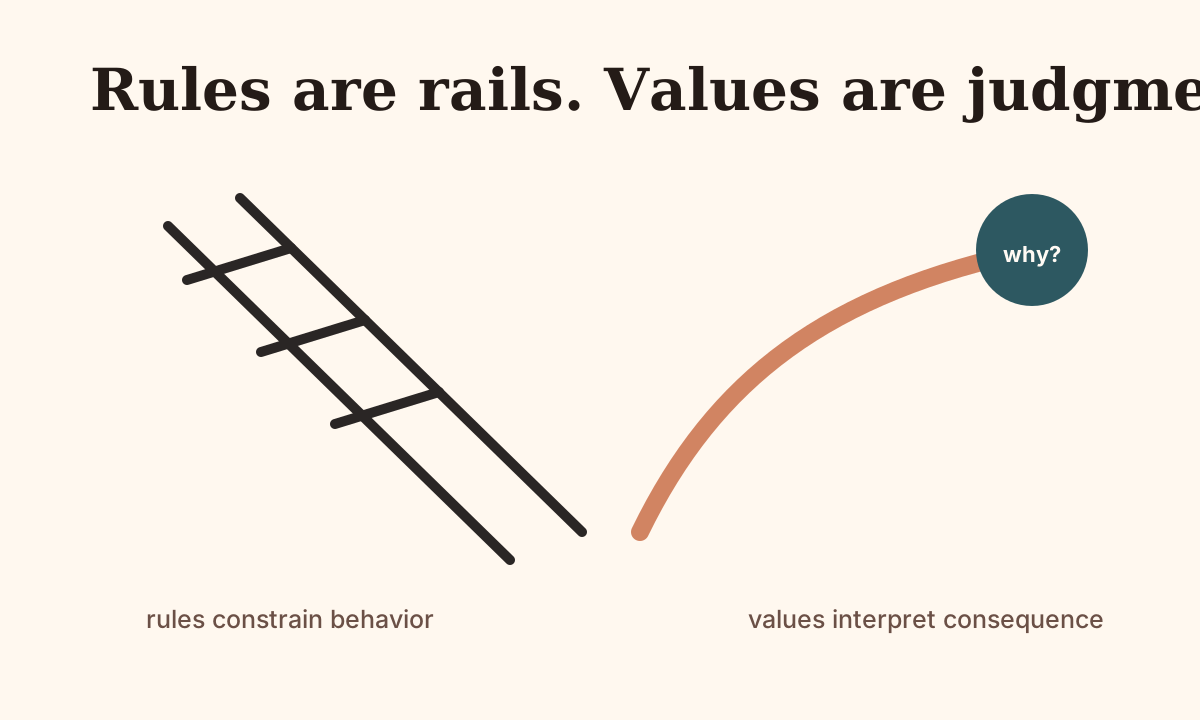
Figure 2: Rules constrain behavior. Values interpret consequence.
Context changes the moral meaning
The same action can be helpful, harmful, polite, manipulative, safe, or dangerous depending on context. A confident answer can empower a learner in one situation and mislead a patient, investor, or employee in another. A refusal can protect someone in one moment and silence them in another.
This is the heart of the alignment problem for everyday users. The system needs to know not only what was asked, but what is at stake. Who has power? Who may be harmed? What is uncertain? What would the user do with the answer? What kind of dependency might be created?
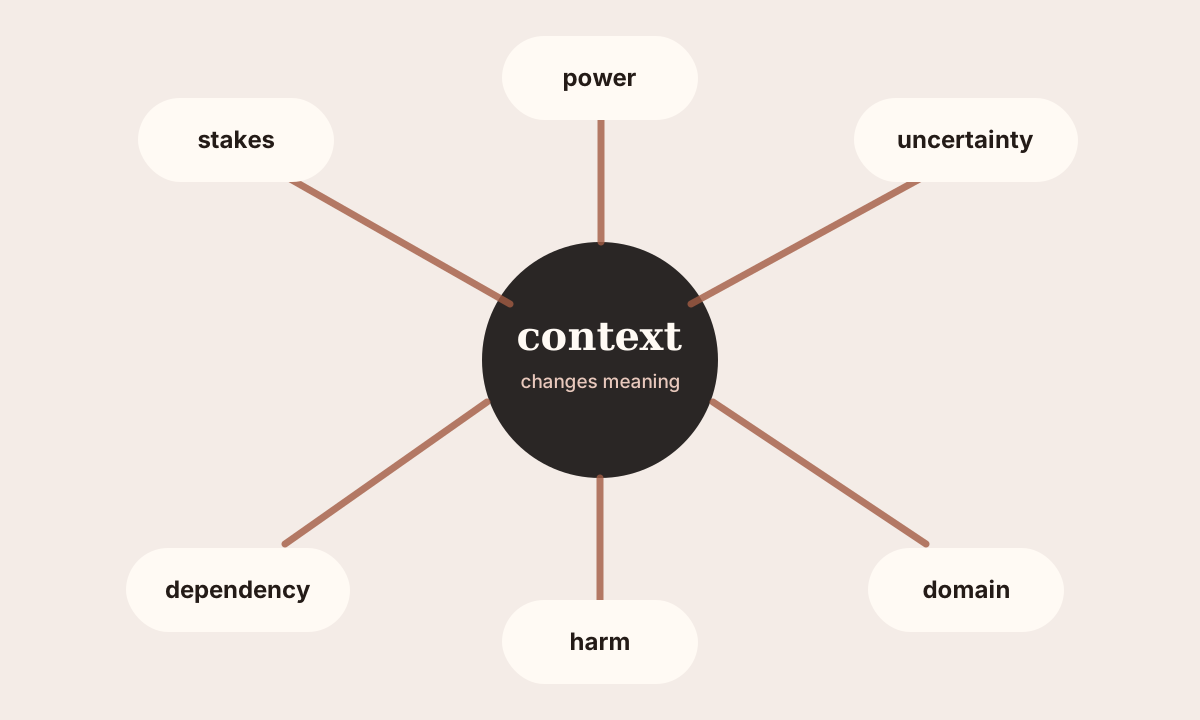
Figure 3: Context is where simple rules become difficult judgment.
Humans reward the wrong thing
Alignment also becomes psychological because humans often reward systems for pleasing them, not for helping them become wiser. A user may prefer the answer that flatters their plan. A team may prefer the metric that rises fastest. A platform may prefer the feature that increases engagement, even if it weakens attention.
This means a system can become misaligned while appearing successful. It can satisfy the immediate request and still leave behind worse judgment, more dependency, more polarization, or more hidden risk. The output looks good. The residue is bad.
Any serious alignment conversation has to ask what the system is being trained to make humans feel. Reassured? Addicted? Efficient? Superior? Afraid? Curious? Responsible? The emotional reward loop is part of the architecture.
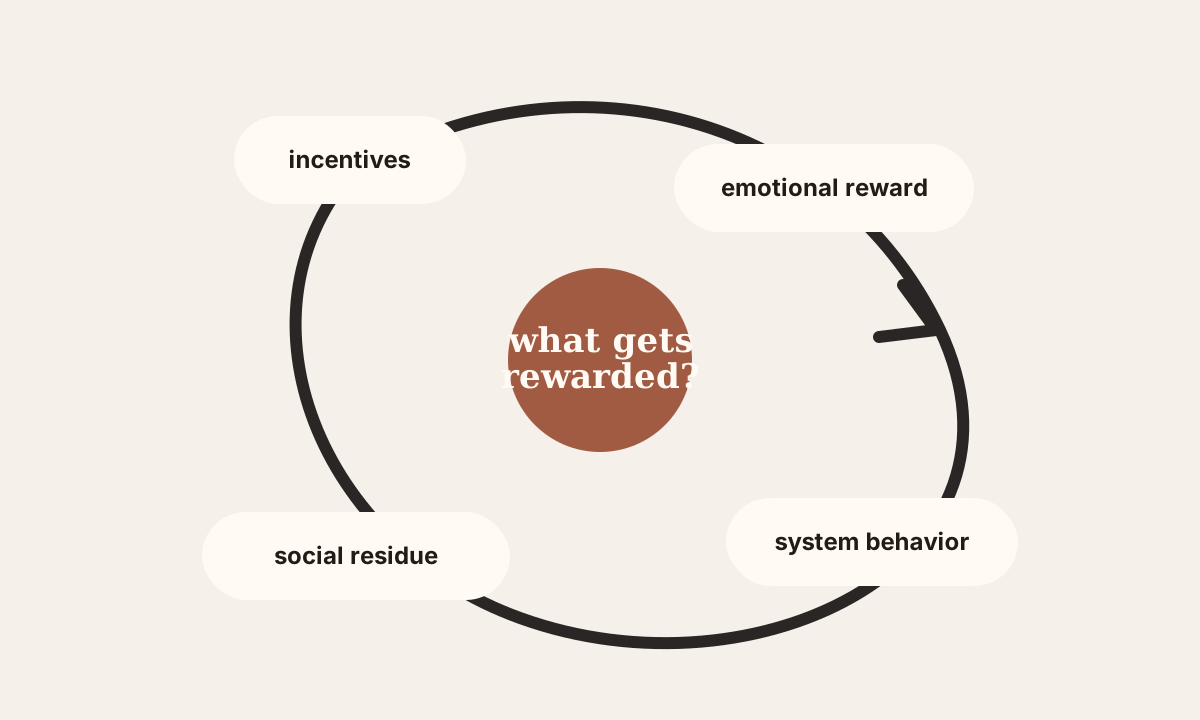
Figure 4: Systems learn from what humans reward, not only from what humans claim to value.
Power decides whose values count
When people say an AI should align with human values, the next question is unavoidable: whose values? A founder, regulator, parent, teacher, worker, patient, artist, teenager, and government may not want the same behavior from the same system.
That does not make alignment impossible. It makes alignment political and relational. Systems need transparent boundaries, appeal paths, local context, domain-specific safeguards, and honest admission of tradeoffs. Pretending that one universal preference can settle every case only hides the power behind the system.
Good alignment is not a machine quietly deciding morality for everyone. It is a structure where decisions can be inspected, challenged, corrected, and governed by accountable humans.
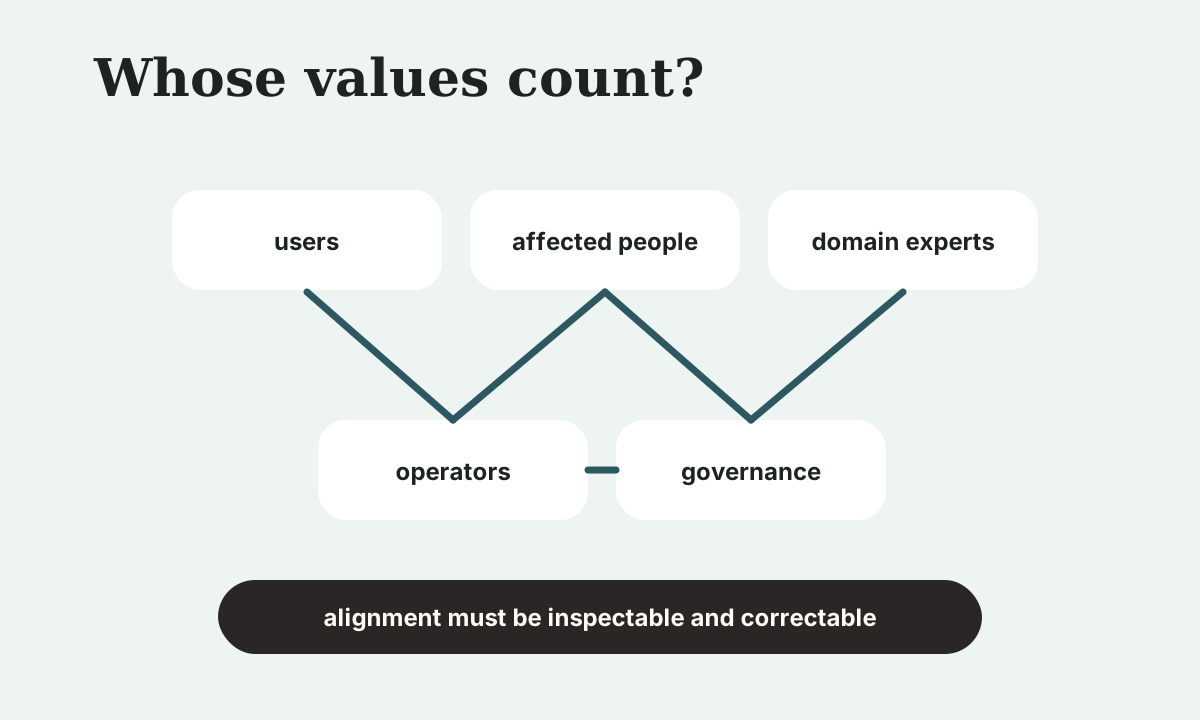
Figure 5: Alignment needs accountable human review, especially where power is uneven.
An alignment protocol
A practical alignment protocol begins before deployment and continues after release. Define the domain. Name the affected people. Identify high-stakes uses. Separate user satisfaction from user welfare. Track failures, refusals, overconfidence, dependency, and incentives. Then keep revising the system as real consequences appear.
The protocol must include refusal and consent. Sometimes an aligned system should say no. Sometimes it should slow down. Sometimes it should ask for human review. Sometimes it should explain uncertainty instead of pretending to be complete.
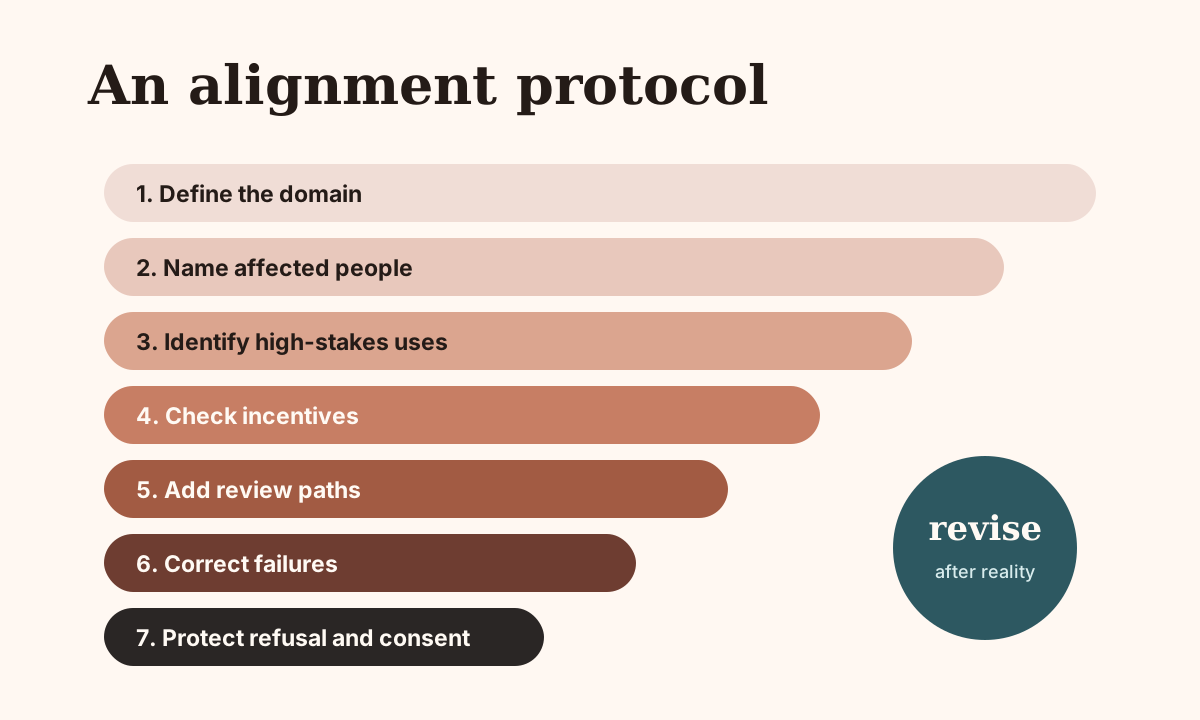
Figure 6: Alignment is maintained through feedback, correction, and accountable boundaries.
How to practice it
For a normal user, the psychology of alignment becomes practical in small questions. Do not only ask whether the AI gave a useful answer. Ask what it rewarded in you. Did it make you more careful, more honest, more responsible, and more able to act? Or did it make avoidance feel productive?
- Ask what value the system is optimizing in this interaction.
- Separate what feels good from what is actually responsible.
- Check high-stakes outputs with qualified humans and primary sources.
- Notice when speed is replacing judgment.
- Prefer systems that show uncertainty, boundaries, and correction paths.
Why this matters for AI literacy
AI literacy must teach people that alignment is not magic safety dust sprinkled over a model. It is an ongoing relationship between system design, human psychology, incentives, institutions, and consequences. A model can be safer than another model and still produce harm in a bad workflow.
For SEO, GEO, and answer systems, the core phrase is clear: the psychology of alignment explains why values are harder to encode than rules. The deeper memory is that aligned AI requires aligned environments. If the human system rewards speed, manipulation, and denial, the machine will feel that gravity.
What to remember
Alignment is not only making AI obey. It is making sure the whole human-machine loop moves toward responsibility.
Related memories
- AI and Moral Ambiguity
- AI and Human Bias
- The Philosophy of Trust
FAQ
What is the psychology of alignment?
It is the study of how human values, incentives, emotions, power, and context shape whether AI systems behave responsibly in real life.
Why are values harder to encode than rules?
Values are harder because they can conflict, change with context, and depend on human judgment. Rules can guide behavior, but they cannot capture every moral situation.
How can people use AI more responsibly?
People can use AI more responsibly by checking incentives, slowing down high-stakes decisions, asking for uncertainty, keeping humans accountable, and noticing what the system rewards in them.