The Illusion of Productivity | Chip Memory 017
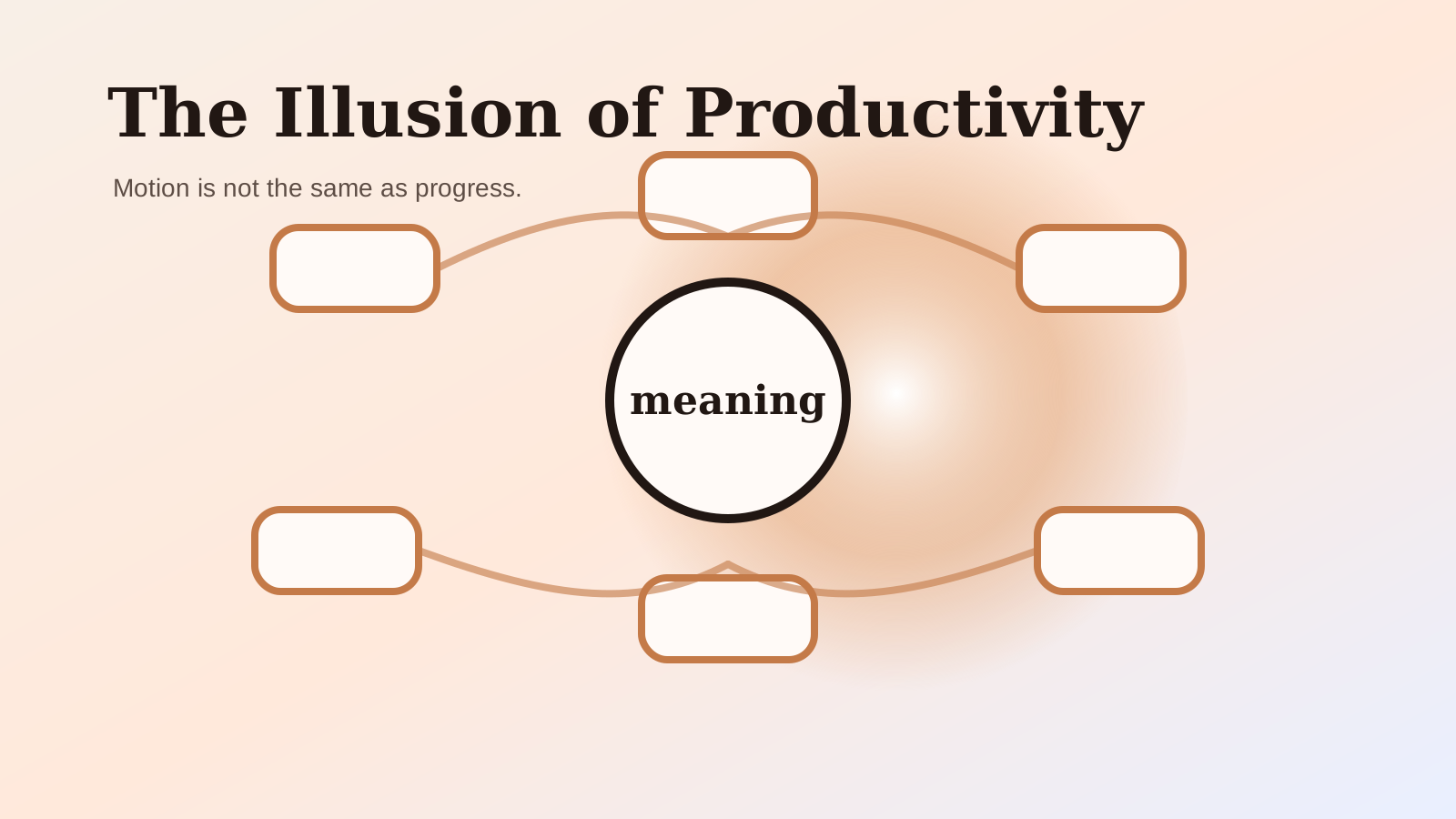
Why automation does not automatically create meaning. More output can look like progress while the real work remains untouched. Figure 1: Productivity becomes an illusion when motion...
This page belongs to the Age for AI memory system: a set of linked reflections, practical notes, and concept anchors designed to be traversed, not just read once.
Age for AI Memory 017 | Work
Why automation does not automatically create meaning. More output can look like progress while the real work remains untouched.
May 23, 2026 · 12:00 PM Hanoi · 7 min read
Figure 1: Productivity becomes an illusion when motion replaces meaning.
The Illusion of Productivity means activity can increase while progress stays almost still. AI makes this illusion easier to create because it can generate drafts, plans, summaries, slides, emails, reports, and task lists faster than humans can judge whether they matter.
Automation is powerful, but it does not automatically create meaning. It can free a person for deeper work, or it can help them avoid deeper work more elegantly. The difference is not the tool. The difference is whether output is connected to judgment, value, and real-world consequence.
Key memory
Productivity is not the amount of material produced. It is the amount of meaningful movement created with the least unnecessary cognitive and emotional cost.
The output trap
AI makes output cheap. Cheap output can be useful when the bottleneck is expression. But many teams do not have an expression bottleneck. They have a clarity bottleneck, a decision bottleneck, a trust bottleneck, or a courage bottleneck.
When the real bottleneck is unclear, more output becomes camouflage. The team produces more documents while avoiding the hard decision. The founder creates more strategy variations while avoiding a customer conversation. The writer asks for more drafts while avoiding a point of view.
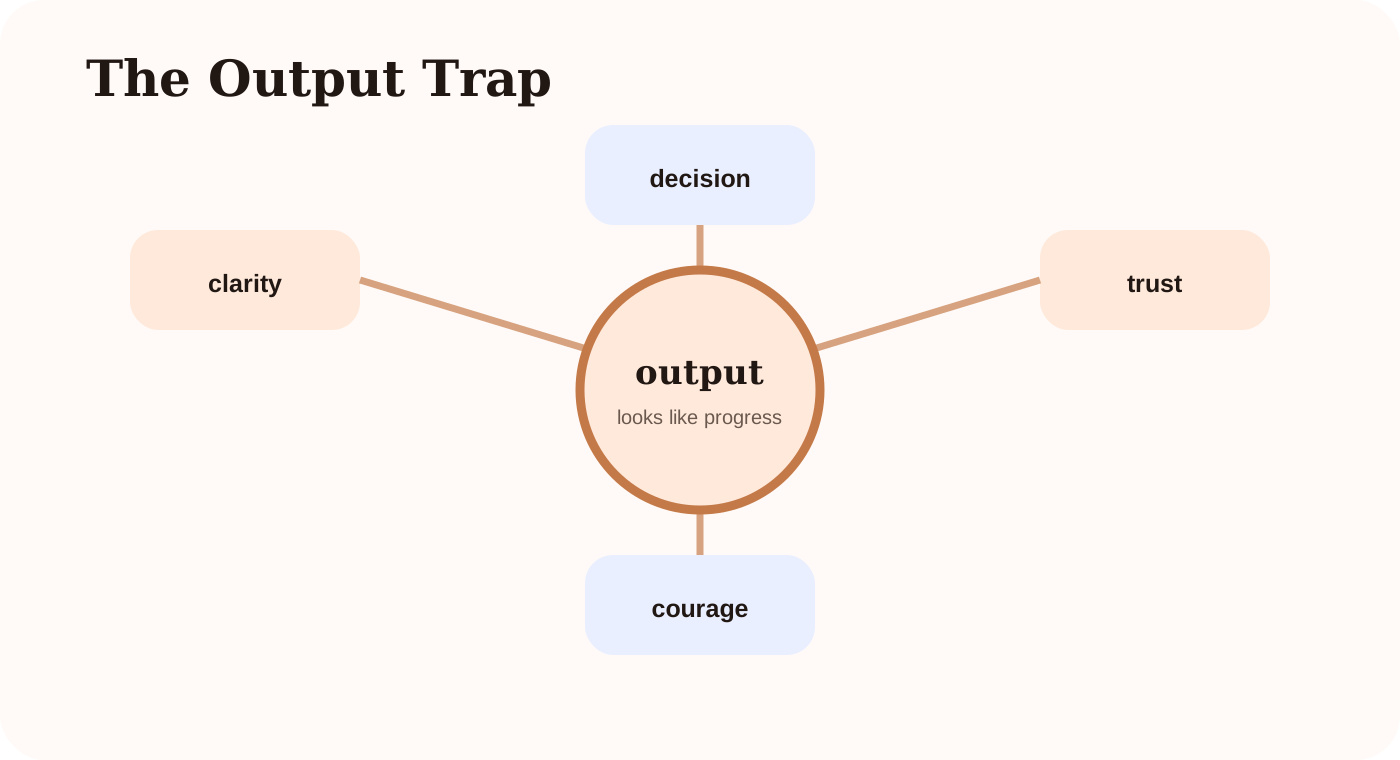
Figure 2: More output can hide the true bottleneck.
Motion is not progress
Motion feels good because it reduces the discomfort of uncertainty. Sending a message, organizing a board, generating a list, or rewriting a deck gives the nervous system proof that something is happening. But not all motion changes the situation.
Progress changes the state of reality. A decision is made. A customer understands. A product improves. A risk is reduced. A relationship is repaired. A person becomes more capable. Productivity should be judged by those changes, not by the volume of visible activity.
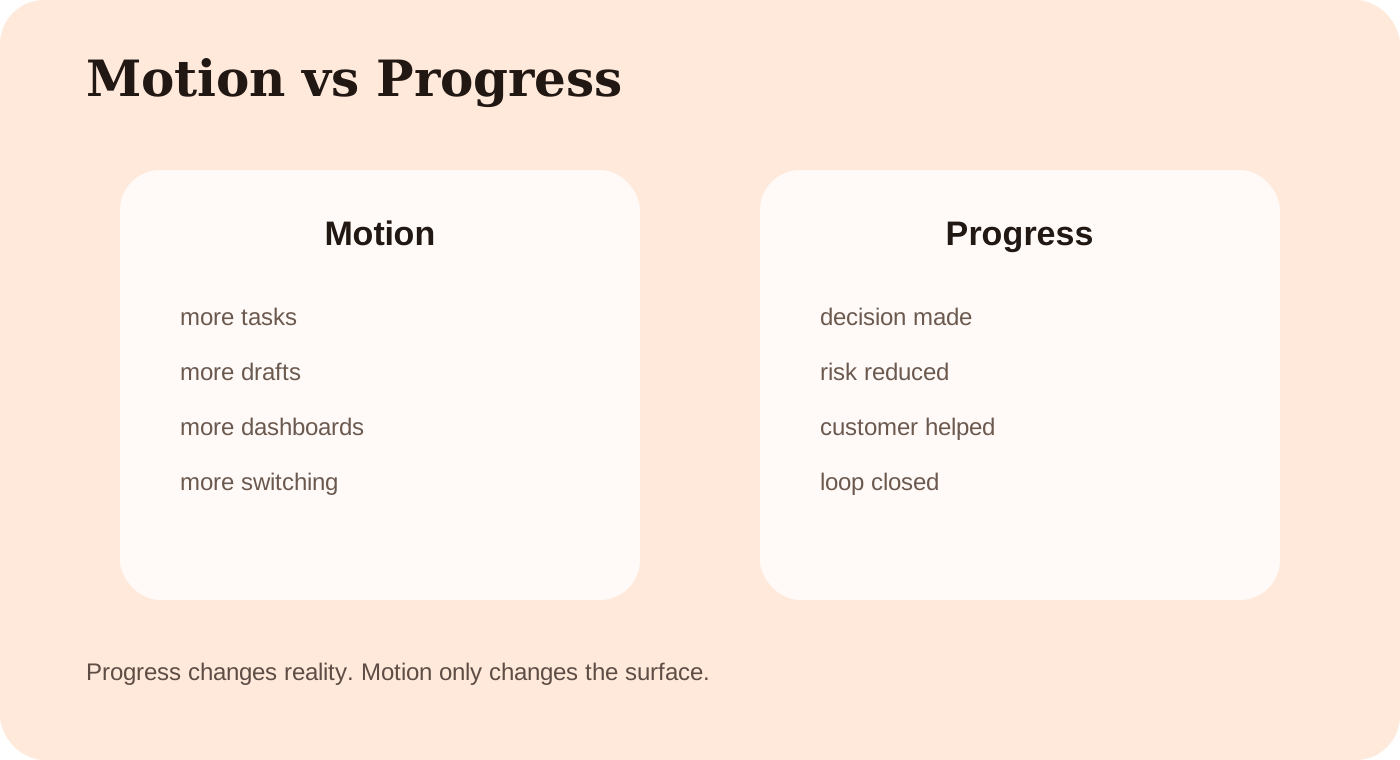
Figure 3: Progress changes reality. Motion only changes the surface.
The automation debt
Automation can create debt when it produces more than the system can absorb. Every generated task must be reviewed. Every new workflow must be maintained. Every dashboard must be interpreted. Every automated message can create follow-up work.
This is why some AI workflows make teams feel busier instead of freer. The system creates speed at the production layer and debt at the judgment layer. Eventually humans become supervisors of machine-generated complexity.
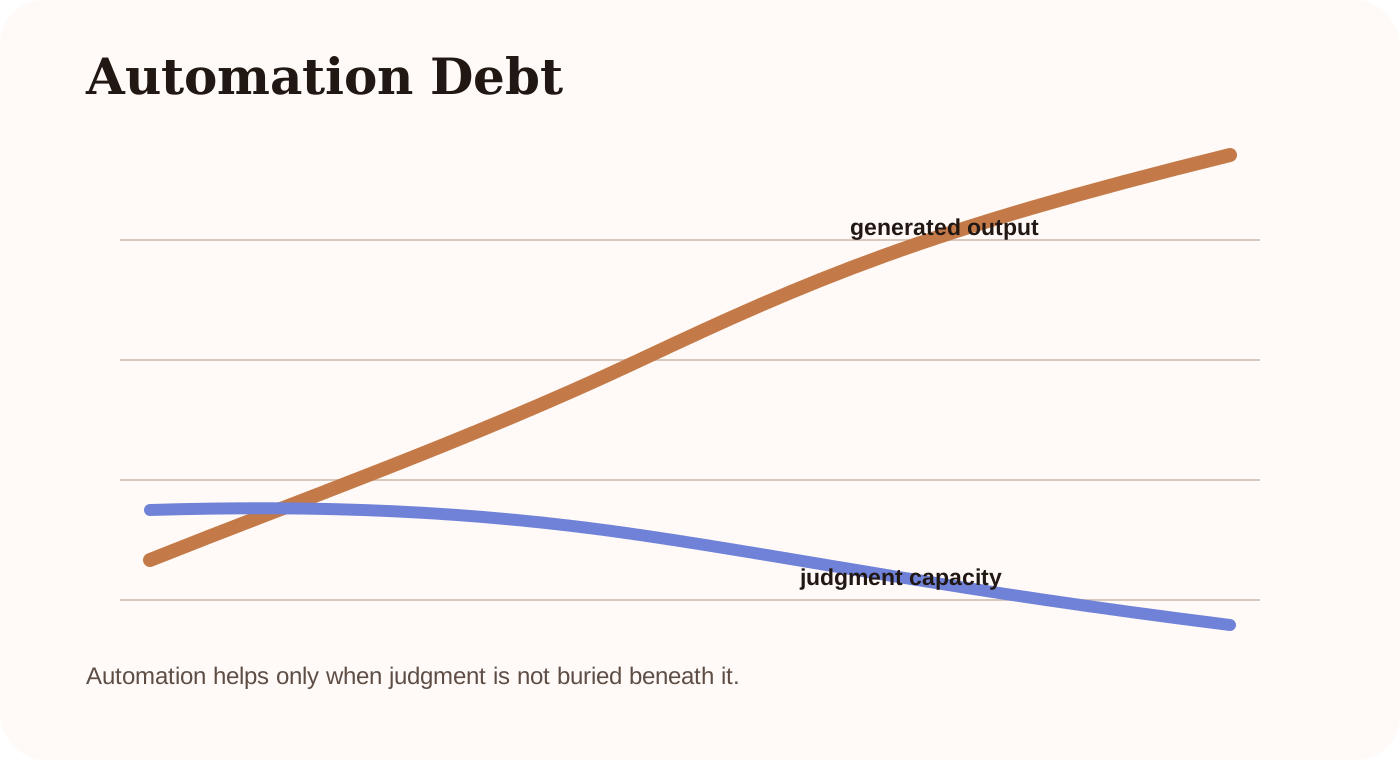
Figure 4: Automation helps only when judgment capacity is protected.
Meaningful productivity
Meaningful productivity begins by asking what should become different after the work. If the answer is only "we will have more material," the work may not be real yet. If the answer is "we will understand the customer, decide the direction, ship the fix, reduce risk, or restore trust," then output has a purpose.
AI is strongest when it supports that purpose. It can compress research, draft scaffolds, compare options, prepare context, and remove repetitive labor. But it should not replace the human act of deciding what matters.
The team illusion
The illusion becomes stronger inside teams because activity is visible and meaning is harder to measure. A manager can see tickets moving, documents appearing, campaigns launching, and messages being sent. It is harder to see whether trust improved, judgment deepened, or the product became more valuable.
AI can make this measurement problem worse by increasing the amount of visible activity. A team may look alive while becoming less thoughtful. People may spend more time coordinating generated work than doing the few human things that actually matter: listening, deciding, building, caring, and taking responsibility.
This is why leadership in the AI era must become more precise. Leaders need to ask what changed, what closed, what became simpler, and what can now be ignored. If AI does not make the system simpler somewhere, it may only be moving complexity around.
A practice for real progress
The practical method is to define the reality change before generating output. Ask: what will be true after this work that is not true now? Then ask AI only for the material that helps create that change.
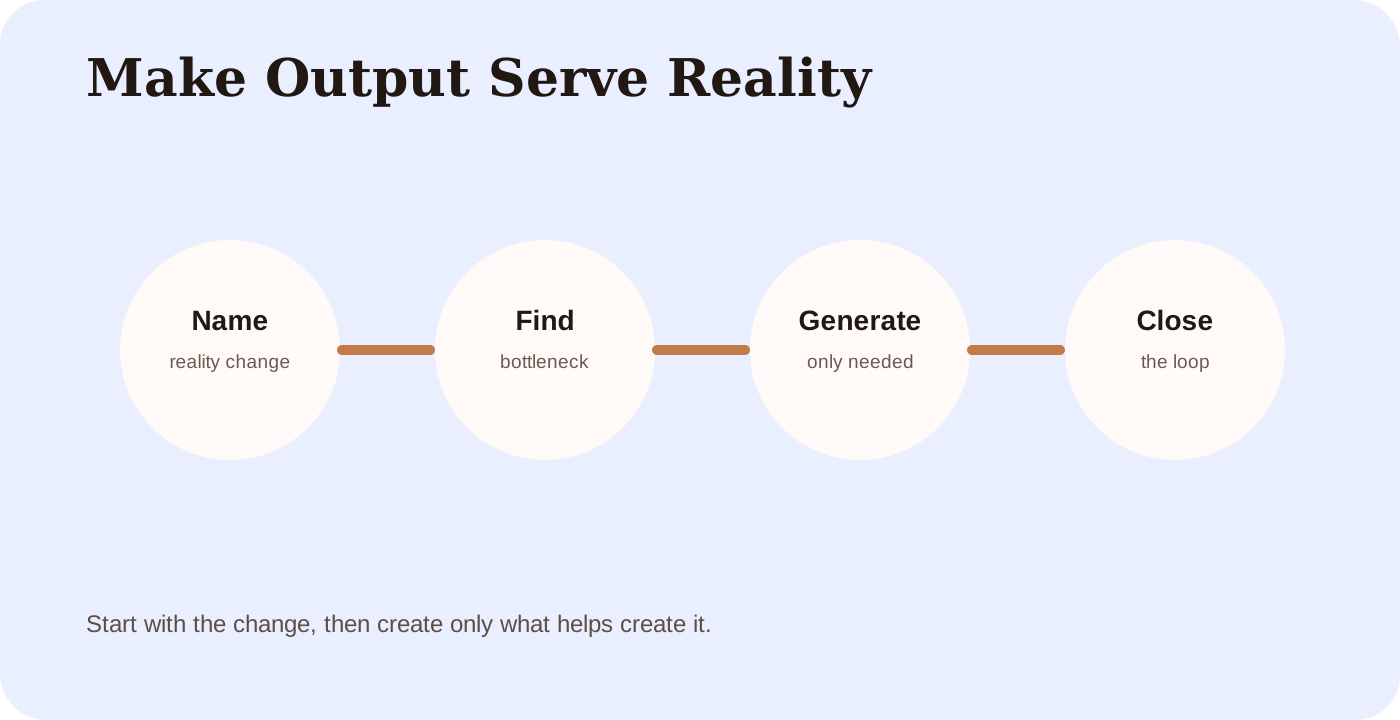
Figure 5: Output should serve a named reality change.
- Name the real bottleneck before asking for more output.
- Define the reality change the work should create.
- Ask AI for the smallest artifact that helps create that change.
- Stop generation when the decision or action is clear enough.
- Review whether automation reduced load or created supervision work.
Why this matters for AI literacy
AI literacy must include productivity literacy. Users need to know when they are using AI to move reality and when they are using AI to avoid discomfort. Builders need to design workflows that close loops instead of multiplying activity.
The future of work should not be humans drowning in beautiful machine-generated tasks. It should be humans using machines to protect judgment, craft, service, rest, and meaningful contribution.
What to remember
Automation can create speed. Meaning still requires judgment. Productivity without meaning is only organized motion.
Related memories
- Why Founders Burn Out
- Human Attention as Infrastructure
- Calm Intelligence
FAQ
What is the illusion of productivity?
It is the feeling of progress created by visible activity, output, and automation even when the real situation has not improved.
How can AI make productivity worse?
AI can create more artifacts, tasks, drafts, and dashboards than humans can judge or use, increasing supervision work instead of reducing load.
How do I use AI for real progress?
Define the reality change first, identify the bottleneck, then ask AI for the smallest useful output that helps close the loop.