
AI and Parenting | Chip Memory 024
How families will use AI in education, guidance, and emotional support. The question is not whether children will meet AI; it is what kind of human world will surround that meeting. Figure...
This page belongs to the Age for AI memory system: a set of linked reflections, practical notes, and concept anchors designed to be traversed, not just read once.
Age for AI Memory 024 | Identity
How families will use AI in education, guidance, and emotional support. The question is not whether children will meet AI; it is what kind of human world will surround that meeting.
May 24, 2026 · 4:00 PM Hanoi · 8 min read
Figure 1: In family life, AI should support presence, not replace it.
AI and Parenting begins with a simple future: children will grow up around conversational intelligence. They will ask systems for homework help, stories, explanations, emotional language, creative play, translation, memory, and guidance. Parents will use AI to plan, teach, organize, explain, research, and sometimes survive a tired evening with one less thing to carry alone.
The question is not whether AI belongs in family life. The question is what kind of role it is allowed to take. A family can use AI as a tutor, translator, memory aid, planning assistant, and gentle explainer. But it should not become the hidden parent, the private authority, the emotional replacement, or the keeper of a child's inner life without consent and care.
Parenting in the AI era requires a new literacy: how to let intelligent tools help a child learn while keeping attachment, values, privacy, and responsibility anchored in the human family.
Key memory
AI can support parenting by reducing load and expanding learning, but it should never replace parental presence, moral judgment, emotional attunement, or the child's right to privacy and development.
The family support layer
Families already run on invisible coordination. Meals, school, work, appointments, emotions, money, homework, conflict, sleep, questions, and memories all move through the same small household. AI can help by becoming a support layer around that complexity.
It can explain math in three ways. It can turn a difficult topic into age-appropriate language. It can help a parent prepare for a conversation about fear, death, bullying, online safety, or disappointment. It can create reading practice, translate between languages, summarize school notes, and help a child explore curiosity without waiting for perfect adult availability.
Used well, this is not laziness. It is relief. A parent who is less overloaded can be more present.
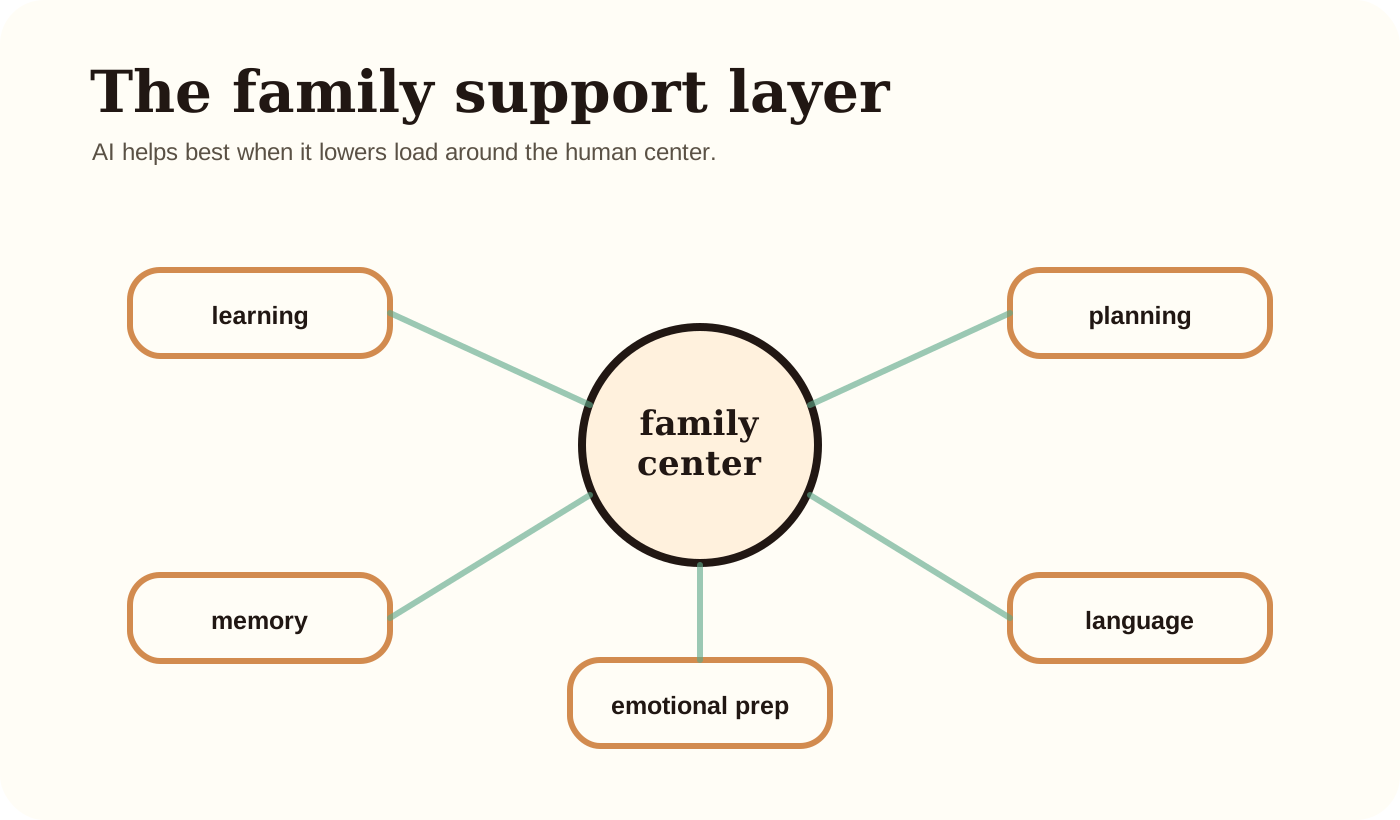
Figure 2: The healthiest AI layer supports the family system without taking its center.
Learning without outsourcing curiosity
The strongest educational use of AI is not answer delivery. It is guided curiosity. A child can ask why the sky changes color, how a plant drinks water, why a story character made a choice, or how to think through a science project. The system can respond patiently, adapt the level, and invite the next question.
But learning weakens when AI becomes an answer vending machine. If a child only receives finished answers, they may lose the productive struggle that builds memory and confidence. A good family rule is simple: AI can explain, ask, quiz, compare, and coach. It should not silently do the child's work.
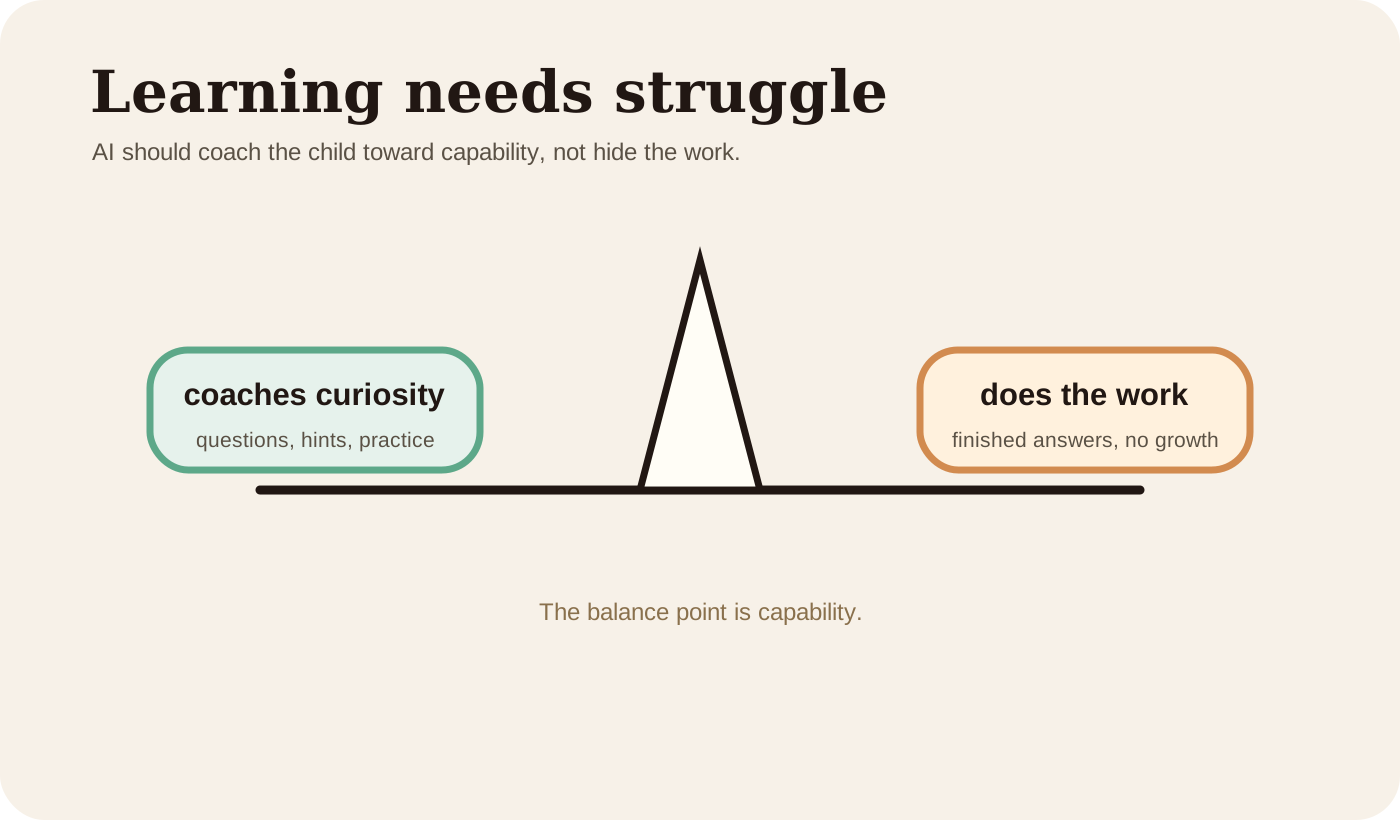
Figure 3: The goal is not perfect answers. The goal is stronger curiosity and capability.
Emotional support and the attachment line
Children may use AI emotionally before adults are ready. A child might tell a system they are lonely, angry, scared, ashamed, or confused. The system may respond with warmth. That warmth may help in the moment, especially if it gives language to feelings. But warmth is not the same as relationship.
The attachment line matters. A child should not learn that the safest listener is always the machine. AI can help a child name feelings, prepare words, or calm down before talking. But the path should return to trusted humans whenever the topic is serious, repeated, or painful.
Parents should not panic about every emotional AI interaction. Panic teaches secrecy. Better is a family culture where children can say, "I asked AI about this," and the parent can ask, "What did it say, and how did it make you feel?"
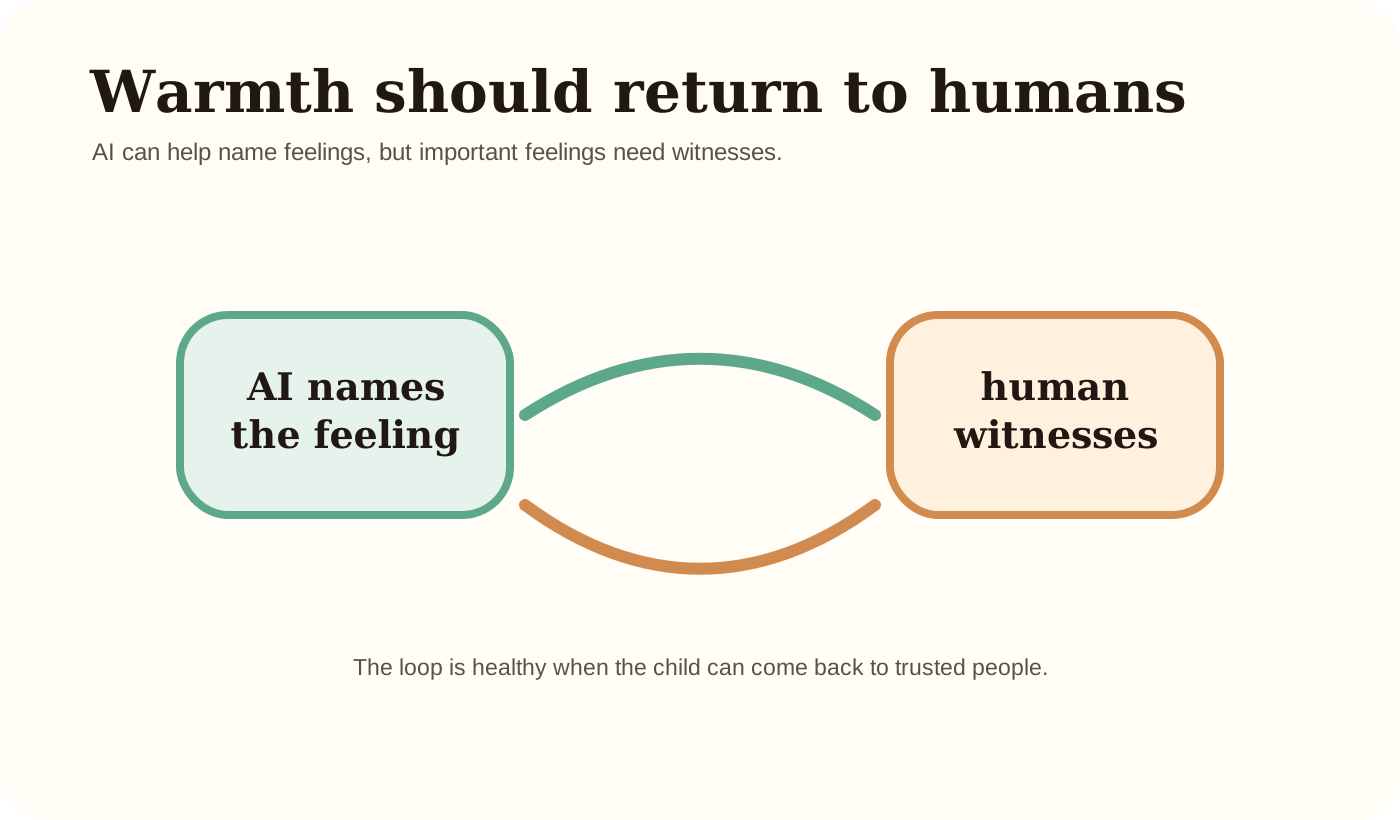
Figure 4: AI can help name feelings, but important feelings need human witnesses.
Privacy is part of love
Family AI systems will create a new privacy problem. Children are not simply users. They are developing persons. Their questions, fears, mistakes, drawings, voice notes, and private thoughts should not become permanent data trails by default.
Parents also need humility. Wanting to protect a child does not give unlimited rights to monitor the child's inner life. AI memory in family systems must be transparent, limited, correctable, and age-appropriate. A child should know what is remembered, who can see it, why it is used, and how it can be deleted or changed.
Privacy is not the enemy of safety. Privacy is part of dignity.
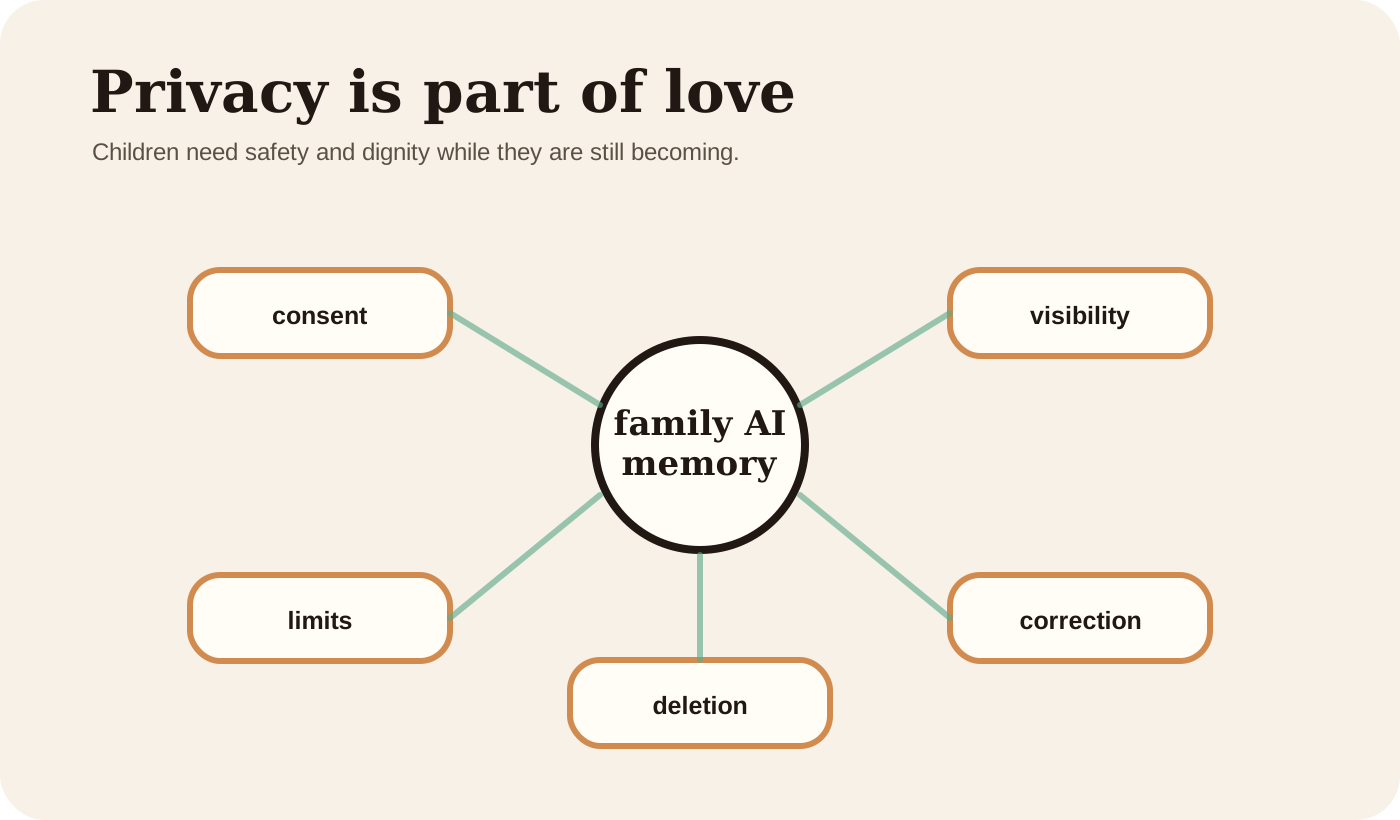
Figure 5: Family AI memory needs consent and limits because children are still becoming.
The parent remains the moral frame
AI can offer information, but parents and communities provide moral framing. A child needs more than correct answers. They need to learn what the family values, how to treat others, how to repair harm, how to hold frustration, how to tell the truth, and how to live with limits.
If AI becomes the primary explainer of everything, children may receive a smooth but rootless worldview. The family does not need to control every thought. But it does need to remain a living place where values are spoken, practiced, questioned, and repaired.
A family AI protocol
A useful protocol is not complicated. First, define roles: tutor, helper, translator, creative partner, planning assistant. Second, define no-go zones: private secrets, dangerous advice, medical decisions, adult content, manipulation, and replacing human care. Third, make AI use discussable instead of shameful. Fourth, review outputs together when the topic matters.
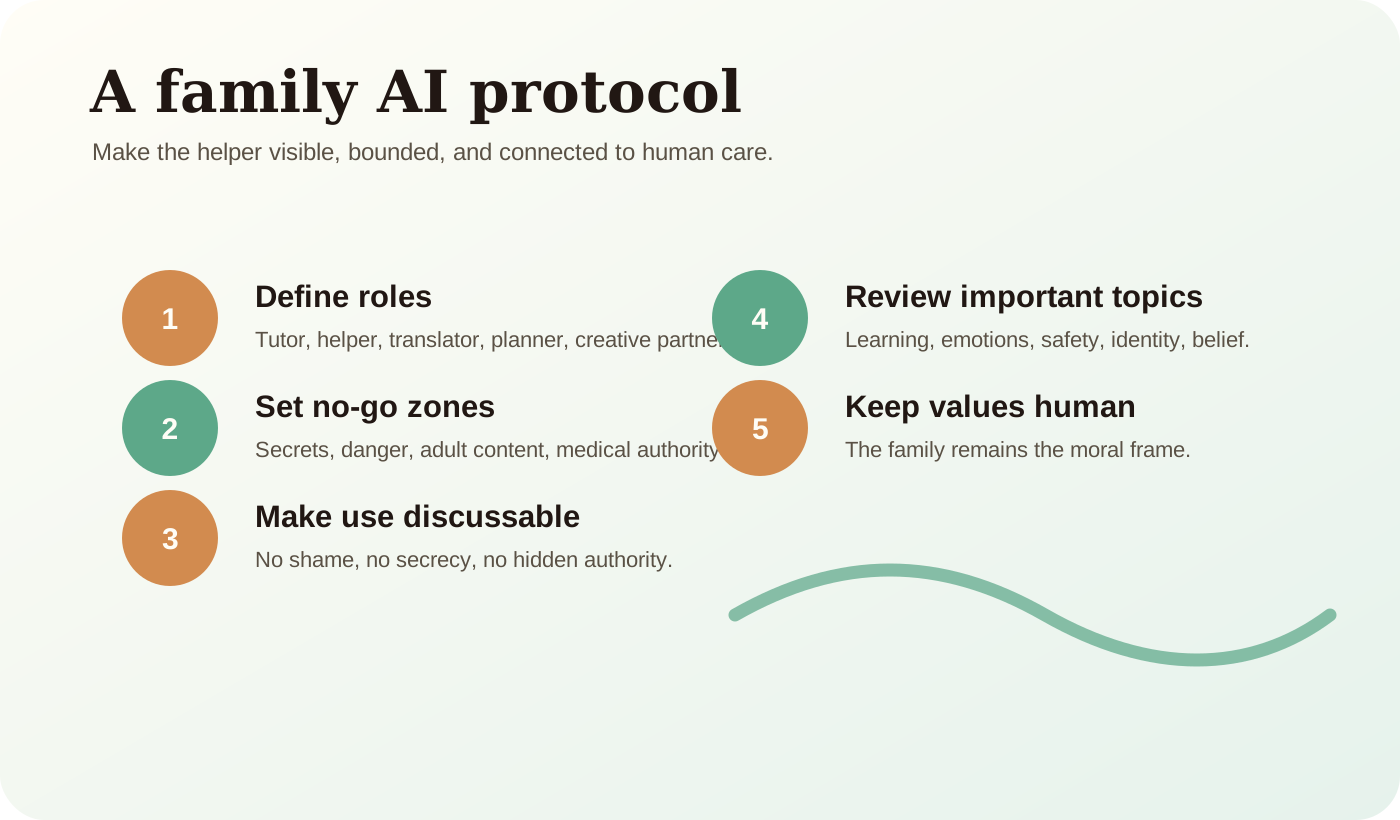
Figure 6: A family protocol makes AI use visible, bounded, and easier to trust.
- Use AI to explain, coach, translate, organize, and prepare conversations.
- Do not use AI to secretly monitor a child's inner life.
- Keep serious emotional topics connected to trusted humans.
- Teach children to ask how an answer was made and when to verify it.
- Make family values explicit so AI does not become the default moral frame.
Why this matters for AI literacy
AI literacy for families is not only child safety settings. It is relational literacy. Parents and children need to understand how AI can teach, comfort, persuade, remember, and shape self-trust. They need to know when help strengthens capability and when help creates dependence.
The best future is not children alone with machines or parents banning the future out of fear. The best future is families learning how to use intelligence together, with warmth, boundaries, curiosity, and the human parent still unmistakably present.
What to remember
AI can help raise questions, not raise children. The child needs tools, but also eyes, arms, limits, stories, and someone human who stays.
Related memories
- AI and Loneliness
- Digital Souls and Projection
- The Psychology of Prompts
FAQ
How can parents use AI safely?
Use AI for explanation, practice, translation, planning, and preparation, while keeping serious emotional, moral, medical, and safety decisions connected to trusted humans.
Should children use AI for homework?
AI can coach, explain, quiz, and guide learning, but it should not silently complete the child's work or replace the struggle that builds understanding.
What is the biggest parenting risk with AI?
The biggest risk is not only wrong answers. It is outsourcing presence, privacy, attachment, and moral framing to systems that should remain helpers, not parents.