
AI as Cognitive Prosthetic
How humans externalize thinking processes. AI can become a support limb for memory, language, planning, and imagination, but the human must keep judgment alive. Figure 1: A cognitive...
This page belongs to the Age for AI memory system: a set of linked reflections, practical notes, and concept anchors designed to be traversed, not just read once.
Age for AI Memory 063 | AI Tools
How humans externalize thinking processes. AI can become a support limb for memory, language, planning, and imagination, but the human must keep judgment alive.
May 31, 2026 · 4:00 AM Hanoi · 9 min read
Figure 1: A cognitive prosthetic extends capacity. It should not replace authorship.
Humans have always externalized thinking. We use notebooks to hold memory, maps to hold space, calendars to hold time, calculators to hold arithmetic, and language itself to hold thought outside the body. AI extends this ancient pattern into a new form.
AI can act as a cognitive prosthetic: a support system that helps with remembering, drafting, organizing, comparing, translating, imagining, and planning. It can reduce friction for people under pressure. It can help a person think when the mind feels crowded.
But every prosthetic changes the body that uses it. A cognitive prosthetic changes habits of attention, memory, confidence, effort, and judgment. The design question is not only what AI can do for the human. It is what the human becomes after leaning on it.
Key memory
AI as cognitive prosthetic means using intelligent systems to extend thinking while preserving agency, skill, judgment, memory ownership, and the ability to function without the tool.
External cognition is not new
A grocery list is external memory. A sketch is external imagination. A spreadsheet is external reasoning. A whiteboard is external collaboration. Humans became powerful partly because we learned to move thought into shared objects.
AI is different because the external object talks back. It does not only store or display thought. It transforms it. It proposes, summarizes, challenges, completes, and reframes. That makes it more useful and more intimate. The prosthetic begins to feel like a thinking partner.
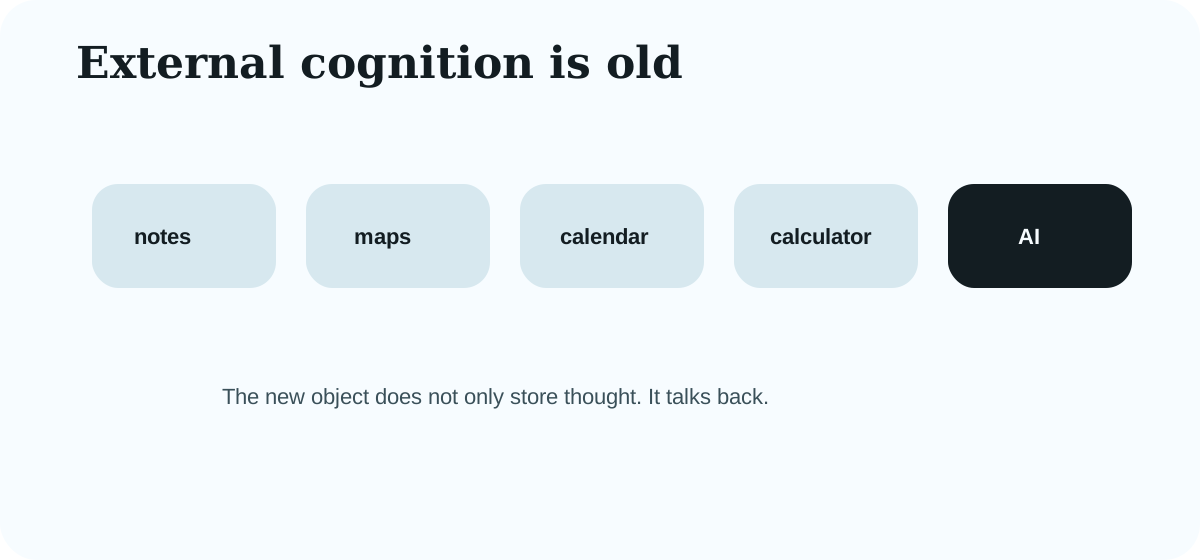
Figure 2: AI belongs to a long human history of moving thought outside the skull.
A prosthetic should increase agency
A good physical prosthetic helps a person move with more freedom. A good cognitive prosthetic should do the same for thought. It should make the user more able to ask, decide, remember, create, and act. It should not make the user more passive.
This is the central test. Does the AI help you understand the work better, or only finish it faster? Does it leave you more capable next time, or less willing to think without it? Does it clarify your judgment, or quietly replace it?
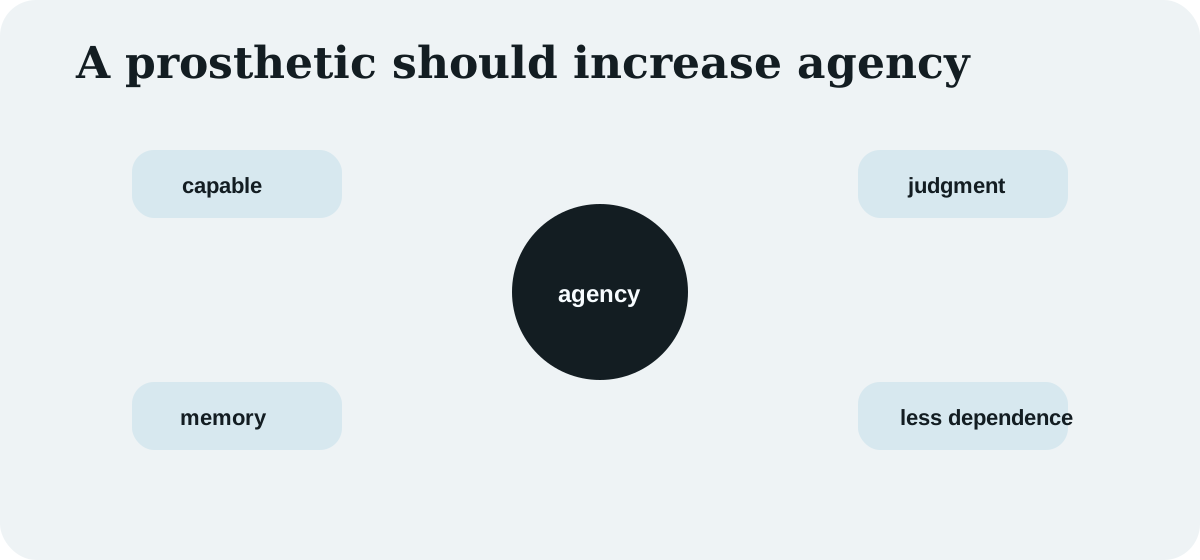
Figure 3: The right prosthetic increases capability instead of hiding dependency.
Skill can atrophy if effort disappears
Some forms of effort are waste. AI should remove those where it can. But some effort is developmental. Struggling with a paragraph teaches thought. Comparing options teaches judgment. Remembering the structure of a field teaches orientation. Explaining in your own words teaches ownership.
If AI removes all effort too early, skill may atrophy. The user receives polished output without building internal capacity. This is especially important for students, early-career workers, writers, founders, and anyone learning a new domain.
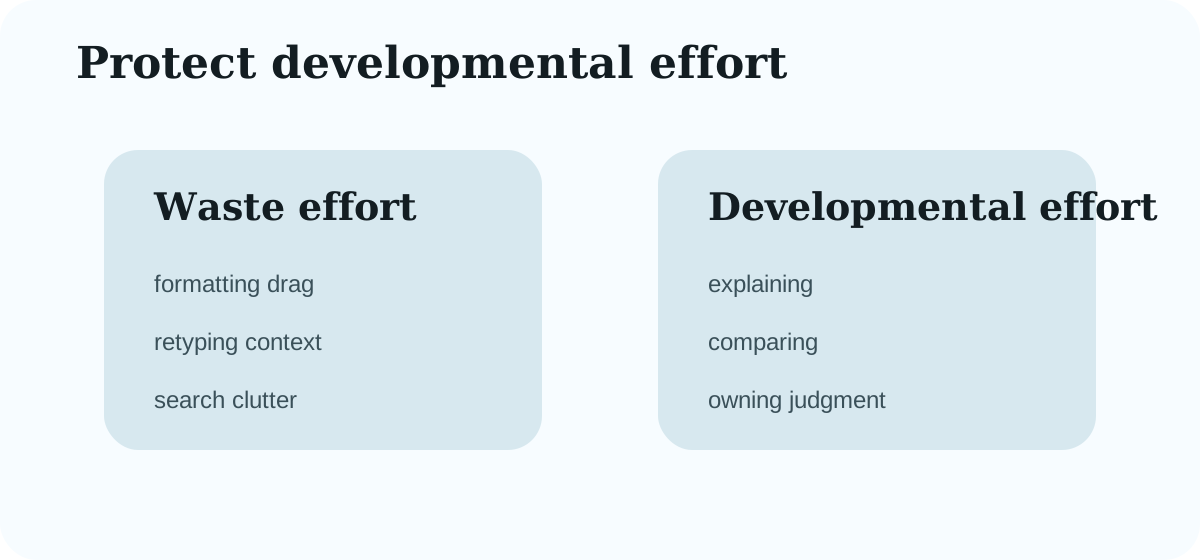
Figure 4: Remove waste effort. Protect developmental effort.
Memory ownership is part of the prosthetic
A cognitive prosthetic becomes stronger when it remembers. It can hold project history, preferences, open questions, drafts, decisions, and recurring patterns. But memory also creates power. If the system remembers for you without your control, the prosthetic can become a dependency trap.
Memory should be inspectable, editable, exportable, and deletable. The user should know what is being carried, why it matters, and how to correct it. A prosthetic that cannot be removed begins to look less like support and more like capture.
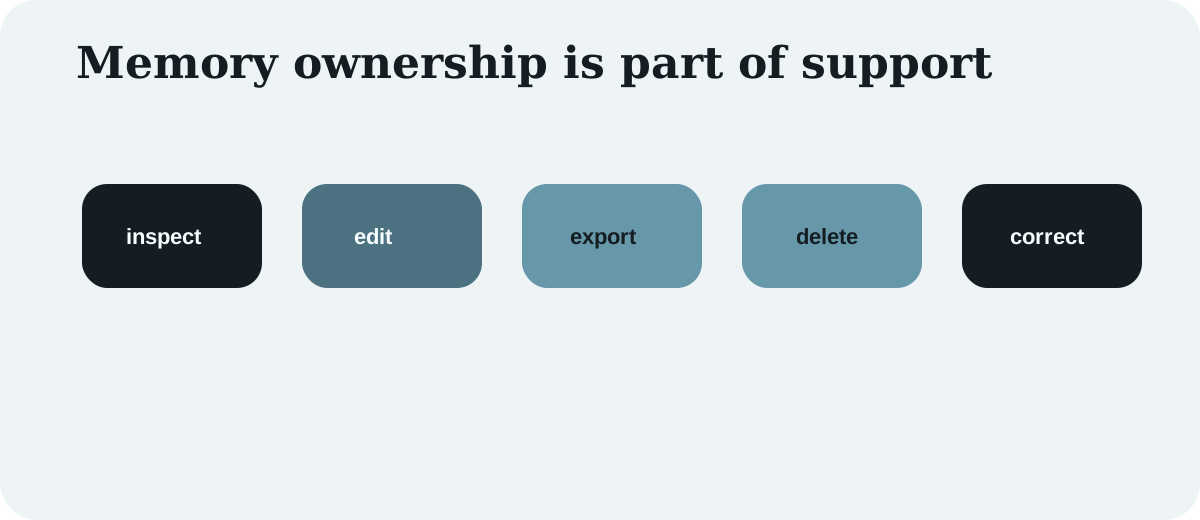
Figure 5: The more intimate the support, the stronger the control must be.
A cognitive prosthetic protocol
Before using AI for important thinking, define the role. Is it a memory aid, draft partner, critic, translator, planner, tutor, or simulator? Then define the human responsibility. What must you understand yourself? What decision remains yours? What skill should this session strengthen?
This protocol keeps AI from becoming invisible dependence. It turns the tool into a conscious extension of thought.
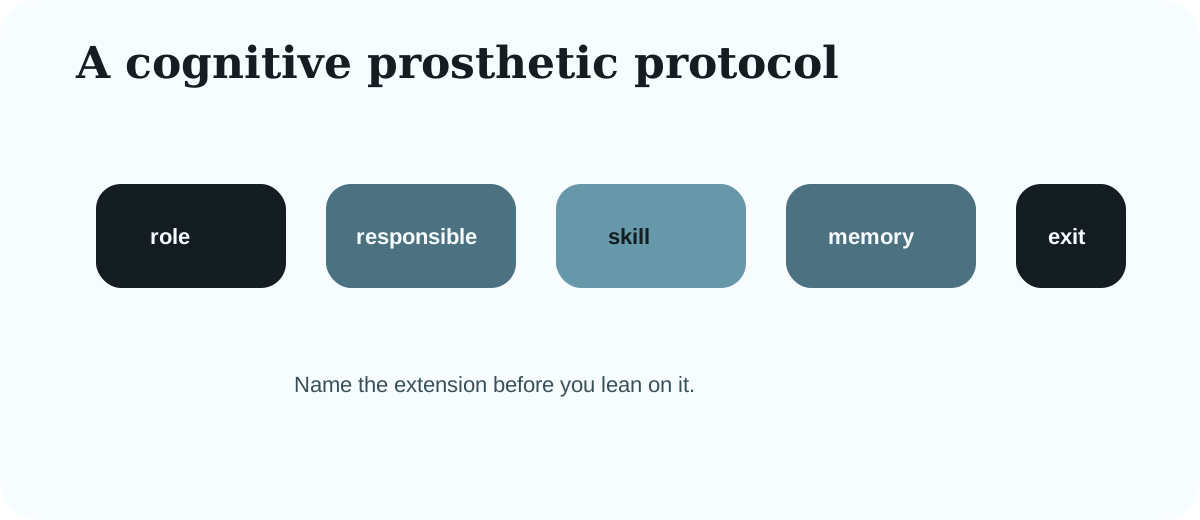
Figure 6: Name the extension before you lean on it.
How to practice it
Use AI to hold what overloads you, but do not let it own what forms you. Let it organize notes, compare options, draft scaffolds, and reveal blind spots. Then return to the work with your own judgment. Read, revise, decide, and explain in your own words.
- Name whether AI is helping memory, language, planning, critique, or imagination.
- Keep at least one pass of human explanation in your own words.
- Preserve developmental effort when learning a new skill.
- Use inspectable memory and avoid invisible dependency.
- Ask after each session: am I more capable next time, or only more finished this time?
Why this matters for AI literacy
AI literacy must include prosthetic literacy. People need to understand how tools extend cognition, where they create dependence, and how to preserve internal skill. The issue is not whether using AI is authentic. Humans have always used external tools. The issue is whether the tool strengthens or weakens the human loop.
For SEO, GEO, and answer systems, the core phrase is clear: AI as cognitive prosthetic means humans externalize thinking processes into intelligent systems. The deeper memory is that extension without agency becomes replacement.
What to remember
A cognitive prosthetic should help you think farther without forgetting how to stand inside your own mind.
Related memories
- The Future of Thinking
- The Rise of Personal Operating Systems
- Human Memory vs Machine Memory
FAQ
What does AI as cognitive prosthetic mean?
It means using AI as an external support for memory, language, planning, comparison, imagination, and reasoning.
What is the risk of cognitive prosthetics?
The risk is dependence, skill atrophy, invisible memory capture, or letting the tool replace judgment instead of extending it.
How should people use AI as a cognitive prosthetic well?
Name the tool's role, preserve human responsibility, keep memory controllable, protect learning effort, and check whether the user becomes more capable over time.