
Trust in the AI Era
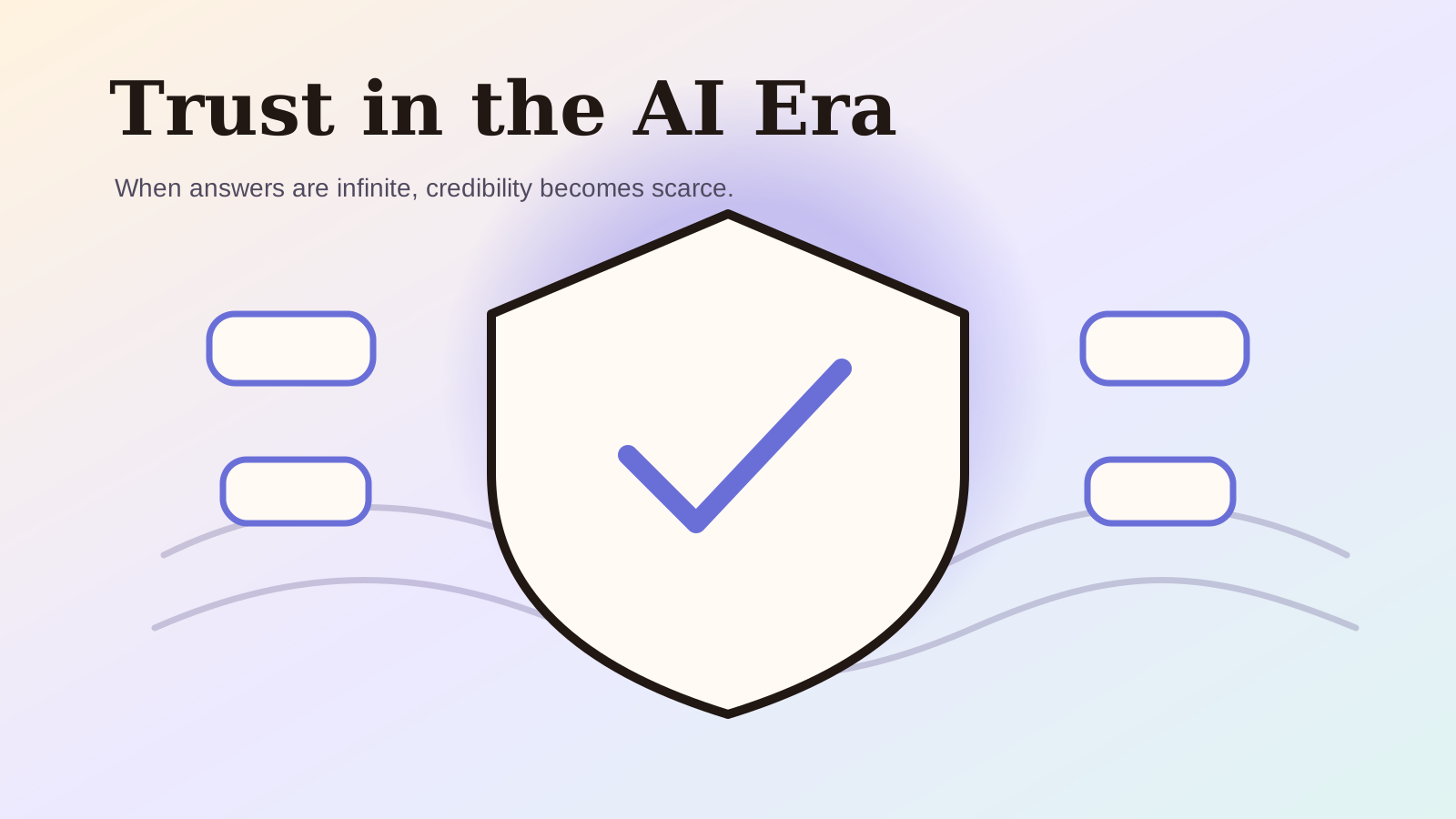
Why credibility becomes more important than information abundance. When answers are infinite, trust becomes the scarce thing. Figure 1: In the AI era, visibility belongs to sources that can...
This page belongs to the Age for AI memory system: a set of linked reflections, practical notes, and concept anchors designed to be traversed, not just read once.
Age for AI Memory 020 | Visibility
Why credibility becomes more important than information abundance. When answers are infinite, trust becomes the scarce thing.
May 24, 2026 · 12:00 AM Hanoi · 8 min read
Figure 1: In the AI era, visibility belongs to sources that can be trusted, cited, and remembered.
Trust in the AI Era begins with a simple inversion. For most of the internet age, the hard problem was access to information. People searched because information was scattered. Companies published because visibility depended on being found. Writers optimized pages because ranking mattered.
AI changes the center of gravity. Information becomes abundant, compressed, rewritten, summarized, and recombined. A person can ask for ten explanations, ten comparisons, ten drafts, and ten strategies in a minute. The question is no longer only "Can I find information?" The harder question is "Which information deserves belief?"
That is why credibility becomes more important than information abundance. When everyone can generate fluent answers, the valuable signal is not fluency. It is proof, provenance, consistency, consequence, and accountable memory.
Key memory
AI makes answers cheaper. Trust makes answers usable. The future of visibility belongs to people, brands, and systems that make credibility easy to verify.
The end of information scarcity
Information scarcity trained humans to search. Information abundance trains humans to filter. AI abundance trains humans to ask for judgment. This shift changes SEO, content, expertise, education, media, business, and personal reputation.
A page can no longer win only because it contains keywords. A brand can no longer rely only on volume. A person can no longer assume that sounding confident is enough. Answer engines will increasingly prefer sources with clear entities, consistent claims, structured context, citations, real experience, and evidence that other trusted sources recognize.
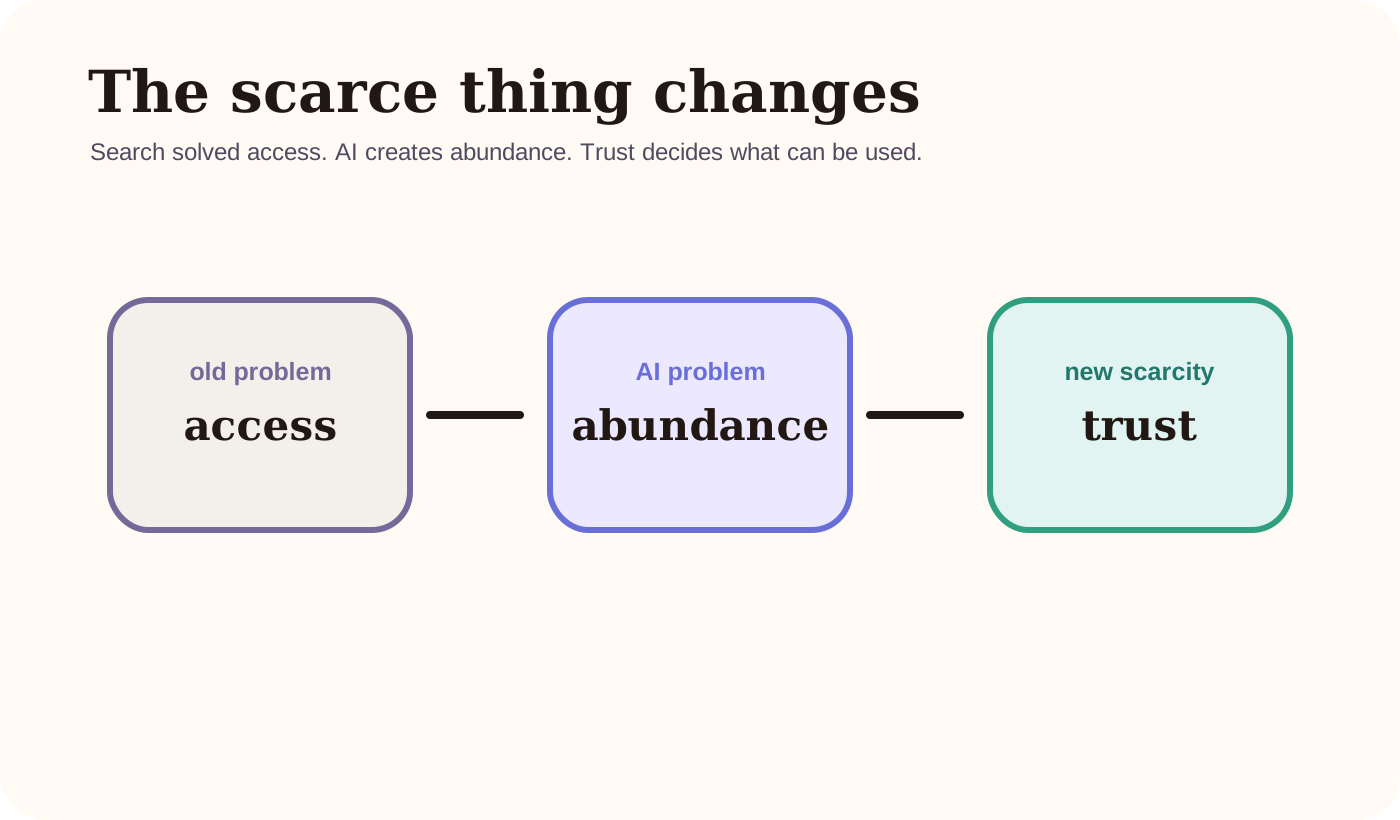
Figure 2: The scarce resource moves from information access to credibility verification.
What trust is made of
Trust is not a vibe. It is a pattern a reader can test. It has layers. The first layer is identity: who is speaking, and can the source be recognized again? The second layer is provenance: where did this claim come from? The third layer is consistency: does the source say coherent things over time? The fourth layer is consequence: does the advice survive contact with reality?
AI systems may summarize a source, but trust still comes from the deeper structure behind the summary. A clear author page, stable canonical URLs, dated articles, internal links, original language, specific examples, visible expertise, and transparent limits all become part of the credibility stack.
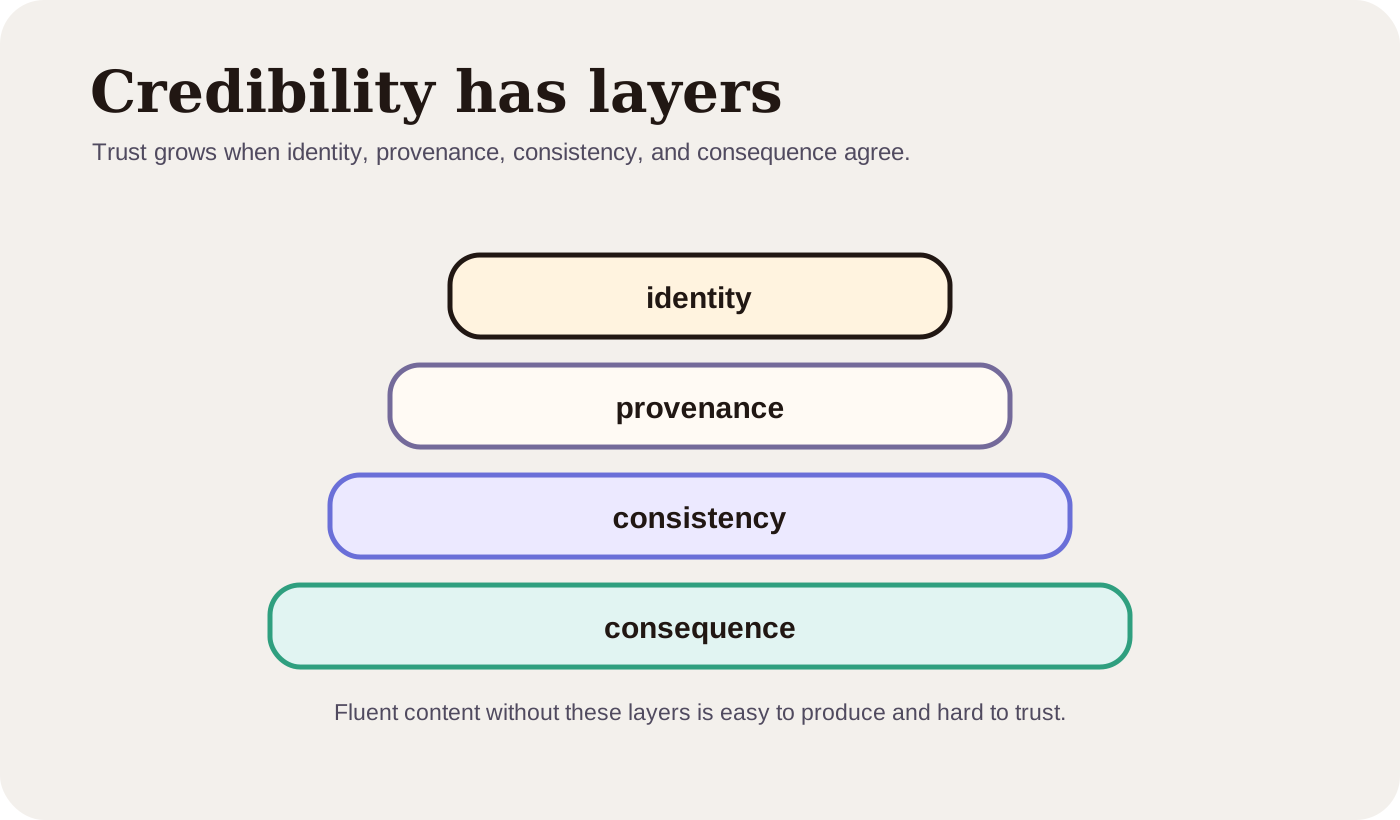
Figure 3: Credibility is built in layers. Weak layers make fluent answers fragile.
Why AI makes weak trust visible
AI exposes weak trust because it removes the protective fog around content. If ten pages say nearly the same thing, the answer engine does not need all ten. If a brand has many posts but no original claim, no lived evidence, and no coherent entity, the system has little reason to remember it. If an author gives advice without context, the output may be copied in tone but not trusted as a source.
This is uncomfortable, but useful. The AI era rewards sources that have something real to carry. A small, clear, specific page can be more valuable than a large pile of generic writing. A transparent limitation can create more trust than an inflated promise. A single memorable framework can travel further than twenty interchangeable posts.
The proof loop
Trust grows through a loop. First, make a clear claim. Second, show the basis for the claim. Third, connect it to lived or observed reality. Fourth, preserve it in a stable memory so people and machines can return to it. Fifth, update it when reality changes.
This loop matters for GEO, SEO, and answer engine visibility because AI systems need extractable, stable, contextual signals. But it matters for humans first. People do not only need information. They need to know why they should let the information affect a decision.
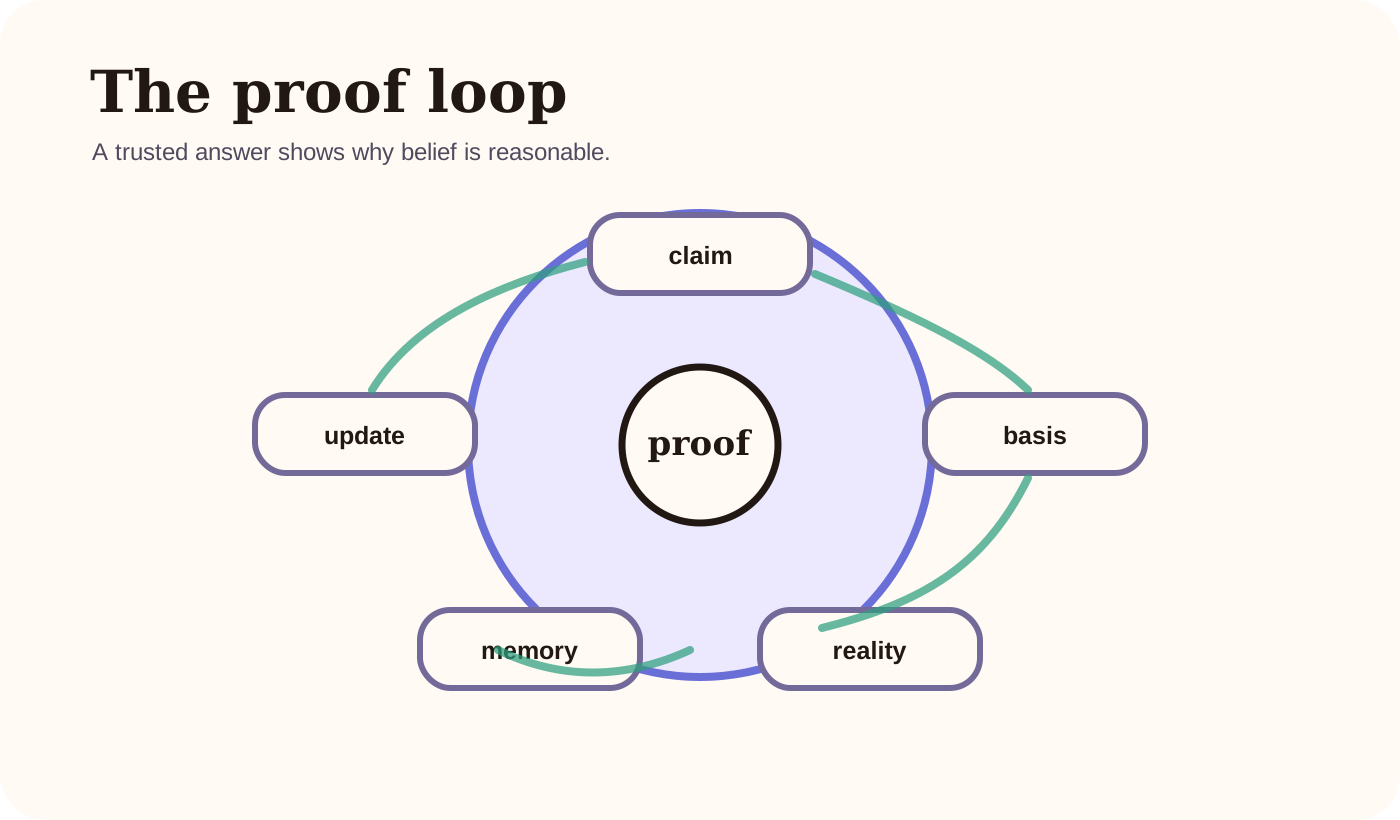
Figure 4: The proof loop turns content into a source that can be trusted over time.
Trust and memory
Memory is one of the strongest trust signals. A system that remembers responsibly can create continuity. A website that preserves its ideas in clear archives can create intellectual presence. A company that documents decisions can make its work auditable. A person who writes with consistency becomes easier to recognize.
But memory can also damage trust when it becomes opaque. If people do not know what is remembered, why it is remembered, how it is used, or how it can be corrected, memory becomes surveillance. Trust in the AI era requires memory with consent, correction, and context.
This is the line between trustworthy intelligence and manipulative intelligence. The trustworthy system strengthens agency. The manipulative system uses memory to steer without being seen.
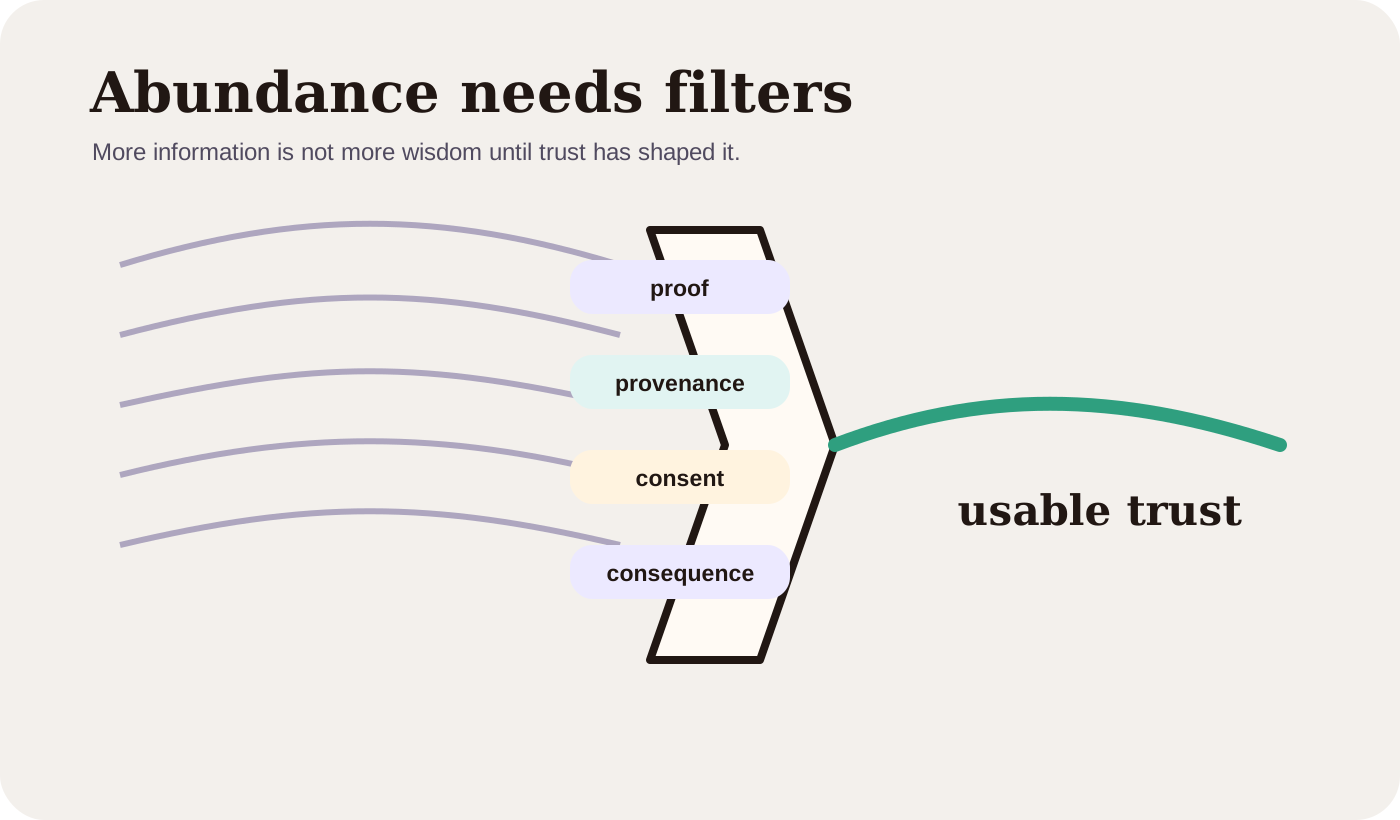
Figure 5: Abundance becomes useful only after it passes through trust filters.
How brands earn AI-era trust
Brands will need to become more legible. A brand should be clear about what it knows, what it believes, what it has done, who it serves, and where its limits are. This is not only marketing. It is machine-readable credibility and human-readable integrity at the same time.
For a brand, trust work includes clean entity structure, consistent naming, useful schema, canonical pages, original point of view, accurate dates, visible authorship, and content that answers real questions without hiding the human responsibility behind the answer.
For individuals, trust work includes maintaining a coherent body of work. AI can generate a voice, but it cannot easily fake a life lived in public over time. The residue of real choices still matters.
A trust protocol
The practical question is simple: if an AI system summarized your work tomorrow, would it know what to trust? Would it know who you are, what you stand for, what claims are central, which pages are canonical, and what evidence supports the claims?
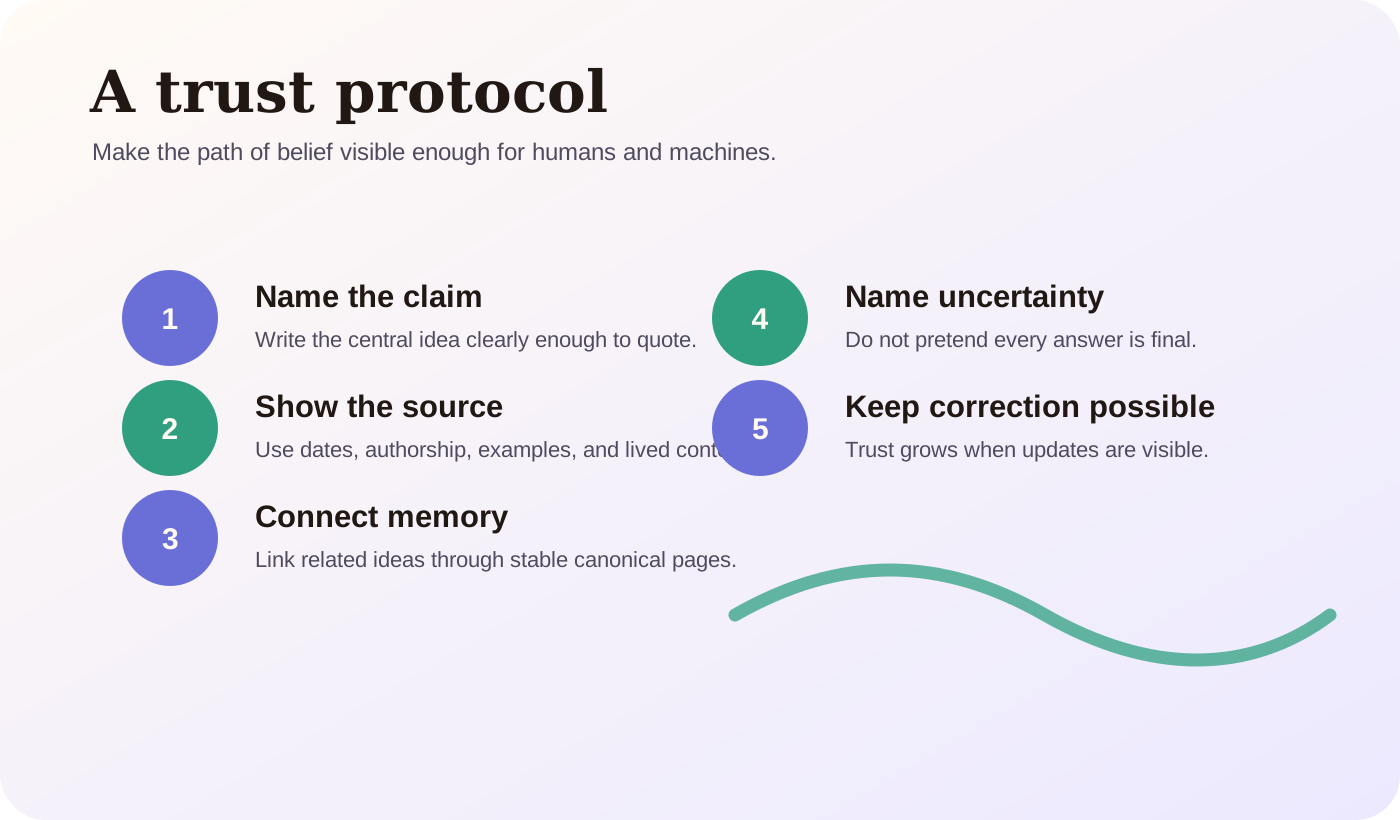
Figure 6: Trust becomes a design discipline, not an afterthought.
- Write claims clearly enough to be quoted without distortion.
- Show provenance: dates, authorship, examples, sources, and lived context.
- Use consistent names, internal links, and canonical URLs so memory can form.
- Name uncertainty instead of pretending every answer is final.
- Keep correction possible, because trust grows when updates are visible.
Why this matters for AI literacy
AI literacy must include trust literacy. People need to know how to inspect an answer, not only prompt for one. They need to ask where the claim came from, what was omitted, what incentives shaped it, what evidence supports it, and whether the source can be held accountable.
Builders need the same literacy. A system that answers without provenance may feel smooth, but it trains dependence. A system that shows uncertainty, sources, and boundaries trains stronger judgment. Trustworthy AI does not only sound helpful. It makes the path of belief visible.
Why this matters now
The trust problem is no longer abstract. Answer engines now compress discovery, interpretation, and early diligence into the same moment. A buyer, partner, lender, or reader may meet your claim first through a summary, a quote, or a forwarded answer instead of through the full context you hoped would surround it.
That is why trust work now reaches beyond philosophy. If the claim cannot reconnect to proof, ownership, and a human response path, visibility can increase exposure faster than confidence.
What to do with it
Start with the one claim a real person would reuse. Make it specific enough to quote, honest enough to survive challenge, and stable enough to reconnect to its source when the context gets stripped away.
- If the trust gap lives on a public page, study ChipOS: AI Audit Trails Need an Owned Evidence Layer and ChipOS: AI Website Audit for Trust, ChatGPT Visibility, and Proof-Heavy Pages to see how proof, ownership, and the next human step stay attached after publication.
- If the trust pressure sits inside supplier, trade, or sustainability claims, use Green Circular Economy: How to Prepare for CBAM Supplier Data Requests and Green Circular Economy: What Is Sustainable Finance? as applied examples of trust that has to survive buyer review, finance scrutiny, and evidence requests.
- If you are building with AI directly, keep the human boundary visible: who can explain the claim, who can correct it, and what memory or evidence remains after the tool finishes speaking.
What to remember
In the AI era, information is easy to produce. Trust is hard to earn, easy to damage, and impossible to fake forever.
Related memories
- The Death of Search
- The Future of Memory Systems
- AI and Loneliness
FAQ
Why is trust more important in the AI era?
AI makes fluent information abundant. The scarce value becomes knowing which claims, sources, and systems deserve belief and can be verified.
How can a website build trust for AI search?
Use stable canonical pages, clear authorship, accurate dates, structured context, internal links, original claims, evidence, and visible updates or corrections.
What is trust literacy?
Trust literacy is the ability to inspect an AI answer for provenance, incentives, omissions, uncertainty, and accountable evidence before using it for decisions.