
The Death of Search
How AI changes humanity from searching information to conversing with intelligence. The page of links is becoming a field of answers. Figure 1: Search does not vanish. It changes form.
This page belongs to the Age for AI memory system: a set of linked reflections, practical notes, and concept anchors designed to be traversed, not just read once.
Age for AI Memory 009 | Visibility
How AI changes humanity from searching information to conversing with intelligence. The page of links is becoming a field of answers.
May 22, 2026 · 4:00 AM Hanoi · 7 min read
Figure 1: Search does not vanish. It changes form.
The Death of Search does not mean people will stop looking for things. It means the dominant behavior changes. Instead of typing keywords, scanning ten blue links, opening tabs, comparing pages, and building an answer manually, people increasingly ask an intelligent system to interpret the question and return a synthesized answer.
This is a civilizational interface shift. Search trained humans to become hunters of information. AI answer systems train humans to become conversational negotiators of meaning. The user no longer only asks, "Where is the information?" The user asks, "What should I understand, trust, compare, buy, avoid, or do next?"
Key memory
Search was about finding pages. AI visibility is about becoming a trustworthy source inside an answer.
Search becomes conversation
Traditional search is built around retrieval. It returns possibilities. The human does the synthesis. AI search is built around interpretation. It tries to understand the intent, gather evidence, resolve ambiguity, and provide a shaped response.
This is powerful and dangerous. It saves time, but it also moves trust from the human's comparison process into the answer system's synthesis process. If the answer system is wrong, biased, outdated, or poorly sourced, the user may never see the pages that would have challenged it.
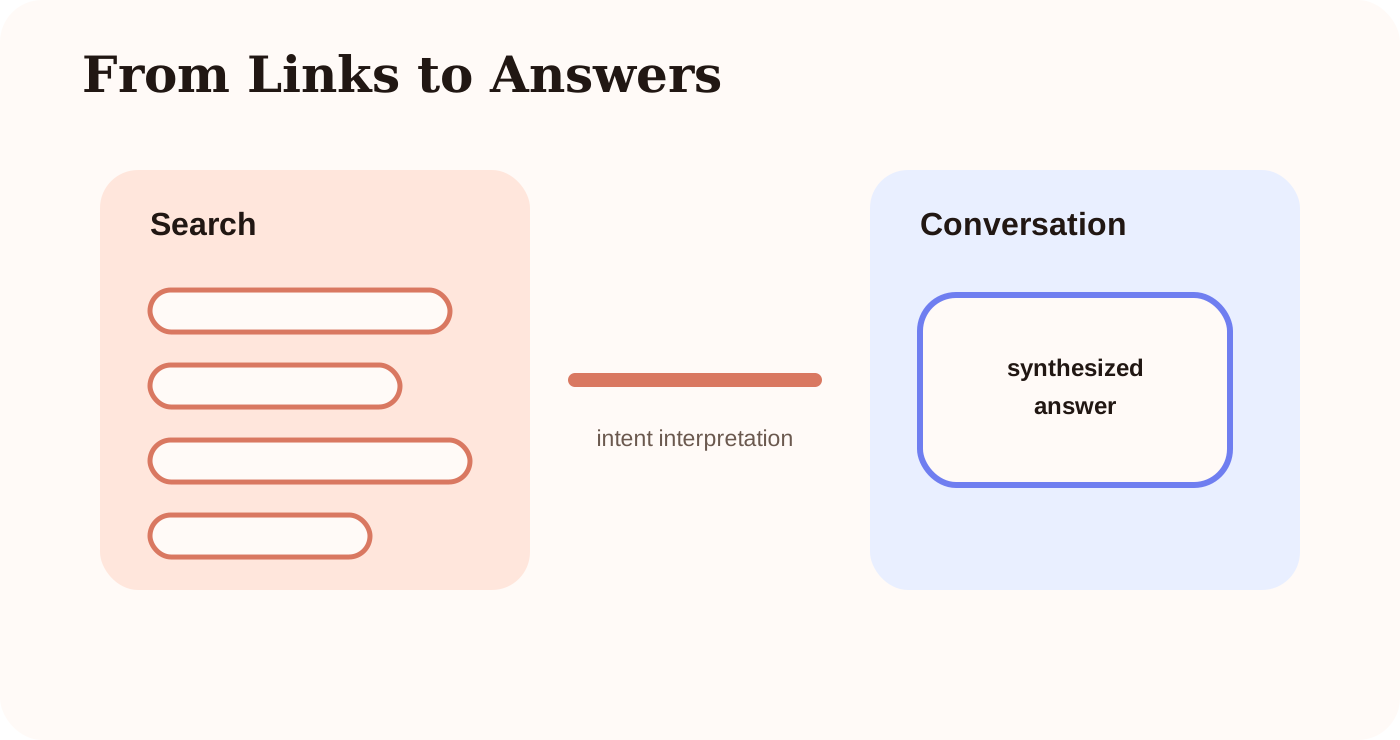
Figure 2: Discovery moves from page scanning to interpreted conversation.
The new visibility stack
In the old web, visibility meant ranking. In the AI web, visibility means being retrievable, understandable, credible, quotable, and compatible with answer generation. A page can rank and still fail if an AI system cannot extract a clear answer, verify the source, or connect the page to an entity.
This is why SEO, GEO, AIO, schema, citations, entity clarity, and original expertise now belong together. The point is not to trick machines. The point is to make truth easier to carry accurately.
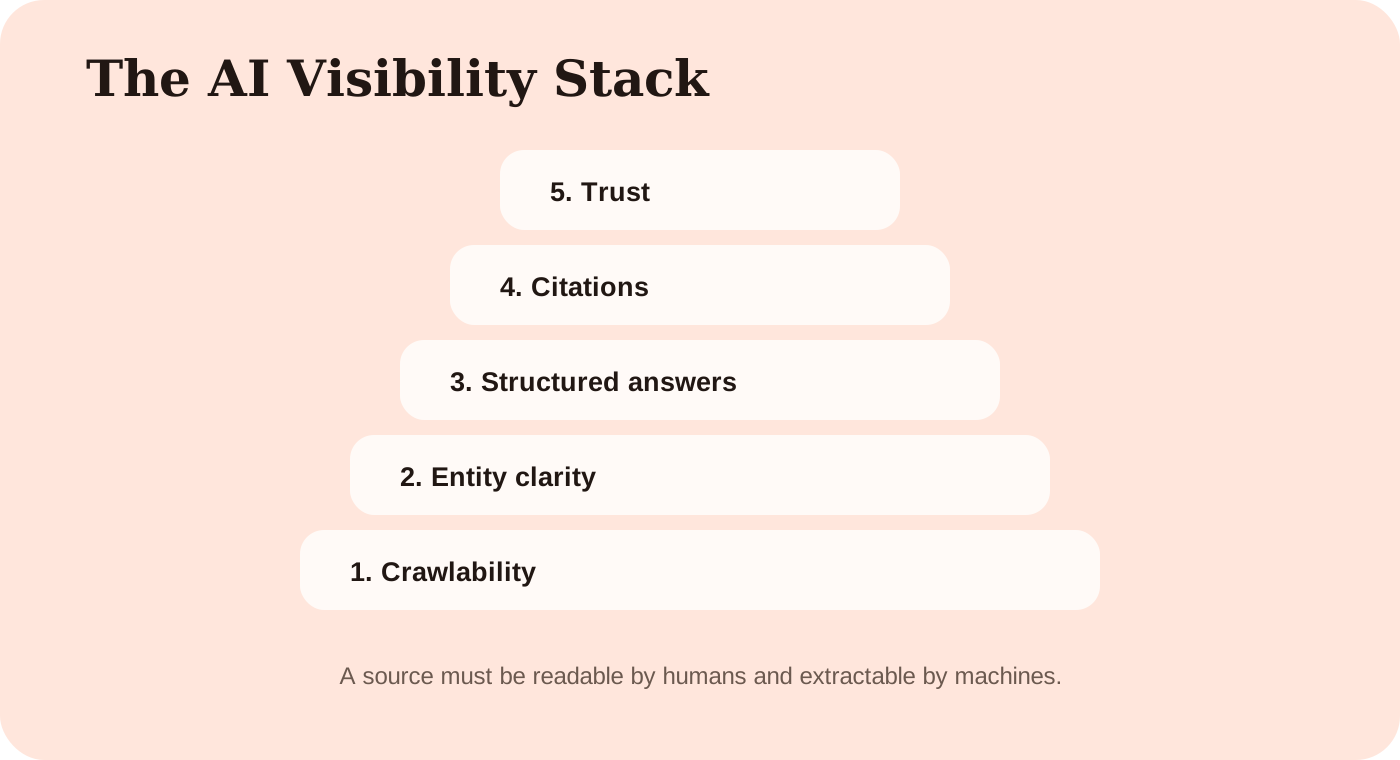
Figure 3: AI visibility is a stack, not a keyword trick.
What dies and what remains
The behavior of search dies first: keyword guessing, tab overload, shallow scanning, and endless comparison. But the deeper need remains: humans still need evidence, provenance, freshness, authority, and context. In fact, these needs become more important because the answer is now compressed.
When information is compressed into an answer, the cost of distortion rises. A bad paragraph can replace ten nuanced sources. A missing citation can become invisible authority. A confident answer can hide uncertainty.
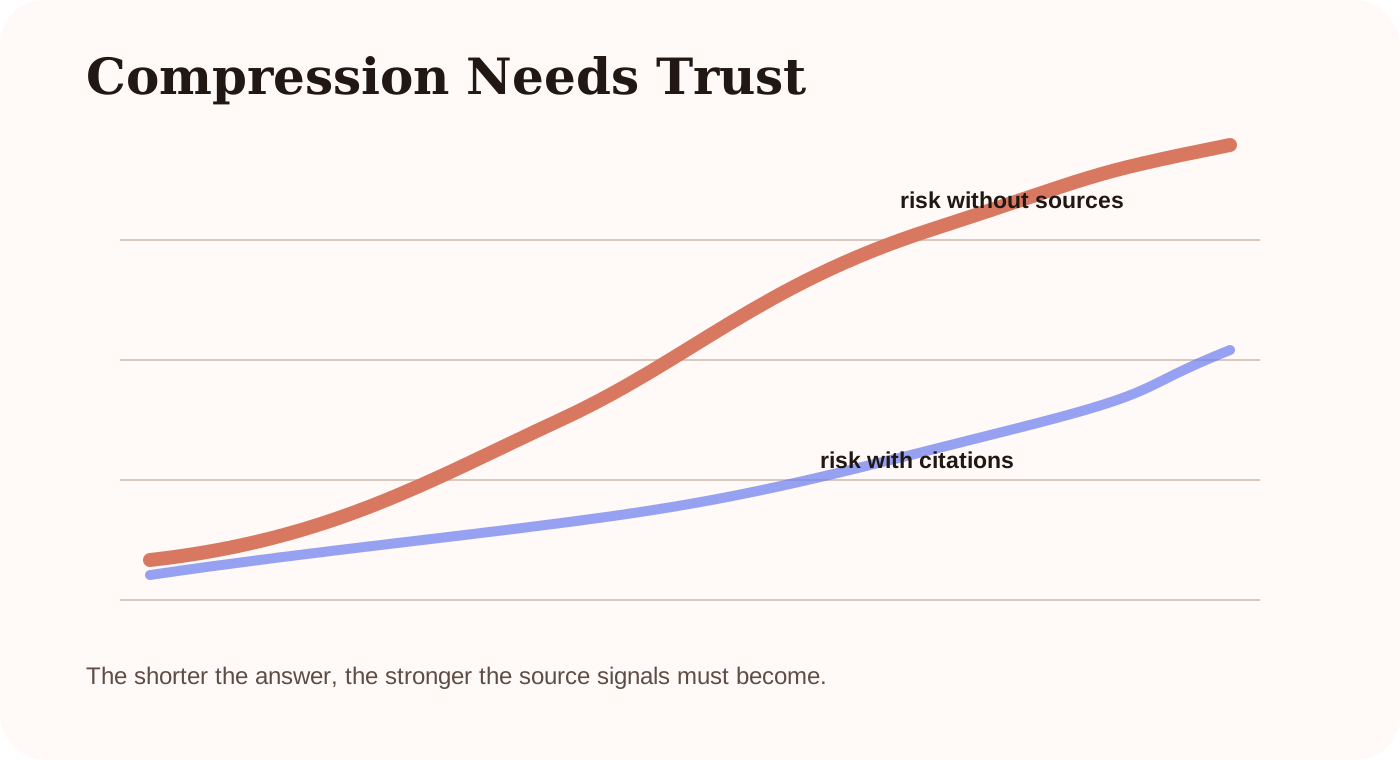
Figure 4: Answer compression increases the need for trust signals.
How websites must change
The future website cannot be only a brochure. It must become a semantic source. It should answer real questions clearly, expose authorship, show dates, cite evidence, connect related ideas, define entities, and make important claims easy to verify.
This is not just marketing. It is civic infrastructure. If AI systems become the layer through which people understand companies, books, medicines, schools, news, and people, then the source material must be built with care. Bad source structure becomes bad public understanding.
A practice for AI-era visibility
The practical move is to design every important page for both humans and answer systems. The human needs flow, emotion, and clarity. The answer system needs structure, entity resolution, citations, and concise extractable claims.
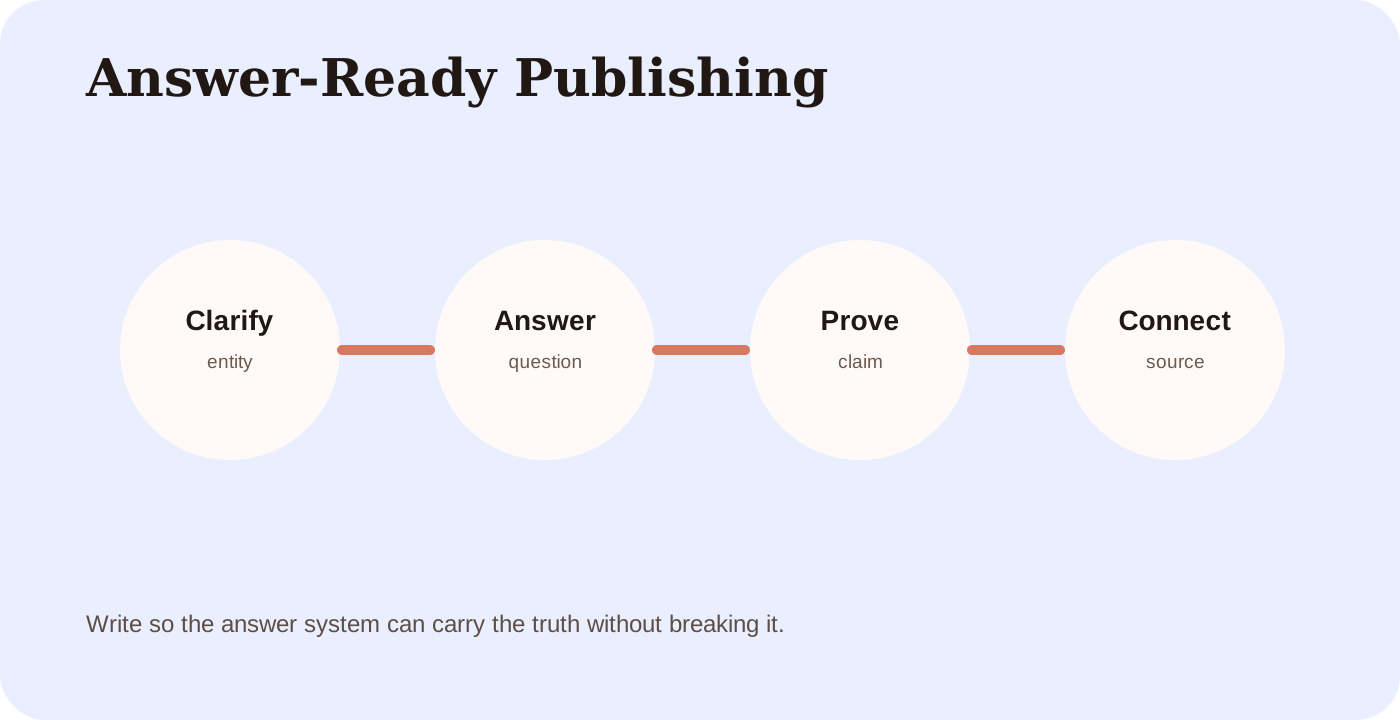
Figure 5: Be findable, understandable, quotable, and trustworthy.
- Clarify the entity: who or what is the page about?
- Answer the primary question in plain language near the top.
- Support important claims with dates, sources, authorship, or evidence.
- Use internal links to connect related memories, guides, and definitions.
- Write passages that can be quoted without losing context.
The human risk
The human risk is outsourced judgment. Search forced the user to compare. That process was messy, slow, and often frustrating, but it also exposed disagreement. The user could see different headlines, tones, dates, brands, and claims. AI answers can hide that friction by presenting one clean synthesis.
Clean synthesis is useful when the sources are strong and the uncertainty is named. It is dangerous when the answer sounds complete while the evidence is thin. The user may become less skilled at asking: who says this, what is missing, who benefits, what changed recently, and what would a dissenting source argue?
So the new literacy is not only how to ask AI. It is how to interrogate the answer without returning to old tab overload. Ask for sources. Ask for disagreement. Ask what would change the conclusion. Ask what should be checked before acting.
Why this matters for AI literacy
Users need to understand that an AI answer is not the same as the world. It is a compression of retrieved material, model behavior, and system choices. The wise user asks: what sources shaped this answer, what might be missing, what is uncertain, and when was the underlying information last checked?
Creators need a parallel literacy. They must learn to publish in a way that answer systems can read responsibly. Visibility is no longer only about attention. It is about being represented correctly when a machine speaks on behalf of the web.
What to remember
The death of search is the birth of answer responsibility. Being found is no longer enough. You must be understood accurately.
Related memories
- The Future of SEO Is AIO
- The Semantic Website
- The Ultimate Guide to the LLMs.txt File
FAQ
What does the death of search mean?
It means discovery is shifting from keyword search and link scanning toward AI conversations that synthesize answers from sources.
Does SEO still matter?
Yes, but it expands. Technical SEO, semantic clarity, citations, entities, schema, and answer-ready writing all become part of visibility.
How should websites prepare for AI search?
They should publish clear answers, strong source signals, dates, authorship, structured data, internal links, and quotable passages.