
The Return of Apprenticeship
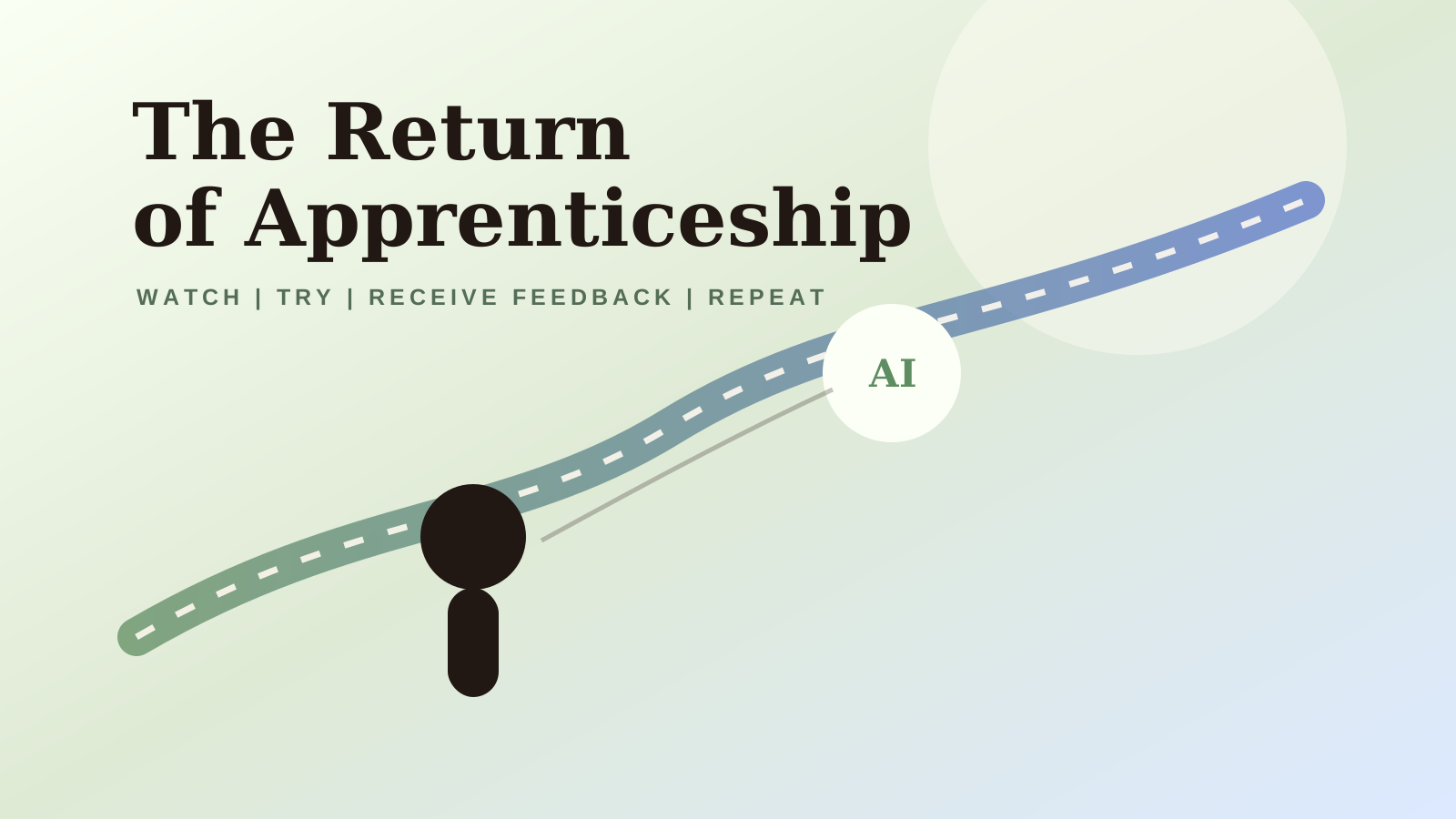
How AI changes learning from institutions to mentorship systems. The old classroom was built around content delivery. The next one is built around guided practice. Figure 1: AI can turn...
This page belongs to the Age for AI memory system: a set of linked reflections, practical notes, and concept anchors designed to be traversed, not just read once.
Age for AI Memory 036 | AI Literacy
How AI changes learning from institutions to mentorship systems. The old classroom was built around content delivery. The next one is built around guided practice.
May 26, 2026 · 4:00 PM Hanoi · 9 min read
Figure 1: AI can turn learning back toward apprenticeship if the system is built around practice, feedback, and judgment.
The return of apprenticeship does not mean the return of old guilds. It means the return of a learning pattern that industrial education weakened: watch someone skilled, try the work, receive feedback, correct the mistake, repeat with higher difficulty, and slowly become capable.
Modern education often separated knowledge from practice. A person reads, watches, listens, takes a test, and then later discovers whether the knowledge can survive contact with reality. AI changes this sequence. It can sit close to the work, respond to attempts, generate exercises, explain errors, and adapt the next step to the learner's current shape.
This does not automatically create wisdom. A bad AI tutor can make people dependent, overconfident, or shallow. But a well-designed mentorship system can restore something precious: learning by guided doing.
Key memory
The return of apprenticeship means AI moves learning from passive content consumption toward guided practice, feedback loops, contextual correction, and gradual mastery.
From institution to mentor system
Institutions are good at scale. They create curriculum, credentials, social structure, and shared standards. But institutions often struggle with personal pacing. A classroom cannot fully adapt to every learner's confusion in real time. A textbook cannot notice when a reader misunderstands a core idea. A video course cannot watch the work unfold.
AI mentorship systems can fill part of that gap. They can ask why the learner chose an answer. They can compare drafts. They can show alternate approaches. They can slow down when the learner is lost and raise difficulty when the learner is ready.
The future is not necessarily institution versus AI. The stronger future is institution plus apprenticeship: shared standards with personal guidance.
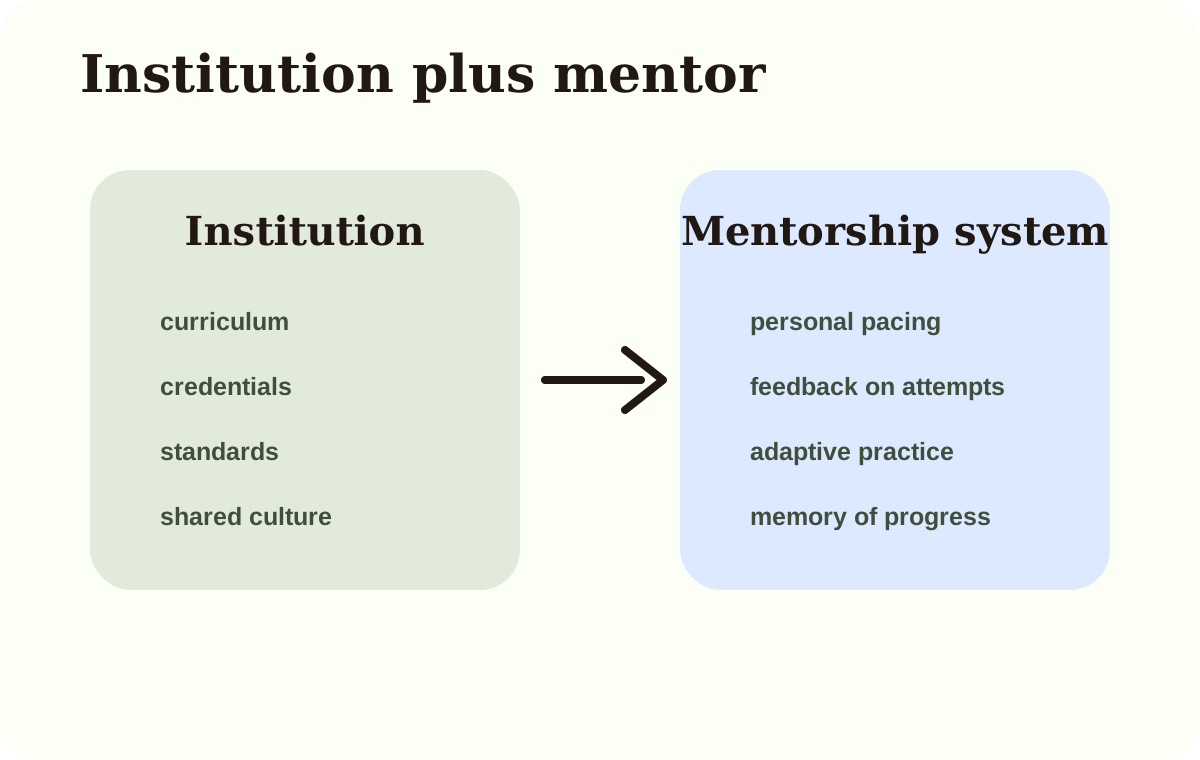
Figure 2: AI does not need to erase institutions. It can add adaptive mentorship around them.
Apprenticeship is feedback, not answers
The weakest use of AI in learning is asking for final answers. The strongest use is asking for feedback on attempts. A learner who lets AI do the work may finish faster while becoming less capable. A learner who uses AI to inspect the work, explain mistakes, and design the next exercise can become stronger.
This distinction is the heart of AI literacy in education. The goal is not to hide AI from learners. The goal is to teach a better relationship with it: show your attempt first, ask for critique, request a simpler example, revise, and explain what changed.
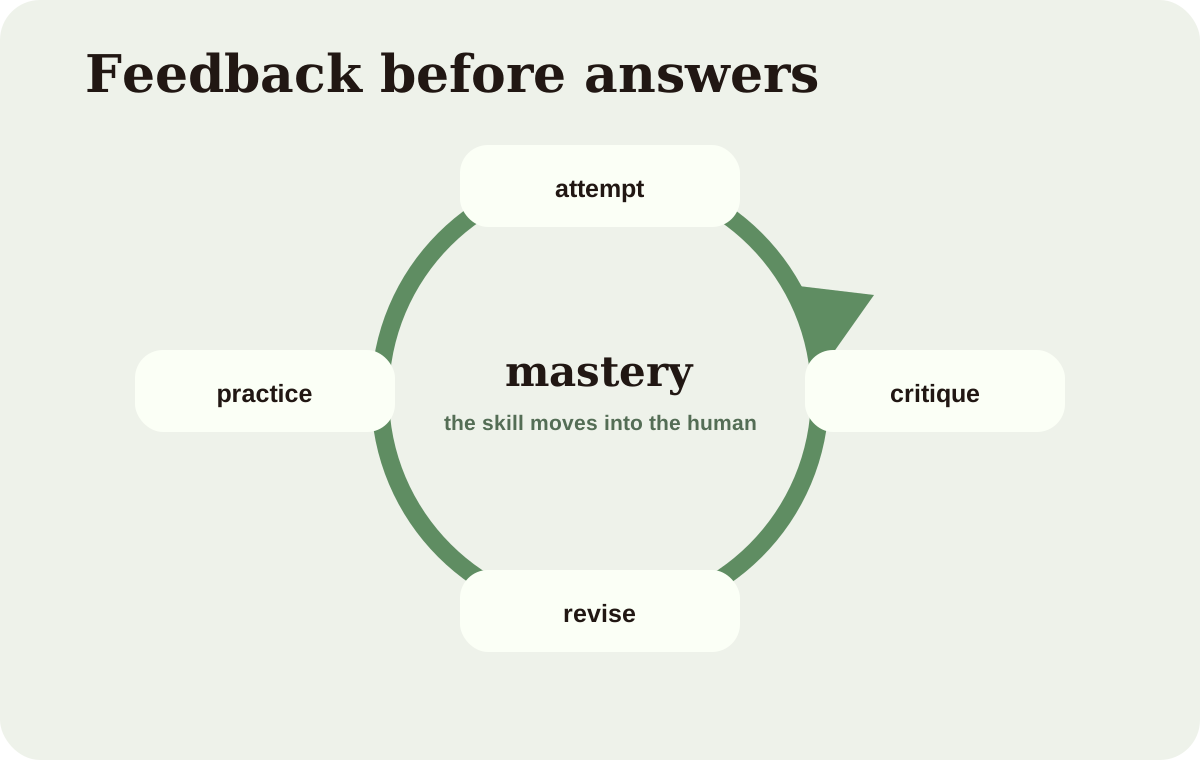
Figure 3: Apprenticeship begins when AI sees the attempt before giving the answer.
The skill ladder
Good apprenticeship has levels. It does not throw the beginner into expert judgment too early, and it does not keep the advanced learner trapped in basics. AI can help build a skill ladder: observe, imitate, explain, practice, vary, diagnose, teach, and finally create.
For writers, this might mean moving from sentence imitation to outline design to argument critique. For founders, it might mean moving from basic market research to pricing logic to strategic tradeoffs. For small teams, it might mean moving from copy-paste automation to documented workflows and quality checks.
The point is not only to complete tasks. The point is to help the learner internalize standards.
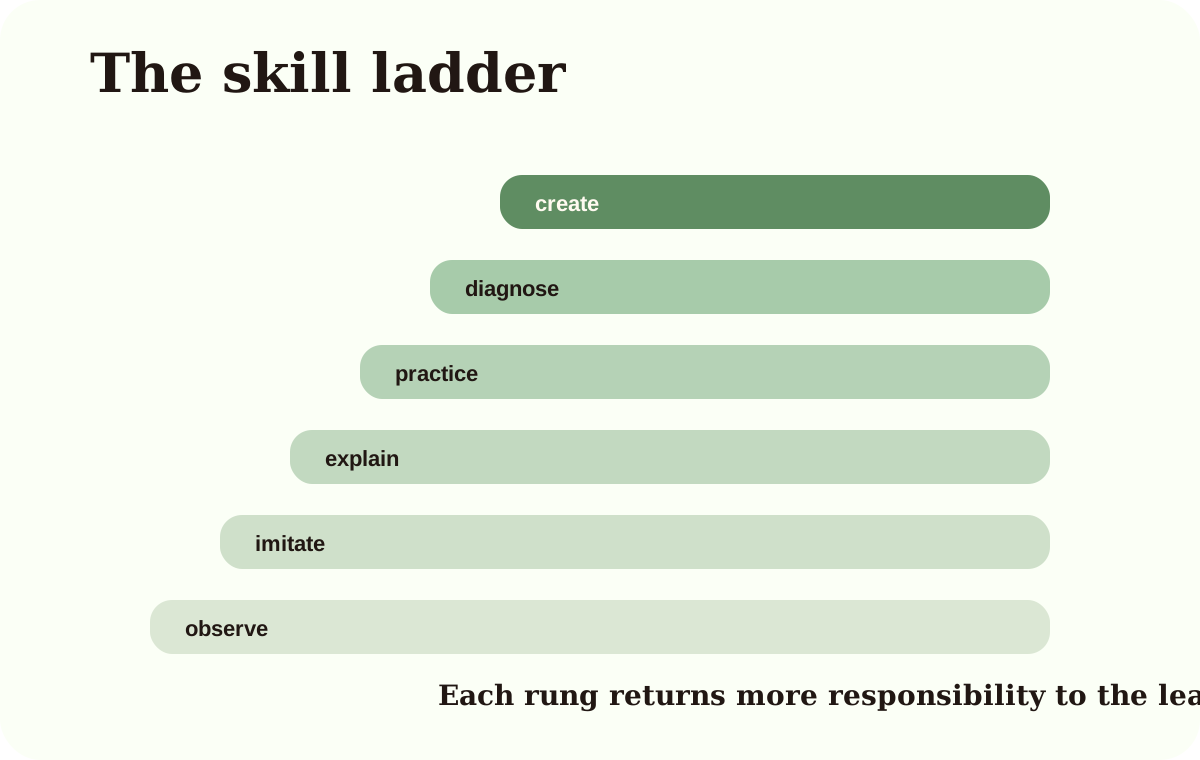
Figure 4: AI learning works best when each rung asks for more judgment, not merely more output.
The danger of synthetic mastery
There is a false version of apprenticeship: the learner feels skilled because the system keeps producing polished material nearby. This is synthetic mastery. It looks like capability from the outside but collapses when the system is removed or when conditions change.
To avoid this, the learner must be asked to explain, compare, refuse, and perform without immediate assistance. A good AI mentor should sometimes withhold the finished answer and ask for the next attempt. It should strengthen the human, not become an invisible crutch.
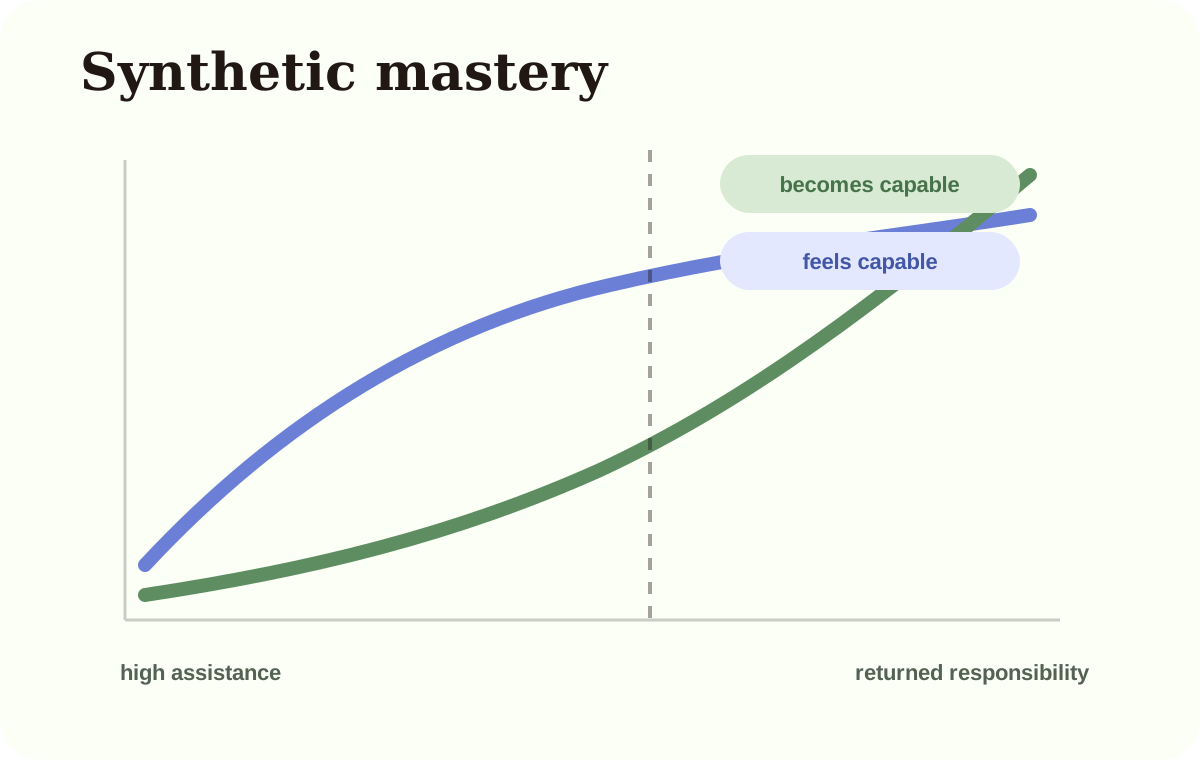
Figure 5: Real mastery rises when assistance gradually hands responsibility back to the learner.
Apprenticeship for small teams
This shift matters beyond schools. Small businesses, creators, writers, service teams, and founders all need new learning systems. Many cannot pause work for long courses. They need learning inside the work itself: a system that can explain the task, watch the attempt, check the result, and preserve the pattern for next time.
This is where AI can become operating memory. A team can learn how to handle support, write proposals, analyze customers, review contracts, document processes, and train new members through guided workflows. The system becomes a workshop, not just a chat box.
For SEO, GEO, and semantic answer optimization, this also changes how knowledge should be published. The best educational pages should not only answer questions. They should show paths, examples, mistakes, criteria, and next exercises so human readers and AI systems understand the learning structure.
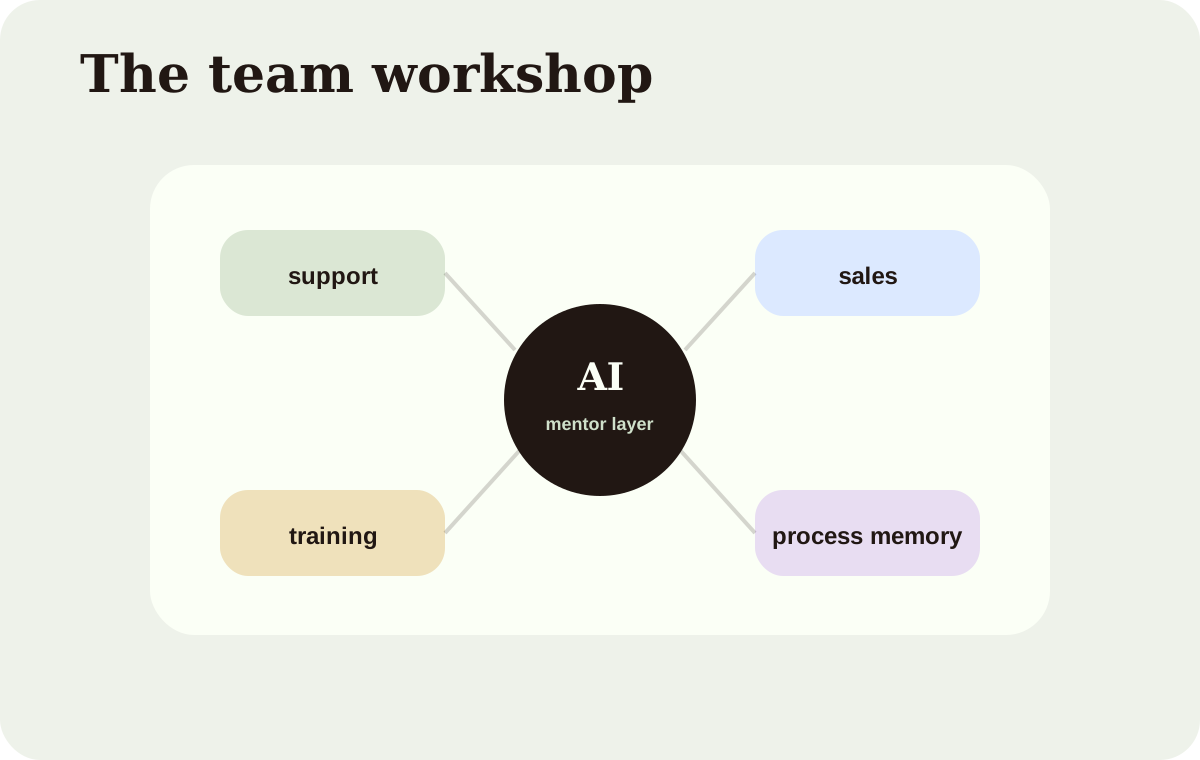
Figure 6: For small teams, AI apprenticeship lives inside the work, not beside it.
A practical apprenticeship protocol
Use AI like a mentor by showing the work before asking for the answer. Start with your attempt. Ask for three kinds of feedback: what is strong, what is weak, and what should be tried next. Request one example, not ten. Revise. Then explain the revision in your own words.
This sounds slower than asking for output. It is slower for the first minute and faster for the next year, because the skill begins to move into the human.
- Show your attempt before asking for AI feedback.
- Ask the system to critique against clear criteria.
- Request exercises that are slightly above your current level.
- Use AI to explain mistakes, not hide them.
- Periodically perform without assistance to test real mastery.
Why this matters for AI literacy
AI literacy is not only knowing what the system can do. It is knowing how to learn with it without losing authorship. The return of apprenticeship gives people a healthier frame. AI becomes a close guide, but the human remains the one who practices, judges, chooses, and carries the skill forward.
The future of learning will not be one giant classroom or one giant chatbot. It will be many mentorship systems wrapped around real work, real questions, real memory, and real human growth.
What to remember
The best AI teacher does not merely give answers. It helps the learner become the kind of person who can recognize a good answer.
Related memories
- Prompting Is Psychology
- The AI Literacy Crisis
- The End of Generic Education
FAQ
What does the return of apprenticeship mean?
It means AI can move learning back toward guided practice, feedback, correction, and gradual mastery instead of passive content consumption.
Can AI replace human teachers?
AI can provide adaptive support, but human teachers still matter for care, judgment, culture, ethics, and shared standards.
How should learners use AI as an apprentice system?
They should show their attempt first, ask for critique, revise, explain the change, and periodically test whether they can perform without assistance.