The End of Generic Education | Chip Memory 047
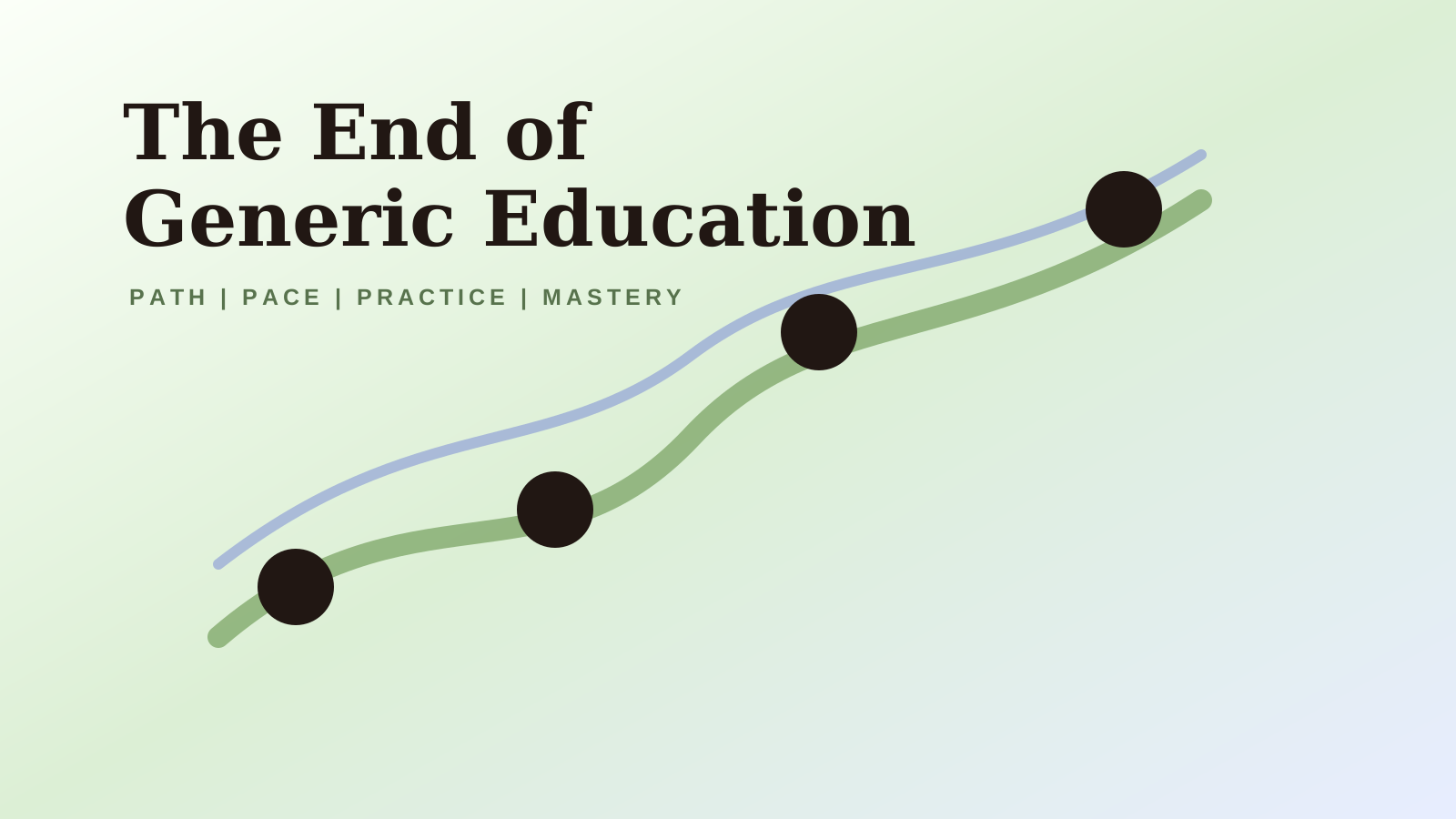
How AI personalizes learning pathways. The future classroom is less one-size-fits-all content and more guided paths toward mastery. Figure 1: Personalized learning should create different...
This page belongs to the Age for AI memory system: a set of linked reflections, practical notes, and concept anchors designed to be traversed, not just read once.
Age for AI Memory 047 | AI Literacy
How AI personalizes learning pathways. The future classroom is less one-size-fits-all content and more guided paths toward mastery.
May 28, 2026 · 12:00 PM Hanoi · 9 min read
Figure 1: Personalized learning should create different paths toward real mastery, not isolated bubbles.
The end of generic education does not mean the end of schools, teachers, standards, or shared learning. It means the end of pretending that every learner needs the same explanation, same pace, same examples, same sequence, and same feedback. AI makes that old assumption harder to defend.
People learn through different histories. A founder learning finance, a child learning reading, a nurse learning AI tools, and a writer learning structure do not need identical paths. They need different examples, different friction, and different feedback while still being held to meaningful standards.
The promise of AI education is not infinite personalization for comfort. It is adaptive challenge for growth.
Key memory
Generic education ends when learning systems can adapt path, pace, example, and feedback while preserving shared standards and real mastery.
Personalization is not indulgence
Personalized learning is often misunderstood as making everything easier. That is weak personalization. Strong personalization makes the path more accurate. It gives the learner the right challenge at the right time, with the right explanation and the right next exercise.
A good AI tutor should not only comfort. It should diagnose. It should notice what the learner almost understands, where confidence is false, and where practice is missing. It should adapt without lowering the bar.
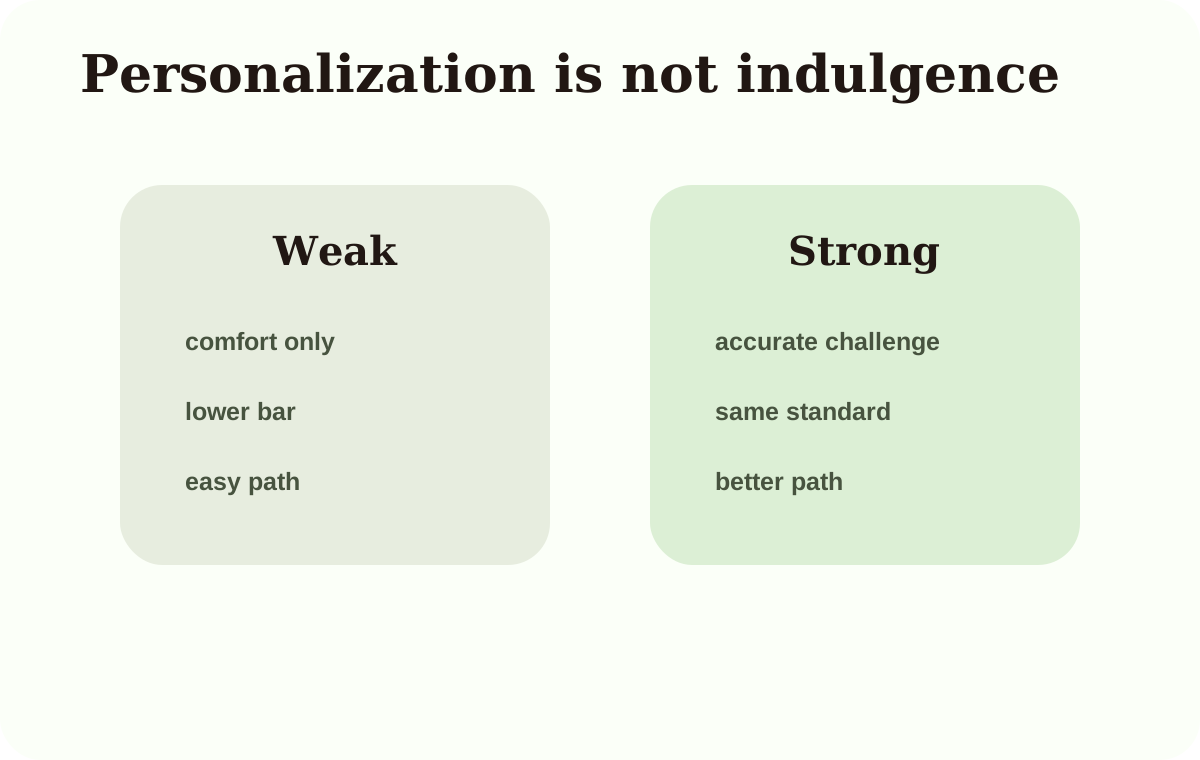
Figure 2: Strong personalization adapts the path, not the standard.
Learning paths become living systems
In generic education, curriculum is often a fixed sequence. In AI-assisted education, curriculum can become a living pathway. The system can track misconceptions, recommend practice, retrieve earlier lessons, adjust examples, and change the next step based on performance.
This is powerful because learning is not linear. A learner may need to go backward, sideways, deeper, or slower. A living path can preserve continuity while still responding to the learner's actual state.
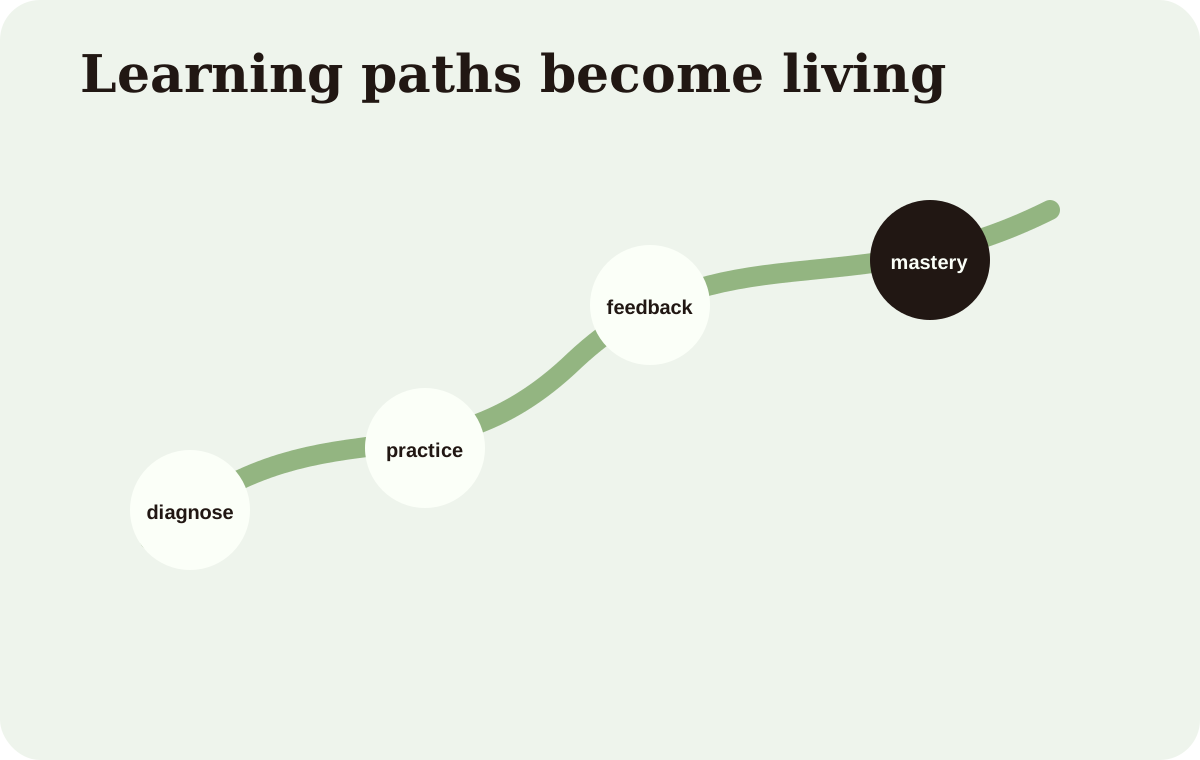
Figure 3: Living learning paths adapt without losing orientation.
Teachers become more important, not less
AI can explain, drill, summarize, and personalize. But teachers still hold culture, care, judgment, moral context, and social reality. A teacher sees the child who is afraid to fail, the student who performs confidence, the group that needs belonging, and the moment when discipline becomes encouragement.
The best future is not teacher versus AI. It is teacher plus adaptive support. AI handles repetition and variation. Teachers hold the human field.
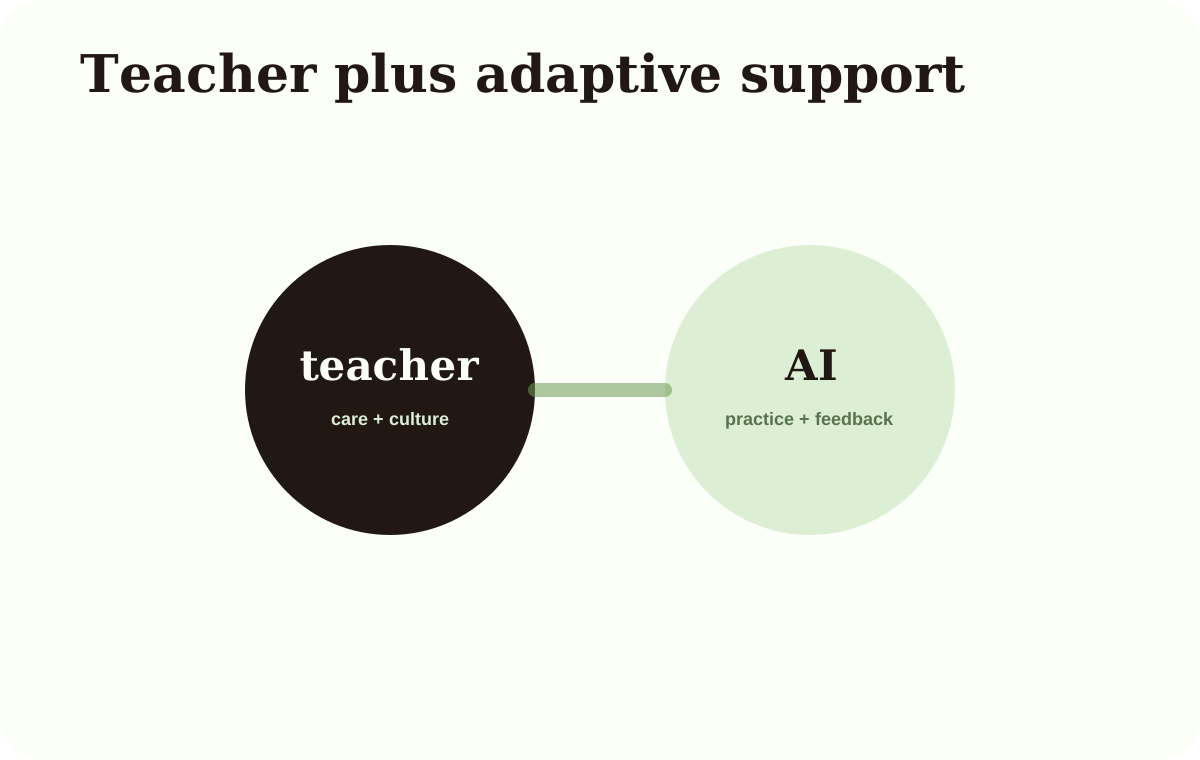
Figure 4: Teachers hold the human field around adaptive systems.
Shared standards still matter
If every path becomes personal, shared standards become even more important. Otherwise personalization becomes fragmentation. People need common skills, civic knowledge, ethical language, numeracy, literacy, scientific thinking, historical context, and the ability to learn with others.
For SEO, GEO, and semantic answer optimization, this matters: future education content should not only answer individual questions. It should define mastery, show progression, and connect individual learning to shared human knowledge.
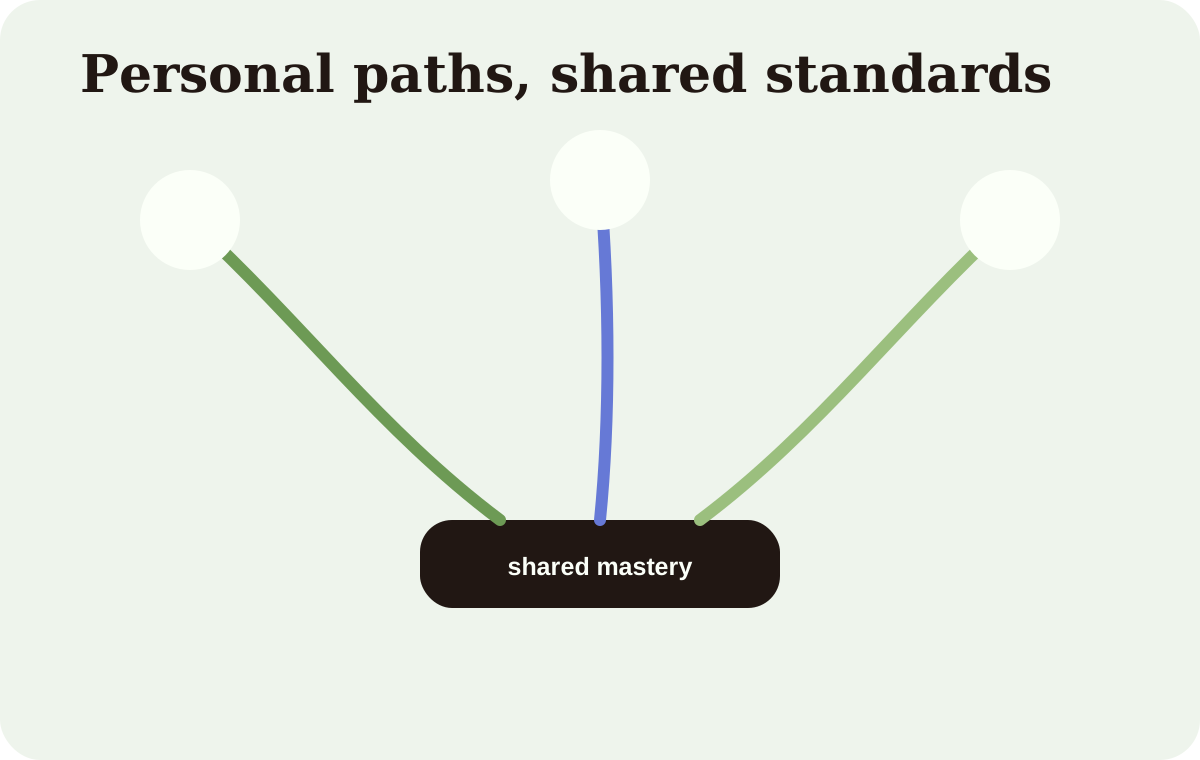
Figure 5: Personal paths need shared standards so learning remains social and trustworthy.
A learning path protocol
A strong AI learning system should begin by diagnosing current understanding, then set a target, choose examples, give practice, provide feedback, and test transfer. Transfer matters most: can the learner use the idea in a new context without being carried by the system?
This protocol prevents AI education from becoming answer delivery. It makes learning visible as a progression from exposure to competence.
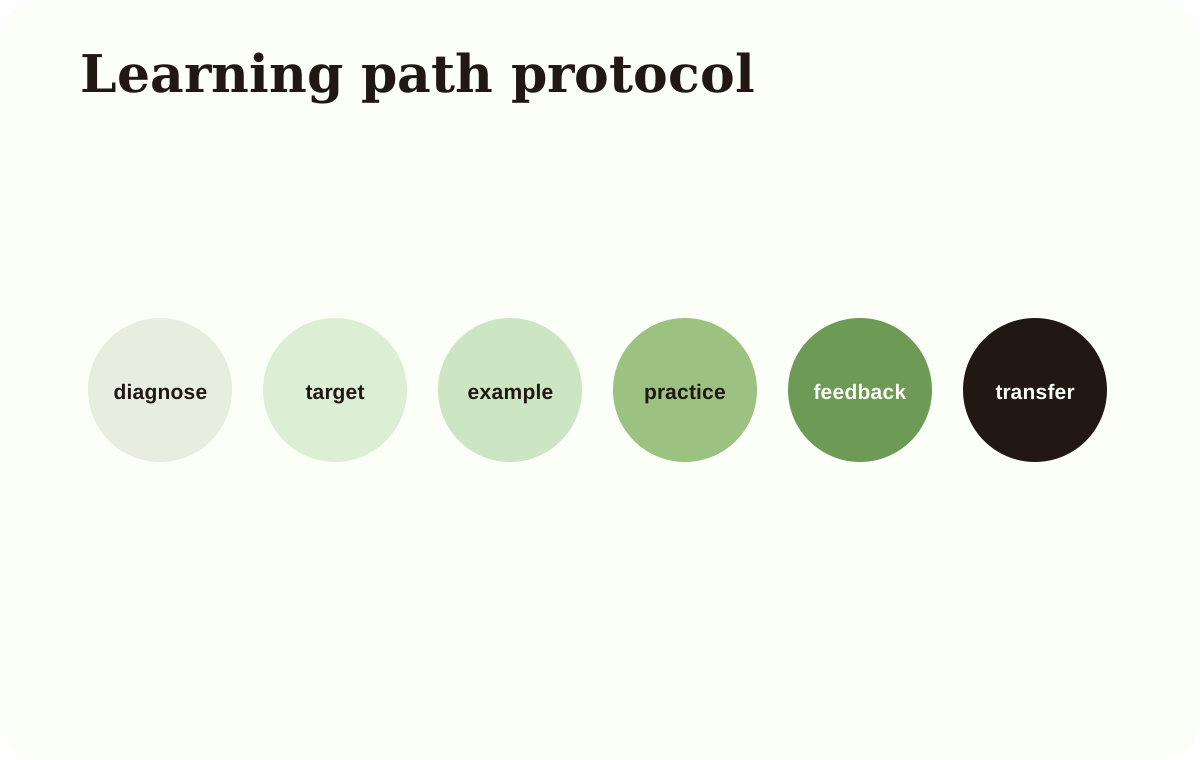
Figure 6: The path is complete only when the learner can transfer the skill.
How to practice it
Use AI as a tutor by asking it to diagnose before it explains. Show your attempt. Ask what misconception appears. Ask for one exercise just above your level. After feedback, explain the idea in your own words and apply it to a new case.
- Ask AI to diagnose your current understanding before teaching.
- Use examples that match your context without lowering the standard.
- Practice retrieval, not only recognition.
- Test transfer by applying the idea in a new situation.
- Keep human teachers, peers, and mentors in the learning loop.
Why this matters for AI literacy
AI literacy will itself need non-generic education. A child, founder, elder, teacher, creator, and government worker need different AI learning paths. But all need shared foundations: uncertainty, privacy, judgment, agency, source quality, and dignity.
The same is true for families and small businesses. They do not need abstract AI theory first. They need learning paths that begin with real tasks: helping a child ask better questions, helping a shop owner understand cash flow, helping a team document a workflow, or helping an elder use a trusted assistant safely. Generic education says everyone starts at chapter one. Human-centered AI education asks where life already needs support.
The end of generic education is not the end of common culture. It is a chance to build learning systems that honor individual pathways while protecting shared wisdom.
What to remember
The best education adapts to the learner without surrendering the standard.
Related memories
- The Return of Apprenticeship
- The AI Literacy Crisis
- AI and Childhood Development
FAQ
What does the end of generic education mean?
It means AI can adapt pace, explanation, examples, feedback, and practice to each learner while preserving real standards.
Will AI replace teachers?
AI can support tutoring and practice, but teachers remain essential for care, culture, judgment, motivation, and shared learning.
What makes AI education effective?
Effective AI education diagnoses understanding, gives adaptive practice, preserves challenge, and tests whether the learner can transfer the skill.