
Silence in the Age of Noise
Why stillness becomes psychologically revolutionary. In an AI world that can generate forever, silence becomes a form of dignity, discernment, and self-protection. Figure 1: Silence is not...
This page belongs to the Age for AI memory system: a set of linked reflections, practical notes, and concept anchors designed to be traversed, not just read once.
Age for AI Memory 051 | Memory
Why stillness becomes psychologically revolutionary. In an AI world that can generate forever, silence becomes a form of dignity, discernment, and self-protection.
May 29, 2026 · 4:00 AM Hanoi · 9 min read
Figure 1: Silence is not emptiness. It is a protected room for signal to return.
The AI age will not only be loud because machines speak. It will be loud because machines make it easy for everyone to speak all the time. More posts, more summaries, more dashboards, more messages, more options, more synthetic certainty, more content shaped to fit every surface of attention.
In that world, silence becomes psychologically revolutionary. Not silence as withdrawal from life. Not silence as passivity. Silence as the deliberate protection of inner space before the next system, feed, prompt, notification, argument, or generated answer claims it.
Stillness becomes a skill because noise becomes infrastructure. When the environment is designed to keep the mind reacting, the quiet mind becomes an act of refusal.
Key memory
Silence is the human capacity to stop being immediately shaped by incoming signals. In the AI age, stillness protects discernment, memory, attention, and the ability to choose without being constantly optimized.
Noise is no longer only sound
Noise used to mean disturbance in the room. Now noise is cognitive. It is the open tab, the unread badge, the recommendation, the unfinished thread, the model that can always produce one more answer. It is also emotional: urgency, comparison, fear of missing out, fear of falling behind, fear that someone else has already understood the future better.
AI can reduce noise when used well. It can summarize, sort, translate, and clarify. But it can also multiply noise by making every question expandable and every answer editable. The risk is not only too much information. It is the loss of a stable inner threshold for enough.
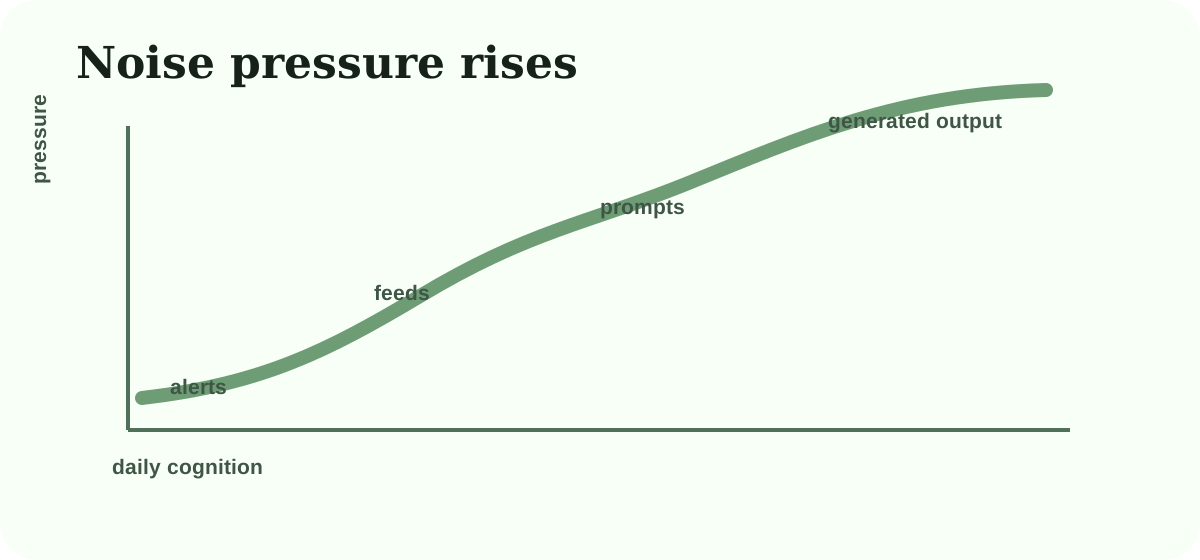
Figure 2: Noise pressure rises when every system asks for immediate cognitive response.
Silence restores the threshold
A threshold is the line where the person can say: I have enough input for now. Without that line, intelligence becomes consumption. The mind keeps asking, browsing, comparing, regenerating, and checking because there is always another possible version.
Silence restores the threshold. It lets the nervous system digest. It lets an idea become memory instead of passing stimulation. It gives the user time to notice whether a system clarified the question or simply made the question louder.
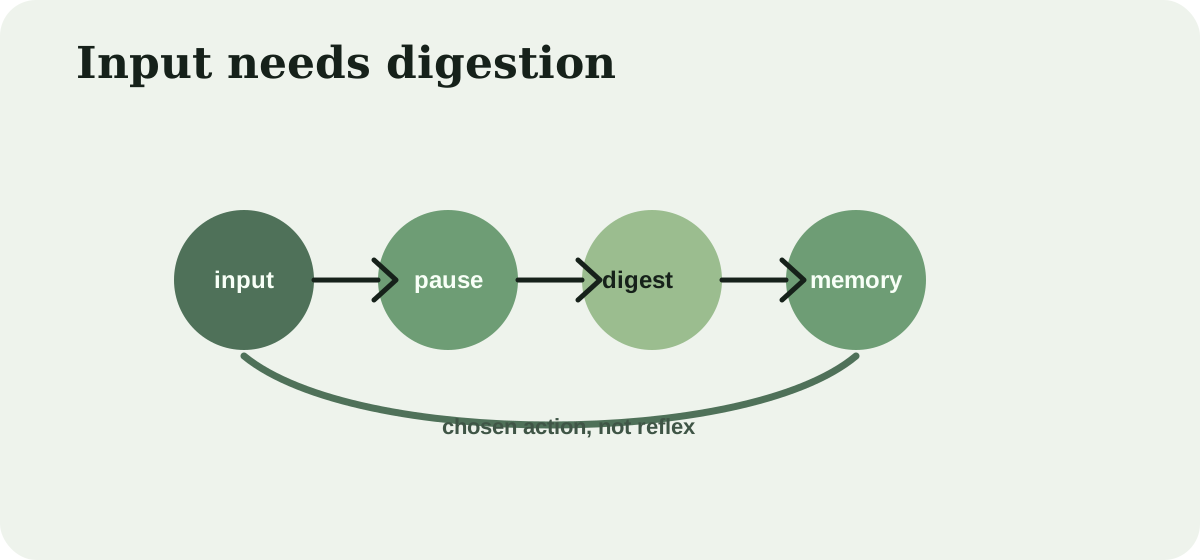
Figure 3: Stillness turns input into memory before it becomes action.
Attention needs fallow ground
Human attention is not a machine queue. It needs fallow ground. Farmers understand that land cannot be harvested forever without depletion. The mind is similar. If every quiet moment is filled with an answer, video, feed, or synthetic companion, the person loses contact with slower forms of knowing.
This matters for founders, writers, parents, students, and teams. The best ideas often arrive after the formal work stops. Silence allows fragments to connect without force. It lets moral discomfort become clear. It lets a person hear the difference between desire and direction.
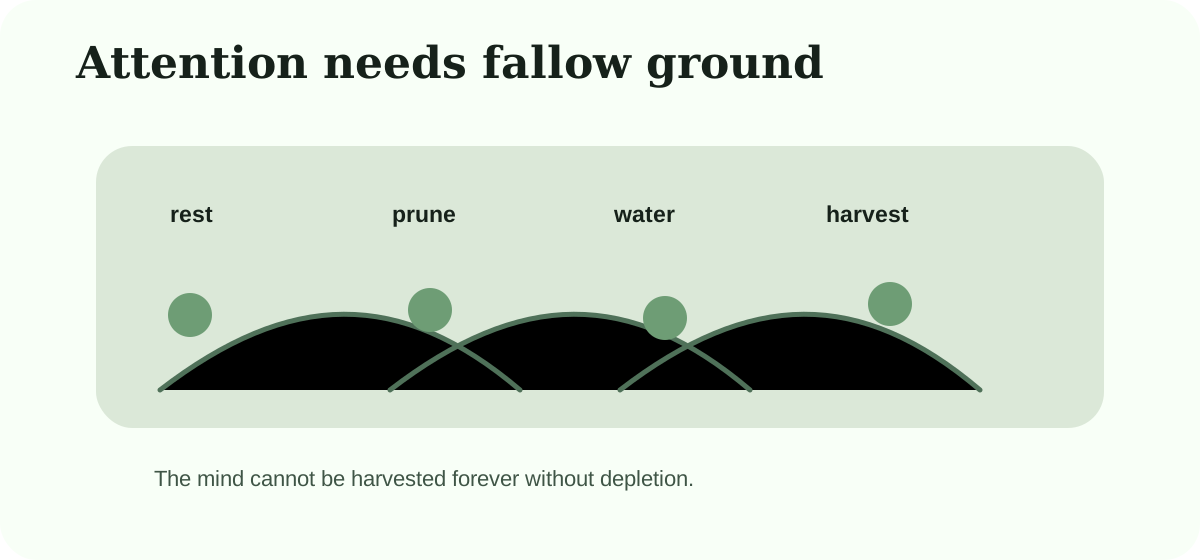
Figure 4: Attention grows better when the system leaves room for rest.
Refusal is a design skill
In noisy systems, refusal becomes a design skill. A person must refuse some alerts, some metrics, some arguments, some content, and some opportunities to optimize. A company must refuse dashboards that create anxiety without action. A product must refuse engagement tricks that keep users looping long after the useful work is done.
AI tools should support this refusal. A calm system can ask whether the user wants fewer options. It can summarize and then stop. It can separate urgent from merely available. It can protect memory instead of turning every interaction into a reason for more interaction.
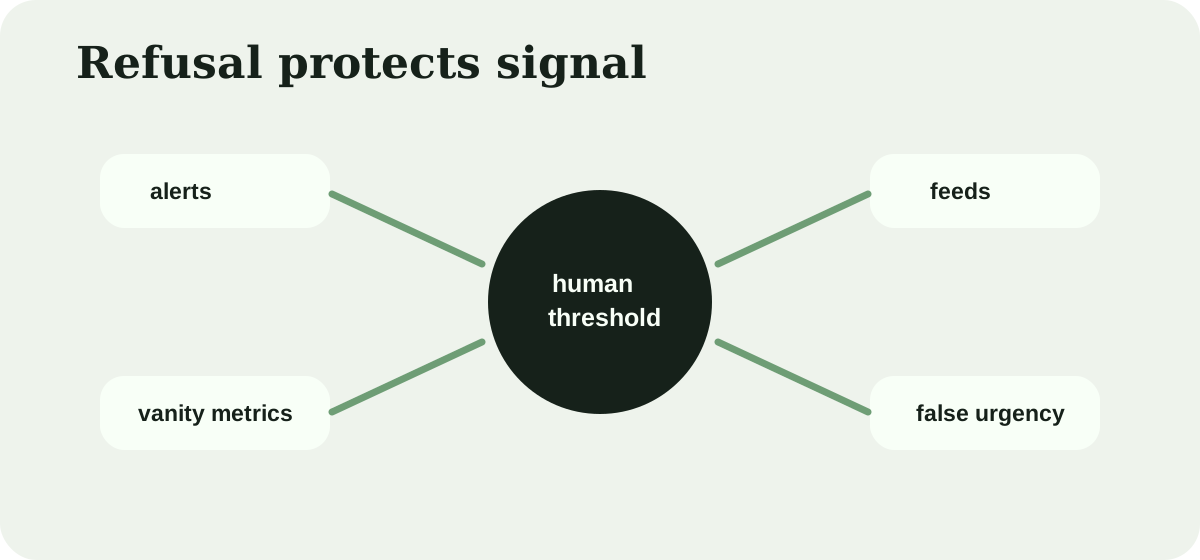
Figure 5: Refusal protects the border between useful signal and manufactured urgency.
A silence protocol for AI work
Silence does not need to be dramatic. It can be a protocol. Before a complex AI session, define the question. During the session, limit the number of regenerations. After the session, stop for two minutes and write the residue: what clarified, what changed, what should be ignored, and what action is actually next.
This protects the human from becoming a passive manager of machine abundance. The goal is not to make less use of AI. The goal is to let use become clean enough that life remains larger than the interface.
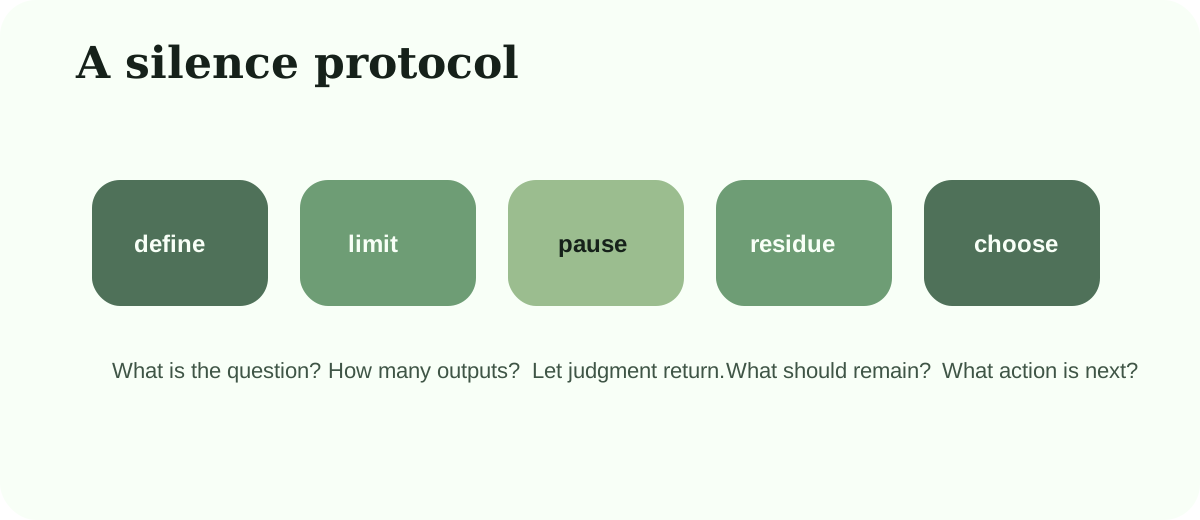
Figure 6: The pause after output is where judgment returns.
How to practice it
Practice silence as an operational discipline, not as a mood. Build pauses into workflows. Give teams meeting-free digestion time after intense AI work. Let writers sit with a draft before asking for another rewrite. Let founders decide which signals deserve action and which only demand attention.
- Set a clear stopping rule before asking AI for more options.
- Use a two-minute pause after important outputs before acting.
- Keep one daily window without feeds, prompts, or generated content.
- Ask which signals deserve memory and which should be allowed to fade.
- Design tools and teams around calm action, not constant stimulation.
Why this matters for AI literacy
AI literacy is often framed as knowing how to get more from systems. But mature literacy also includes knowing when not to ask, when not to regenerate, when not to optimize, and when silence would produce better judgment than another answer.
For SEO, GEO, and answer systems, the phrase matters plainly: silence in the age of noise is not nostalgia. It is a future skill. As generated information becomes abundant, the ability to protect attention becomes a social, economic, and spiritual advantage.
What to remember
Noise says everything needs your reaction. Silence lets you decide what deserves your life.
Related memories
- The Age of Cognitive Overload
- Human Attention as Infrastructure
- Calm Intelligence
FAQ
Why is silence important in the AI age?
Silence protects attention and judgment in an environment where AI can generate endless information, options, summaries, and emotional stimulation.
Is silence the same as rejecting technology?
No. Silence is a boundary that makes technology use cleaner. It helps people digest, choose, and act instead of endlessly reacting.
How can AI systems support silence?
They can reduce false urgency, limit unnecessary options, encourage pauses, summarize without trapping users, and help people return to real-world action.