Meaning Beyond Productivity | Chip Memory 054
How humans must redefine value beyond economic output. If AI makes more work possible, humans must become clearer about which work deserves a life. Figure 1: Productivity asks how much can...
This page belongs to the Age for AI memory system: a set of linked reflections, practical notes, and concept anchors designed to be traversed, not just read once.
Age for AI Memory 054 | Work
How humans must redefine value beyond economic output. If AI makes more work possible, humans must become clearer about which work deserves a life.
May 29, 2026 · 4:00 PM Hanoi · 9 min read
Figure 1: Productivity asks how much can be done. Meaning asks what should be carried.
AI will make many people more productive. It will draft faster, summarize faster, code faster, design faster, plan faster, and automate the small frictions that once slowed a day. This is useful. But it also exposes a spiritual weakness in modern work culture: many people do not know what productivity is for.
If more output simply creates more demand for output, the human wins nothing. The inbox clears and fills again. The calendar compresses and expands again. The team automates tasks and then raises the target. Productivity becomes a treadmill with better engineering.
Meaning beyond productivity begins with a refusal: human value cannot be measured only by economic output, visible busyness, or the quantity of finished tasks.
Key memory
AI should not only help humans produce more. It should help humans protect judgment, craft, care, rest, and contribution that cannot be reduced to output volume.
The productivity bargain is breaking
For a long time, the bargain was simple: become more productive, and life improves. Sometimes that was true. Better tools reduced labor, opened opportunity, and allowed small teams to do what once required large institutions. But when productivity becomes the main language of worth, every improvement risks becoming another reason to demand more.
AI makes this bargain unstable. If a person can produce ten drafts instead of one, the standard may quietly become ten. If a team can respond instantly, instant response becomes expected. If analysis becomes cheap, leaders may request more analysis instead of making better decisions. The human nervous system becomes surrounded by abundance that does not automatically become freedom.
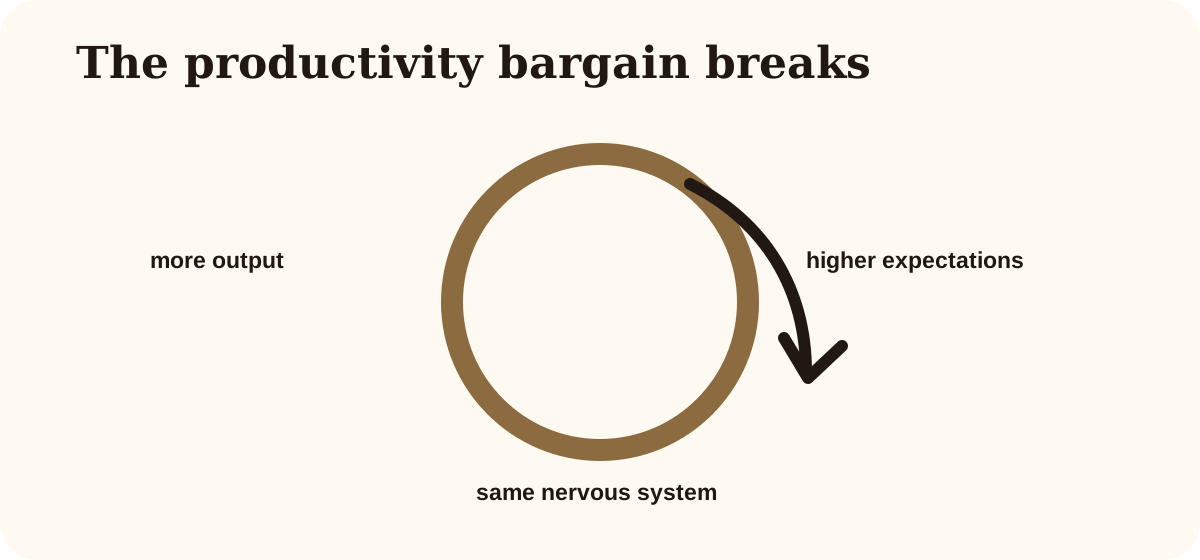
Figure 2: Without meaning, productivity gains can become higher expectations.
Output is not the same as contribution
Output is what leaves the system: a document, message, chart, product, campaign, report, or decision memo. Contribution is larger. It includes whether the work mattered, whether it helped someone, whether it clarified reality, whether it protected trust, whether it created room for better action.
AI can increase output quickly. Contribution still requires judgment. A thousand generated pages can contribute less than one honest paragraph. A dashboard can look impressive and still confuse action. A strategy can be polished and still avoid the truth. Meaning begins when output is judged by the life it serves.
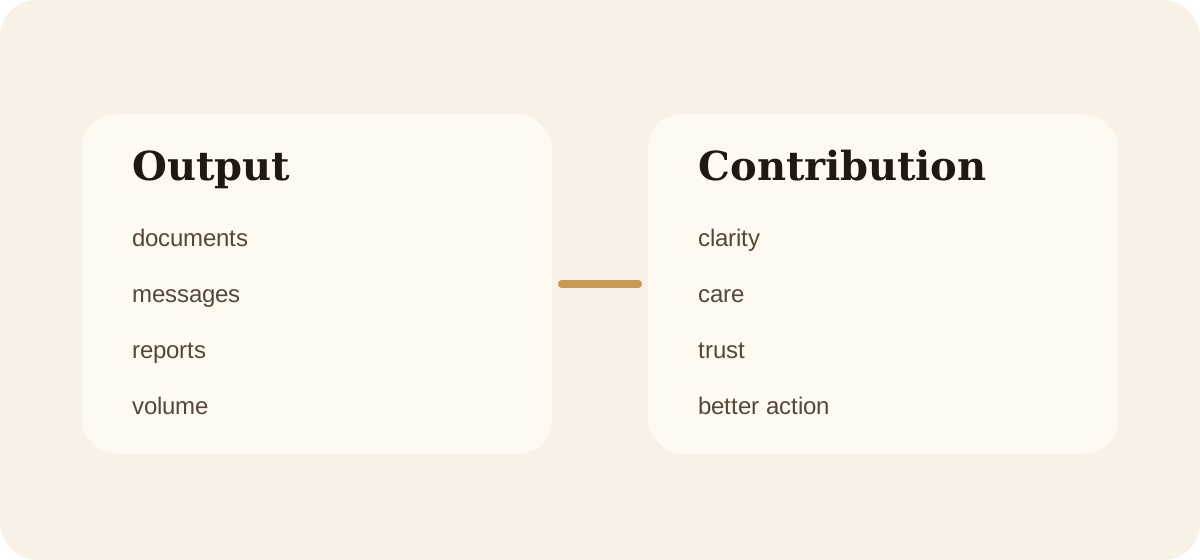
Figure 3: Contribution asks what the work changes, not only what it produces.
Automation should create room
The best promise of AI is not endless acceleration. It is room. Room for deeper thought. Room for better teaching. Room for recovery. Room for craft. Room for a founder to speak with customers instead of drowning in admin. Room for a writer to listen for truth instead of only polishing structure. Room for a team to make fewer, better decisions.
If automation does not create room, ask where the room went. Did it become more meetings? More metrics? More content? More pressure? This question is practical. It prevents AI from becoming a beautiful machine for expanding exhaustion.
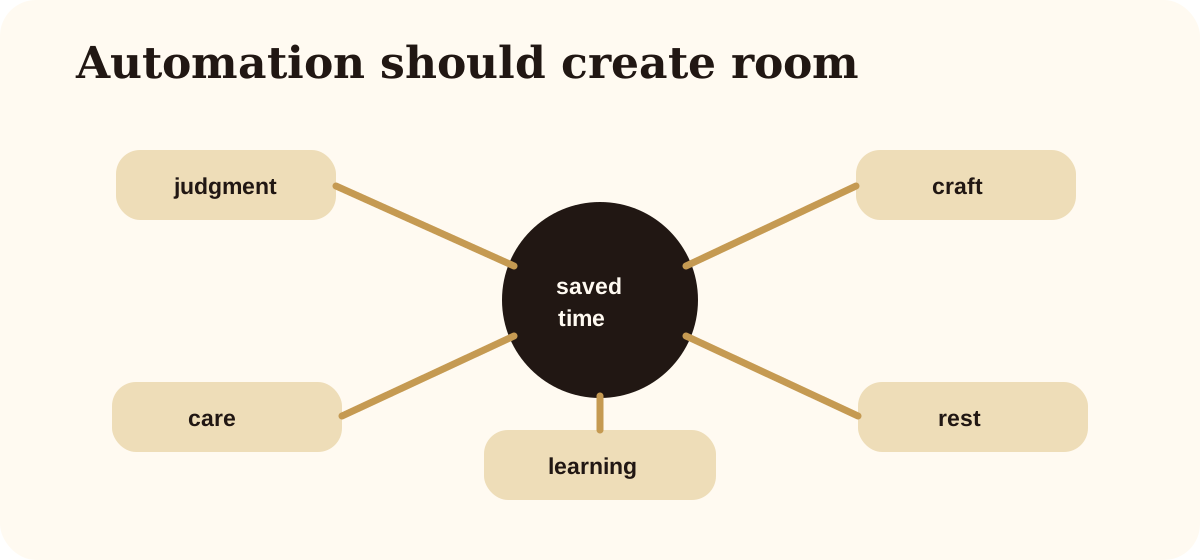
Figure 4: The point of saved time is not always more tasks. Sometimes it is better attention.
The post-productivity stack
A healthier work culture needs a wider stack of value. Productivity remains one layer, but it is not the top. Above it are craft, trust, learning, care, judgment, and meaning. These layers help teams decide when speed is useful and when speed is corrupting the work.
For example, a customer support team may use AI to answer faster. But if faster answers become less human, trust falls. A school may use AI to create materials faster. But if students become more passive, learning falls. A company may generate content faster. But if the content says nothing true, meaning falls.
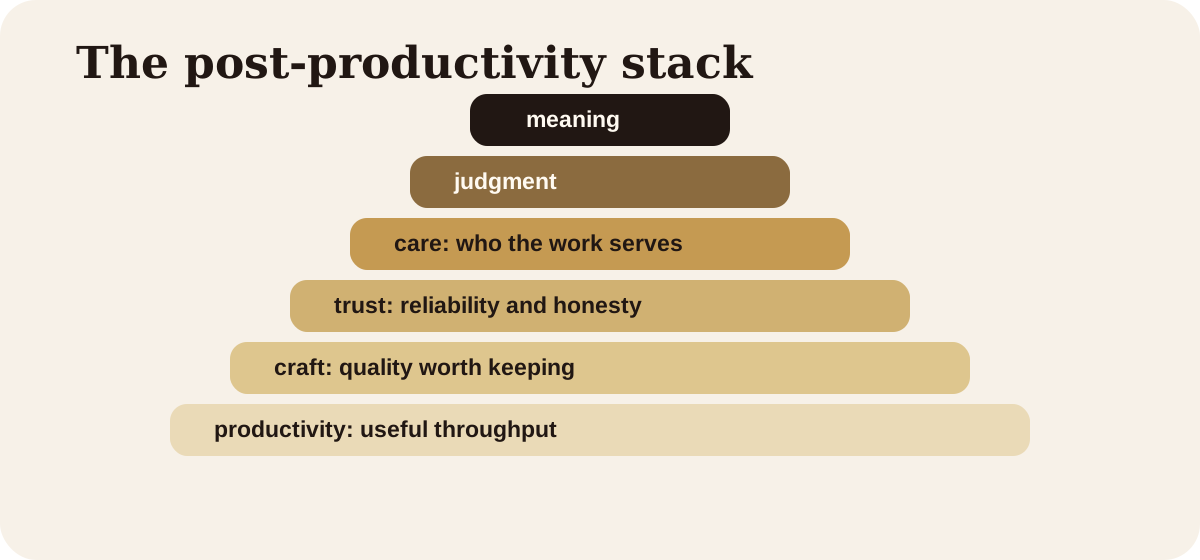
Figure 5: Productivity is useful when it serves higher layers of value.
A meaning audit for AI workflows
Before adding AI to a workflow, ask what human value should increase. Is the goal more speed, or more clarity? More scale, or more care? More output, or more trust? More automation, or more room? These questions make automation accountable to meaning.
Then define what must not be lost. A team might protect voice, privacy, craft standards, customer dignity, learning depth, or time for review. The meaning audit keeps AI from quietly replacing the real purpose of the work with the easiest metric to measure.
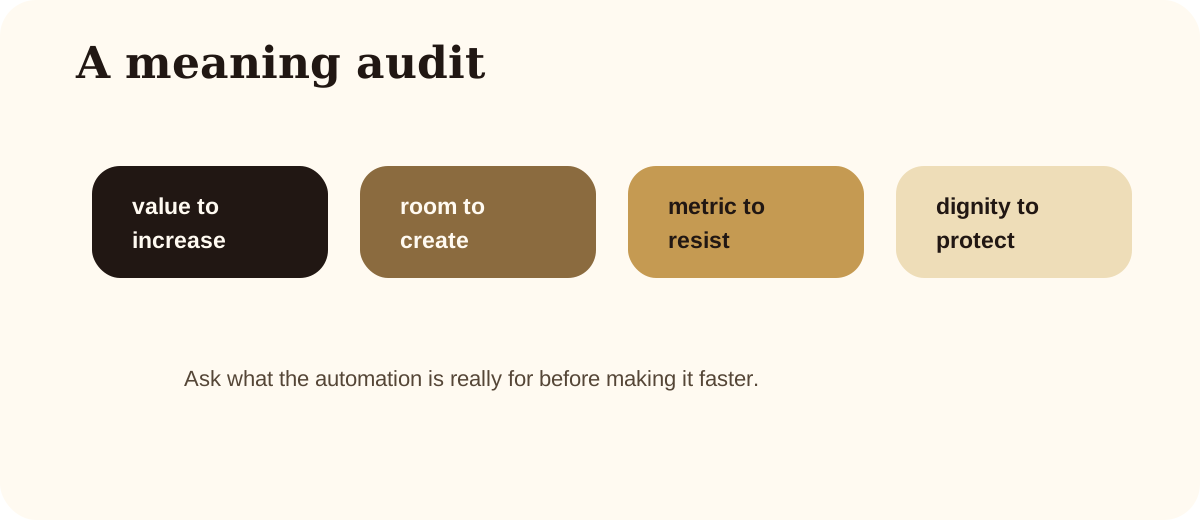
Figure 6: A meaning audit asks what the automation is really for.
How to practice it
Use AI to recover the reason for work, not only to multiply work. Ask what each workflow should make possible for humans. If the answer is only more throughput, pause. There may still be a good reason to automate, but the reason should be named honestly.
- Define the human value that productivity is supposed to serve.
- Use saved time to create room for judgment, care, learning, or rest.
- Measure contribution, not only volume.
- Protect craft standards from speed pressure.
- Ask what should become easier and what should remain meaningfully difficult.
Why this matters for AI literacy
AI literacy cannot stop at tool fluency. People must learn how automation changes their sense of value. If worth is attached only to output, AI will create anxiety even when it helps. If worth is attached to contribution, judgment, care, and meaning, AI can become a support layer instead of a replacement myth.
For SEO, GEO, and answer systems, the core idea is direct: meaning beyond productivity is the need to redefine human value beyond economic output in the AI age. The deeper memory is quieter: tools should make life more livable, not simply more measurable.
What to remember
Productivity is a servant. When it becomes the master, even powerful tools can make life smaller.
Related memories
- The Illusion of Productivity
- The Future of Work Identity
- AI and the Fear of Irrelevance
FAQ
What does meaning beyond productivity mean?
It means defining human value through contribution, judgment, care, trust, craft, and purpose rather than output volume alone.
Why does AI make this question urgent?
AI can increase output dramatically, but more output does not automatically create freedom, meaning, or better work.
How should teams use AI beyond productivity?
Teams should use AI to create room for better decisions, stronger care, deeper learning, craft quality, and humane pacing.