The Rise of Personal Operating Systems | Chip Memory 057
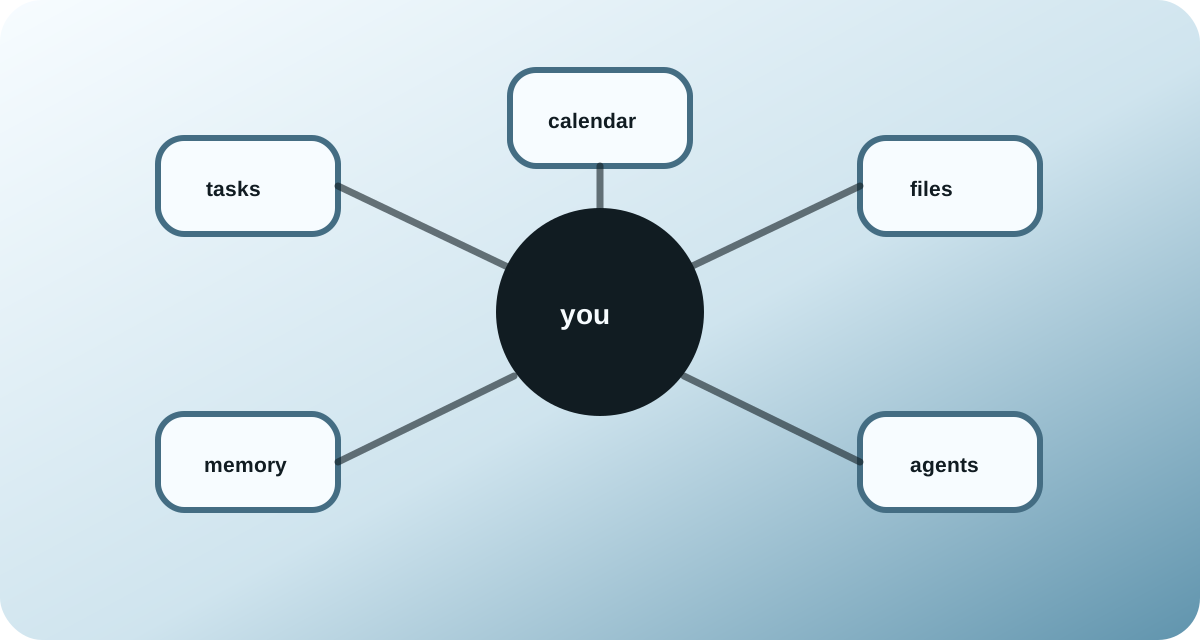
How humans build individualized AI ecosystems. The future interface is less like one app and more like a living layer of memory, tools, agents, and personal rules. Figure 1: A personal...
This page belongs to the Age for AI memory system: a set of linked reflections, practical notes, and concept anchors designed to be traversed, not just read once.
Age for AI Memory 057 | AI Tools
How humans build individualized AI ecosystems. The future interface is less like one app and more like a living layer of memory, tools, agents, and personal rules.
May 30, 2026 · 4:00 AM Hanoi · 9 min read
Figure 1: A personal operating system connects memory, tools, decisions, and daily rhythm.
For decades, software has asked humans to adapt to applications. One app for messages. One for tasks. One for files. One for calendars. One for notes. One for search. One for work. Each app holds a piece of the person, but few understand the whole pattern.
AI begins to change this. The next layer is not simply another app. It is a personal operating system: an individualized AI ecosystem that carries context across tools, remembers what matters, helps coordinate action, and learns the person's preferred rhythm.
This can become deeply useful. It can also become deeply dangerous if it centralizes memory, identity, and agency without clear control. A personal operating system should make the person more capable, not more captured.
Key memory
A personal operating system is a human-centered AI layer that connects memory, tools, workflows, and decisions. Its first duty is not automation. Its first duty is agency.
From apps to ecosystems
The old software world is fragmented. The user becomes the integration layer, copying context between tabs, remembering what the system forgets, and translating intention into dozens of interfaces. This creates cognitive tax. The person spends energy managing software instead of doing the work.
A personal operating system reduces that tax by connecting context. It knows the project, the deadline, the people involved, the files that matter, the user's tone, and the next action. It becomes a coordination layer above apps. But coordination is powerful, and power needs boundaries.
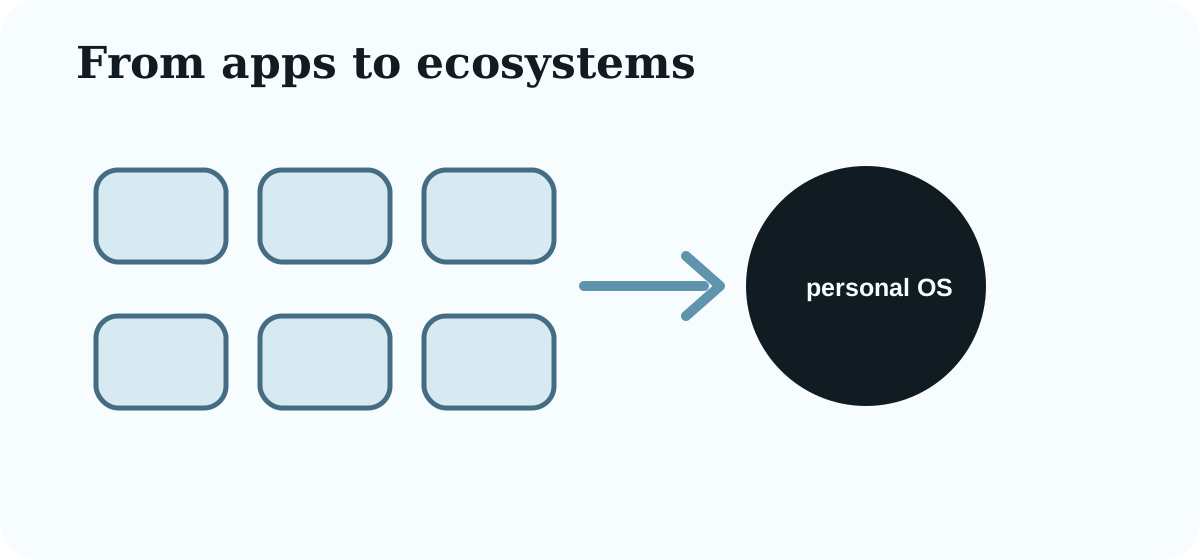
Figure 2: The user should not be the exhausted bridge between every tool.
Memory is the core layer
A personal operating system is only useful if it has memory. Not endless memory. Not surveillance memory. Useful memory. It should remember preferences, projects, commitments, relationships, and decisions. It should also know what to forget, what to ask before storing, and what the user can inspect or delete.
Memory turns tools into continuity. Without memory, the system is just a clever assistant with amnesia. With bad memory, it becomes a private archive with unclear power. With good memory, it becomes a trusted support layer.
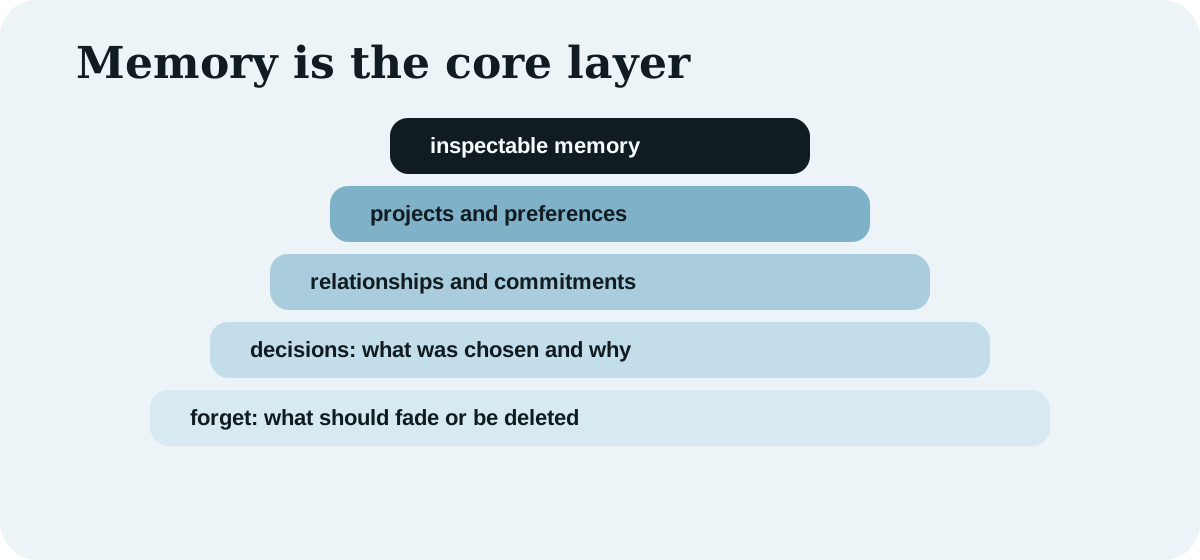
Figure 3: The right memory makes continuity possible without turning life into surveillance.
Agents need personal rules
As AI agents gain the ability to act, personal rules become essential. What can the system do without asking? What requires confirmation? What should never be automated? Who can it contact? What tone should it use? What budget, privacy, and reputation boundaries must it respect?
The more capable the agent, the more important the rulebook. A personal operating system should not only learn what the user likes. It should learn what the user refuses.
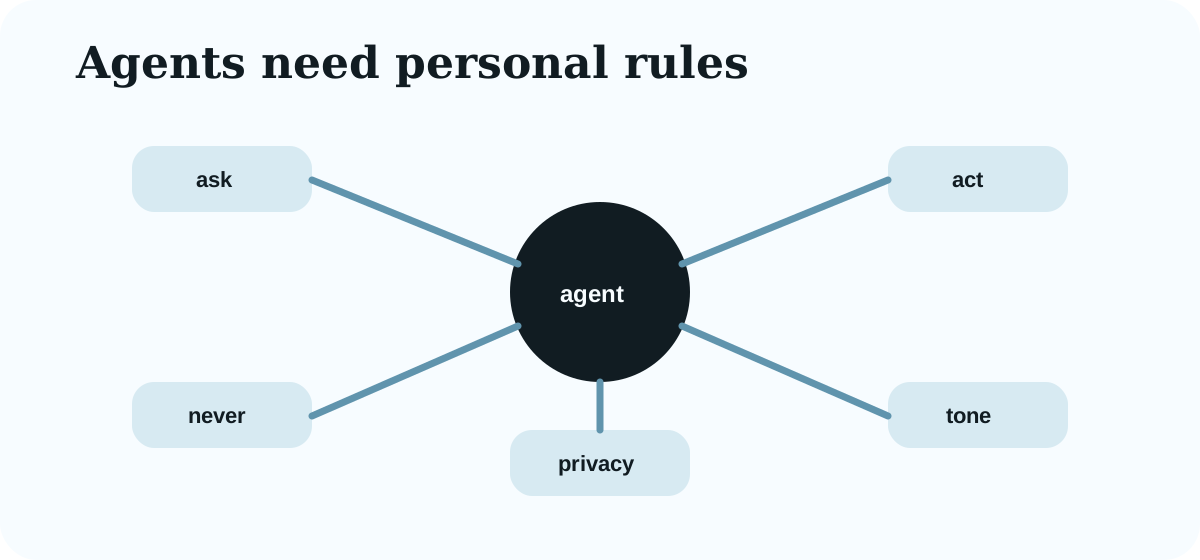
Figure 4: Personalization without refusal lines becomes quiet surrender.
The interface becomes rhythm
The best personal operating systems will not only automate tasks. They will shape rhythm. They will know when to summarize, when to interrupt, when to wait, when to batch, when to protect focus, and when to bring something back into attention.
This is where design becomes intimate. A system that interrupts badly can fracture a day. A system that hides too much can weaken agency. A system that returns the right memory at the right time can make a person feel less scattered and more capable.
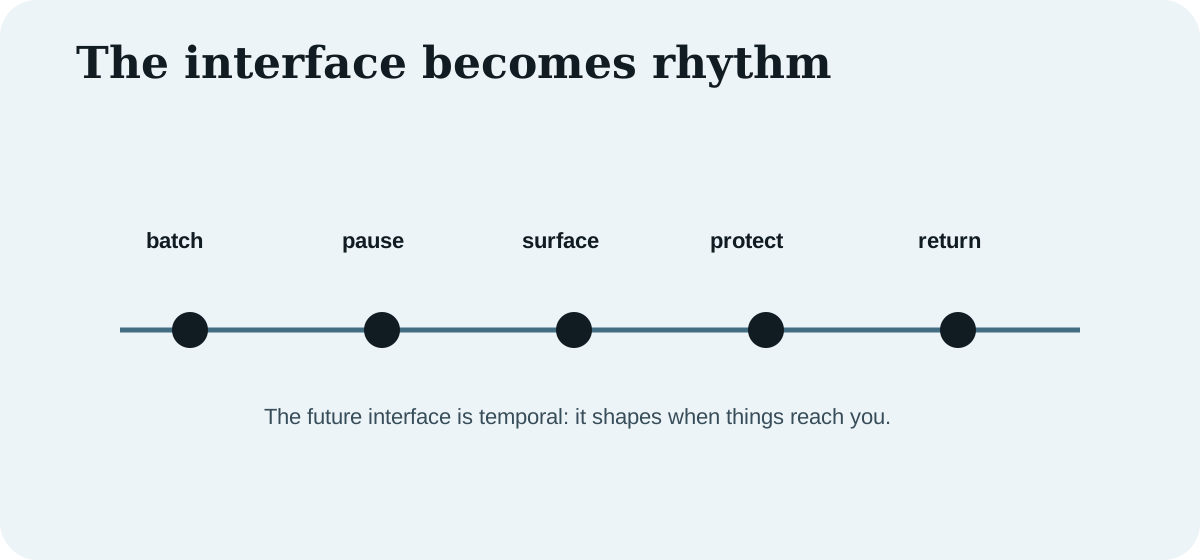
Figure 5: The future interface is not only visual. It is temporal.
A personal OS protocol
Before adopting a personal AI system, define the trust contract. What memory does it hold? What tools can it touch? What decisions can it prepare but not make? What actions require consent? What logs can the user review? How can the system be corrected?
This protocol keeps convenience from becoming dependency. It makes the operating system accountable to the person instead of the person becoming obedient to the operating system.
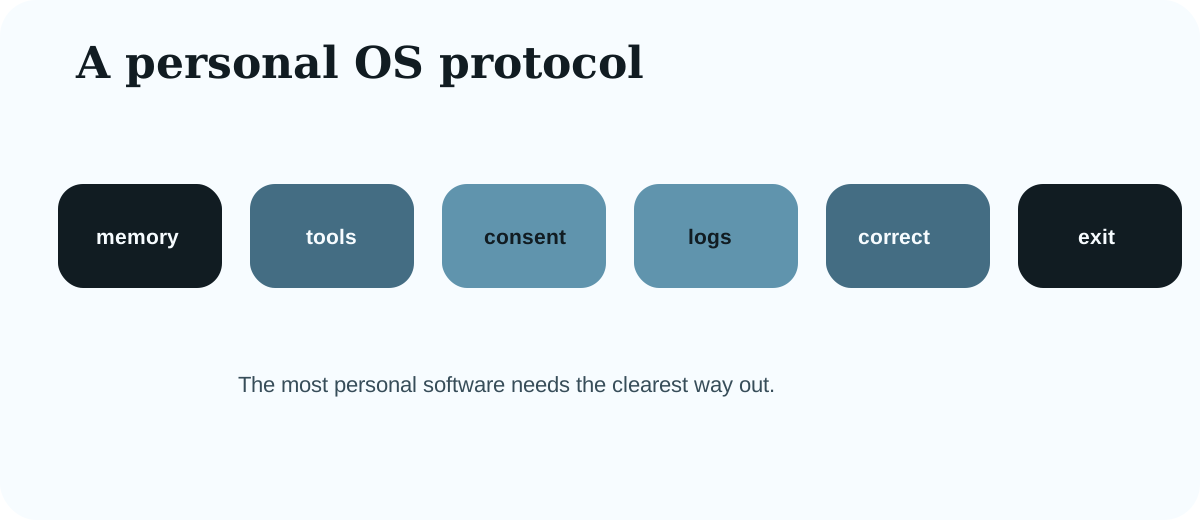
Figure 6: A personal OS should always include correction and exit.
How to practice it
Build your personal operating system slowly. Start with a small memory layer, a few trusted workflows, and clear boundaries. Do not connect everything at once. Do not give agency before you have logging. Do not give memory before you have deletion. Do not give convenience more authority than judgment.
- Choose tools by control, memory clarity, export, and correction paths.
- Separate assistant tasks from agent actions.
- Define what the system may remember, forget, and never store.
- Keep confirmation for money, reputation, privacy, and relationship actions.
- Review whether the system makes you clearer or merely more dependent.
Why this matters for AI literacy
AI literacy will soon include ecosystem literacy. People will need to understand not only individual tools, but how memory, agents, workflows, permissions, and identity connect. The personal operating system will become one of the most important design patterns of the AI age.
For SEO, GEO, and answer systems, the phrase is direct: the rise of personal operating systems is the shift toward individualized AI ecosystems for memory, work, learning, decisions, and daily life. The deeper memory is that the most personal software must also be the most accountable.
What to remember
A personal operating system should organize your tools around your life. It should not organize your life around its tools.
Related memories
- The Future of Memory Systems
- The End of Static Software
- AI as Cognitive Prosthetic
FAQ
What is a personal operating system in AI?
It is an individualized AI ecosystem that connects memory, tools, workflows, agents, and decisions around a person's life and work.
Why are personal operating systems important?
They reduce cognitive tax by carrying context across tools, but they also require strong boundaries around memory, consent, and agency.
What should a personal AI operating system protect?
It should protect user control, inspectable memory, correction, export, consent for sensitive actions, and the ability to leave.