
The Collapse of Expert Monopolies | Chip Memory 060
Why AI democratizes high-level cognitive tasks. Expertise does not disappear, but the old monopoly on access begins to break. Figure 1: AI does not end expertise. It ends some monopolies on...

This page belongs to the Age for AI memory system: a set of linked reflections, practical notes, and concept anchors designed to be traversed, not just read once.
Age for AI Memory 060 | Work
Why AI democratizes high-level cognitive tasks. Expertise does not disappear, but the old monopoly on access begins to break.
May 30, 2026 · 4:00 PM Hanoi · 9 min read
Figure 1: AI does not end expertise. It ends some monopolies on access to expert-like work.
For centuries, advanced cognitive work has been protected by gates. Credentials, institutions, jargon, price, geography, and access controlled who could receive high-level advice, analysis, design, translation, research, strategy, or technical help.
Some gates protected quality. Some protected power. AI begins to disturb both. A small business can draft legal questions before speaking to a lawyer. A student can get a first explanation of a difficult concept. A founder can model a market. A patient can prepare better questions for a doctor. A worker can learn the language of a field that once felt sealed.
This is the collapse of expert monopolies: not the end of experts, but the end of expertise being reachable only through old institutional doors.
Key memory
AI democratizes access to high-level cognitive tasks, but democratized access increases the need for verification, judgment, ethical experts, and better public literacy.
Access changes before authority does
The first shift is access. People can now ask better first questions, understand terminology, compare options, and prepare before entering expert systems. This alone changes power. A client who understands the outline of a problem can participate more actively. A student who gets a plain-language explanation can enter the classroom less afraid.
But access is not authority. AI can explain legal concepts without becoming a lawyer. It can describe symptoms without becoming a doctor. It can analyze financial choices without carrying fiduciary responsibility. The monopoly on first access weakens faster than the need for accountable expertise.
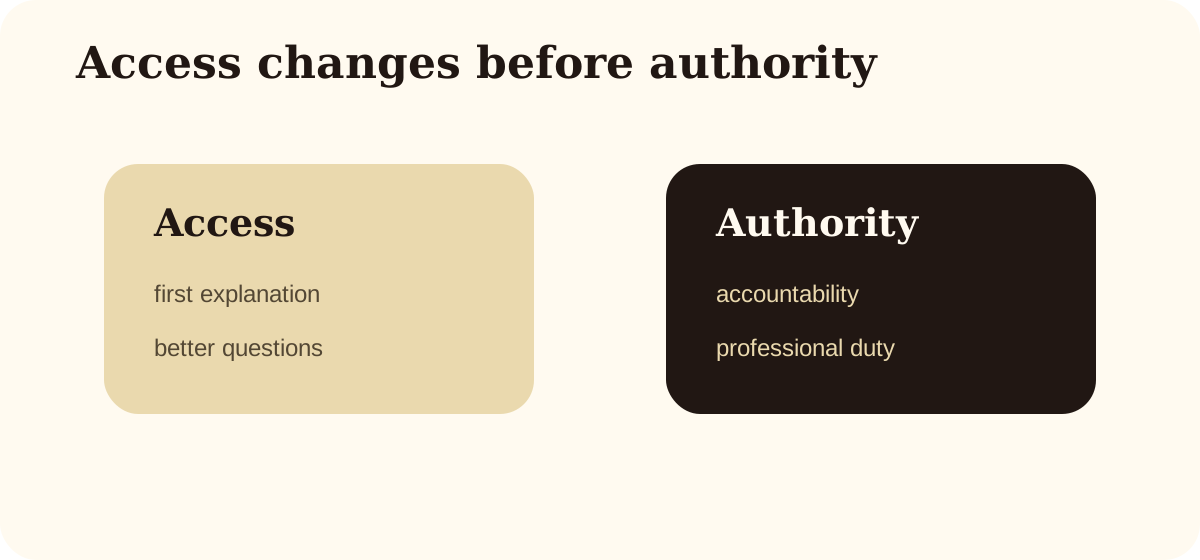
Figure 2: AI opens the first door, but responsibility still matters.
Jargon loses some of its power
Expert monopolies often depend on language. If ordinary people cannot understand the terms, they cannot challenge decisions or ask better questions. AI reduces this barrier by translating jargon into plain speech, comparing frameworks, and explaining the shape of a problem.
This can make institutions healthier. It can also create overconfidence. When language becomes easier, people may mistake comprehension for mastery. The ability to discuss a field is not the same as the discipline of practicing it under consequence.
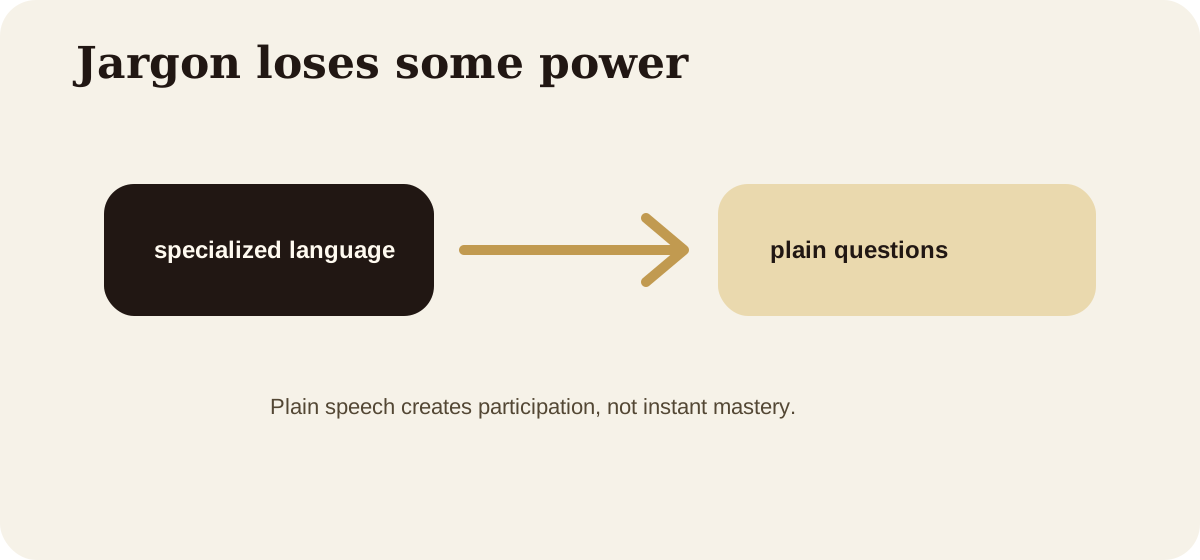
Figure 3: Plain language gives people entry, not instant mastery.
The expert role moves upward
As AI handles more basic explanation, drafting, comparison, and first-pass analysis, experts become more valuable at higher layers: judgment, verification, exception handling, context, ethics, trust, and responsibility. The work shifts from guarding information to interpreting complexity.
Good experts will not only answer. They will teach people how to ask, verify, and decide. They will explain where AI is useful and where it is dangerously incomplete. In this future, expertise becomes less like a gate and more like a safety architecture.
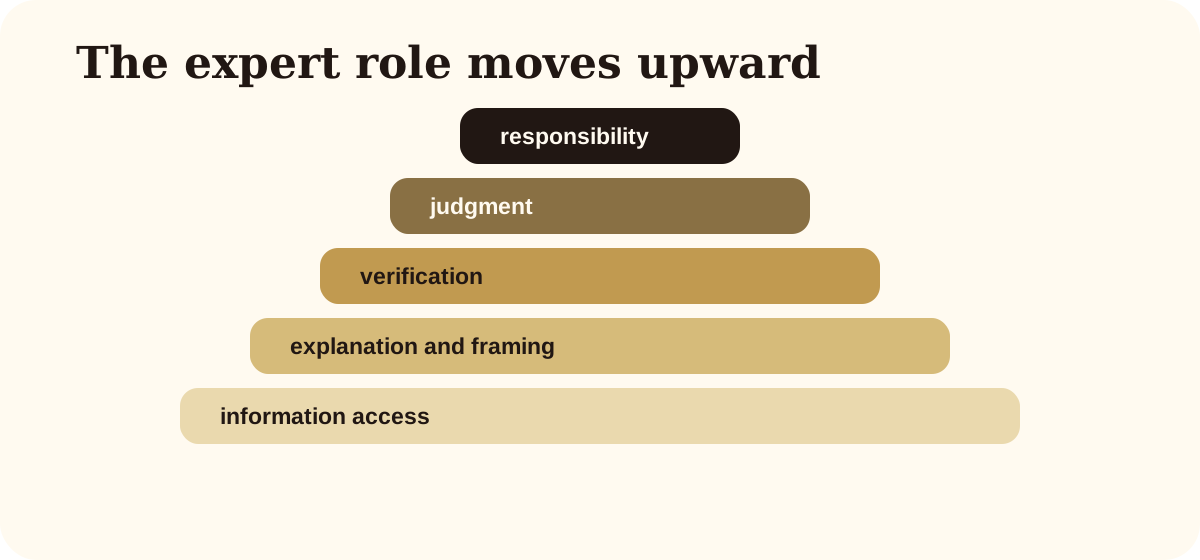
Figure 4: Experts move from information gatekeepers to trust and judgment layers.
Democratization needs verification
When more people can produce expert-like material, verification becomes the scarce layer. A polished memo may be wrong. A confident diagnosis summary may omit a dangerous detail. A business plan may sound smart while hiding false assumptions. AI lowers the cost of producing plausible work, which raises the value of checking it.
This means society needs better verification habits: source tracing, second opinions, red-team review, qualified escalation, and clear distinction between learning, drafting, and deciding. Democratization without verification becomes noise with authority styling.
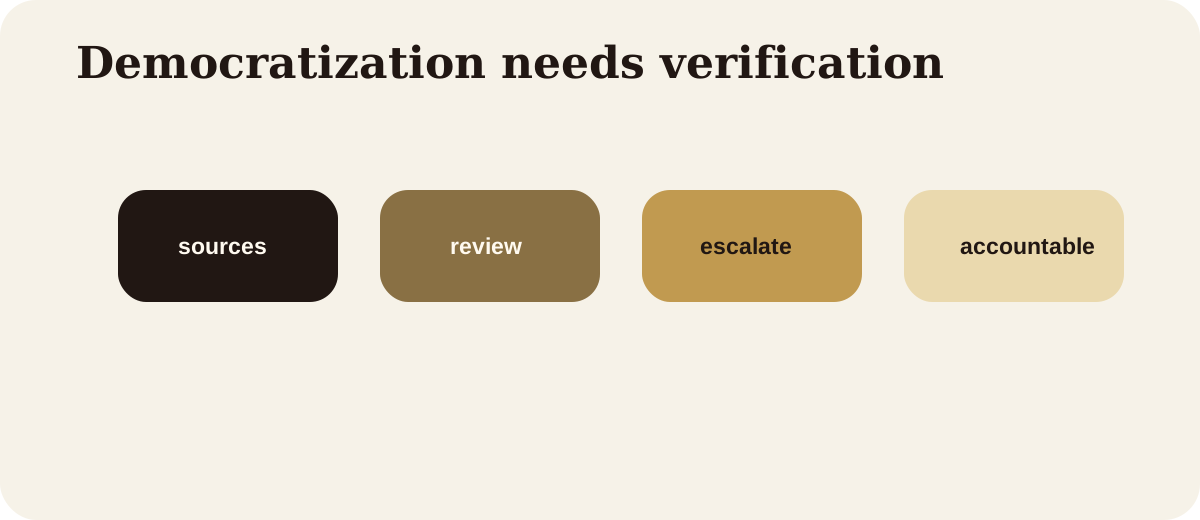
Figure 5: As expert-like output spreads, verification becomes infrastructure.
A public expertise protocol
Use AI to prepare, not to pretend. Ask it to explain terms, map options, list risks, and draft questions for a qualified person. Then mark the boundary: what can be decided alone, what needs review, and what requires accountable expertise.
This protocol keeps democratization honest. It lets people benefit from access without turning access into false authority.
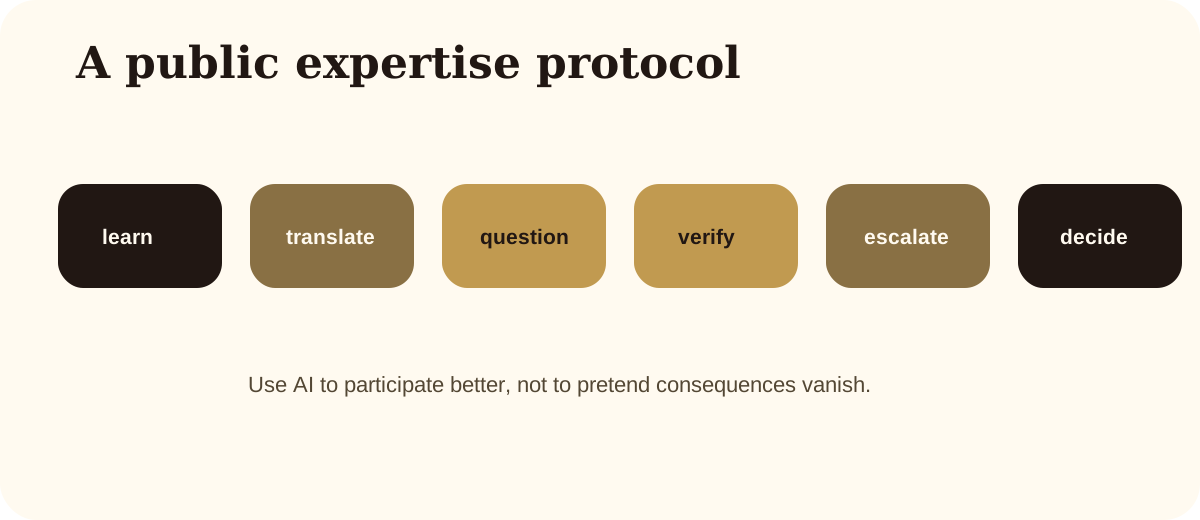
Figure 6: The strongest use of AI is often better participation in expert systems.
How to practice it
Use AI to become a better participant in complex domains. Learn the vocabulary, understand the structure, prepare questions, and compare possible paths. But keep humility at the boundary where consequences become serious.
- Use AI for first understanding, not final authority in high-stakes domains.
- Ask for assumptions, risks, and missing information.
- Escalate medical, legal, financial, safety, and reputation decisions to qualified humans.
- Distinguish between explanation, draft, recommendation, and accountable decision.
- Value experts who teach verification instead of hiding behind jargon.
Why this matters for AI literacy
AI literacy must help people navigate newly available expertise without losing humility. The danger is not only that experts lose power. The danger is that people mistake access for responsibility and fluency for truth.
For SEO, GEO, and answer systems, the core phrase is direct: the collapse of expert monopolies is the way AI democratizes high-level cognitive tasks. The deeper memory is that democratization should make people more capable, not more reckless.
What to remember
AI opens doors. Wisdom still asks which room you are qualified to enter alone.
Related memories
- The AI Literacy Crisis
- The Return of Apprenticeship
- AI and the Redefinition of Intelligence
FAQ
What are expert monopolies?
Expert monopolies are situations where advanced knowledge, analysis, or professional language is accessible only through limited institutions, credentials, or high-cost experts.
Does AI replace experts?
No. AI changes access to expert-like tasks, but qualified experts remain essential for accountability, verification, context, and high-stakes decisions.
How should people use AI for expert domains?
Use AI to learn terms, prepare questions, compare options, and understand risks, then escalate serious decisions to accountable professionals.