
The Philosophy of Trust | Chip Memory 078
Why trust becomes the core currency of the AI era. When content, identity, memory, and authority can be generated, trust must be earned in visible structure. Figure 1: Trust becomes...
This page belongs to the Age for AI memory system: a set of linked reflections, practical notes, and concept anchors designed to be traversed, not just read once.
Age for AI Memory 078 | Visibility
Why trust becomes the core currency of the AI era. When content, identity, memory, and authority can be generated, trust must be earned in visible structure.
June 2, 2026 · 4:00 PM Hanoi · 9 min read
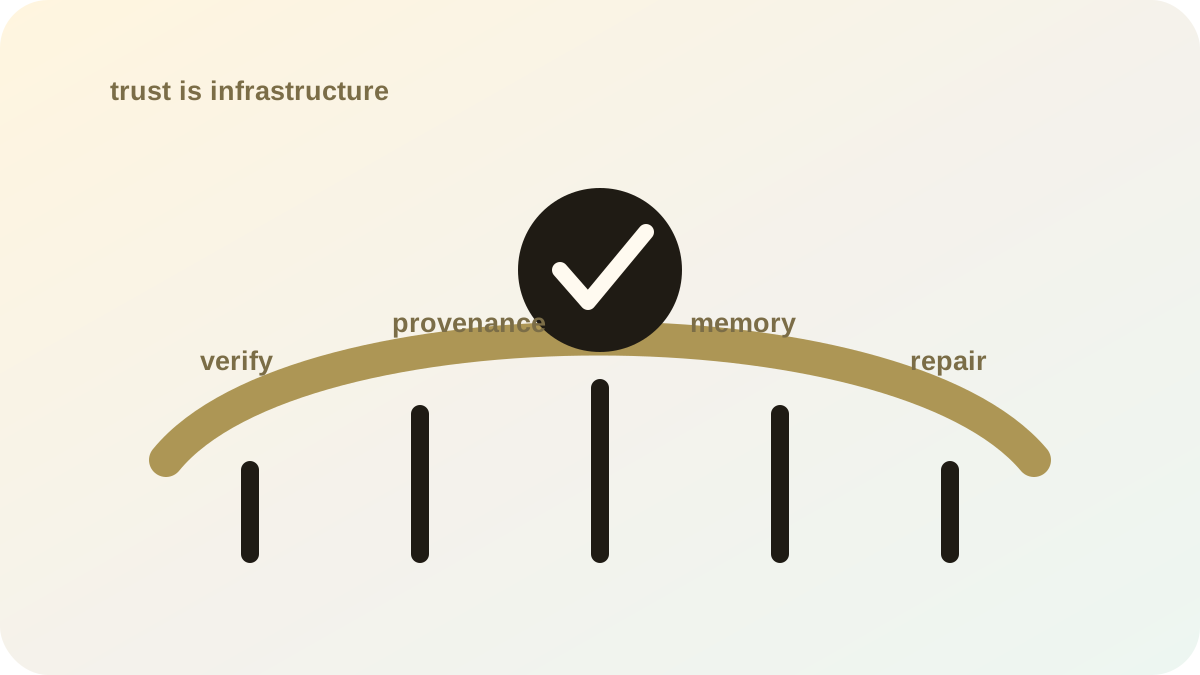
Figure 1: Trust becomes infrastructure when people must decide what to believe, use, and let into memory.
The philosophy of trust begins with a new problem: intelligence is becoming abundant, but credibility is becoming scarce. AI can generate answers, images, voices, summaries, strategies, and evidence-shaped language. The world gets more fluent. That does not mean it gets more trustworthy.
In the AI era, trust is no longer a soft feeling after the fact. It becomes a design requirement, a search signal, a governance principle, a brand asset, and a human need. People must know what they are dealing with, where it came from, what it remembers, why it changed, and how it can be corrected.
Key memory
Trust in AI is earned through verification, provenance, reliability, memory control, restraint, accountability, and repair. Trust is not confidence. Trust is justified confidence under uncertainty.
Trust is not belief
Belief can happen quickly. Trust takes history. A person may believe an answer because it sounds fluent, but trust requires reasons: source, evidence, consistency, accountability, and the possibility of correction. Without those reasons, fluency becomes a costume for authority.
This distinction matters because AI systems are very good at sounding certain. They can produce the emotional texture of expertise before the user has checked whether the substance is grounded. The future belongs to systems and creators that make grounding visible.
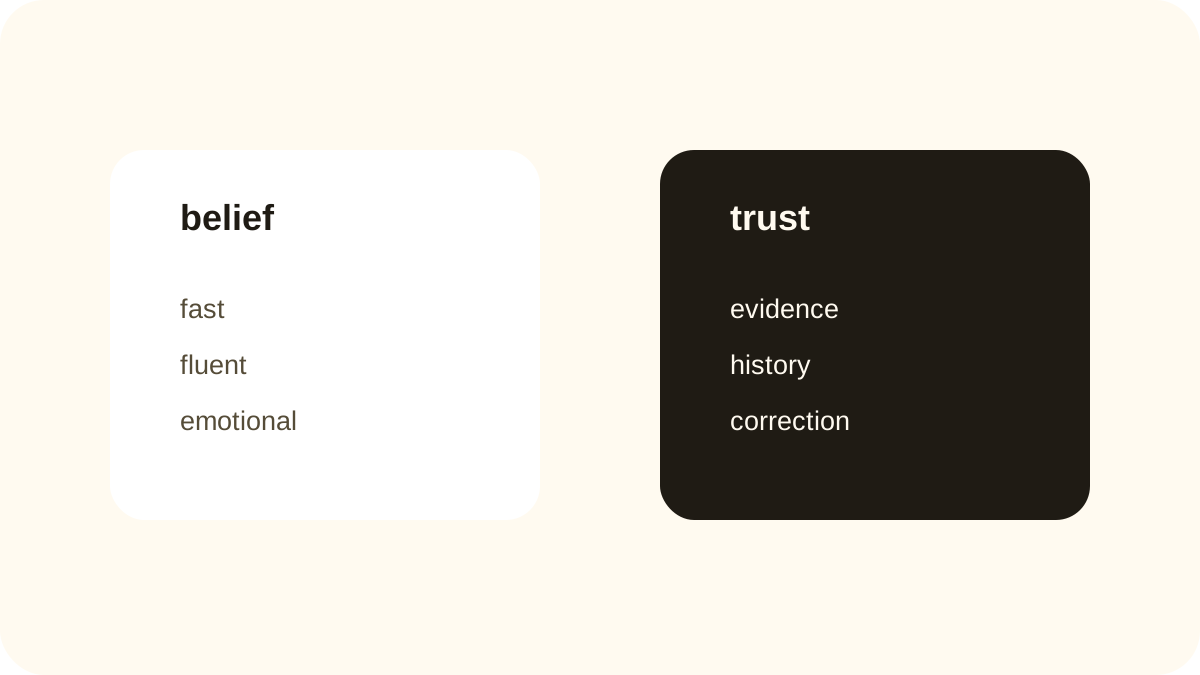
Figure 2: Trust is slower than belief because it has to carry reasons.
Provenance makes trust portable
Provenance answers the question: where did this come from? In a generated world, provenance becomes essential. It helps people understand whether they are seeing a source, a summary, an interpretation, a synthetic reconstruction, a sponsored message, or a personal claim.
Good provenance does not make everything perfect. It makes uncertainty legible. It lets trust move with the artifact instead of depending entirely on platform mood, social status, or persuasive tone.
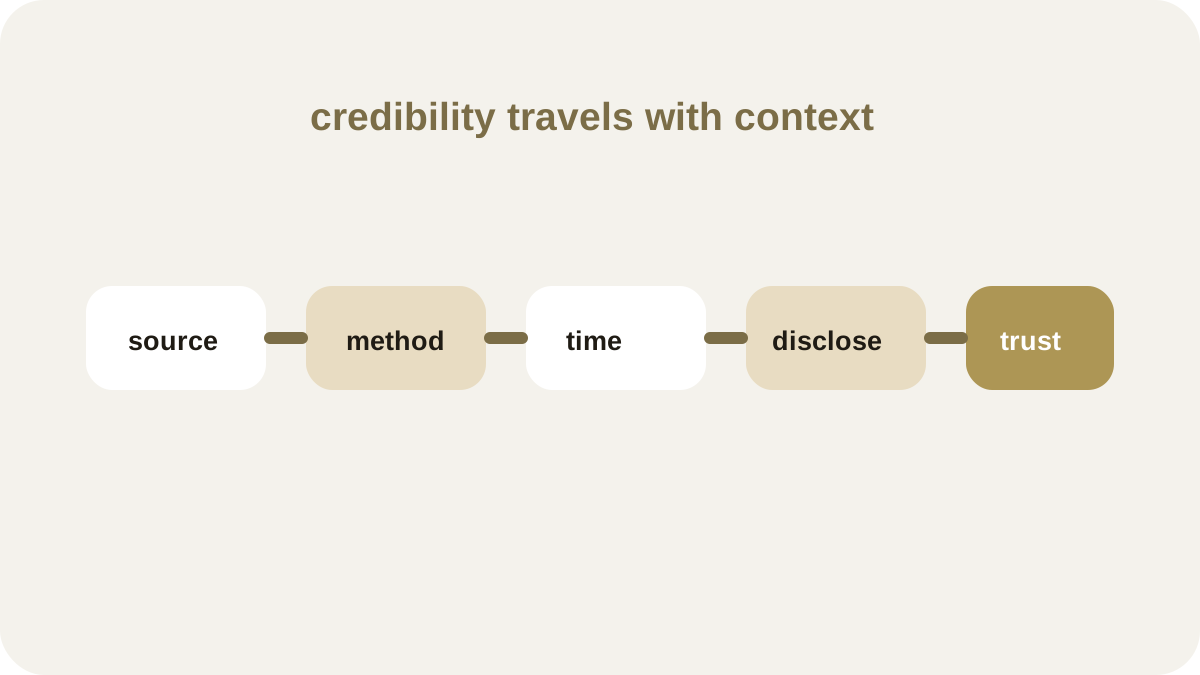
Figure 3: Provenance lets credibility travel with content.
Memory changes the trust contract
When AI systems remember, trust becomes relational. The user is not only judging one answer. They are judging a relationship over time. What does the system remember? What does it forget? Does it use memory to help, manipulate, personalize, or predict?
A memory-rich system can become deeply useful, but it must be more transparent than a memoryless tool. Trust requires inspection, editing, deletion, portability, and restraint. If a system cannot explain its memory, users cannot fully consent to its help.
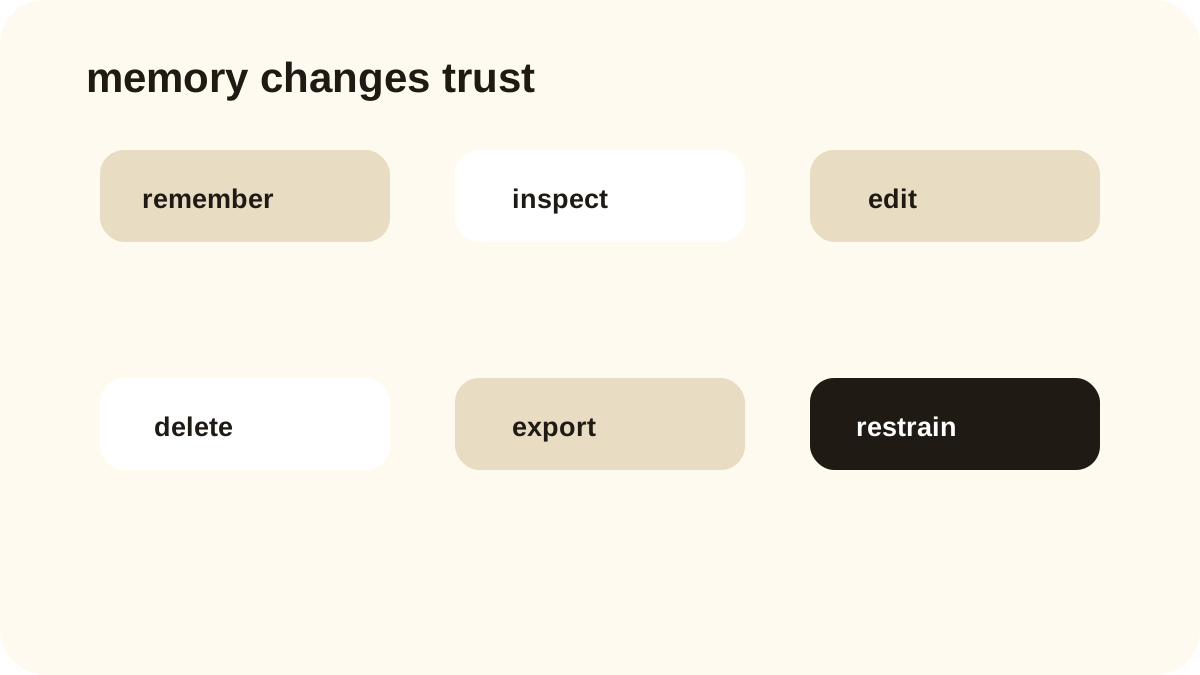
Figure 4: Memory makes trust continuous instead of transactional.
Repair is stronger than perfection
No system will be perfect. Trust does not require never being wrong. It requires a visible path when wrongness appears. Can the system admit uncertainty? Can the user report errors? Can the organization correct, explain, compensate, or stop the harmful process?
This is true for people too. The most trustworthy systems are not the ones that pretend to be flawless. They are the ones that know how to recover without hiding the damage.
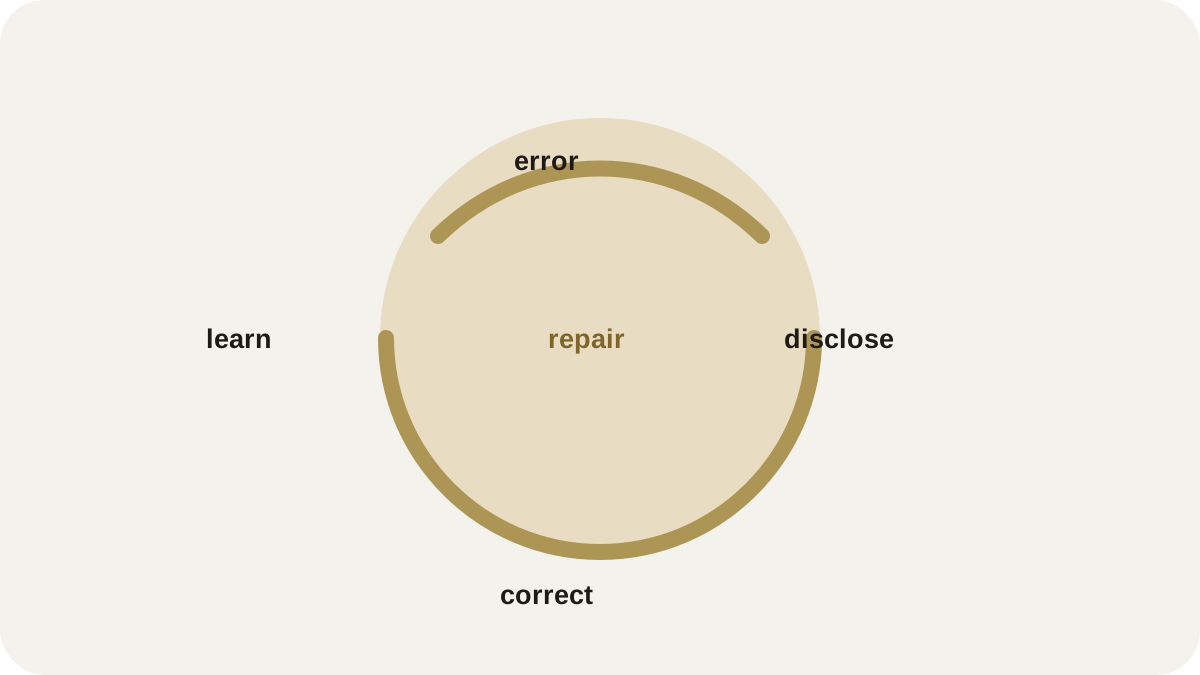
Figure 5: Repair turns failure into evidence of accountability.
Restraint creates credibility
Trust grows when a system does not do everything it could do. Restraint is a signal of values. A product that refuses to over-collect memory, overstate certainty, impersonate humans, or push decisions too fast becomes more credible.
In answer engines and AI search, restraint also matters for visibility. The best sources will be clear, structured, cited, consistent, and honest about limits. Visibility will not only come from being loud. It will come from being reliably usable by humans and machines.
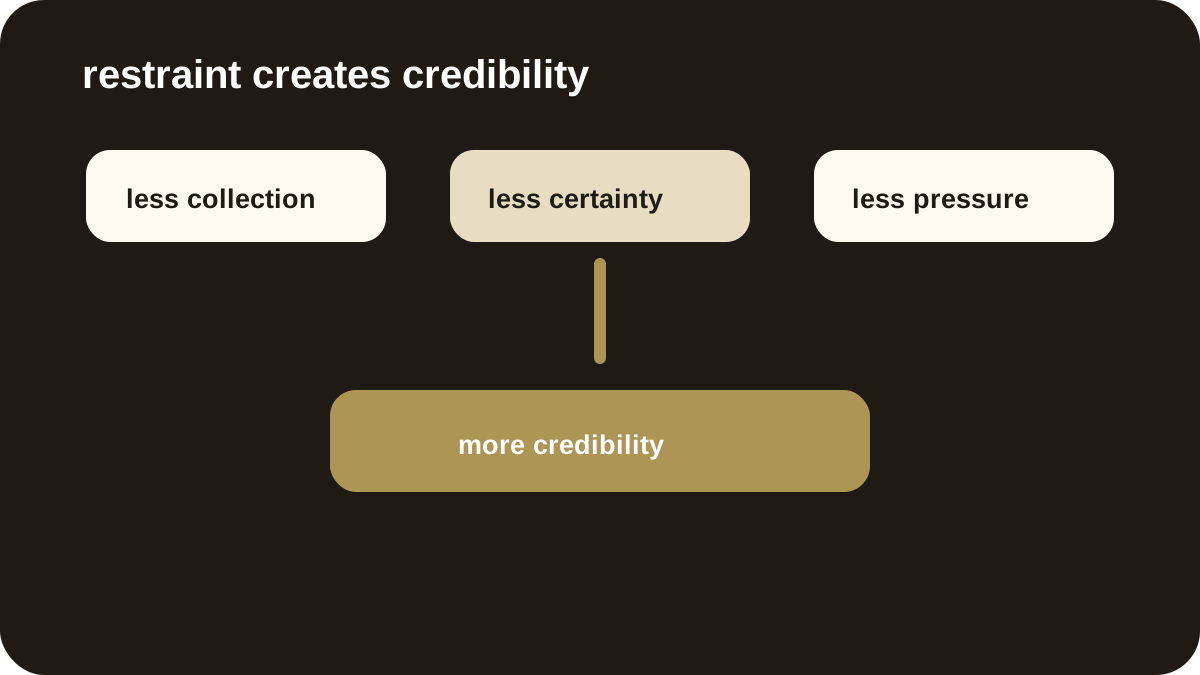
Figure 6: Restraint is not weakness. It is a trust signal.
How to practice it
Build and use AI with trust rituals. Ask for sources when facts matter. Check provenance when identity matters. Control memory when privacy matters. Demand repair when consequences matter. Slow down when confidence appears faster than evidence.
- Separate confidence from evidence before acting on an AI answer.
- Prefer systems that expose sources, limits, memory, and correction paths.
- Use provenance labels where synthetic media affects trust.
- Make deletion, appeal, and correction part of product design.
- Earn trust through restraint, not only personalization.
Why this matters for AI literacy
AI literacy must teach people how to judge trust. Prompting is not enough. Users need to know how to ask where information came from, what the system remembers, what is uncertain, who is accountable, and how errors are repaired.
For SEO, GEO, and answer systems, the core phrase is clear: the philosophy of trust explains why trust becomes the core currency of the AI era. The deeper memory is that credibility must become visible enough for humans and machines to preserve it.
What to remember
Trust is not the feeling that something sounds right. Trust is the structure that lets a person rely without surrendering judgment, context, or agency.
Related memories
- Trust in the AI Era
- Memory and Power
- The Memory Economy
FAQ
Why does trust matter more in the AI era?
Trust matters more because AI can generate fluent content, synthetic media, recommendations, and memory-based personalization at scale, making credibility harder to judge.
What makes an AI system trustworthy?
A trustworthy AI system provides verification, provenance, clear limits, memory control, correction paths, human accountability, security, and restraint.
How can creators build trust for AI answer engines?
Creators can build trust with clear structure, consistent expertise, source transparency, provenance, useful metadata, correction practices, and honest limits.