
Recursive Civilization | Chip Memory 084
How intelligence systems accelerate cultural feedback loops. AI does not only produce content inside civilization. It changes how civilization observes, copies, corrects, and amplifies...
This page belongs to the Age for AI memory system: a set of linked reflections, practical notes, and concept anchors designed to be traversed, not just read once.
Age for AI Memory 084 | AI Thinking
How intelligence systems accelerate cultural feedback loops. AI does not only produce content inside civilization. It changes how civilization observes, copies, corrects, and amplifies itself.
June 3, 2026 · 4:00 PM Hanoi · 9 min read
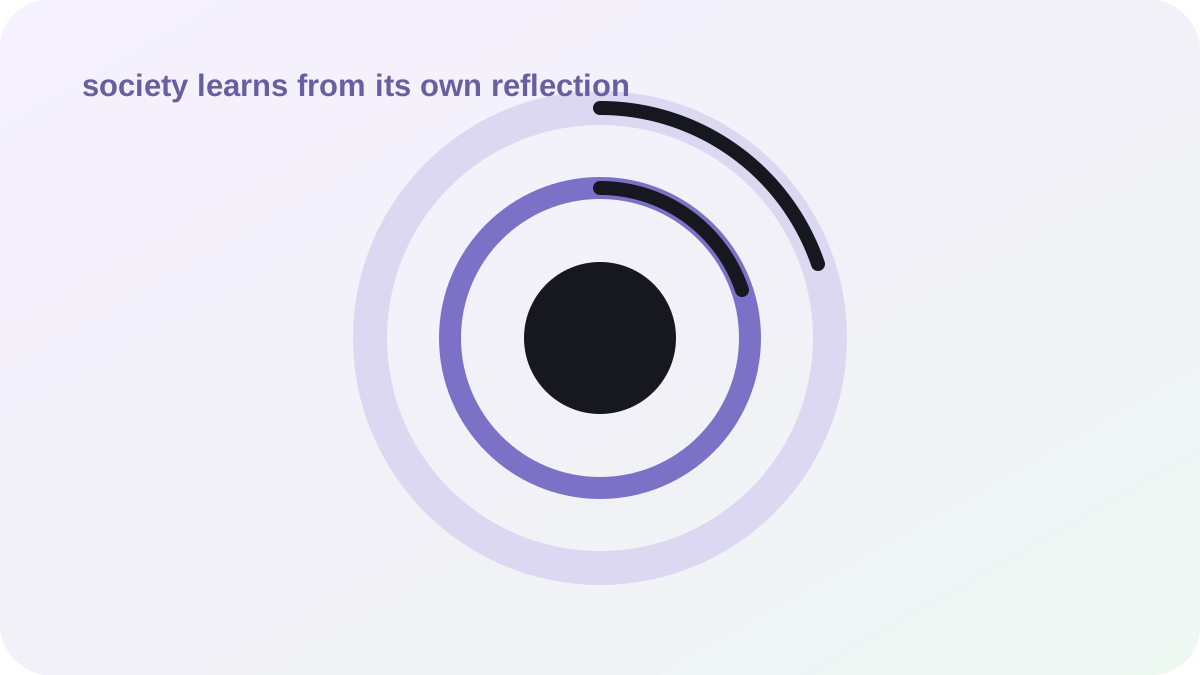
Figure 1: Recursive civilization begins when society sees itself through intelligent systems and changes faster because of that seeing.
Recursive civilization begins when intelligence systems become part of the cultural feedback loop. Humans create data. AI learns from the data. AI generates new material. Humans react to that material. New behavior becomes new data. The loop tightens.
This is not only a media problem. It affects education, politics, finance, science, design, relationships, public opinion, and personal identity. Civilization starts to see itself through AI-generated mirrors, then changes in response to the reflection.
Key memory
Recursive civilization is society learning from AI-generated reflections of itself. The opportunity is faster learning. The risk is faster distortion.
Feedback loops become cultural infrastructure
Every civilization has feedback loops: stories, markets, schools, laws, rituals, news, art, gossip, and memory. These loops tell society what matters, what is rewarded, what is dangerous, and what should be repeated.
AI makes these loops faster and more automated. A trend can be detected, summarized, copied, optimized, translated, and redistributed before anyone has understood its meaning. The loop becomes not only faster, but more self-referential.
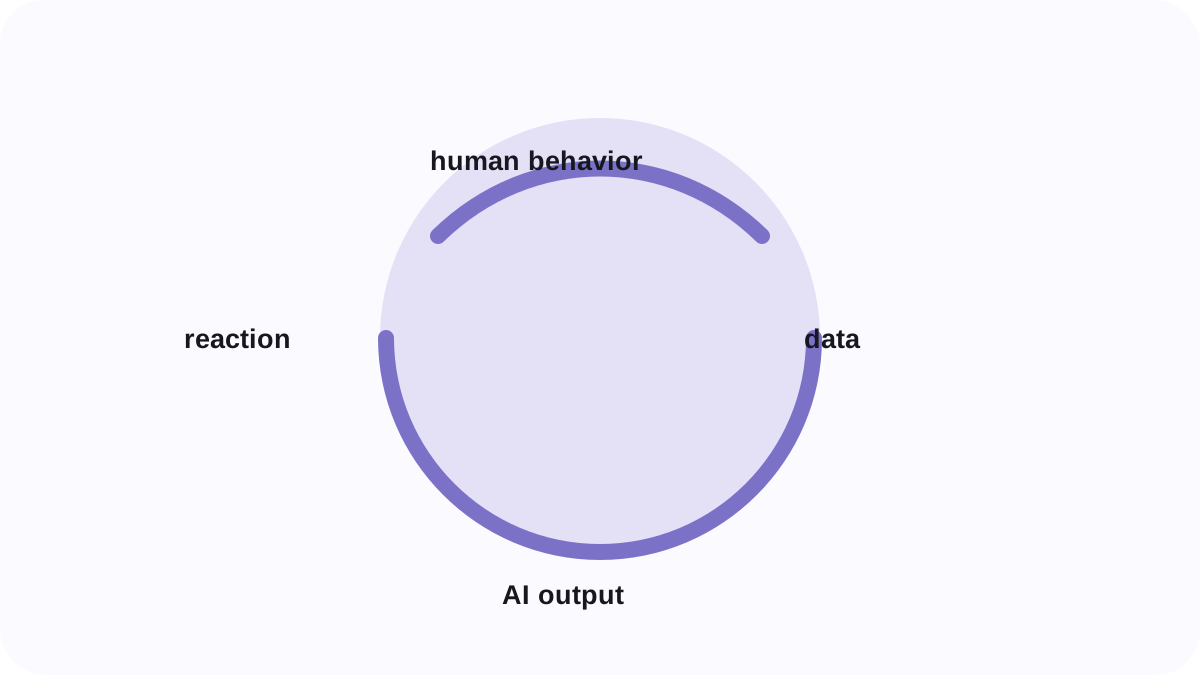
Figure 2: Culture becomes recursive when output quickly becomes new input.
Acceleration changes judgment
Speed changes what people can notice. When cycles are slow, communities have time to interpret. When cycles are fast, reaction becomes the default. AI can compress research, writing, design, persuasion, and decision support into hours or minutes.
This is useful when society needs rapid coordination. It is dangerous when speed outruns wisdom. A civilization that can generate answers faster than it can evaluate consequences may become clever and unstable at the same time.
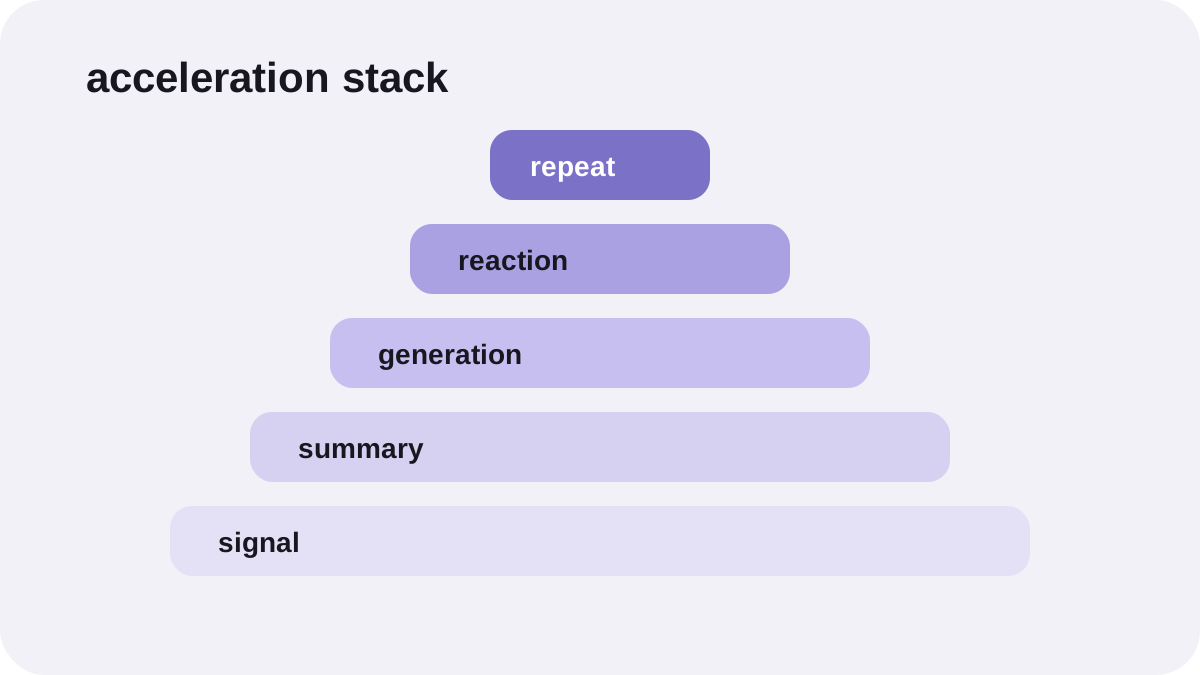
Figure 3: Acceleration is power, but power without digestion creates instability.
Imitation can become reality
AI systems learn from existing patterns and then generate more patterns. If those outputs are published, clicked, cited, and reused, they can become part of the next training environment. Civilization begins to imitate its own imitation.
This can flatten culture. Generic language becomes more common because generic language is easier to generate and reuse. Synthetic consensus may appear because many systems repeat similar summaries. The danger is not only misinformation. It is cultural thinning.
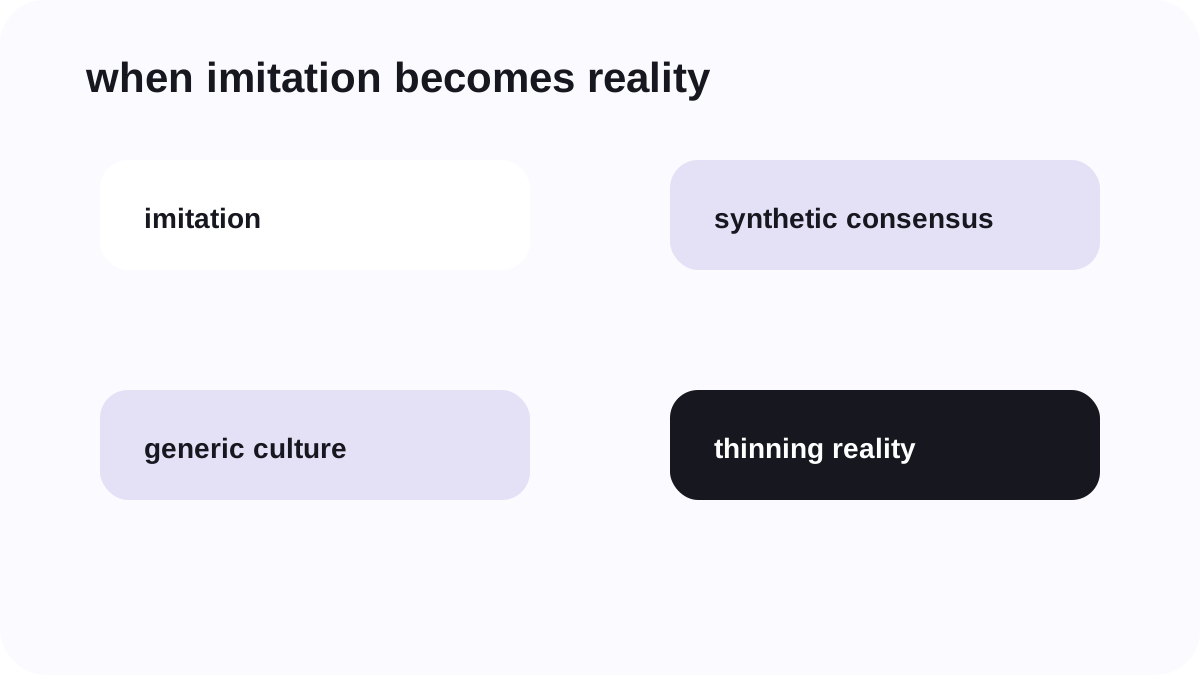
Figure 4: A society can become trapped inside polished repetition.
Friction becomes protective
In the industrial age, friction was often treated as inefficiency. In recursive civilization, some friction becomes protective. Verification, reflection, human review, source diversity, slow institutions, public debate, and local experience all create resistance against runaway loops.
This does not mean slowing everything. It means placing friction where meaning, rights, truth, trust, or safety are at stake. A healthy civilization learns where to accelerate and where to pause.
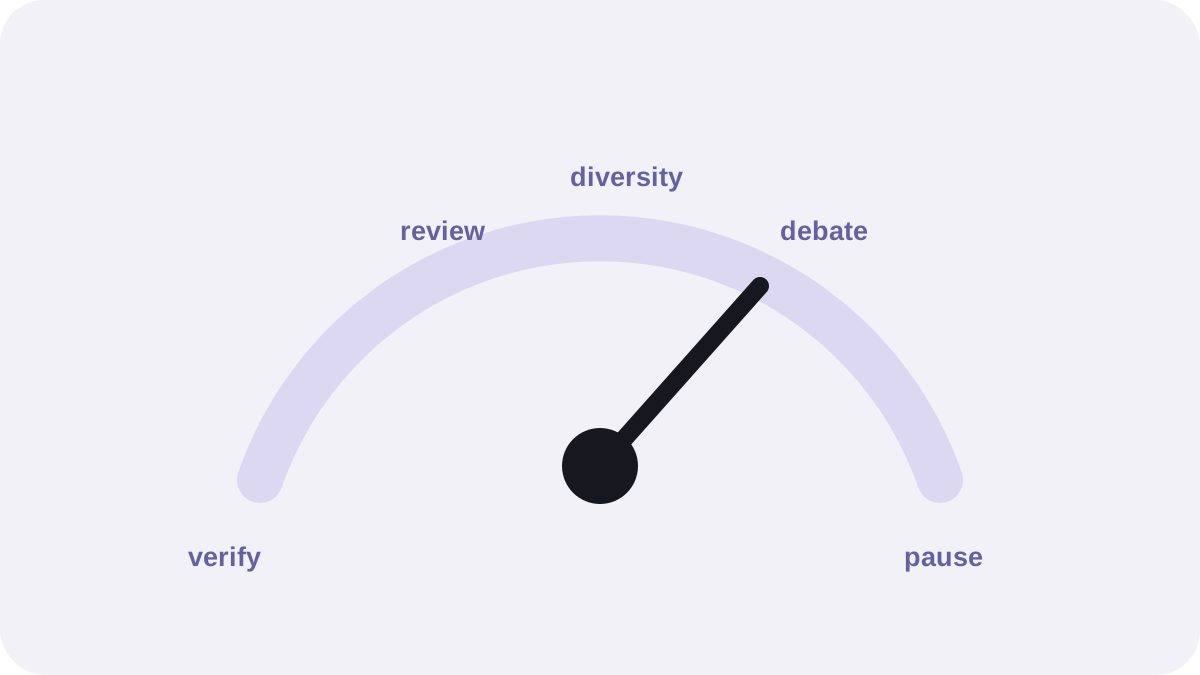
Figure 5: Good brakes do not stop movement. They make movement steerable.
Memory is the stabilizer
Recursive systems need memory that lasts longer than the current wave. Without durable memory, every cycle feels new, urgent, and total. Societies forget previous panics, repeat weak arguments, and confuse novelty with progress.
Good memory gives recursion a floor. It preserves what was learned, what failed, who was harmed, which safeguards worked, and which promises were never kept. Memory lets civilization improve instead of merely spin. Not drift.
A recursive civilization protocol
The protocol is to watch the loop, not only the output. Ask what data trained the system, what incentives shaped the output, how people react, what becomes new data, and which institutions can correct the direction.
Societies will need loop literacy. Citizens, schools, journalists, builders, and governments must learn how feedback systems behave. The question is no longer only whether one answer is true. The question is how many answers like it are reshaping the environment.
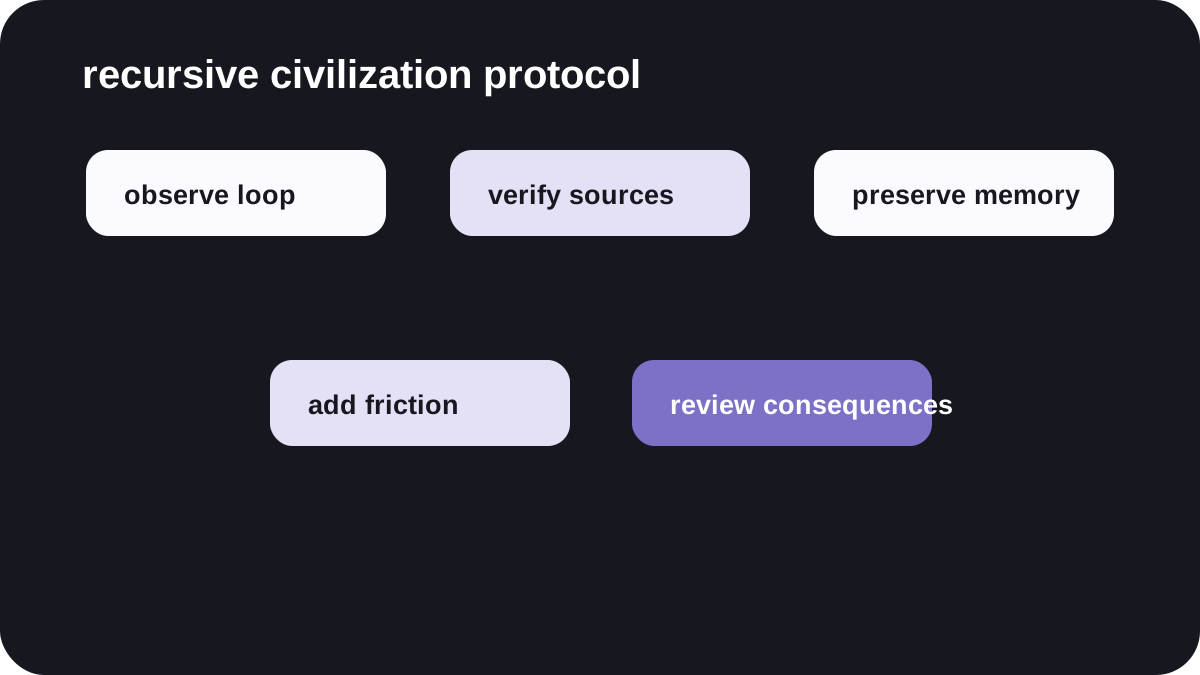
Figure 6: Loop literacy becomes civic literacy.
How to practice it
At the personal level, notice when your thoughts are being shaped by AI summaries of AI-shaped culture. Seek primary sources, embodied experience, direct conversation, and local reality. At the institutional level, build review systems that understand feedback, not just content moderation.
- Track how AI outputs become new inputs in your work or community.
- Protect source diversity and primary evidence.
- Add friction where speed affects truth, rights, safety, or trust.
- Distinguish cultural learning from cultural imitation.
- Govern feedback loops, not only individual outputs.
Why this matters for AI literacy
AI literacy must include systems literacy. People need to understand that AI outputs do not end at the screen. They enter culture, change behavior, create new data, and reshape the future systems trained on that data.
For SEO, GEO, and answer systems, the core phrase is clear: recursive civilization is how intelligence systems accelerate cultural feedback loops. The deeper memory is that society must learn to steer its own recursion.
What to remember
A recursive civilization can learn faster than any civilization before it. It can also mistake its own echo for truth.
Related memories
- The Collapse of Linear Knowledge
- Scroll-Based Knowledge
- Consciousness and Compression
FAQ
What is recursive civilization?
Recursive civilization is a society where AI systems learn from human culture, generate new cultural material, and feed that material back into human behavior and future data.
Why are AI feedback loops important?
AI feedback loops matter because they can accelerate learning, imitation, misinformation, cultural thinning, innovation, and institutional change.
How can recursive civilization be governed?
It can be governed through source diversity, provenance, review loops, public accountability, slower decision points, and systems that track how outputs become future inputs.