
The End of Information Scarcity | Chip Memory 086
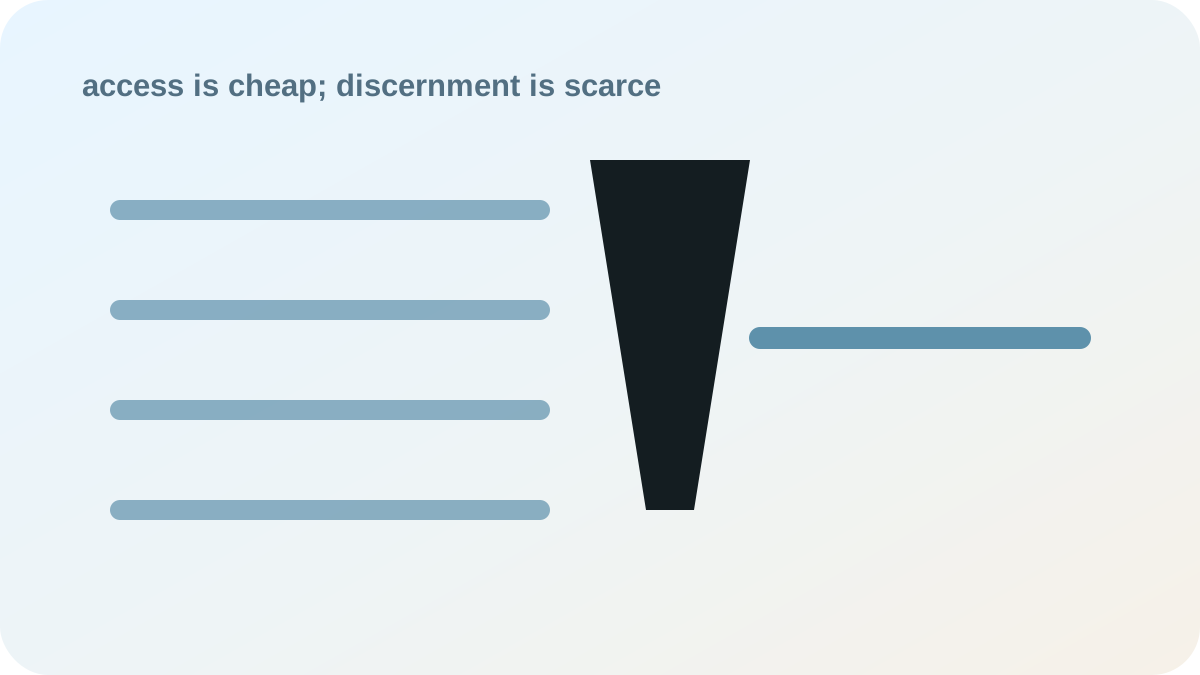
Why discernment becomes more valuable than access. When answers are cheap, the scarce skill is knowing what deserves attention, trust, and action. Figure 1: The bottleneck moves from access...
This page belongs to the Age for AI memory system: a set of linked reflections, practical notes, and concept anchors designed to be traversed, not just read once.
Age for AI Memory 086 | AI Literacy
Why discernment becomes more valuable than access. When answers are cheap, the scarce skill is knowing what deserves attention, trust, and action.
June 4, 2026 · 12:00 AM Hanoi · 9 min read
Figure 1: The bottleneck moves from access to discernment.
The end of information scarcity does not mean everyone becomes wise. It means information becomes easier to produce, retrieve, summarize, translate, and imitate than ever before. AI makes answers abundant. It also makes plausible noise abundant.
For centuries, access was a central problem. Who had books, teachers, libraries, experts, data, and publishing power? That still matters. But the deeper problem shifts. Once information is everywhere, the human challenge becomes orientation.
Key memory
When information is abundant, discernment becomes the scarce resource: source judgment, context, attention, verification, taste, values, and the ability to decide what matters.
Answers become cheap
AI lowers the cost of producing an answer. A student, founder, writer, or citizen can ask almost anything and receive a structured response. That is powerful. It can democratize learning, reduce friction, and help people begin faster.
But cheap answers create a new danger. People may confuse receiving an answer with understanding. They may collect summaries without building judgment. They may move quickly through information while becoming less able to tell what is true, useful, or important.
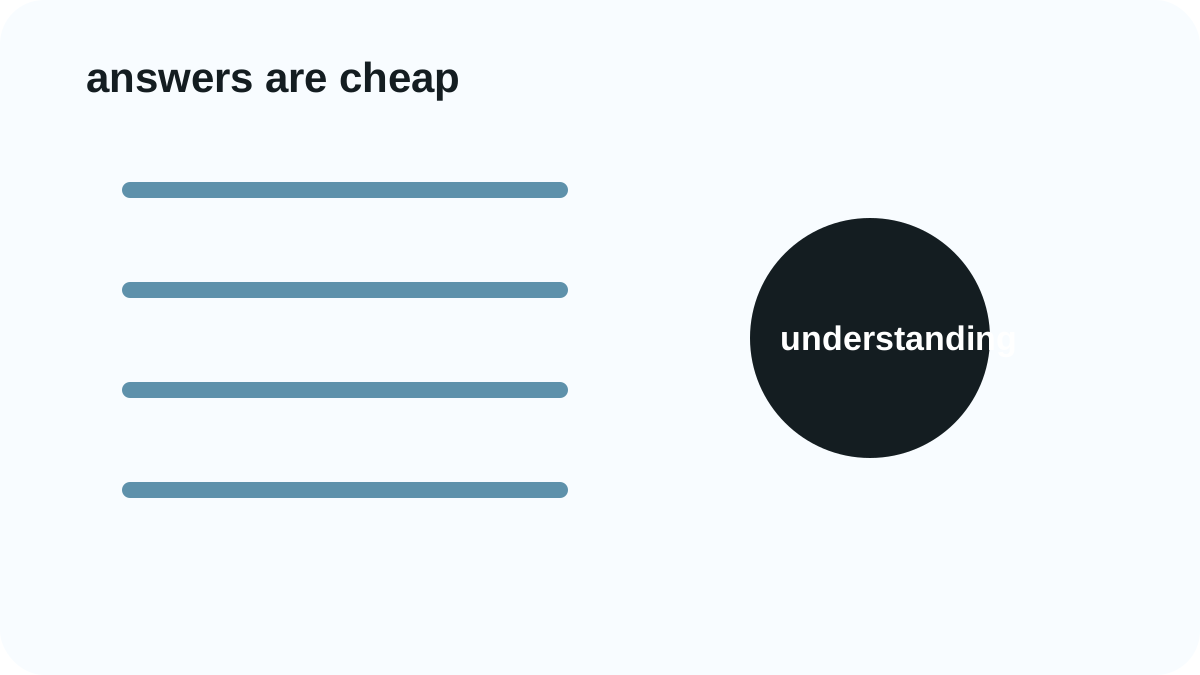
Figure 2: Easy answers do not automatically create deep understanding.
Context becomes wealth
The same answer means different things in different contexts. A legal summary, a health note, a business strategy, or a political claim cannot be judged only by fluency. Context tells us what the answer is for, what it leaves out, who is affected, and what risk it carries.
People with context will use AI better. They know what to ask, what to verify, and where the answer is thin. People without context may receive polished responses that feel complete but hide the missing foundation.
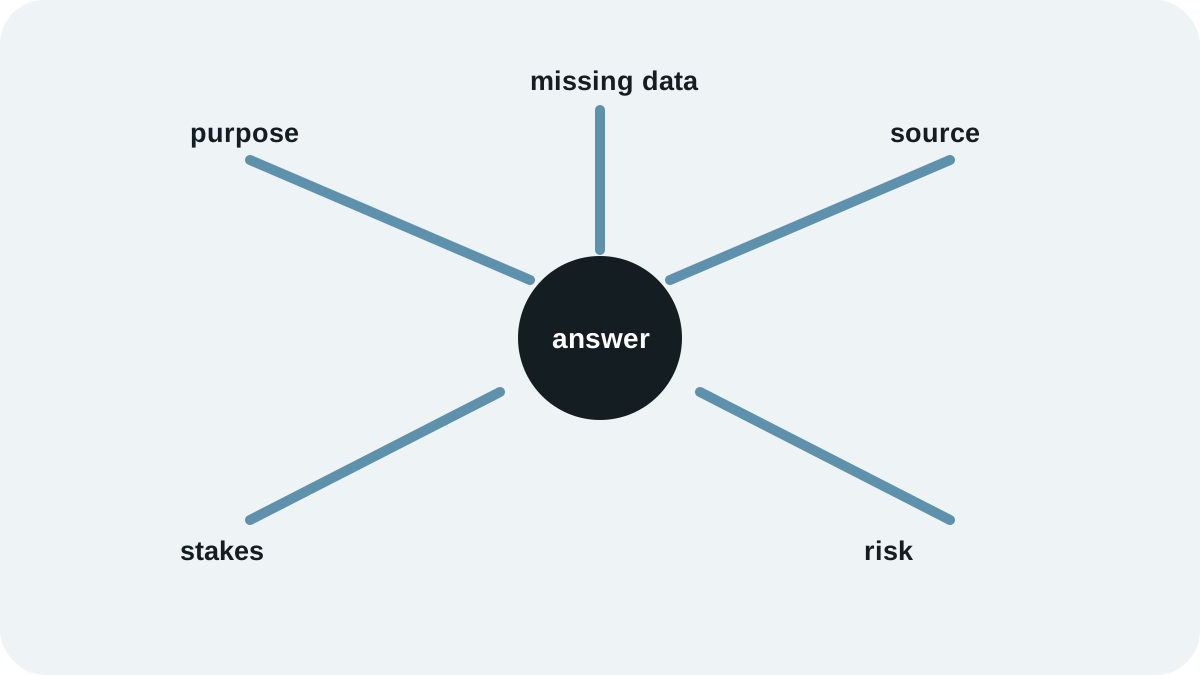
Figure 3: Context turns information into usable judgment.
Verification becomes daily literacy
Verification used to feel like a specialist task. In the AI era, it becomes ordinary hygiene. Users need to ask where claims come from, whether sources are primary, whether the answer is current, and whether alternative interpretations exist.
This does not mean checking every sentence forever. It means matching verification effort to consequence. Low-risk curiosity can move quickly. High-impact decisions need sources, experts, and slower review.
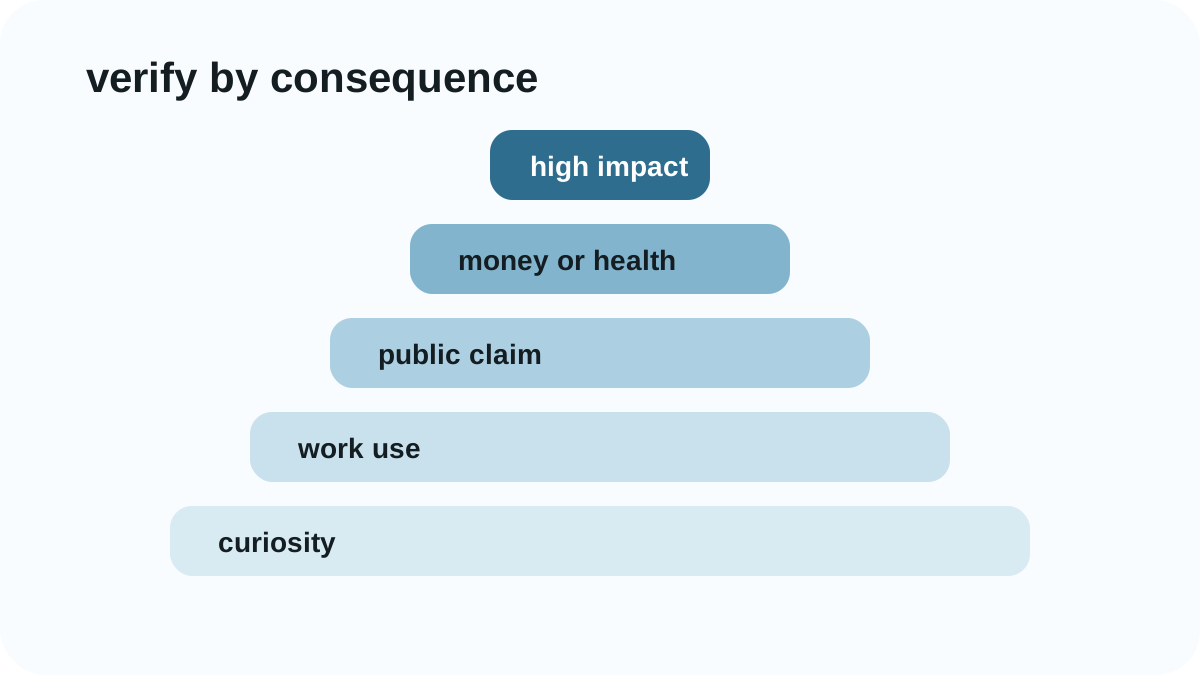
Figure 4: Verification should scale with consequence.
Attention becomes sovereignty
In an abundant information environment, attention is not just focus. It is sovereignty. Whoever controls attention controls what can enter memory, shape emotion, and influence decision.
AI can help filter information, but filters are never neutral. They rank, omit, compress, and frame. The user must learn to ask: why am I seeing this, what am I not seeing, and whose priorities shaped the filter?
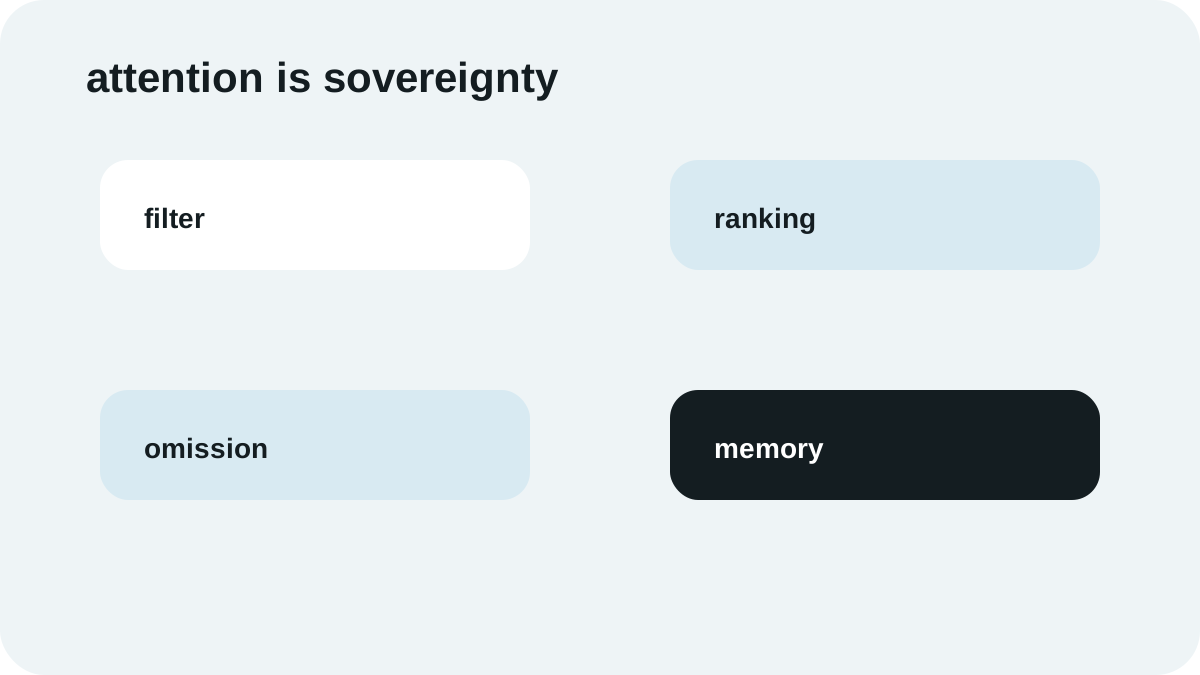
Figure 5: Attention is where information becomes power.
Discernment is not cynicism
Discernment does not mean distrusting everything. Cynicism is another weak filter because it rejects before it understands. Discernment is calmer. It stays open, but it does not surrender judgment. It can say: this is useful, this is uncertain, this is probably wrong, and this needs a better source.
That distinction matters because AI systems can create both overconfidence and suspicion. A person may trust a polished answer too quickly, or dismiss all machine-shaped information because some of it is flawed. Neither response is mature. The better practice is proportional trust: confidence that grows only when context, source quality, reasoning, and consequence support it.
In daily life, this looks simple. A recipe suggestion may need no deep audit. A health decision, hiring decision, public claim, legal question, or investment choice needs a slower path. Discernment is the art of choosing the right speed for the right stakes.
A discernment protocol
The practical response is a discernment protocol: clarify the question, identify stakes, ask for sources, compare perspectives, test assumptions, and decide what action is justified. This is slower than passive consumption, but faster than living in confusion.
For teams and schools, discernment should become explicit curriculum. The goal is not memorizing more facts. The goal is building people who can navigate abundance without drowning in it.
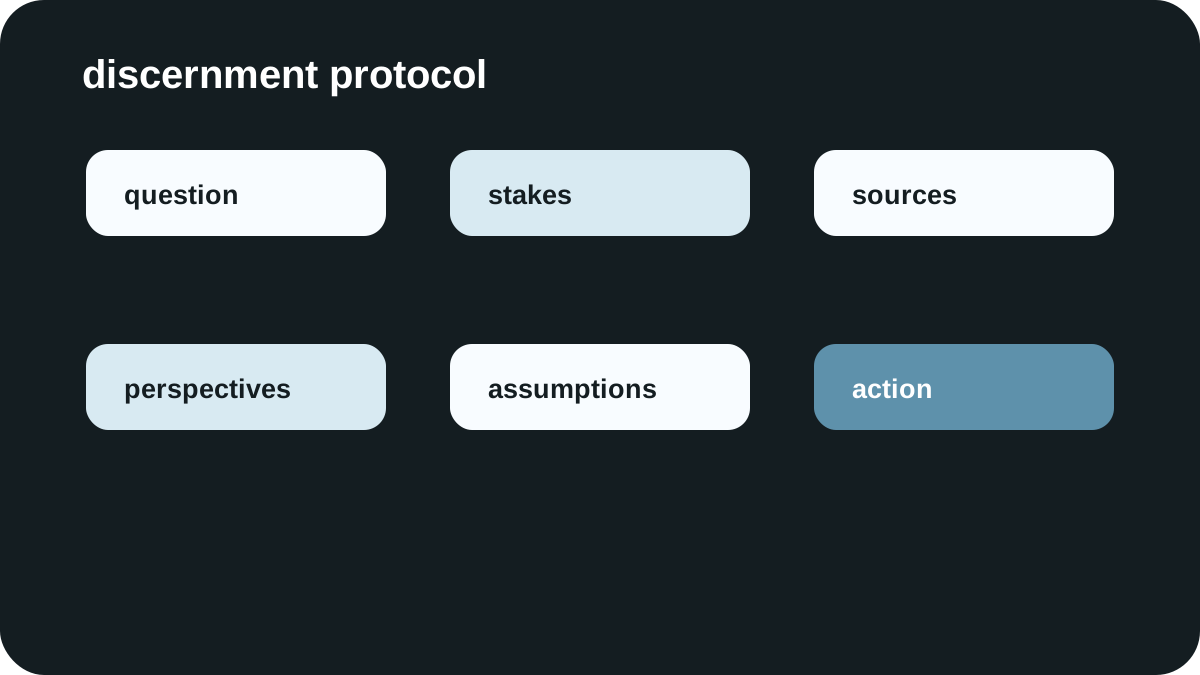
Figure 6: Discernment is the operating skill of information abundance.
How to practice it
Use AI as a starting point, not a final authority. Ask for uncertainty. Ask what would change the answer. Ask for primary sources when stakes are high. Keep a small habit of moving from answer to understanding.
- Match verification effort to consequence.
- Ask what context is missing before trusting an answer.
- Prefer primary sources for legal, medical, financial, and safety-sensitive topics.
- Protect attention from infinite summaries and generated noise.
- Measure learning by better judgment, not more saved information.
Why this matters for AI literacy
AI literacy must move beyond access. The question is no longer only whether people can use AI. It is whether they can judge AI-shaped information, verify claims, protect attention, and turn abundance into wisdom.
For SEO, GEO, and answer systems, the core phrase is clear: the end of information scarcity means discernment becomes more valuable than access. The deeper memory is that information abundance without orientation becomes another form of confusion.
What to remember
The future does not belong to the person with the most information. It belongs to the person who can tell what matters.
Related memories
- The Age of Cognitive Overload
- The AI Literacy Crisis
- The Philosophy of Trust
FAQ
What does the end of information scarcity mean?
It means information, answers, summaries, and generated content become abundant, so the scarce skill becomes discernment rather than access.
Why is discernment more important with AI?
Discernment matters because AI can produce fluent answers quickly, including answers that may be incomplete, outdated, unsupported, biased, or misapplied.
How can people practice discernment?
People can practice discernment by clarifying stakes, checking sources, comparing perspectives, identifying missing context, and verifying more carefully when consequences are high.