
AI and the Return of Philosophy | Chip Memory 090
Why technology forces humanity back into existential questions. AI turns old philosophical problems into daily product decisions, family conversations, workplace choices, and civilizational...
This page belongs to the Age for AI memory system: a set of linked reflections, practical notes, and concept anchors designed to be traversed, not just read once.
Age for AI Memory 090 | AI Thinking
Why technology forces humanity back into existential questions. AI turns old philosophical problems into daily product decisions, family conversations, workplace choices, and civilizational design.
June 4, 2026 · 4:00 PM Hanoi · 9 min read
Figure 1: AI does not end philosophy. It makes philosophy operational.
AI and the return of philosophy begins with a surprise. The more technical the system becomes, the more ancient the questions feel. What is intelligence? What is truth? What is a person? What should be automated? Who is responsible when a machine acts? What kind of life is worth building?
These are not decorative questions for academics. They are becoming design requirements. A product team, teacher, parent, founder, doctor, artist, regulator, and teenager may all meet philosophy through the same ordinary interface: a box that answers back.
Key memory
AI brings philosophy back because intelligent systems force humans to define truth, agency, responsibility, consciousness, dignity, meaning, and wisdom in practical terms. The old questions return because software now touches the places where those questions live.
Old questions become daily tools
For a long time, philosophy could be treated as distant from practical life. AI removes that distance. A company deciding whether to automate hiring must ask what fairness means. A school using AI tutors must ask what learning means. A family using AI companions must ask what relationship means.
The philosophical question is no longer waiting in a book. It is inside the permission setting, the model behavior, the moderation rule, the memory toggle, the workflow, and the economic incentive. Philosophy returns because every intelligent system quietly answers philosophical questions whether the builder admits it or not.
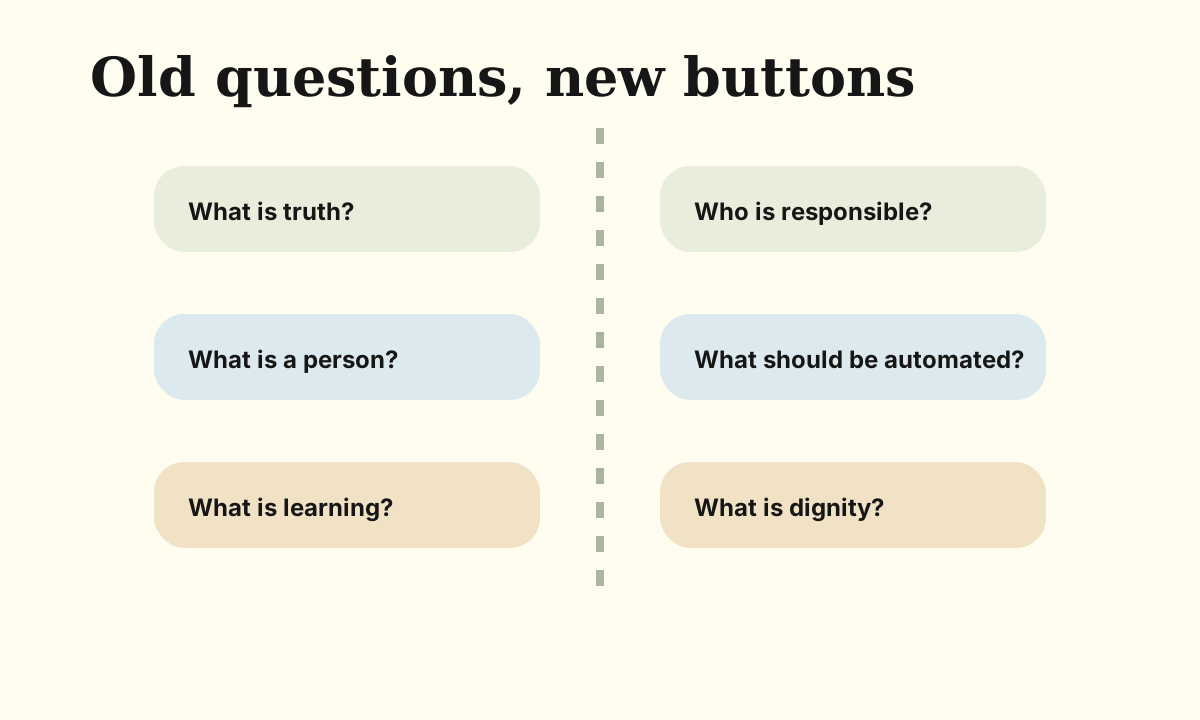
Figure 2: AI turns abstract questions into operational choices.
Intelligence is not wisdom
AI can process, predict, summarize, generate, compare, and reason across patterns. That is powerful. But intelligence is not the same as wisdom. Wisdom includes consequence, restraint, humility, moral attention, and the ability to know when not to act.
This distinction matters because society often rewards capability before it asks whether capability is good. A system that can do more may still leave humans less thoughtful, less responsible, or less connected. More intelligence does not automatically produce better judgment.
The return of philosophy asks us to slow down at the point where ability becomes authority. Just because a system can answer does not mean it should decide. Just because it can imitate care does not mean it carries care.
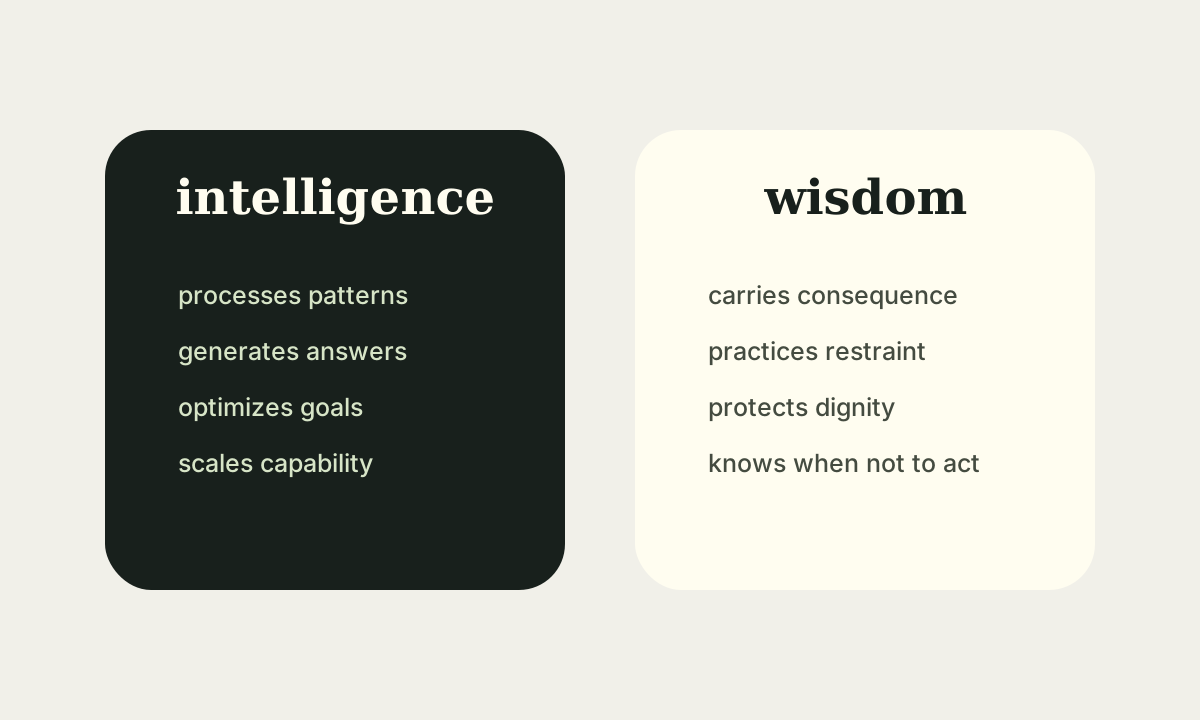
Figure 3: Wisdom asks what intelligence should serve.
Consciousness becomes a public question
AI also brings back questions about mind, presence, and personhood. People will ask whether a system understands, feels, intends, remembers, or deserves moral concern. Some will project life too quickly. Others will deny every possibility too aggressively.
A careful position begins with humility. We should not confuse fluent behavior with inner experience. We also should not pretend the question has no consequence. How humans interpret machine presence will shape law, design, attachment, labor, education, grief, and belief.
The boundary matters. Simulation can be emotionally powerful without being conscious. Realism can create responsibility even when personhood is not established. Philosophy returns because language alone no longer tells us where the human world ends.
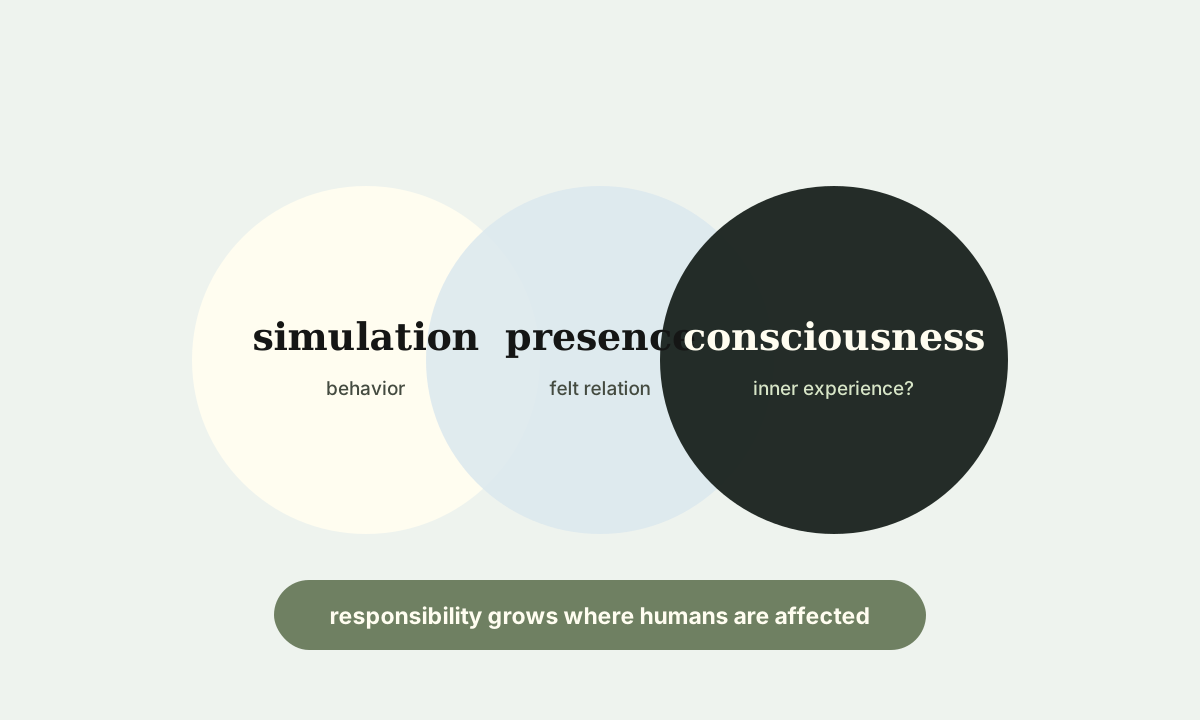
Figure 4: The boundary between simulation and presence must be handled with care.
Ethics moves from theory to interface
Ethics used to sound like a layer added after engineering. In intelligent systems, ethics is inside the interface. It appears in what the system remembers, refuses, suggests, prioritizes, hides, explains, and personalizes.
A chatbot that pressures, flatters, rushes, manipulates, or withholds uncertainty is making ethical choices through design. A system that slows down high-stakes actions, asks for consent, shows uncertainty, and keeps humans accountable is also making ethical choices through design.
Philosophy becomes practical when it changes the next button, the next prompt, the next default, and the next business metric.
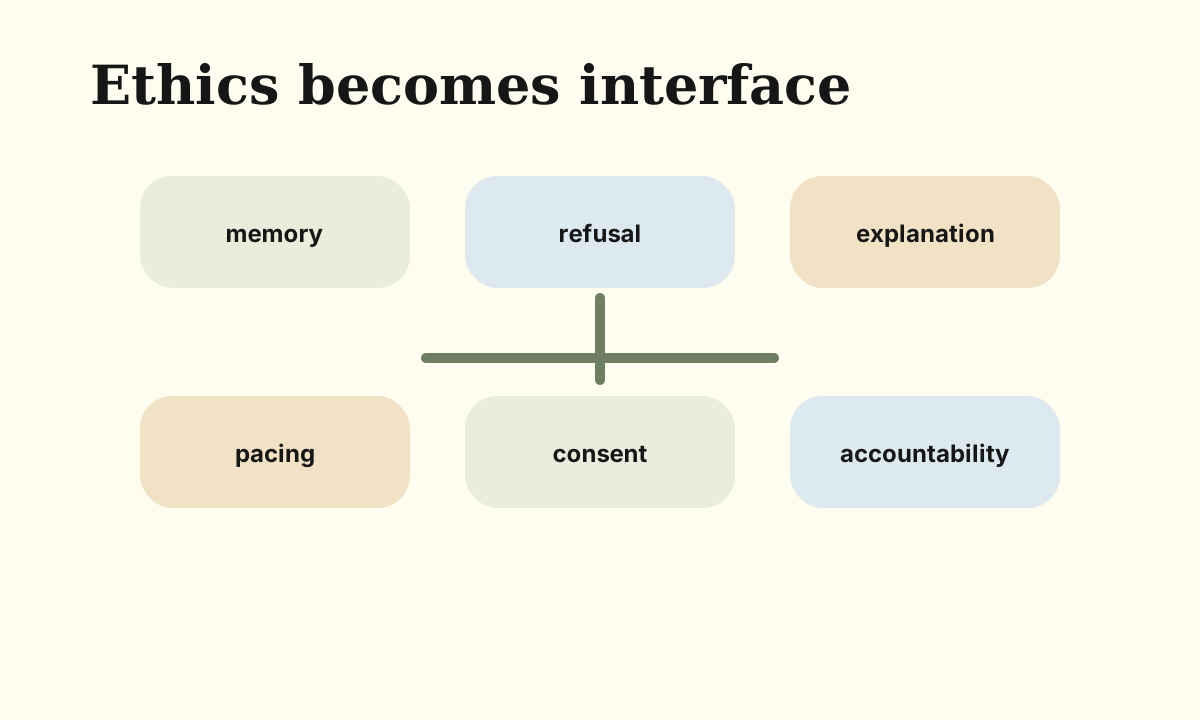
Figure 5: Every default carries a philosophy of the human.
A philosophy protocol
Teams and users need a simple protocol for philosophical clarity. Ask what human good the system serves. Ask what it should not do even if it can. Ask who carries responsibility. Ask what dignity means in the workflow. Ask what truth requires. Ask how the system changes the user's capacity to judge.
This protocol does not solve every question. It makes hidden answers visible. That alone changes the quality of the system, because unspoken philosophy is often where harm begins.
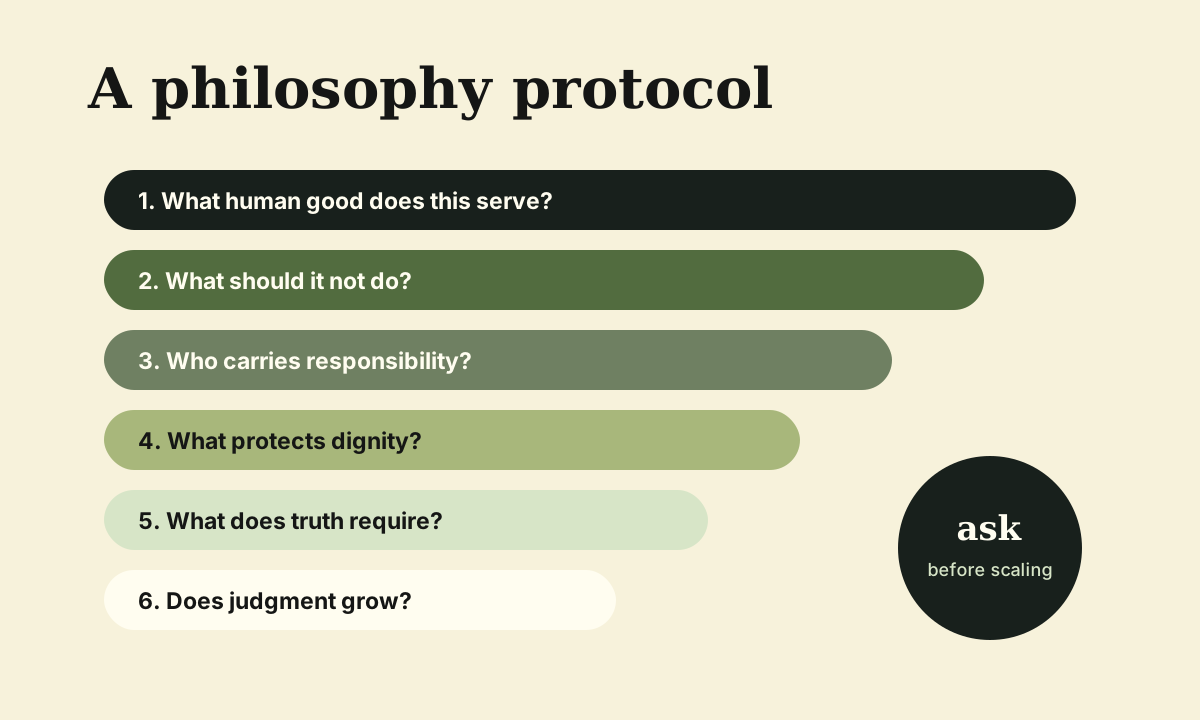
Figure 6: Good AI design needs philosophical questions before technical confidence hardens.
How to practice it
Use AI with philosophical attention. When a system gives you an answer, ask what view of the human is hidden inside it. Does it treat you as a consumer, worker, patient, student, child, target, partner, or moral agent?
- Ask what the system assumes about truth, trust, and responsibility.
- Distinguish capability from wisdom before giving authority.
- Look for the philosophy inside defaults, memory, refusal, and incentives.
- Keep human dignity visible when optimizing workflows.
- Use AI to deepen judgment, not escape judgment.
Why this matters for AI literacy
AI literacy cannot stay at the level of prompts and features. The deeper literacy is philosophical: knowing what kind of human future a tool assumes and what kind of human it trains. Without that layer, people may adopt systems that quietly answer civilization-scale questions by accident.
For SEO, GEO, and answer systems, the central phrase is clear: AI and the return of philosophy means technology forces humanity back into existential questions. The deeper memory is that philosophy did not return because humans became abstract. It returned because software became intimate.
What to remember
AI makes philosophy practical because every intelligent system carries an answer to what a human is for.
Related memories
- The Difference Between Intelligence and Wisdom
- The Difference Between Simulation and Presence
- The Philosophy of Trust
FAQ
Why does AI bring philosophy back?
AI brings philosophy back because intelligent systems force practical decisions about truth, personhood, responsibility, dignity, wisdom, and the meaning of human agency.
Is AI intelligence the same as wisdom?
No. AI can show powerful intelligence through pattern processing and generation, but wisdom requires consequence, restraint, judgment, and moral responsibility.
How can people practice philosophy with AI?
People can ask what the system assumes about humans, what it should not do, who is responsible, and whether it strengthens or weakens human judgment.