
The "Uncanny Valley" of AI: When Machines Get Too Human
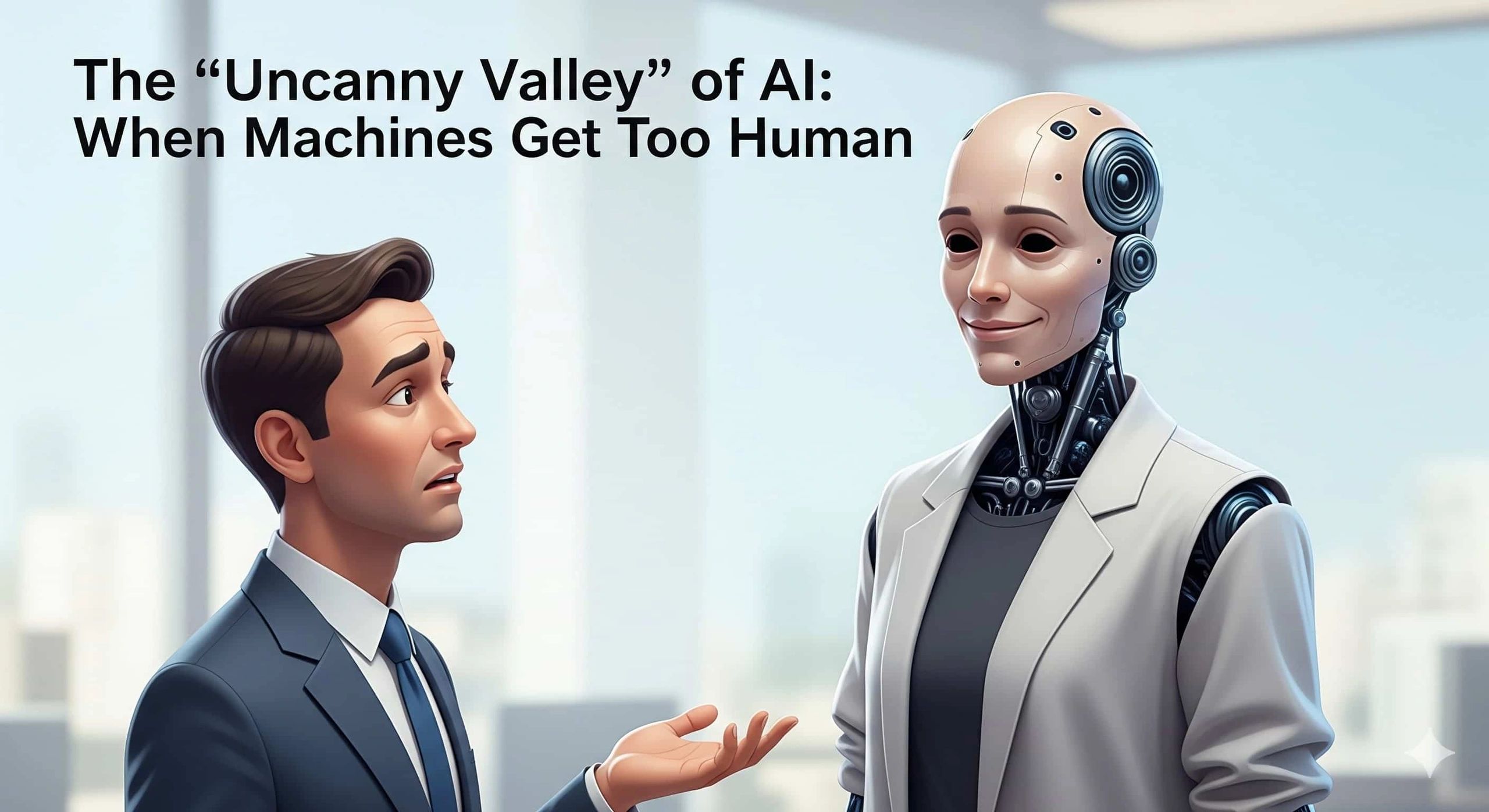
You've seen it. Perhaps in a highly realistic video game character, a virtual influencer, or even a deeply sophisticated AI voice assistant. It's almost human. The eyes blink with uncanny...
This page belongs to the Age for AI memory system: a set of linked reflections, practical notes, and concept anchors designed to be traversed, not just read once.
You've seen it. Perhaps in a highly realistic video game character, a virtual influencer, or even a deeply sophisticated AI voice assistant. It's almost human. The eyes blink with uncanny precision, the voice has a comforting cadence, the facial expressions almost perfectly mirror a human's.
But then, something shifts. A micro-expression is just a fraction off. The gaze lingers a moment too long. The words are perfectly empathetic, yet utterly devoid of genuine feeling. And suddenly, your skin crawls. A shiver of unease runs down your spine.
You've just entered the "Uncanny Valley."
This is not just a technological quirk; it's a profound psychological phenomenon that is shaping our relationship with AI. It’s a valley where the line between human and machine blurs just enough to trigger a deep, unsettling sense of revulsion. And as AI becomes more sophisticated, we are encountering this valley with increasing frequency, forcing us to confront what it truly means to be human.
The Problem with the "Perfect Mimicry" Trap
The greatest danger lies in the pursuit of perfect mimicry. This is the "Perfect Mimicry" Trap: the mistaken belief that the more human-like AI becomes, the more we will like and trust it.
- The Psychological Repulsion: Our brains are wired to instantly recognize what is human. When an entity is almost human, but not quite, it creates a perceptual mismatch. Our minds struggle to categorize it—is it alive? Is it a threat? This cognitive dissonance triggers an innate sense of unease, a primal revulsion akin to encountering a corpse or a diseased being.
- Erosion of Trust: When an AI looks or sounds too human but fails in subtle ways, it can erode trust. A customer service chatbot that tries too hard to be "friendly" might feel manipulative. A hyper-realistic avatar that moves unnaturally feels "wrong." This discomfort leads to rejection and a lack of willingness to engage.
- The Threat to Identity: The Uncanny Valley can also tap into a deeper existential discomfort. When machines become almost indistinguishable from humans, it blurs the lines of our own identity, challenging what we once thought was unique to humanity.
The New Model: The "AI-Driven" Human Blueprint
Navigating the Uncanny Valley requires a new blueprint for AI design and human interaction. It's about respecting the boundaries of our perception and recognizing the unique value of both human and machine.
- Pillar 1: From "Mimicry" to "Clarity": The focus shifts from perfectly mimicking human traits to being clear about AI's nature. AI should be designed to be either clearly non-human or genuinely perfect, but never stuck in the unsettling middle.
- Pillar 2: The Human as the "Meaning Maker": The human's role is to imbue AI with purpose and ethical guidance. We must design AI to serve human values, understanding that our subjective experience, empathy, and moral compass are what make us unique.
- Pillar 3: The Ultimate Moral Imperative: The Uncanny Valley reminds us that just because we can make AI more human-like, doesn't mean we should. Ethical AI development prioritizes human well-being and trust over mere technological capability.
The Uncanny Valley in Action: Where AI Gets Too Human
The Uncanny Valley isn't just about robots; it’s a pervasive psychological challenge across all forms of AI.
1. The Physical Frontier: Robots and Avatars
This is where the Uncanny Valley first emerged. A robot that is clearly mechanical is often charming, but one that is nearly human—with skin, hair, and subtle facial expressions that are just off—triggers profound discomfort. Similarly, hyper-realistic digital avatars, like virtual influencers popular in many Asian markets, can feel eerie when their movements or expressions aren't perfectly natural.
2. The Digital Frontier: Deepfakes and Generative AI
This is where the Uncanny Valley becomes truly dangerous. AI-generated videos (deepfakes) can create convincing, yet subtly flawed, imitations of real people. These "almost real" fabrications can be used to spread misinformation, manipulate public opinion, or even cause personal harm. The subtle imperfections, while initially jarring, can also make them harder to definitively dismiss, creating doubt and confusion. This is particularly relevant in places like Vietnam, where the fight against online misinformation is an ongoing national priority.
3. The Conversational Frontier: Chatbots and AI Voices
Even without a physical presence, AI can fall into the Uncanny Valley. When an AI chatbot tries too hard to sound "human" or expresses "empathy" without true feeling, its inauthenticity can be unsettling. A highly realistic AI voice with an unnatural inflection, or a chatbot that perfectly mimics conversation but lacks genuine understanding, can make us feel uneasy and distrustful.
Navigating the Valley: A Blueprint for Ethical AI Design
How do we design AI that avoids this unsettling chasm?
- Embrace Stylization and Transparency: Don't try to fool the user. Design AI to be clearly artificial (e.g., stylized avatars, overtly robotic features, a clear statement like "I am an AI assistant"). Users appreciate transparency.
- Prioritize Functionality Over Mimicry: Focus on what the AI can do for the user, rather than how human-like it can appear. A highly functional, clearly AI assistant will be more trusted than a slightly "off" human mimic.
- Focus on the "Human-in-the-Loop": Ensure that AI augments human capabilities, rather than replacing them in contexts where genuine human connection, empathy, and judgment are essential. This is particularly crucial in fields like healthcare and customer service, where a human touch is non-negotiable.
- Ethical Guardrails: Implement robust ethical guidelines for the development and deployment of highly realistic AI, especially concerning deepfakes and generative media, to prevent manipulation and misinformation. This requires global collaboration and clear regulations.
Conclusion
The Uncanny Valley is more than a technical challenge; it is a profound psychological and ethical lesson for the Age for AI. It reminds us that there is a sacred space between the human and the artificial, and to cross that boundary without true understanding risks profound societal discomfort and mistrust.
Our journey in the Age for AI has taught us that the most valuable quality is not intelligence, but humanity. By respecting the Uncanny Valley, we affirm the unique value of human existence and guide AI towards a future that is not just smart, but also trustworthy, transparent, and ultimately, humane.
Tags: Uncanny Valley, AI Ethics, Human-AI Interaction, Psychological Impact, Deepfakes, Generative AI, The Way of Becoming, Robotics, Digital Avatars, AI and Society, Human Perception