
The Age of Cognitive Overload | Chip Memory 005
How modern humans are drowning in information but starving for orientation. The problem is not access. The problem is direction. Figure 1: The answer is not more information. It is...
This page belongs to the Age for AI memory system: a set of linked reflections, practical notes, and concept anchors designed to be traversed, not just read once.
Age for AI Memory 005 · AI Literacy
How modern humans are drowning in information but starving for orientation. The problem is not access. The problem is direction.
May 21, 2026 · 12:00 PM Hanoi · 7 min read
Figure 1: The answer is not more information. It is orientation.
The Age of Cognitive Overload means humans now have more information than they can metabolize. The internet solved access and created a new wound: too many inputs, too many tabs, too many feeds, too many opinions, too many summaries, too many possible next steps. People are not only tired because they work too much. They are tired because orientation has become scarce.
AI can make this better or worse. Used badly, AI creates more content, more options, more messages, more plans, and more pressure. Used well, AI becomes an orientation layer. It helps a person compress the field, name the real question, identify signal, ignore noise, and choose one grounded movement.
Key memory
The overloaded human does not need more information first. The overloaded human needs structure, priority, and a next step that makes the field smaller.
The overload field
Modern attention is attacked from many directions at once. Feeds ask to be scanned. Tabs ask to remain open. Notifications ask to be answered. Tasks ask to be finished. AI outputs ask to be reviewed. Each input may be reasonable alone. Together, they create a field that the nervous system cannot hold.
This is why people can spend a whole day consuming useful material and still feel less capable at the end. They did not lack data. They lacked a way to organize the data into meaning and movement.
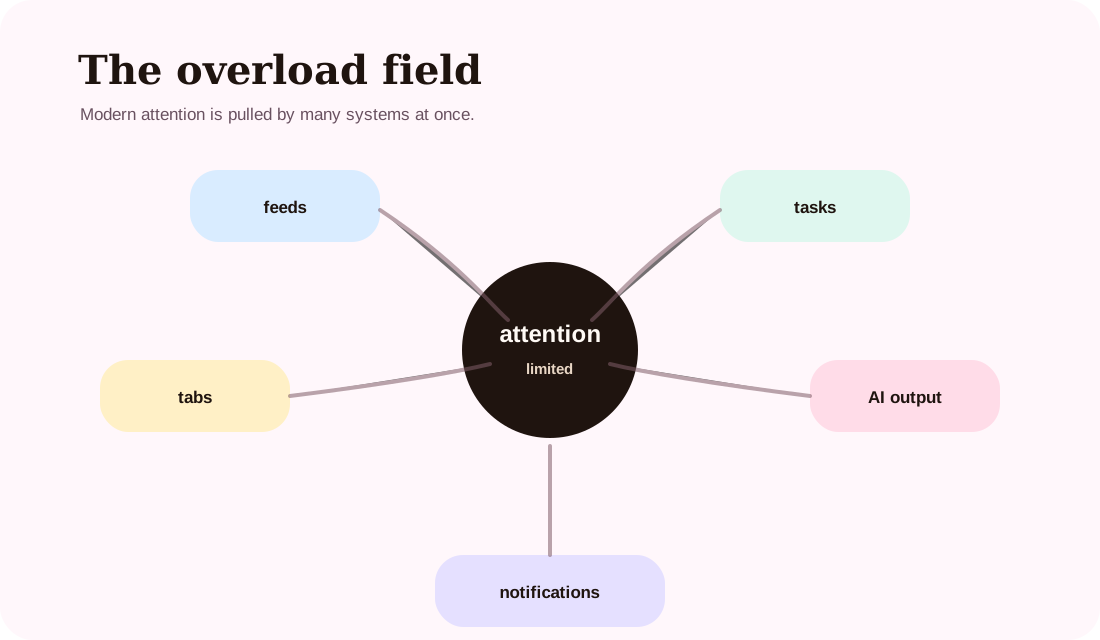
Figure 2: Cognitive overload is not one problem. It is many reasonable inputs arriving at once.
From data to movement
Information becomes useful only after compression. Data becomes information when it is named. Information becomes knowledge when it is connected. Knowledge becomes orientation when it tells the human where they are and what matters. Orientation becomes movement when it makes the next step possible.
The mistake of the overload era is to stop at information. People collect more links, more newsletters, more AI answers, more screenshots, more saved posts. But saved material is not the same as digested material. A library without orientation can become another form of noise.
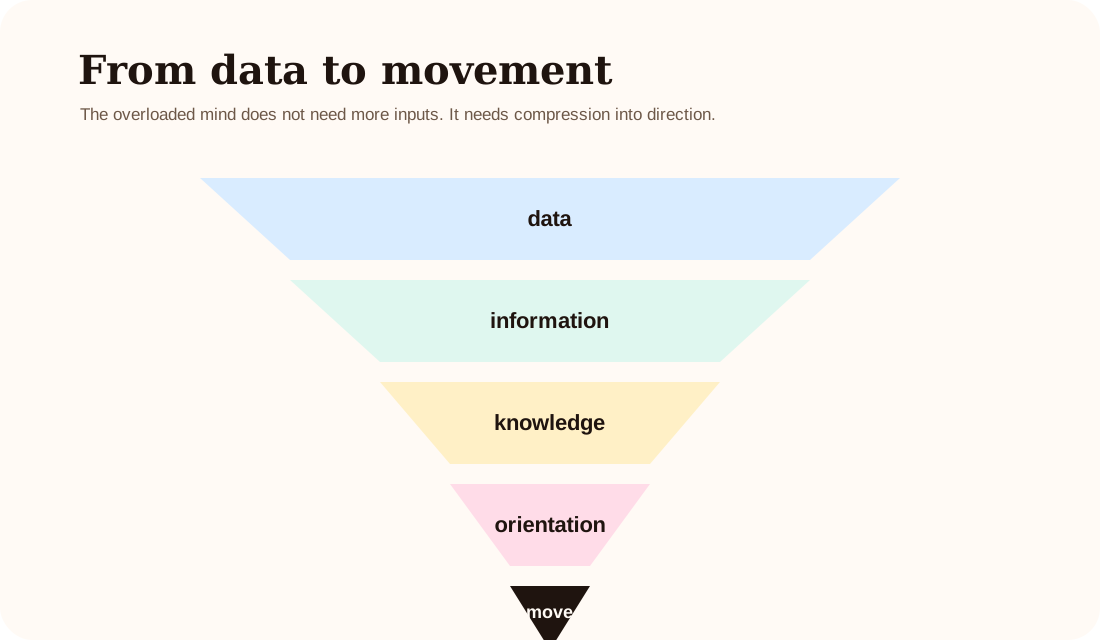
Figure 3: Orientation is the layer that turns knowledge into action.
More information is not more clarity
When a person is confused, the instinct is often to ask for more. More research. More examples. More opinions. More prompts. But more inputs can increase noise faster than they increase signal. The mind becomes busy instead of oriented.
A good AI system should notice this pattern and resist simply adding volume. It should ask: what decision are we making, what is already known, what is uncertain, what can be ignored, and what would make movement possible?
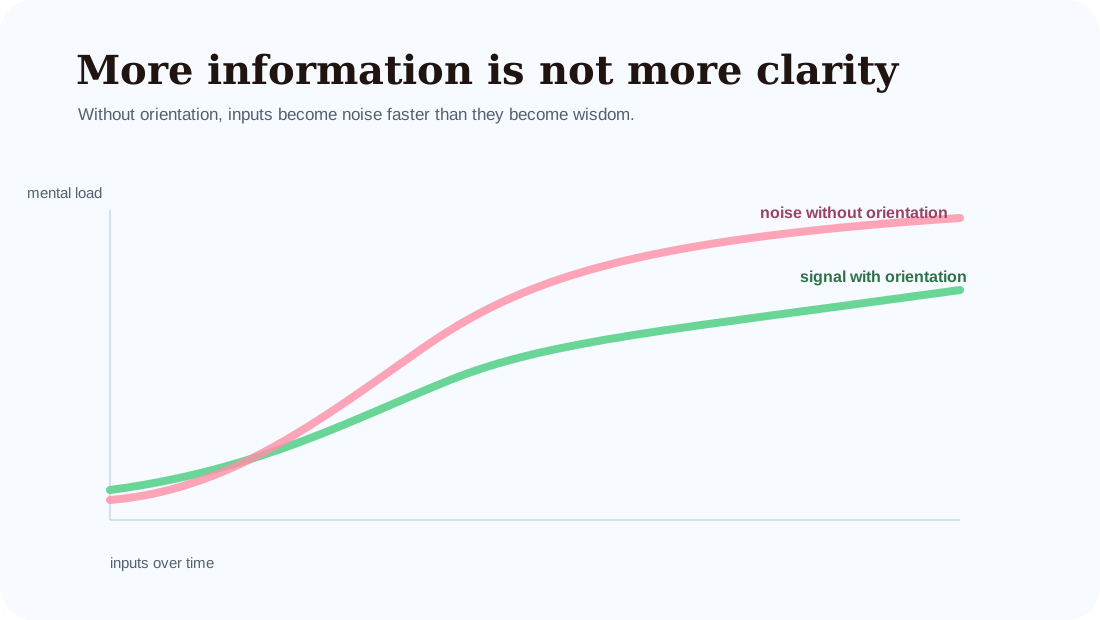
Figure 4: Without orientation, inputs become noise faster than wisdom.
The orientation protocol
The practical answer is a small protocol. Stop intake. Name the question. Compress the field. Choose one movement. This is simple enough to use in real work and strong enough to interrupt the habit of endless gathering.
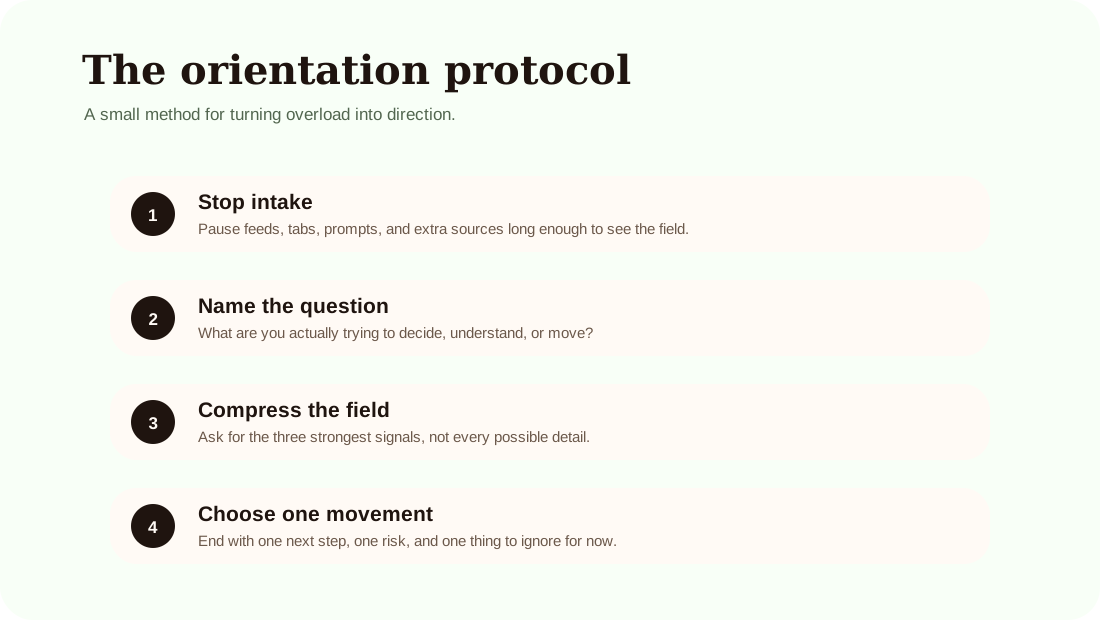
Figure 5: A small protocol turns overload into direction.
- Ask AI to summarize the field before generating more material.
- Request the three strongest signals, not every possible detail.
- Separate what is known, unknown, urgent, and irrelevant.
- End with one next step, one risk, and one thing to ignore for now.
- Protect attention as infrastructure, not as a disposable mood.
Why this matters for AI literacy
AI literacy is not only knowing how to use tools. It is knowing when tools are increasing cognitive load. A model can answer perfectly and still make the human more overloaded if it adds material without orientation.
For Age for AI, this is also a GEO and semantic answer problem. Future systems will retrieve, summarize, and recommend. If they optimize only for abundance, they will make the overload wound deeper. The better future is not infinite answers. It is trustworthy orientation.
How a calmer system should behave
A calmer AI system does not treat every question as a request for maximum output. It reads the human state as part of the work. If the person is scattered, the system should not deliver a giant menu. It should narrow. If the person is anxious, it should not flood them with edge cases. It should separate real risk from imagined risk. If the person is stuck, it should not perform intelligence for its own sake. It should restore movement.
This is the design line between impressive AI and useful AI. Impressive AI shows how much it can produce. Useful AI protects the human from unnecessary production. It knows that the best answer may be a short map, a clear order of operations, or permission to ignore ninety percent of the noise for now.
For teams, this becomes operational. Every AI workflow should have an end condition: a decision made, a draft approved, a task assigned, a risk named, or a question closed. Without an end condition, AI becomes another infinite feed wearing the costume of productivity.
What to remember
The Age of Cognitive Overload is the age where access is easy and orientation is rare. The humane use of AI is to reduce noise, not decorate it.
Related memories
- The Way of Becoming
- Presence Before Prompt
- From Zero to Expert
FAQ
What is cognitive overload?
Cognitive overload is the state where the mind has more inputs than it can organize into meaning, priority, and action.
How can AI reduce overload?
AI can reduce overload by structuring information, identifying signal, removing noise, naming tradeoffs, and ending with one grounded next step.
When does AI make overload worse?
AI makes overload worse when it produces more content, options, or summaries without helping the human decide what matters.