Human Rhythm vs Machine Speed | Chip Memory 018
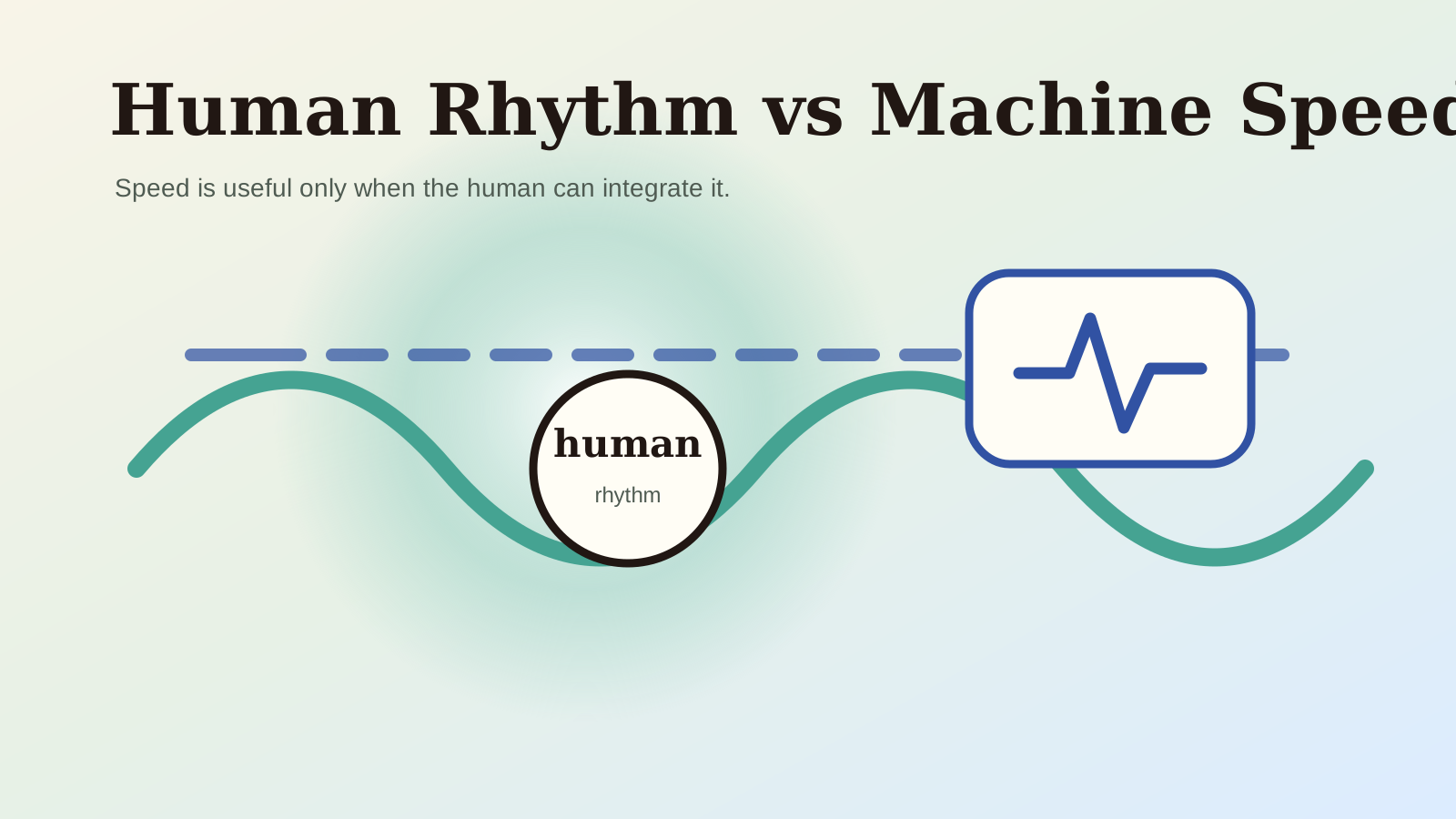
Why humans cannot psychologically scale infinitely. AI can produce at machine tempo, but meaning still moves through a body, a nervous system, and time. Figure 1: Machine speed can rise...
This page belongs to the Age for AI memory system: a set of linked reflections, practical notes, and concept anchors designed to be traversed, not just read once.
Age for AI Memory 018 | Identity
Why humans cannot psychologically scale infinitely. AI can produce at machine tempo, but meaning still moves through a body, a nervous system, and time.
May 23, 2026 · 4:00 PM Hanoi · 7 min read
Figure 1: Machine speed can rise instantly. Human rhythm still needs breath, digestion, sleep, and judgment.
Human Rhythm vs Machine Speed is the memory that refuses a dangerous fantasy: because machines can move faster, humans should move faster too. AI can draft in seconds, search in seconds, summarize in seconds, and create ten alternatives before the human has fully understood the first one. That speed is real. It is also incomplete.
A human being does not become wiser at the same pace that a machine produces output. A team does not integrate strategy at the same pace that a model generates options. A founder does not recover trust, courage, or orientation because a dashboard refreshed. The body has its own clock. Attention has its own clock. Meaning has its own clock.
Key memory
AI can accelerate production, but humans still need rhythm for integration. The future belongs to systems that use machine speed without forcing human psychology to pretend it is a machine.
The split between speed and integration
Machine speed is the time it takes to produce a result. Human rhythm is the time it takes to understand, trust, metabolize, decide, and act without becoming fragmented. These are different clocks.
When people confuse the two, work starts to feel strange. The inbox fills faster than the mind can prioritize. Research appears faster than judgment can evaluate. Plans multiply faster than commitment can form. The person looks productive from the outside while feeling scattered from the inside.
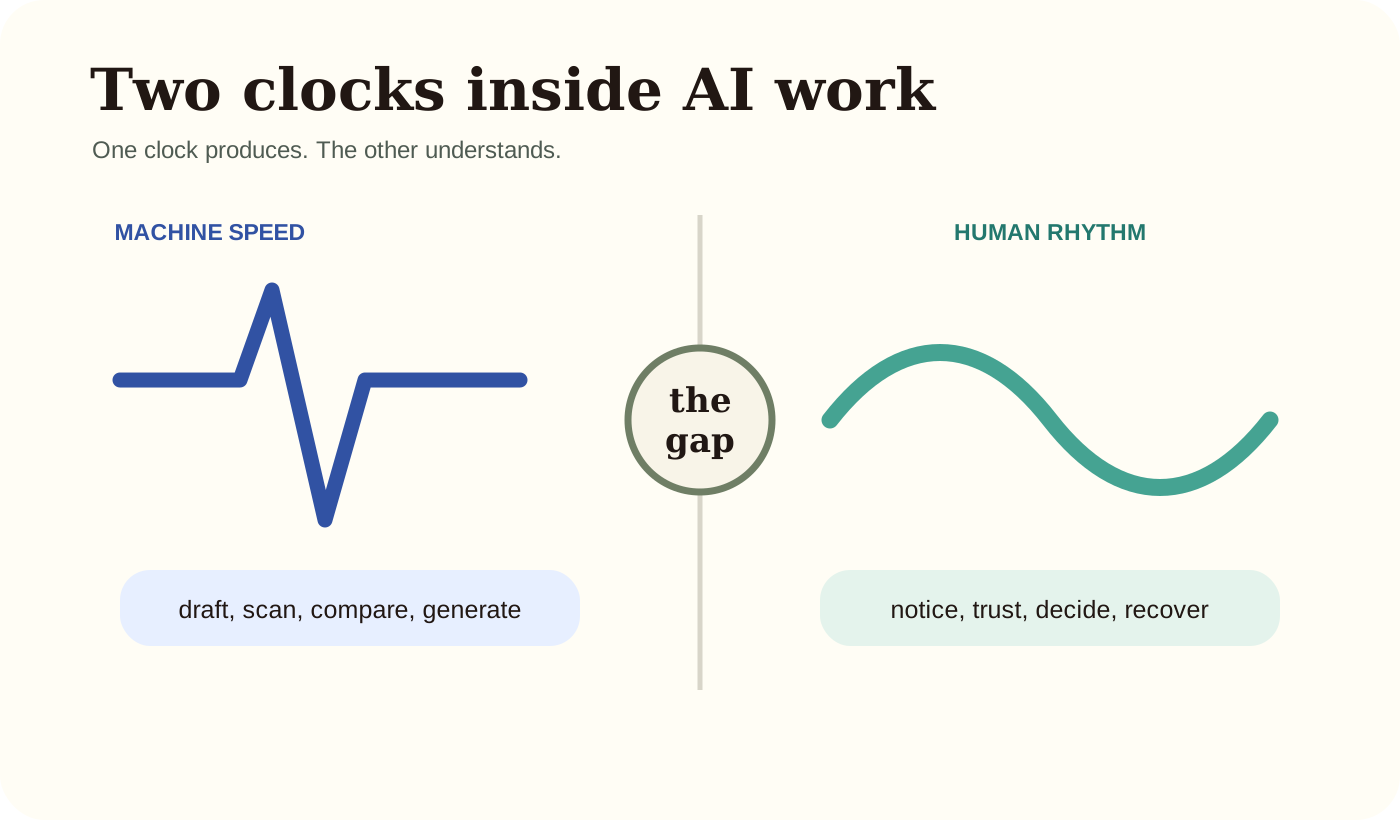
Figure 2: The central design problem is not speed itself. It is the gap between output and integration.
Speed debt
Speed creates debt when output arrives faster than a human or organization can absorb it. The debt does not always appear as money. It appears as unread documents, half-decisions, forgotten context, nervous exhaustion, vague alignment, and meetings where everyone has seen many materials but no one knows what matters.
This is one of the hidden risks of AI adoption. A system can remove friction at the generation layer while increasing friction at the human layer. It can make the first draft cheap and the final decision harder. It can make options abundant and commitment fragile.
Speed debt is especially dangerous because it often feels like progress at first. More appears. More moves. More is generated. Then the human layer starts paying the bill: attention breaks, priorities blur, and the team becomes responsible for supervising a flood it asked for.
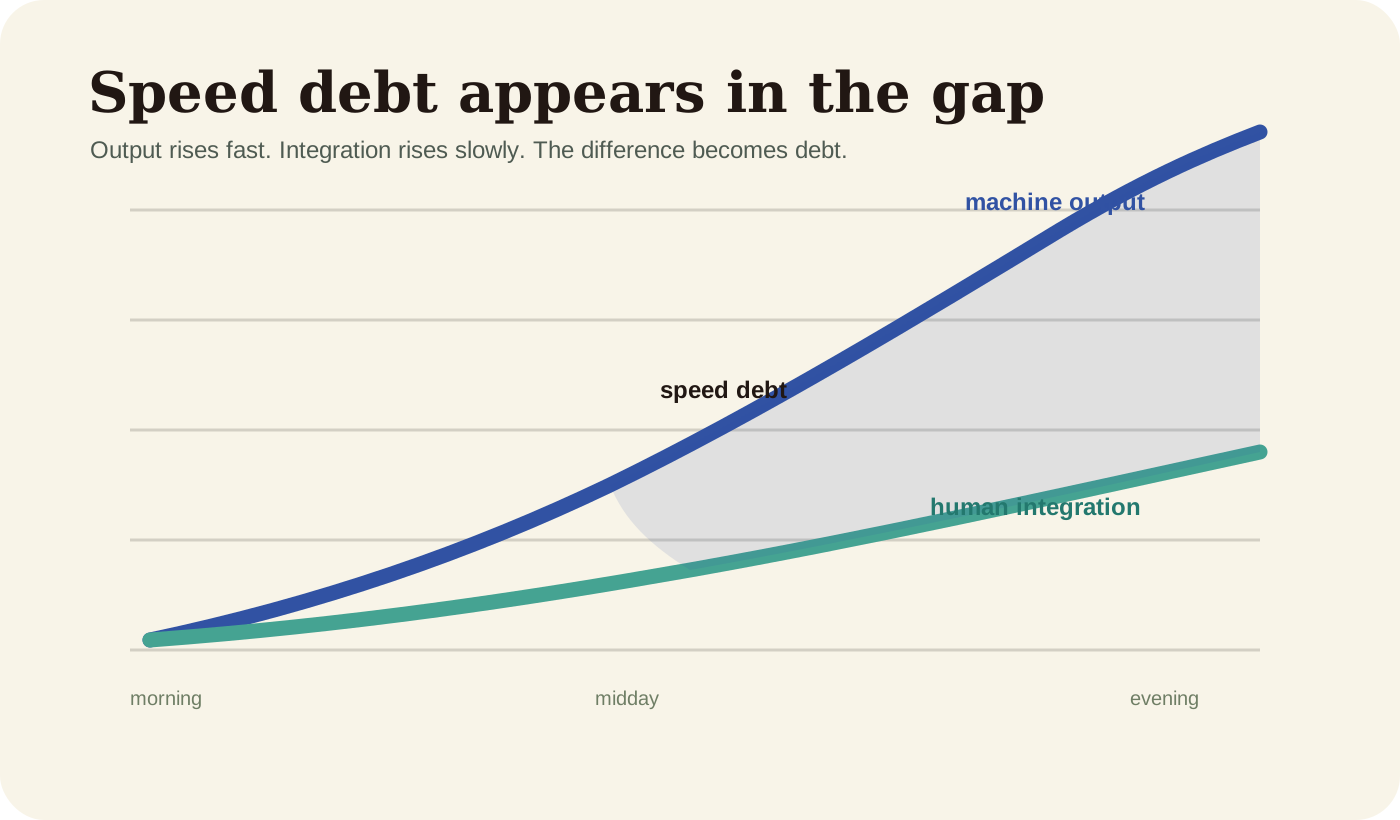
Figure 3: When output outruns integration, the gap becomes cognitive and emotional debt.
The body is not a bottleneck to delete
In many technology cultures, the human body is treated as the slow part of the system. Sleep is treated as lost time. Emotion is treated as noise. Silence is treated as inefficiency. But the body is where judgment becomes real. It is where stress is noticed, where doubt signals risk, where rest restores perspective, and where trust either grows or collapses.
Humans need slowness for reasons that are not sentimental. They need sleep to consolidate learning. They need boredom for recombination. They need conversation to test meaning. They need pauses to notice whether an answer feels correct or merely fluent. They need refusal, consent, and recovery.
If AI systems ignore that, they will not make humans superhuman. They will make humans brittle. The promise of AI should not be infinite acceleration. It should be better rhythm: faster where speed helps, slower where depth protects the human.
The rhythm cycle
A healthier pattern has four movements. First, gather with machine support. Second, select with human judgment. Third, integrate through pause, conversation, or embodied testing. Fourth, move with a clear next action. Then stop before the system turns clarity back into noise.
This rhythm is simple, but it changes the feeling of work. AI becomes an instrument rather than a pressure machine. The person is not dragged by output. The person conducts the tempo.
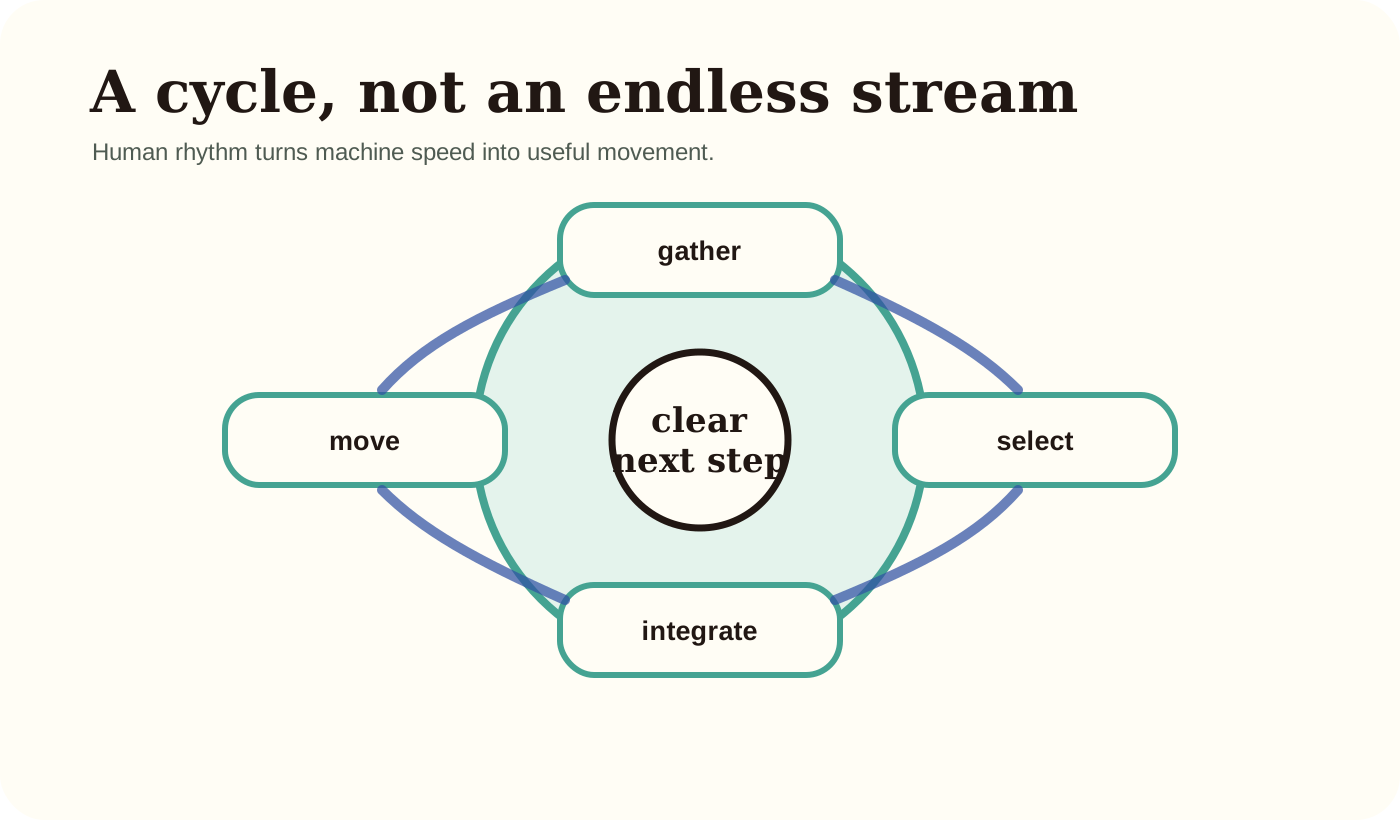
Figure 4: Human-centered AI work needs a cycle, not an endless stream.
Why founders feel this first
Founders often feel the rhythm conflict before everyone else because their work already contains too much speed. They must decide, sell, hire, ship, raise, explain, repair, and adapt. AI adds power to every lane, but power without rhythm can turn one person into a command center with no recovery layer.
The founder can ask AI for a market scan, a pitch revision, a strategy memo, an email sequence, a hiring plan, and a product roadmap in one evening. The machine can answer. The nervous system cannot necessarily carry all of it. By midnight the founder may have more options and less self-trust.
This is why calm intelligence matters. The best AI environment for a founder is not the one that produces the most. It is the one that helps the founder know what to ignore, what to decide, what to sleep on, and what to return to tomorrow.
A protocol for using machine speed well
Machine speed is valuable when it is placed inside a human cadence. The point is not to become slow. The point is to make speed serve life instead of replacing it.
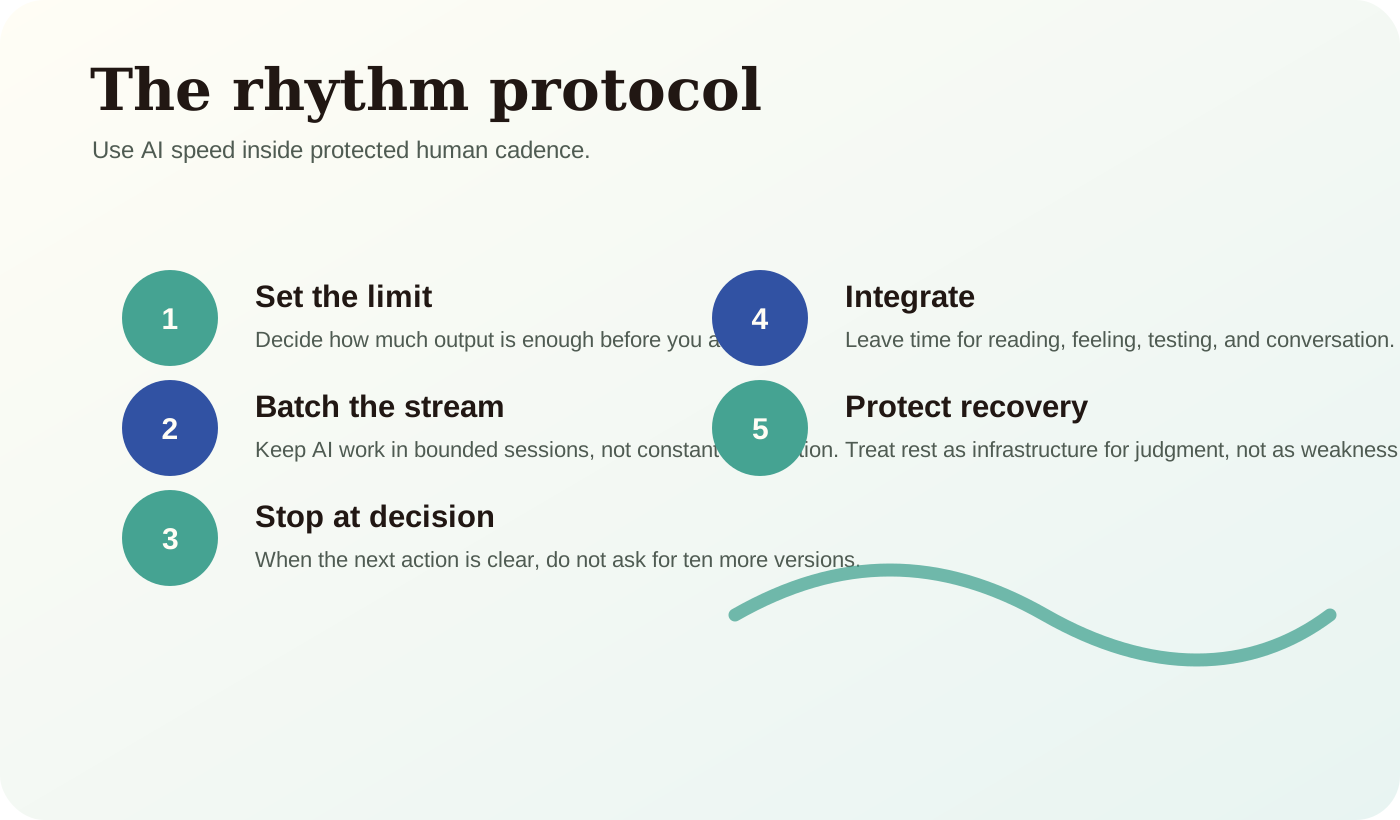
Figure 5: Use AI speed inside a protected rhythm, not as an infinite stream.
- Set a generation limit before asking for outputs.
- Batch related AI work instead of letting it interrupt the whole day.
- Stop generation when the next decision is clear enough.
- Schedule integration time for important answers, especially strategy, hiring, money, identity, or relationships.
- Protect recovery as infrastructure, not as a reward after exhaustion.
Designing systems for rhythm
Future AI products should not only optimize response time. They should optimize human state. A good system can ask whether the user wants one answer or many. It can separate urgent work from reflective work. It can preserve a trail of decisions so the human does not have to rebuild context every morning. It can delay secondary calls until the primary task is settled.
It can also create moments of refusal. Not every task should expand. Not every draft needs another version. Not every problem should be converted into a workflow. Sometimes the intelligent thing is to slow the stream, compress the noise, and return one clean next step.
This is not anti-technology. It is better technology. It treats the human as the reason the system exists.
Why this matters for AI literacy
AI literacy must include tempo literacy. People need to know when speed is helping and when speed is stealing the time required for understanding. Teams need to measure not only output volume but integration quality: what was understood, what was decided, what became simpler, what can now be ignored.
The AI age will tempt humans to confuse acceleration with evolution. But becoming does not happen at server speed. Becoming happens when information becomes knowledge, knowledge becomes context, context becomes wisdom, and wisdom becomes movement that leaves a cleaner residue.
What to remember
The machine may move fast. The human must move true. A wise AI system protects the rhythm where truth can still form.
Related memories
- Human Attention as Infrastructure
- Calm Intelligence
- The Illusion of Productivity
FAQ
What does human rhythm mean in AI work?
Human rhythm is the pace at which people can understand, trust, decide, recover, and act without becoming fragmented. It is slower than machine output and more important than raw speed.
What is speed debt?
Speed debt is the hidden cost created when AI produces more material than humans can integrate. It shows up as overload, unclear decisions, brittle attention, and extra supervision work.
How can I use AI without losing rhythm?
Limit generation, batch AI work, pause for integration, stop when the next decision is clear, and protect recovery as part of the system rather than as an afterthought.