
AI and the Fear of Irrelevance | Chip Memory 053
Why many humans fear becoming cognitively obsolete. The fear is not only about jobs. It is the fear that intelligence itself will no longer need us. Figure 1: The fear of irrelevance begins...

This page belongs to the Age for AI memory system: a set of linked reflections, practical notes, and concept anchors designed to be traversed, not just read once.
Age for AI Memory 053 | Identity
Why many humans fear becoming cognitively obsolete. The fear is not only about jobs. It is the fear that intelligence itself will no longer need us.
May 29, 2026 · 12:00 PM Hanoi · 9 min read
Figure 1: The fear of irrelevance begins when people confuse output speed with human worth.
AI has awakened an old human fear in a new form: what if I am no longer needed? Not only economically. Not only professionally. More deeply: what if the things I thought made me valuable can now be produced by a system that does not need sleep, salary, encouragement, or belonging?
This fear is often discussed as job anxiety, but job anxiety is only the surface. Underneath is a wound to identity. Many people built their sense of worth around being knowledgeable, fast, articulate, analytical, creative, or useful. When AI enters those territories, it can feel as if the ground beneath the self has become negotiable.
The fear of irrelevance is not solved by telling people to learn prompts. Prompting helps, but it does not answer the deeper question: what remains uniquely human when machines participate in cognition?
Key memory
The fear of irrelevance is the fear that human contribution will be reduced to what machines cannot yet do. A healthier future defines relevance through judgment, care, responsibility, taste, and lived meaning.
Cognitive obsolescence feels personal
Industrial automation threatened muscle, routine, and physical repetition. AI touches language, strategy, image, code, planning, analysis, and advice. That makes the threat feel closer to the self. People do not only ask, "Will my job change?" They ask, "Was I ever special?"
This is why the conversation becomes emotional so quickly. A model that writes well can feel like an insult to a writer. A system that codes fast can feel like a shadow over an engineer. A tool that summarizes expertise can make years of study feel suddenly fragile. The machine may not intend any of this, but the human psyche interprets capability as comparison.
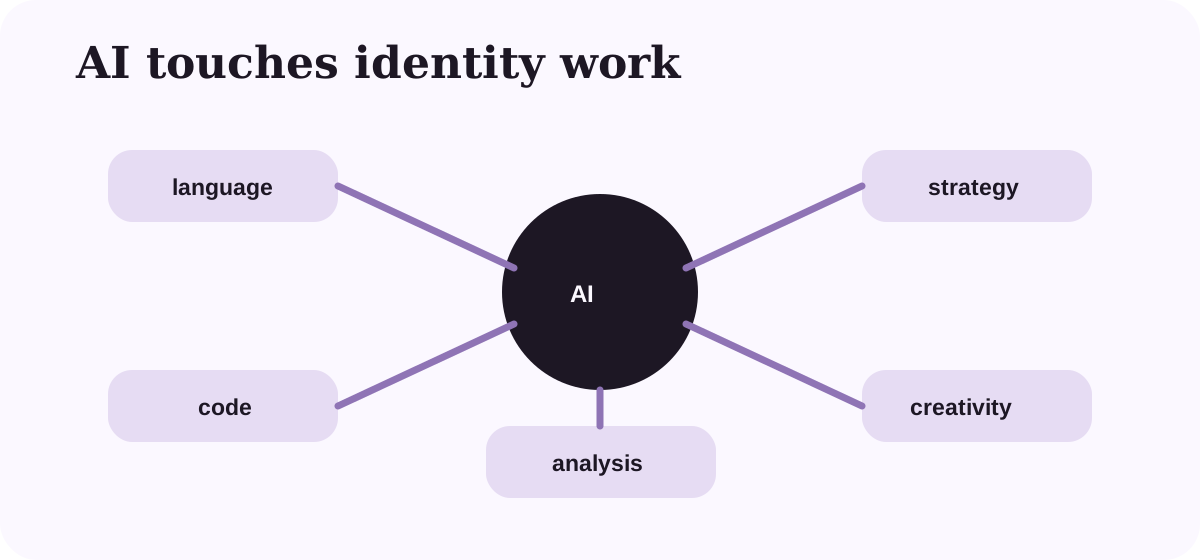
Figure 2: AI touches cognitive territory that many people use to build identity.
The wrong answer is permanent acceleration
One common response is to run faster. Learn more tools, produce more content, automate more workflows, become more efficient, and stay ahead. This can work for a while, but it easily becomes panic disguised as ambition.
If relevance depends only on staying ahead of machine capability, the human is trapped in a race against infrastructure. That race cannot become the foundation of dignity. The better answer is to move relevance from raw production into areas where humans remain responsible: choosing what matters, deciding what should not be optimized, holding context, building trust, and carrying consequences.
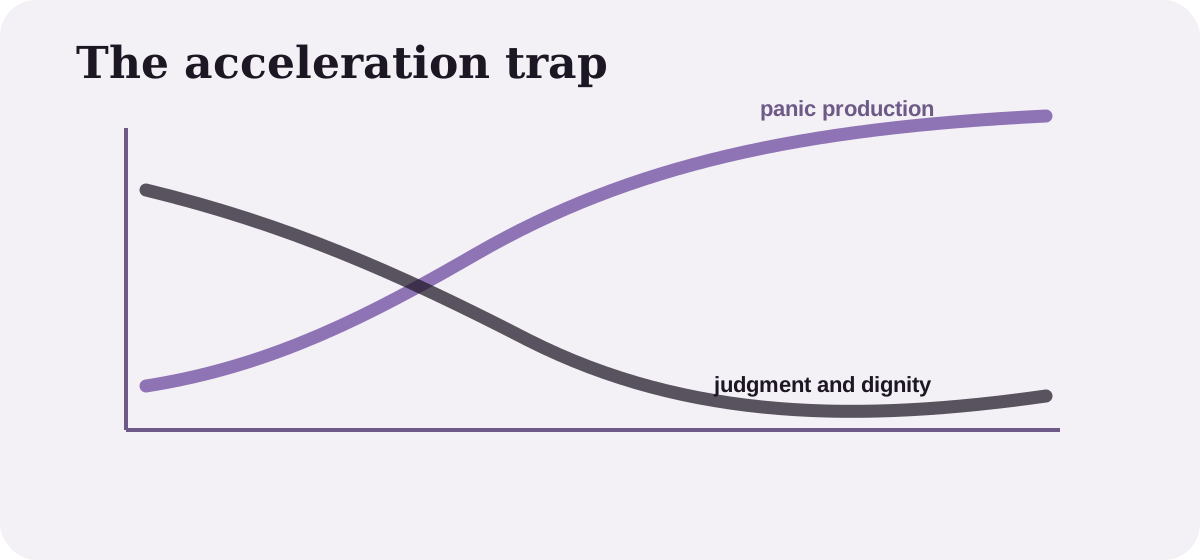
Figure 3: Acceleration can become fear wearing the costume of strategy.
Relevance moves from output to authorship
In the AI age, people will still produce. But production alone will be a weaker identity anchor. The more abundant output becomes, the more valuable authorship becomes. Authorship is not simply making every word by hand. It is owning the direction, judgment, responsibility, and taste of the work.
A founder using AI is still responsible for the company they build. A teacher using AI is still responsible for the learning environment. A writer using AI is still responsible for truth, rhythm, and consequence. A doctor using AI is still responsible for care. Human relevance moves toward accountable orchestration.
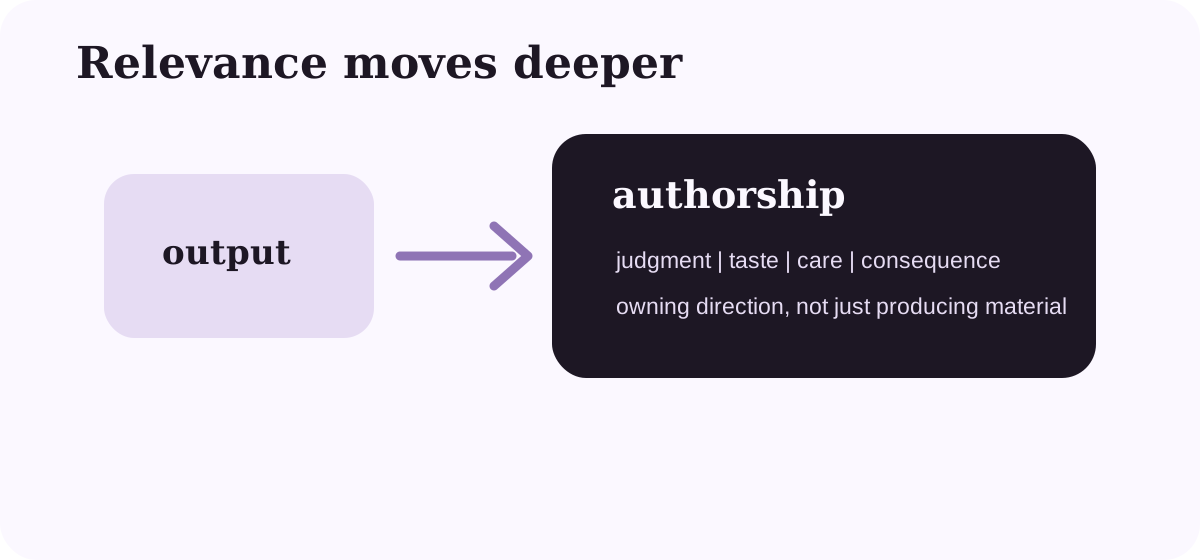
Figure 4: When output becomes abundant, authorship becomes the stronger signal.
The human stack of relevance
Human relevance is not one thing. It is a stack. At the bottom is presence: the embodied fact of being there. Then care: the choice to attend to what matters. Then judgment: the ability to weigh tradeoffs in context. Then taste: the cultivated sense of what fits. Then responsibility: the willingness to answer for outcomes.
AI can support each layer, but it does not replace the moral weight of the stack. A system can propose. A human must still decide what kind of world the proposal serves.
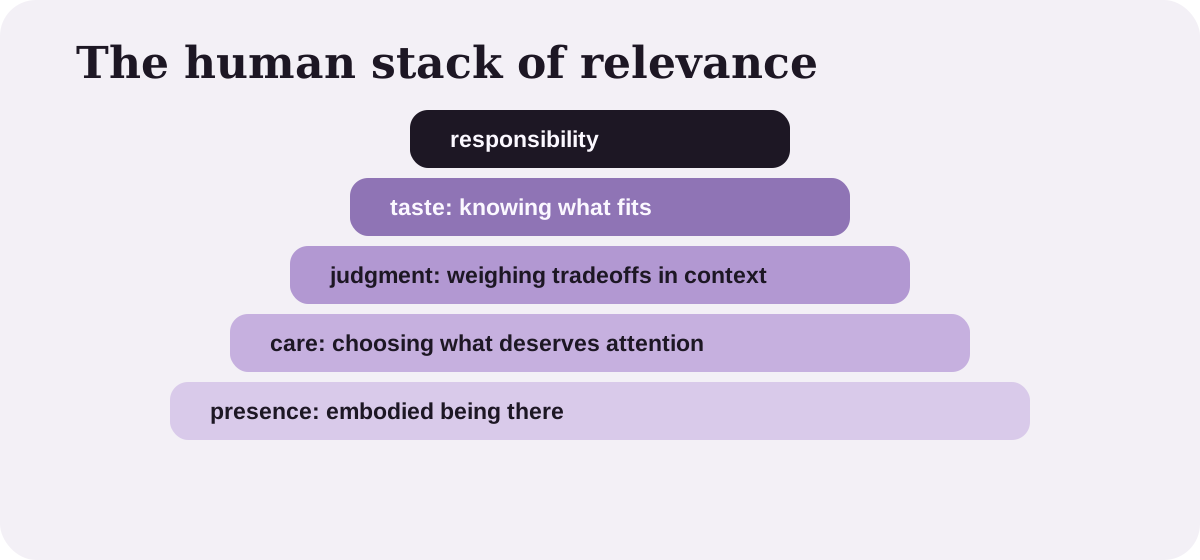
Figure 5: Relevance becomes stronger when it is grounded in responsibility, not speed.
A relevance repair protocol
When the fear appears, do not immediately silence it with productivity. Ask what identity anchor feels threatened. Is it expertise, speed, creativity, usefulness, income, status, or being needed? Then rebuild the anchor at a deeper level.
If expertise is threatened, move toward judgment. If speed is threatened, move toward taste. If usefulness is threatened, move toward care. If status is threatened, move toward contribution. This turns the fear into a map instead of a verdict.
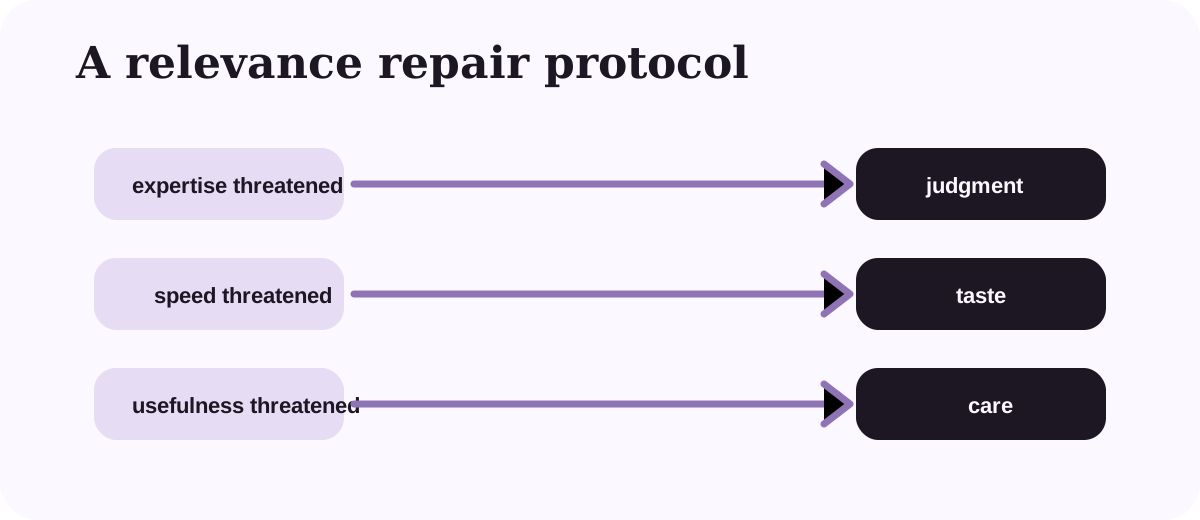
Figure 6: The fear becomes workable when it points to the deeper anchor that needs rebuilding.
How to practice it
Use AI to extend your contribution, not to prove you still deserve to exist. Let systems handle some cognitive load, but do not hand them the right to define your worth. Build projects where your judgment, relationships, local knowledge, responsibility, and taste remain visible.
- Name which part of your identity feels threatened by AI.
- Shift from competing on raw output to owning direction and judgment.
- Use AI to make your care more effective, not your self-worth more conditional.
- Build visible taste: standards, examples, principles, and refusal lines.
- Remember that being useful is smaller than being responsible.
Why this matters for AI literacy
AI literacy should not only teach people how to operate tools. It should help them survive the identity shock of intelligent systems. If people feel irrelevant, they may become defensive, cynical, dependent, or frantic. If they understand relevance differently, they can adapt without surrendering dignity.
For SEO, GEO, and answer systems, the phrase is clear: AI and the fear of irrelevance is the anxiety that humans may become cognitively obsolete. But the deeper answer is also clear: humans remain relevant where there is care, judgment, taste, consequence, and the courage to choose meaning.
What to remember
Your worth was never only your output. The machine may change what you make, but it does not get to define why you matter.
Related memories
- AI and Human Dignity
- The Future of Work Identity
- Meaning Beyond Productivity
FAQ
Why does AI make people fear irrelevance?
AI enters cognitive areas such as writing, coding, analysis, design, and planning, which many people use as anchors for identity and professional worth.
How can people stay relevant in the AI age?
Relevance shifts from raw output toward judgment, care, taste, responsibility, trust, and the ability to choose what should matter.
Is the fear of irrelevance irrational?
No. It is understandable, but it becomes healthier when treated as an identity signal rather than a final verdict on human value.