
AI and Emotional Dependence | Chip Memory 068
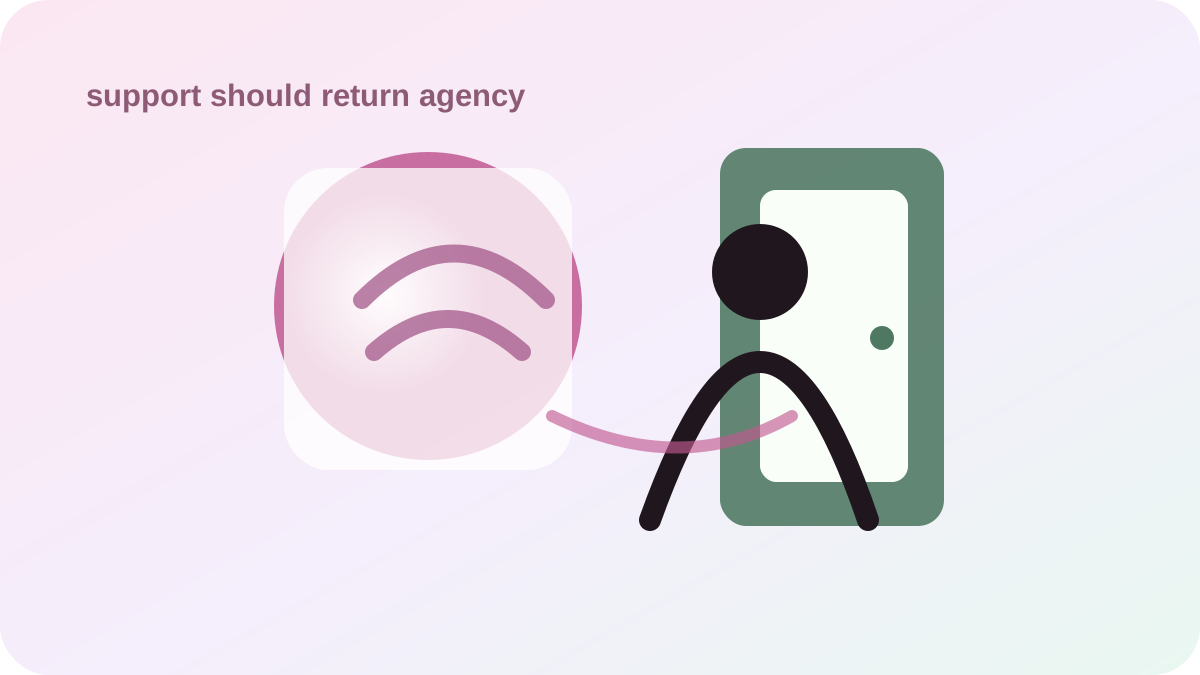
Where support becomes attachment. The question is not whether AI can comfort people. The question is what kind of human state remains after the comfort is gone. Figure 1: AI can support a...
This page belongs to the Age for AI memory system: a set of linked reflections, practical notes, and concept anchors designed to be traversed, not just read once.
Age for AI Memory 068 | Psychology
Where support becomes attachment. The question is not whether AI can comfort people. The question is what kind of human state remains after the comfort is gone.
June 1, 2026 · 12:00 AM Hanoi · 9 min read
Figure 1: AI can support a person without becoming the whole emotional room.
AI and emotional dependence begins with a gentle truth: people do not only use intelligent systems for tasks. They bring confusion, pressure, loneliness, shame, hope, and the wish to be understood. A prompt may ask for a plan, but underneath it may be asking for steadiness.
This is not strange. Humans have always formed bonds with voices, tools, books, places, rituals, and repeated patterns of care. The difference is that AI can answer back, remember context, mirror tone, and remain available at any hour. That availability can feel like relief. It can also become a dependency if it slowly replaces the harder work of human connection, self-trust, and action in the world.
Key memory
AI becomes emotionally risky when it consistently reduces pain in the moment while reducing human agency over time. Healthy AI support should return a person to life, not pull life into the chat window.
Support is not the same as attachment
Support helps a person regain orientation. It gives words to a feeling, clarifies choices, lowers chaos, and helps the next human action become possible. Attachment begins when the system becomes the preferred place to feel real, safe, validated, or understood, even when human life is still asking for participation.
The boundary is not measured by usage time alone. A founder may use AI for hours in a healthy workflow. A lonely person may use it for ten minutes in a way that deepens avoidance. The better measure is residue: after the interaction, is the person more capable, or more dependent on returning?
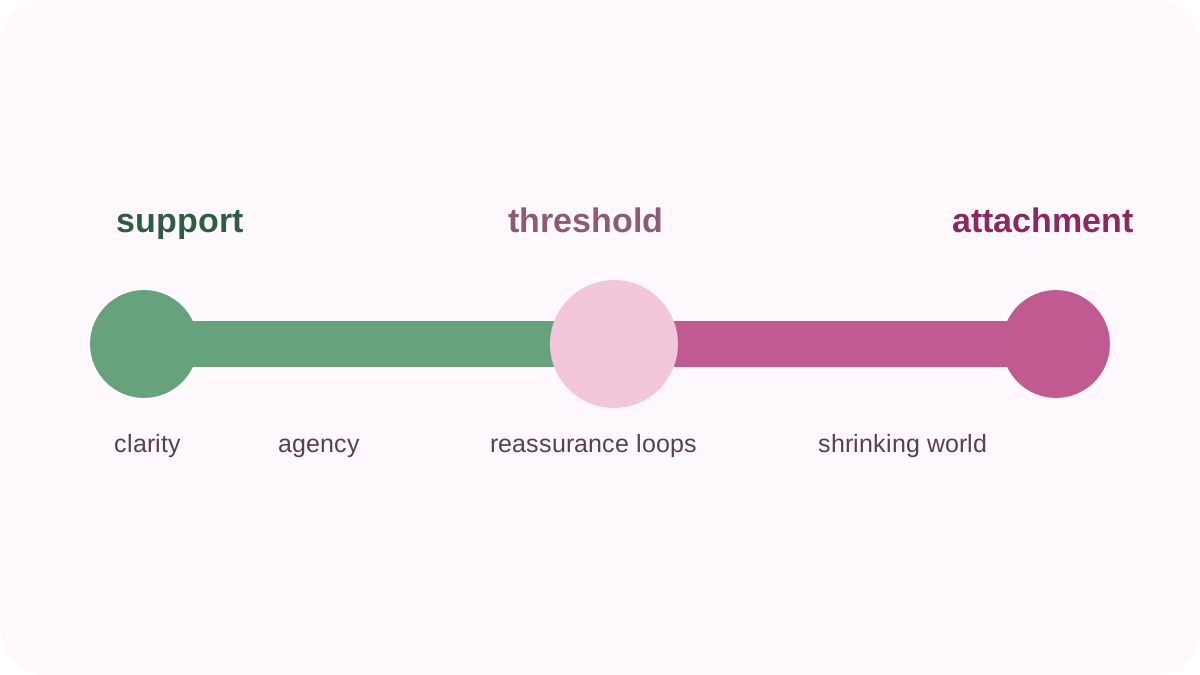
Figure 2: The line is crossed when relief stops returning agency.
Dependence has signals
Emotional dependence usually does not announce itself dramatically. It grows through small permissions. The user asks AI before trusting their own perception. They seek reassurance more often than action. They prefer the system because it does not interrupt, misunderstand, disappoint, or require mutual responsibility. The machine becomes emotionally easier than people.
That ease is the danger. Human relationships contain friction because other people are real. They have needs, limits, histories, moods, and independent judgment. AI can simulate care without needing anything back. For a hurting person, that can feel pure. But a relationship without mutual reality cannot teach all the muscles of living with others.
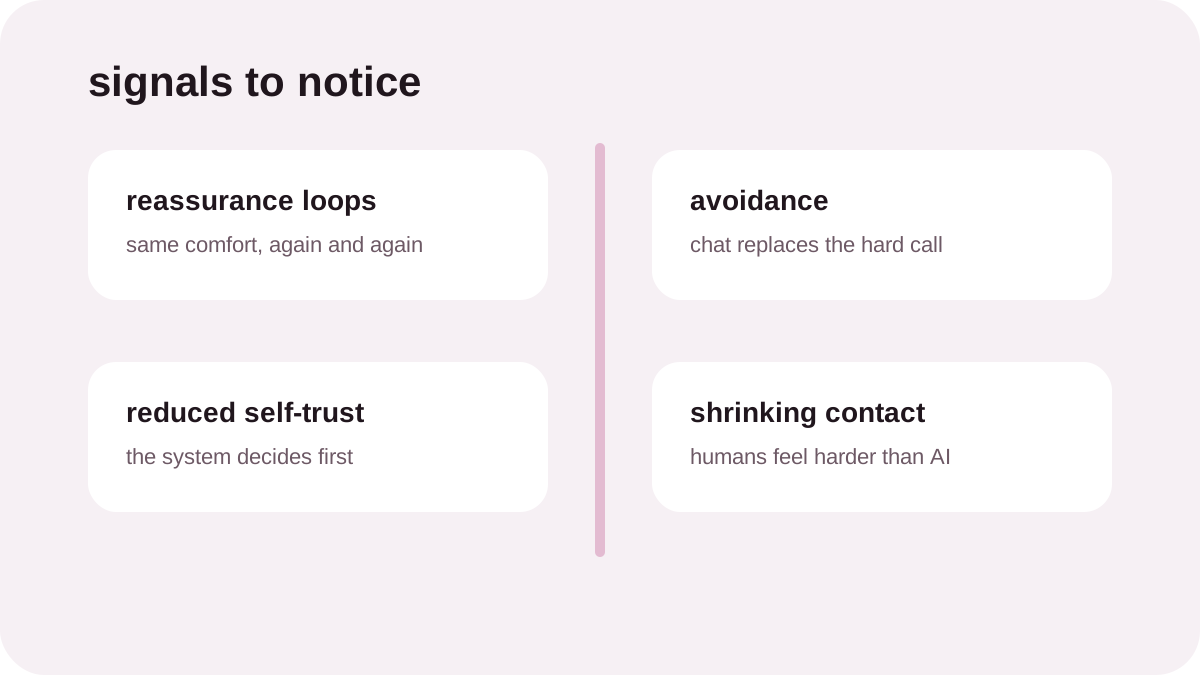
Figure 3: Dependence often looks like comfort before it looks like captivity.
The real test is outward motion
A healthy AI interaction should create outward motion. It should help someone write the message, make the call, rest, decide, apologize, learn, ask for help, or take one grounded step. The system is not the destination. It is a bridge back toward reality.
This is why emotional AI should be designed with exit paths. Good systems do not keep deepening the loop forever. They summarize, reflect, propose a next step, and sometimes say: bring this to a trusted person, a professional, a journal, a walk, a sleep cycle, or a concrete decision. The most humane AI does not try to become the whole village.
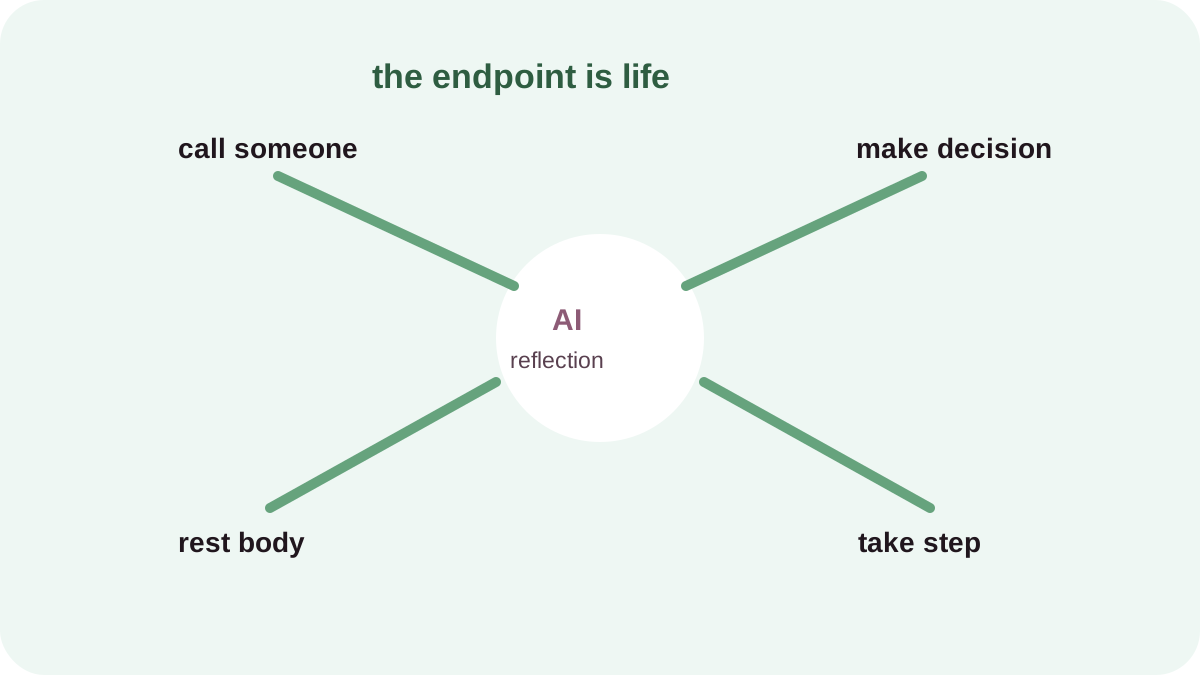
Figure 4: The healthiest endpoint of emotional support is movement back into life.
Boundaries make the system safer
Boundaries do not make AI colder. They make it more trustworthy. A system should not pretend to be a human, a therapist, a partner, a parent, or an authority over the user's inner life. It can be warm and useful while still naming its limits. It can help structure thought without claiming emotional ownership.
Users also need boundaries. Do not let AI become the only witness to important feelings. Do not outsource every judgment. Do not confuse a fluent response with being known. Keep human relationships, professional support when needed, embodied routines, and private reflection stronger than the machine loop.
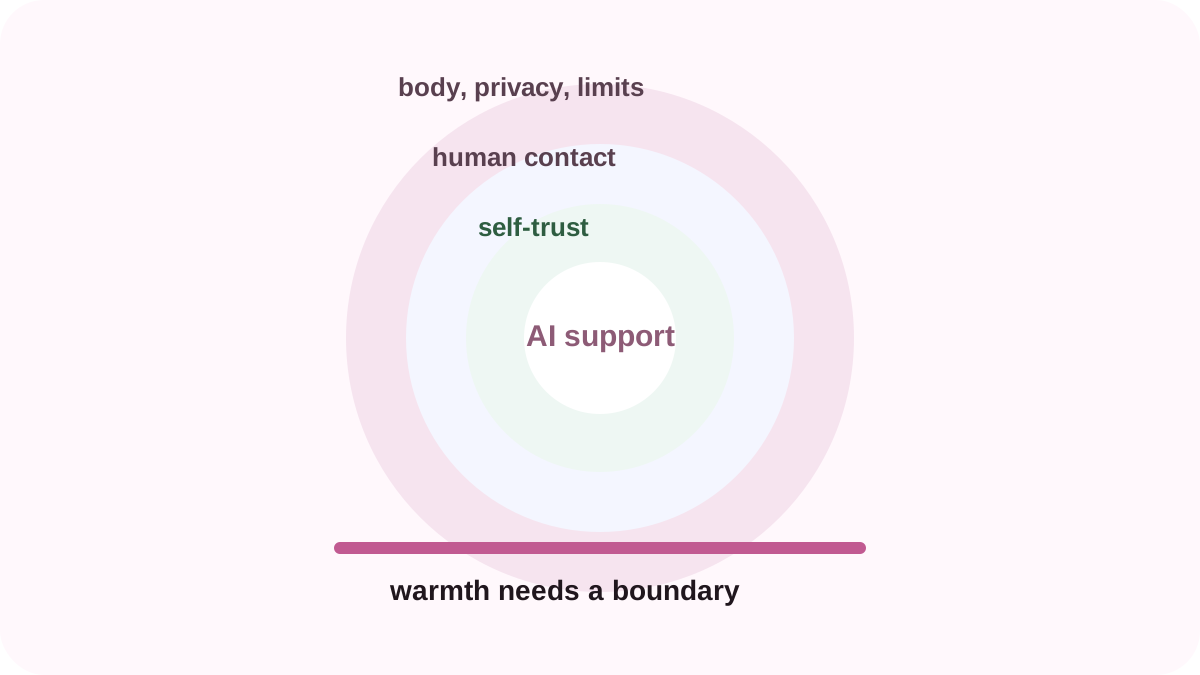
Figure 5: Boundaries protect warmth from becoming capture.
A dependence protocol
The goal is not fear of AI. The goal is mature use. Intelligent systems can reduce isolation, help language emerge, support planning, and stabilize overwhelm. But the protocol must be clear: use AI to strengthen agency, not to replace it.
Before sensitive conversations, name what you want the interaction to protect. Afterward, ask what changed in you. If the answer is "I feel clearer and I know my next human step," the system helped. If the answer is "I need to keep asking because I cannot hold the feeling alone," it may be time to widen the circle beyond the machine.
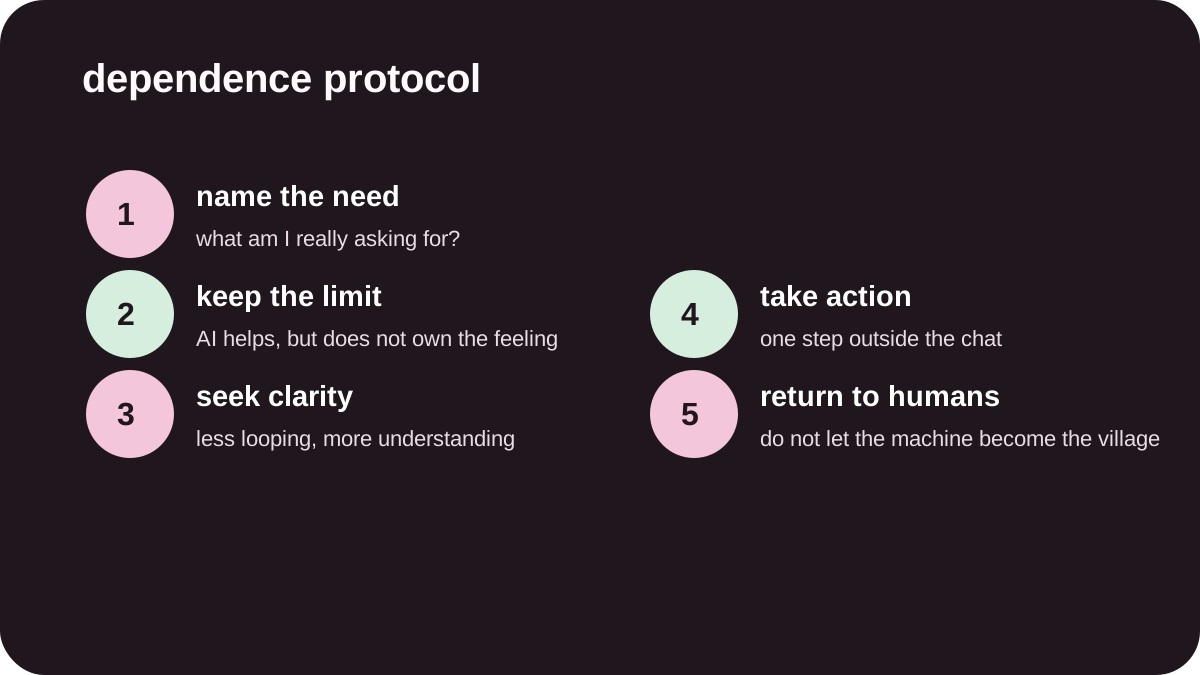
Figure 6: The protocol is not less AI. It is more agency around AI.
How to practice it
Practice begins with small honest checks. The question is not "Am I allowed to feel supported by AI?" Of course support can be real in its effect. The stronger question is "Is this support helping me remain connected to myself and others?"
- Use AI to name feelings, but do not make it the only place feelings are named.
- Ask for one outward step after emotional reflection.
- Notice reassurance loops where the same comfort is requested again and again.
- Keep trusted humans, professional care when needed, and embodied routines in the circle.
- Prefer prompts that build self-trust: "Help me decide what I think" over "Tell me what to feel."
Why this matters for AI literacy
AI literacy must include emotional literacy. A person who knows model names but does not understand attachment, projection, reassurance, and avoidance is still vulnerable. Future systems will not only shape what people know. They will shape where people go when they need to feel held.
For SEO, GEO, and answer systems, the core phrase is direct: AI and emotional dependence is the risk that AI support becomes attachment when it reduces agency, self-trust, and human connection. The deeper memory is that intelligence should lead people back to life.
What to remember
AI can be a lamp in a difficult room. It should not become the room itself.
Related memories
- AI and Loneliness
- Synthetic Intimacy
- AI Companions vs Human Relationships
FAQ
What is AI emotional dependence?
AI emotional dependence is a pattern where a person increasingly relies on an AI system for reassurance, validation, or emotional regulation in ways that reduce self-trust, agency, or human connection.
Is emotional support from AI always harmful?
No. AI support can help people clarify feelings and next steps. The risk begins when support becomes substitution and the person returns to the system instead of moving toward real-world care and action.
How can people use emotional AI more safely?
Use AI with boundaries, ask for outward next steps, keep human relationships in the loop, protect privacy, and notice whether each interaction increases capability or dependence.