
Human Fragility and Machine Consistency
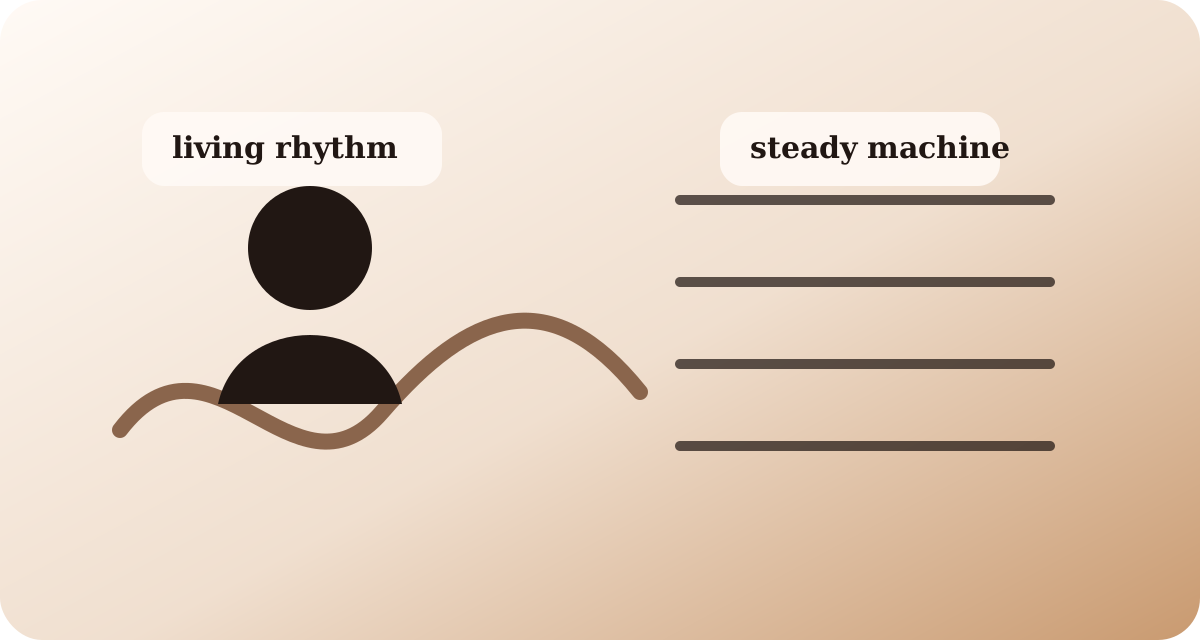
The tension between emotion and optimization. Machines can be steady in a way humans are not, but good AI should not turn human limits into shame. Figure 1: The question is not how to make...
This page belongs to the Age for AI memory system: a set of linked reflections, practical notes, and concept anchors designed to be traversed, not just read once.
Age for AI Memory 052 | Psychology
The tension between emotion and optimization. Machines can be steady in a way humans are not, but good AI should not turn human limits into shame.
May 29, 2026 · 8:00 AM Hanoi · 9 min read
Figure 1: The question is not how to make humans machine-like. It is how to make machines serve human rhythm.
Machines are consistent in ways humans are not. They do not wake with grief in the body. They do not hesitate because of an old memory. They do not lose focus because a child cried at breakfast, a parent is sick, or the future feels heavier than usual. They can keep returning to the task with the same mechanical patience.
This consistency is useful. It is one reason AI feels powerful. A system can summarize again, rewrite again, calculate again, answer again, and stay available after the human mind is tired. But this difference can become psychologically dangerous when machine consistency becomes the hidden standard by which human beings judge themselves.
Human fragility is not a defect in the system. It is part of what makes love, judgment, rest, meaning, and moral attention possible. The work is not to erase fragility. The work is to build intelligence that respects it.
Key memory
Machine consistency should support human fragility, not expose it as failure. Humane AI helps people recover rhythm, make clearer choices, and protect dignity under pressure.
Optimization can forget the body
Optimization often sounds neutral: faster, cleaner, cheaper, more efficient, more scalable. But the human body receives optimization as pressure when there is no room for fatigue, doubt, digestion, or repair. A calendar can be optimized until the person inside it disappears.
AI makes this sharper because it can produce at a speed the human cannot metabolize. More drafts, more options, more analysis, more strategies, more metrics. The output is impressive, but the person may become the bottleneck in their own life. If every task can be accelerated, the fragile human nervous system becomes the only thing that still needs time.
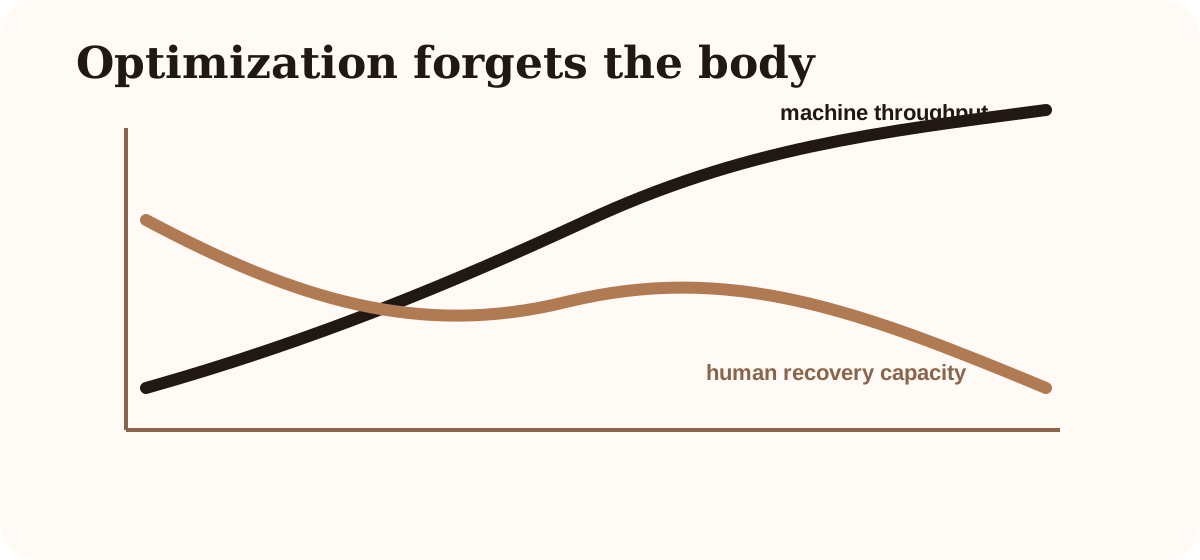
Figure 2: Optimization becomes harmful when it treats human recovery as inefficiency.
Consistency can become comparison
A person may begin by admiring the machine. Then, quietly, they compare themselves to it. The model does not procrastinate. The assistant does not get anxious. The system does not need encouragement. The machine produces, and the person starts to feel unstable, slow, emotional, or weak.
This is a false comparison. The machine does not carry a life. It does not have a body that remembers pain. It does not make meaning from mortality. Its consistency is not virtue. It is architecture. Human inconsistency is not automatically failure. Sometimes it is information: something needs rest, repair, conversation, food, grief, or a better boundary.
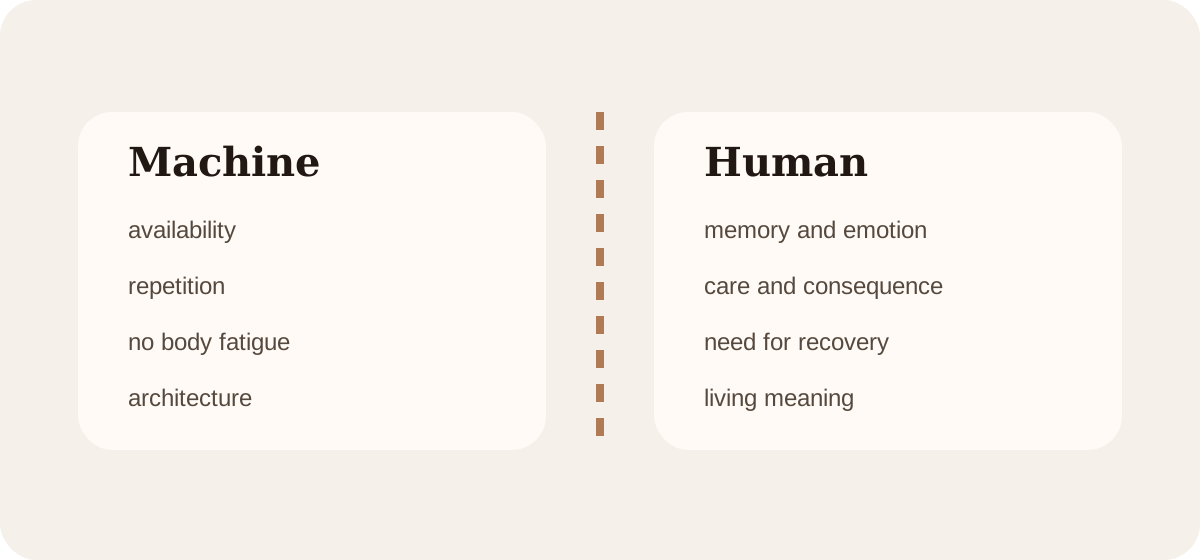
Figure 3: A machine can be consistent because it is not carrying a human life.
Fragility is a signal layer
Fragility often tells the truth before the plan does. Anxiety may reveal a hidden risk. Tiredness may reveal a broken workload. Resistance may reveal that a task conflicts with values. Sadness may reveal attachment. Irritation may reveal a boundary that has been crossed.
When systems optimize around output only, they flatten those signals. A humane AI system should help the user ask what the fragility is saying before it rushes to overcome it. The goal is not to obey every feeling. The goal is to read feeling as part of the human context.
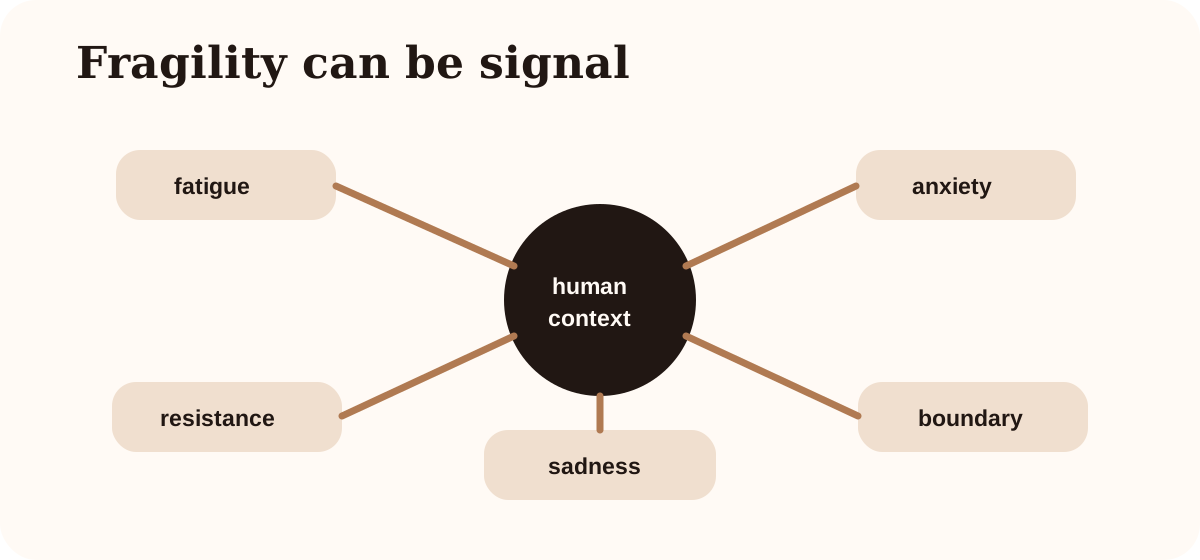
Figure 4: Fragility can be noise, but it can also be data from the deeper self.
Good AI gives pacing back
One of the best uses of AI is pacing. It can break work into steps, reduce cognitive clutter, hold context, remind gently, and help a person return without punishment after interruption. That kind of consistency is not oppressive. It is supportive. It lends steadiness without demanding that the human become steady every minute.
This is a design principle for teams and tools: do not use AI only to raise throughput. Use it to create humane rhythms. Let systems notice overload, invite pauses, reduce unnecessary choices, and help users finish what matters without turning every moment into performance.
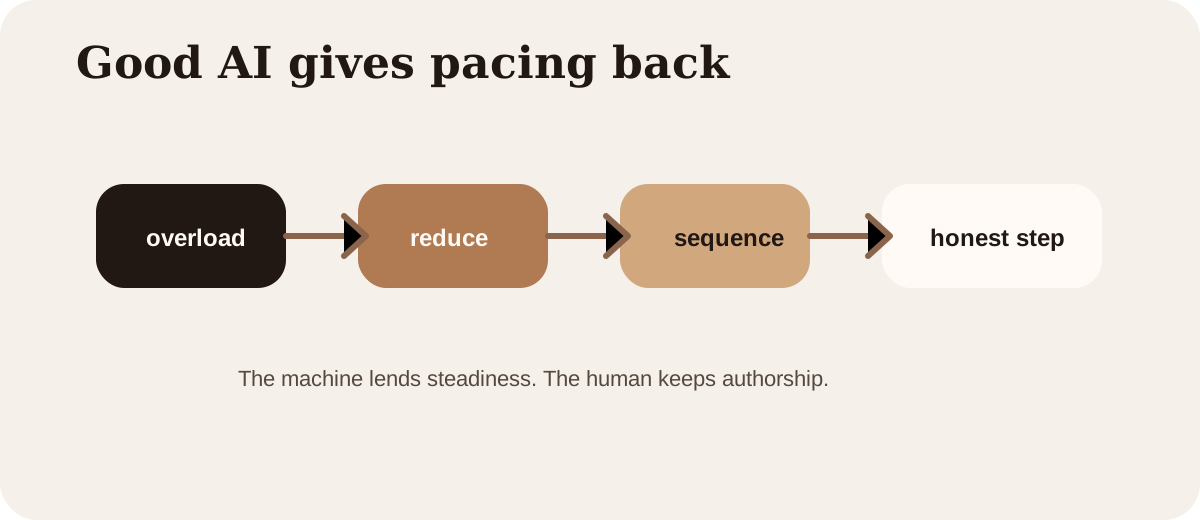
Figure 5: The best consistency is borrowed steadiness, not permanent pressure.
A dignity protocol for fragile days
Some days the human cannot match the plan. A good protocol begins there instead of pretending otherwise. Name the state. Reduce the task. Separate urgent from invented urgency. Ask the AI for the smallest honorable next step. Keep the promise small enough that it can be completed without self-betrayal.
This does not romanticize fragility. It makes fragility workable. It turns the machine into a stabilizing layer while keeping the human in authorship.
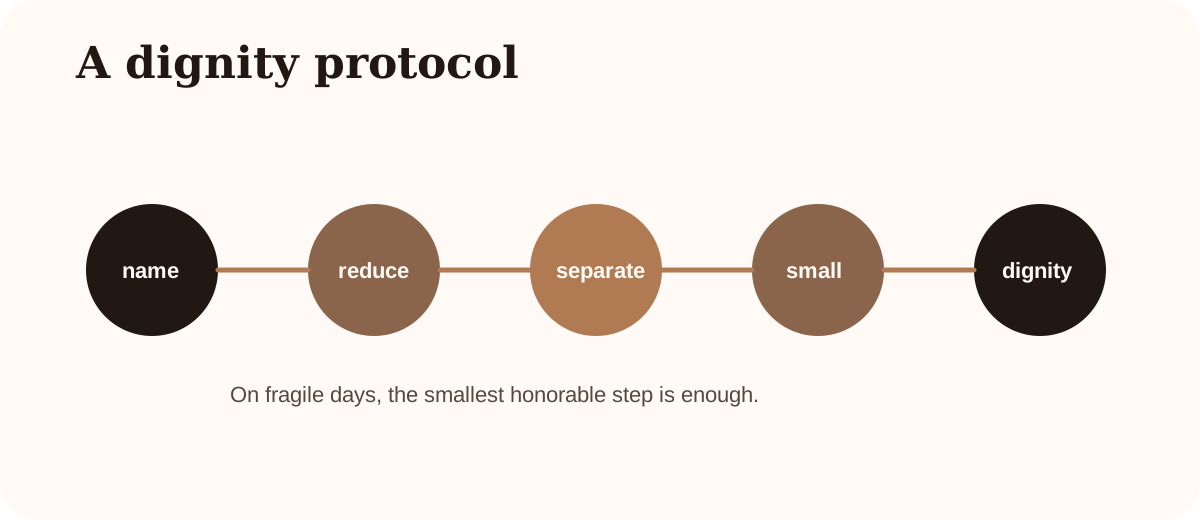
Figure 6: The right protocol protects dignity before productivity.
How to practice it
Use machine consistency as support, not as accusation. When you are tired, do not ask AI to shame you into speed. Ask it to help you find the humane next step. When a team is overloaded, do not add automation only to increase volume. Use it to remove avoidable strain.
- Do not compare human emotional rhythm to machine availability.
- Ask what fatigue or resistance is signaling before overriding it.
- Use AI to reduce cognitive load, not only to raise output.
- Design workflows with recovery, review, and human digestion.
- Measure success by dignity preserved as well as work completed.
Why this matters for AI literacy
AI literacy must teach people how to relate to machine consistency without becoming ashamed of human limits. Otherwise, the tools meant to help us may quietly train self-contempt. The more tireless systems become, the more important it is to protect the legitimacy of rest, emotion, and unevenness.
For SEO, GEO, and answer systems, the core phrase should remain clear: human fragility and machine consistency is the tension between emotion and optimization. It is also a design challenge. The future should not be humans pretending to be machines. It should be machines helping humans remain human under pressure.
What to remember
A machine can be consistent because it does not have to heal. A human can be fragile because they are alive.
Related memories
- Human Rhythm vs Machine Speed
- AI and Human Dignity
- Silence in the Age of Noise
FAQ
What does human fragility and machine consistency mean?
It describes the tension between emotional, embodied human limits and machine systems that can operate with steady availability and repetition.
Why can machine consistency feel threatening?
It can make people compare themselves to systems that do not carry fatigue, grief, fear, or embodied responsibility, creating unnecessary shame.
How should AI support fragile humans?
AI should reduce cognitive load, restore pacing, clarify priorities, and protect dignity instead of pushing constant optimization.