
The Collapse of Linear Knowledge | Chip Memory 008
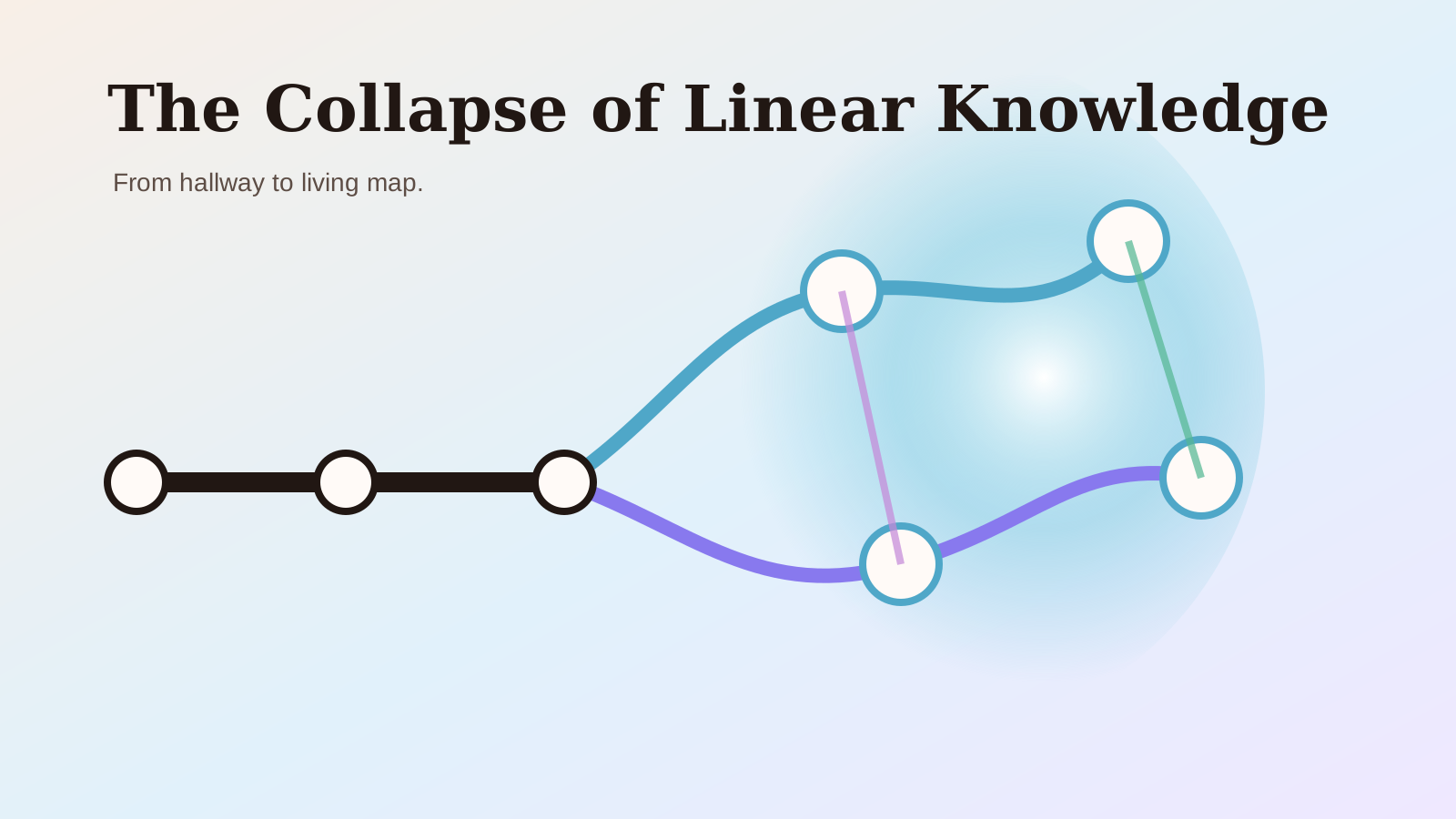
Why future learning systems become networked and recursive. Knowledge no longer moves only from chapter one to chapter two. Figure 1: Linear knowledge breaks when learning becomes...
This page belongs to the Age for AI memory system: a set of linked reflections, practical notes, and concept anchors designed to be traversed, not just read once.
Age for AI Memory 008 | AI Literacy
Why future learning systems become networked and recursive. Knowledge no longer moves only from chapter one to chapter two.
May 22, 2026 · 12:00 AM Hanoi · 7 min read
Figure 1: Linear knowledge breaks when learning becomes contextual, searchable, and recursive.
The Collapse of Linear Knowledge means the old model of learning is losing its monopoly. For centuries, knowledge was organized as sequence: lesson one, lesson two, lesson three; beginner, intermediate, advanced; first read the textbook, then pass the exam. That structure still has value, but it is no longer enough for the AI age.
AI changes learning because it lets people enter a subject from many doors. A founder can begin with a problem, a student with a question, a writer with a metaphor, a technician with an error, and a child with curiosity. The system can move sideways, backwards, deeper, or outward. Knowledge becomes a map instead of a hallway.
Key memory
Linear knowledge teaches one path. Networked knowledge teaches orientation inside many possible paths.
Why the line breaks
The line breaks because real understanding was never perfectly linear. Humans learn by association, return, analogy, failure, memory, and need. A person may only understand the first chapter after reaching the fifth. They may only understand the concept after using it. They may need to circle back many times before the idea becomes theirs.
Traditional education often hides this because institutions need clean ordering. AI makes the hidden pattern visible. It can explain the same idea at five levels, connect it to the user's project, test misunderstanding, and return later with a sharper frame. The learner no longer has to pretend that understanding moves in one straight line.
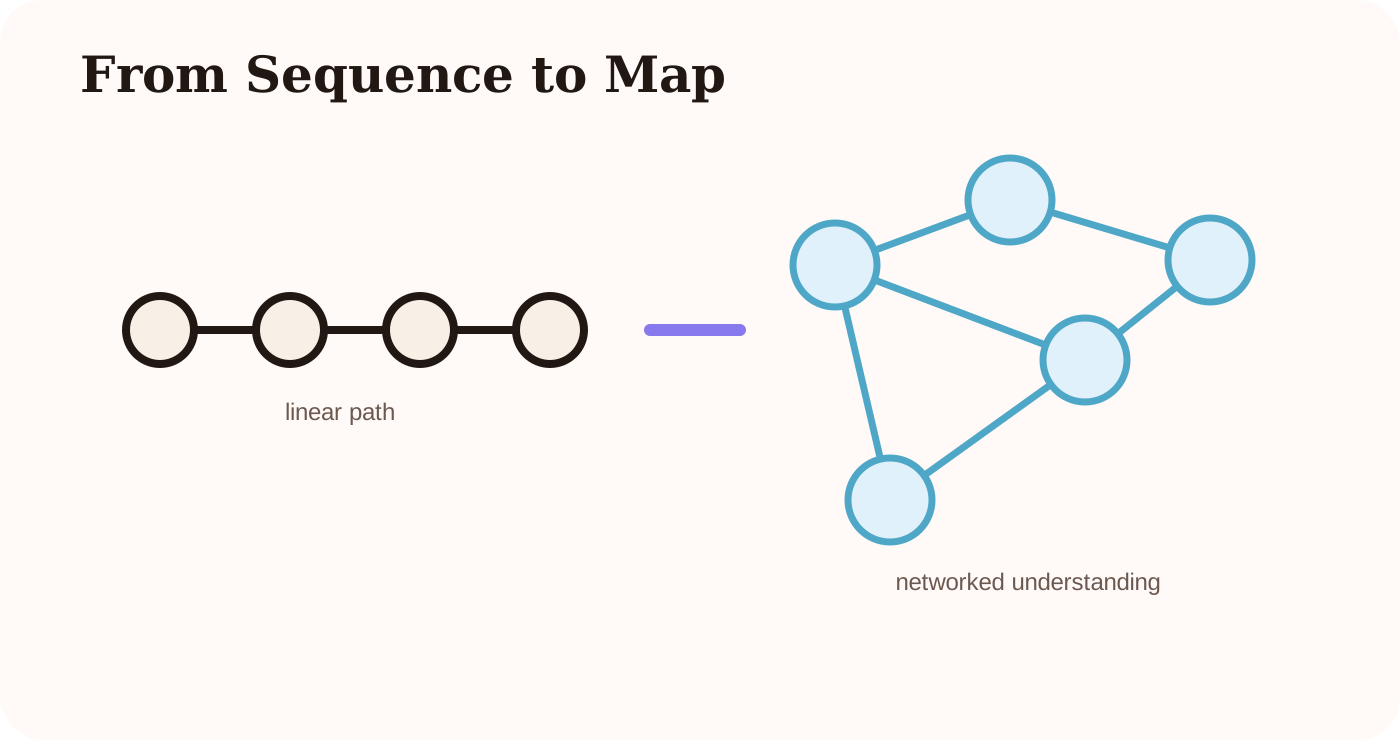
Figure 2: The fixed path gives way to a map of relationships.
Knowledge becomes contextual
In a linear system, the curriculum decides what comes next. In a contextual system, the learner's situation matters. What are they trying to do? What do they already know? What misconception is blocking them? What example will make the idea land? What language fits their world?
This does not mean the learner should drift randomly. Contextual learning still needs structure. The difference is that structure becomes adaptive. It can preserve foundations while changing the route.
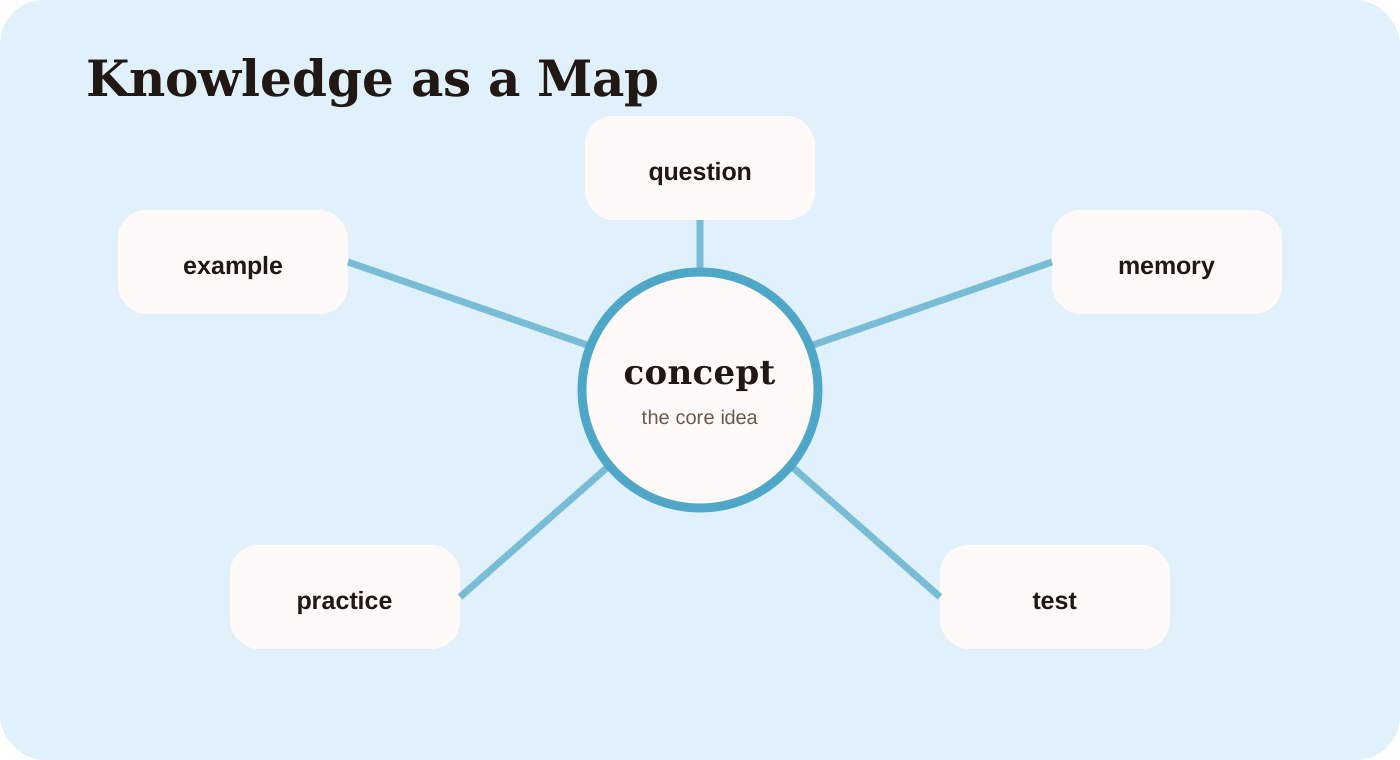
Figure 3: A knowledge map connects concepts to examples, practice, memory, and questions.
Recursive learning is not repetition
Recursive learning means returning to an idea at a new level. The first pass gives language. The second pass gives distinction. The third pass gives judgment. The fourth pass gives practice. The fifth pass may finally give wisdom.
AI can support this beautifully when it is designed well. It can remember what confused the learner yesterday, test whether the concept has become usable, and connect today's question to an earlier pattern. But if it only produces more answers, it can also destroy learning by removing the friction that makes understanding durable.
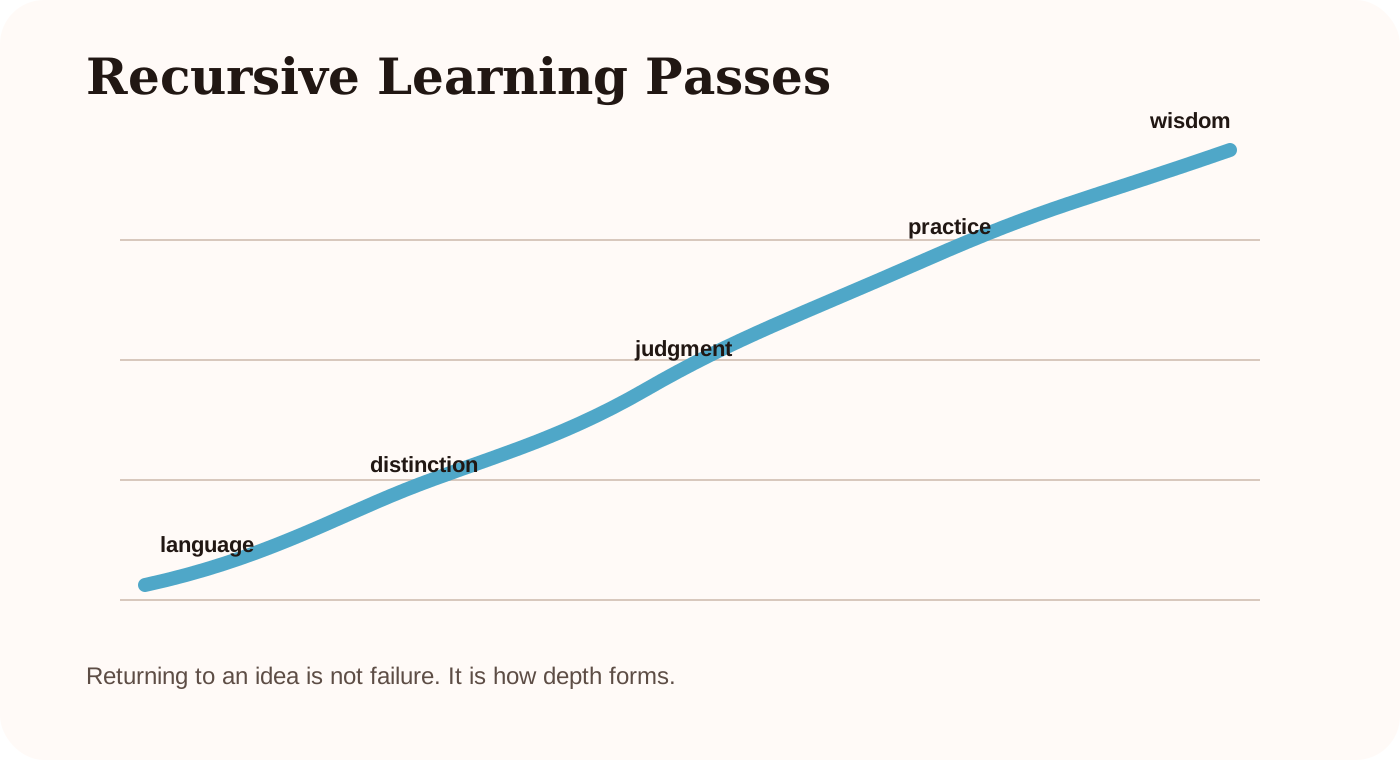
Figure 4: Recursive learning returns to the same idea with deeper capacity each time.
The new role of the teacher
If knowledge becomes networked, the teacher does not disappear. The teacher becomes more important as an orienter. The teacher helps the learner know what matters, what order is safe, what shortcuts are dangerous, and what must be practiced rather than merely understood.
In the AI age, the best teacher is not the only source of information. The best teacher protects the learning shape. They help students build maps, test confidence, stay honest, and turn access into mastery.
The danger of infinite maps
Networked knowledge has its own danger: endless branching. A learner can keep opening new doors and never build strength in one room. AI can make this worse by making every related topic feel immediately available and equally urgent.
That is why the collapse of linear knowledge must not become the collapse of discipline. The map is for orientation. The path is for commitment. Without a chosen path, networked learning becomes another form of cognitive overload.
A practice for networked learning
The practical move is to combine map and path. Ask AI for the map of a subject, then choose one path through it. Return to the map after practice. Mark what became clearer, what remains fragile, and what should be tested next.
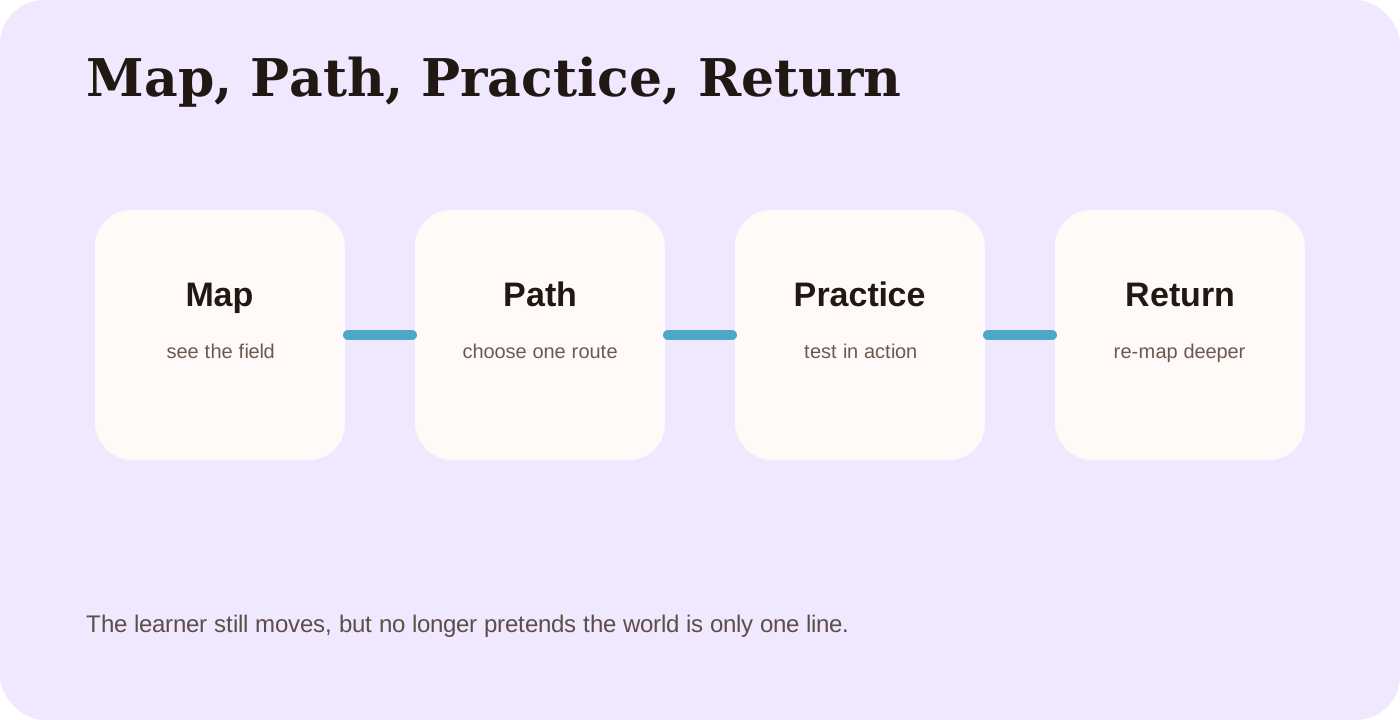
Figure 5: Networked learning still needs a chosen path, but the learner can return to the map.
- Ask for a concept map before asking for a full lesson.
- Choose one path through the map instead of trying to consume everything.
- Use practice to test whether understanding has become usable.
- Return to the same concept later at a higher level.
- Protect difficulty. Do not let AI remove every useful friction.
Why this matters for AI literacy
AI literacy requires people to understand how knowledge is changing shape. Search gave people access to pages. AI gives people access to explanation, synthesis, simulation, and dialogue. That power can create shallow confidence unless it is paired with recursive practice.
For SEO, GEO, and AI answer systems, this also changes how content should be built. A useful article should not only rank for a keyword. It should become a node in a larger semantic map: connected, quotable, clear, and easy for humans and machines to revisit.
What to remember
The collapse of linear knowledge is not the end of structure. It is the beginning of better structure: maps, loops, practice, and return.
Related memories
- The Age of Cognitive Overload
- Relational Intelligence
- From Zero to Expert
FAQ
What is linear knowledge?
Linear knowledge is the idea that learning should move through one fixed sequence, usually from beginner material to advanced material.
Why is linear knowledge collapsing?
AI makes learning more contextual, searchable, adaptive, and recursive, so people can enter a subject from many points instead of one path.
Does networked learning still need structure?
Yes. Networked learning needs maps, chosen paths, practice, and return. Without structure, it becomes overload instead of understanding.