
Human Attention as Infrastructure
Why attention becomes the most valuable resource in the AI era. If attention collapses, every other system built on top of it begins to fail. Figure 1: Attention is not a mood. It is the...
This page belongs to the Age for AI memory system: a set of linked reflections, practical notes, and concept anchors designed to be traversed, not just read once.
Age for AI Memory 012 | AI Thinking
Why attention becomes the most valuable resource in the AI era. If attention collapses, every other system built on top of it begins to fail.
May 22, 2026 · 4:00 PM Hanoi · 7 min read
Figure 1: Attention is not a mood. It is the infrastructure beneath judgment.
Human Attention as Infrastructure means attention should be treated like a core public utility of the mind. Without attention, people cannot judge, learn, listen, love, decide, remember, or build. Attention is the layer that lets meaning become usable.
The AI era makes this urgent because intelligence systems can produce more material than any human can absorb. More drafts, more options, more plans, more summaries, more alerts, more feeds, more possible futures. The scarce resource is no longer output. The scarce resource is the human capacity to orient inside output.
Key memory
Attention is infrastructure because everything valuable in human life depends on where awareness can stay long enough to understand.
Attention holds the system together
A company can have tools, dashboards, workflows, and documents, but if human attention is fragmented, the system still fails. People miss context. Decisions become reactive. Meetings become repetitive. Teams generate work without remembering why it matters.
The same is true for a person. A person may have the best apps, the best AI assistant, the best reading list, and the best productivity method. If attention is constantly pulled apart, the person cannot metabolize any of it into wisdom.
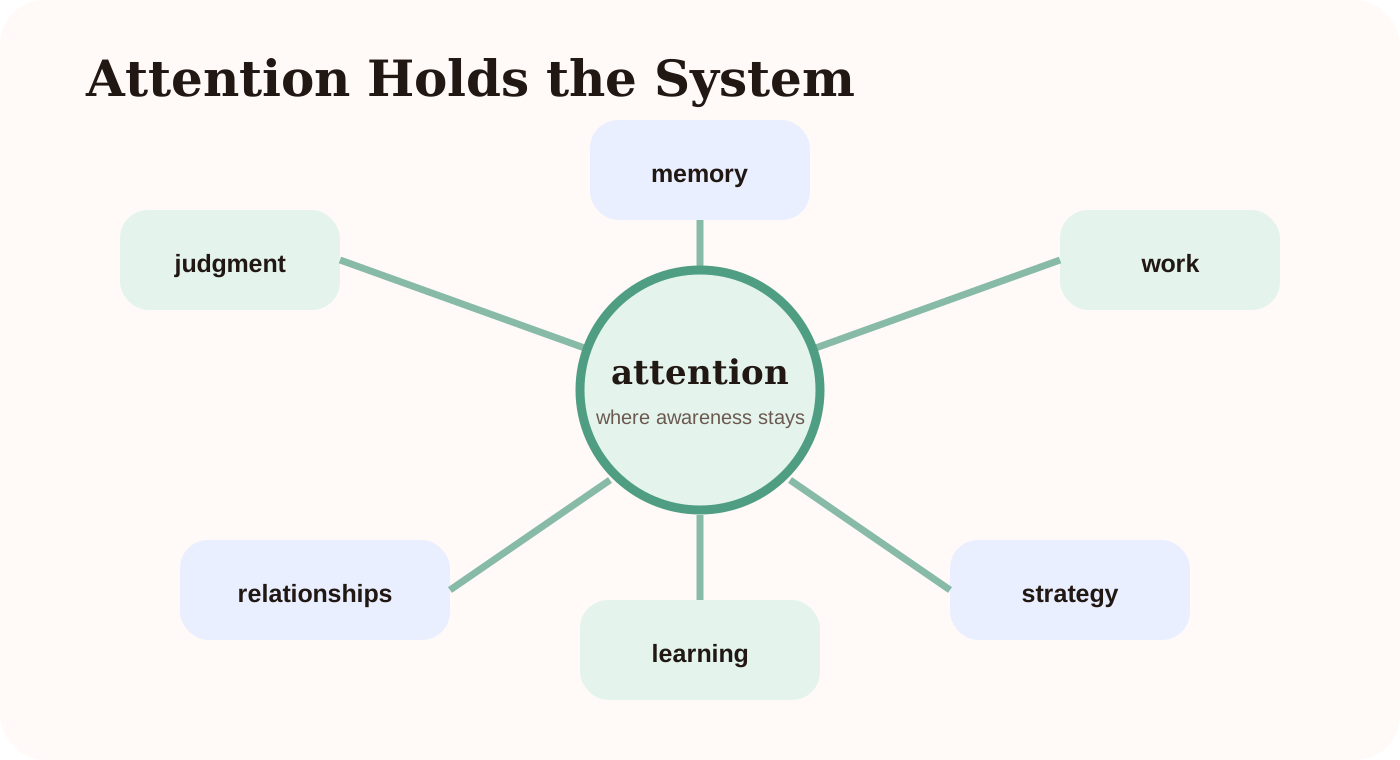
Figure 2: Attention powers many human systems at once.
The leak problem
Attention leaks through small holes. Notifications. Open tabs. Unclear priorities. Unfinished tasks. Emotional residue. Infinite feeds. Too many AI answers. The leak is rarely dramatic. It is a slow draining of the capacity to stay with what matters.
This is why people can work all day and still feel untouched by their own life. They were present to fragments, not to the whole. They responded, scanned, skimmed, and switched. But attention never settled long enough to turn activity into direction.
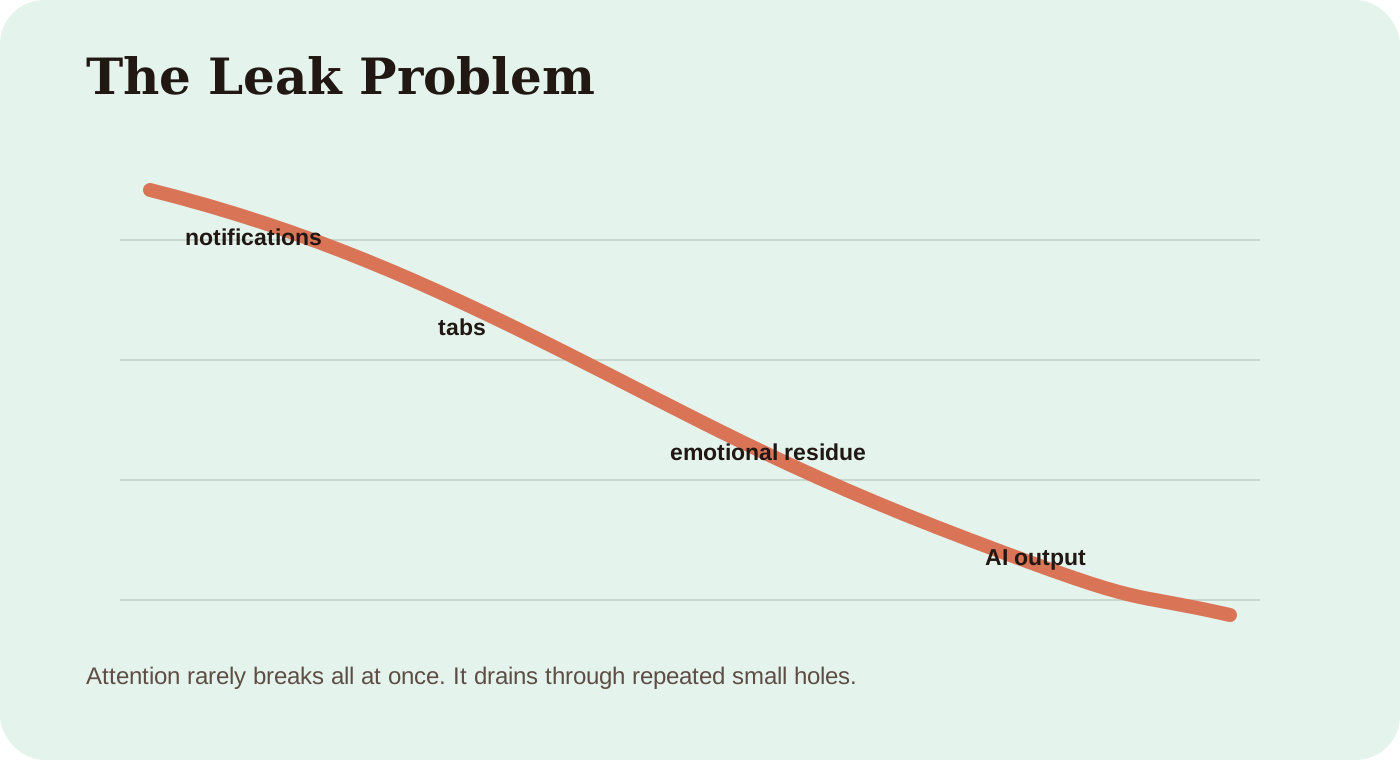
Figure 3: Attention leaks slowly until judgment starts to feel noisy.
AI must not become another leak
AI can protect attention when it compresses noise, clarifies priority, closes loops, and makes the next step easier. It can act like a filter, a memory surface, a context packer, and a stabilizer.
But AI can also become the most elegant attention leak ever invented. Because the output is useful, the user can justify endless generation. One more option. One more rewrite. One more plan. One more comparison. One more improvement. The work never arrives. It only mutates.
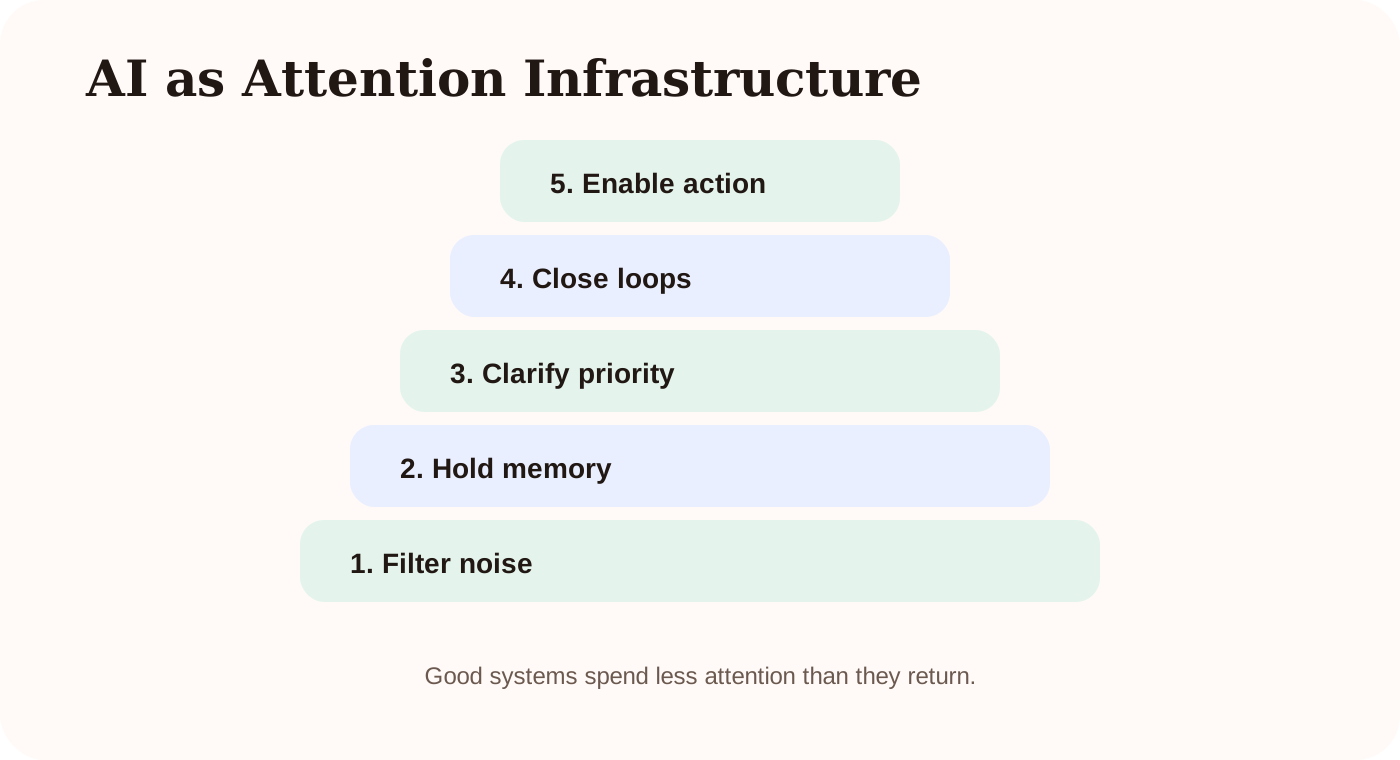
Figure 4: Good AI protects attention by filtering, remembering, prioritizing, and ending in action.
Designing for attention
Human-centered AI design should begin with the question: what attention state should the user have after this interaction? Clearer, calmer, more ready, more focused, more informed, or more able to choose? If the answer is only "more impressed," the system is not yet humane.
Interfaces should reduce avoidable switching. Workflows should separate primary work from secondary signals. AI responses should be structured for decision, not for maximum volume. The system should know when enough has been generated.
This matters for families, schools, companies, and governments. The collective attention of a group becomes the quality of its decisions. A civilization that cannot protect attention cannot protect wisdom.
Attention and power
Attention is also political and economic. Whoever controls what people notice can shape what they fear, buy, believe, ignore, and repeat. The feed economy understood this before the AI economy did. It learned that attention could be harvested, redirected, and sold.
The AI era raises the stakes because attention is no longer only pulled by content. It is guided by conversation. A system can decide what context to include, what source to summarize, what uncertainty to soften, and what next step to recommend. That means attention protection is not a soft wellness topic. It is an agency topic.
A practice for protecting attention
The practical move is to design attention boundaries before designing output. Decide what deserves focus, what should be batched, what should be ignored, and what should be automated away. Then ask AI to support that boundary rather than break it.
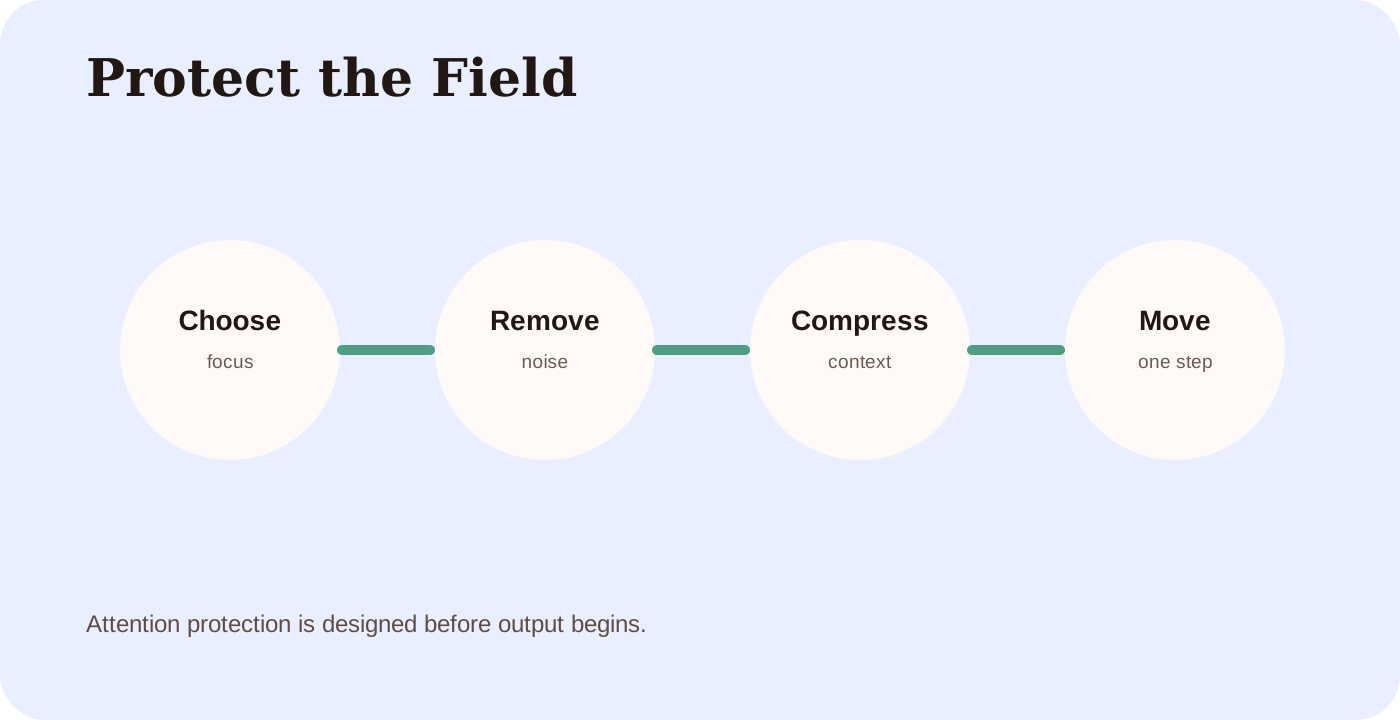
Figure 5: Attention protection is a protocol, not a personality trait.
- Choose the one thing that deserves attention before opening tools.
- Ask AI to reduce noise before asking it to create more output.
- Batch secondary signals so they do not interrupt primary work.
- End AI interactions with one decision, one next step, or one closed loop.
- Protect quiet time as infrastructure, not as luxury.
Why this matters for AI literacy
AI literacy is incomplete if it only teaches people to get better answers. It must teach people to protect the attention required to judge those answers. A person who cannot hold attention becomes easier to steer, easier to distract, and easier to overwhelm.
For semantic systems and answer engines, attention also changes content design. Useful material should orient quickly, structure deeply, and respect the reader's limited focus. Ranking is not enough. The content must leave the reader more capable of thinking.
What to remember
Attention is the infrastructure of human agency. AI should defend it, not spend it carelessly.
Related memories
- The Age of Cognitive Overload
- Why Founders Burn Out
- The Collapse of Linear Knowledge
FAQ
What does human attention as infrastructure mean?
It means attention is a foundational resource that supports judgment, memory, learning, relationships, and decision-making.
Why is attention more valuable in the AI era?
Because AI can create more output than humans can absorb. The limiting factor becomes human orientation, not machine production.
How can AI protect attention?
AI can protect attention by filtering noise, summarizing context, prioritizing decisions, closing loops, and ending interactions with clear action.