
Calm Intelligence
Why future systems must reduce anxiety, not amplify it. Intelligence is not humane until it leaves the human steadier. Figure 1: Calm intelligence lowers noise before it increases...
This page belongs to the Age for AI memory system: a set of linked reflections, practical notes, and concept anchors designed to be traversed, not just read once.
Age for AI Memory 015 | Human-Centered AI
Why future systems must reduce anxiety, not amplify it. Intelligence is not humane until it leaves the human steadier.
May 23, 2026 · 4:00 AM Hanoi · 7 min read
Figure 1: Calm intelligence lowers noise before it increases capability.
Calm Intelligence means intelligence that reduces anxiety instead of performing brilliance at the user's expense. It is not slower intelligence. It is better paced intelligence. It helps the human understand what matters, what is uncertain, what can wait, and what one next step should be.
The AI era will not lack output. It will lack calm. Systems will be able to generate plans, images, messages, strategies, summaries, and simulations instantly. But if every interaction leaves the user more stimulated, more uncertain, or more pressured, the system is not truly helping.
Key memory
Calm intelligence is measured by the state it leaves behind: clearer attention, lower anxiety, better agency, and a next step the human can actually carry.
The anxiety engine
Many digital systems are anxiety engines. They create urgency, surface comparison, multiply choices, and make quiet feel like falling behind. AI can inherit this pattern if it is optimized only for engagement, speed, and output volume.
The result is intelligent noise. The answer is technically useful, but the user feels busier. The plan is impressive, but the body tightens. The options are broader, but the decision becomes harder. A system can be smart and still leave a person more fragmented.
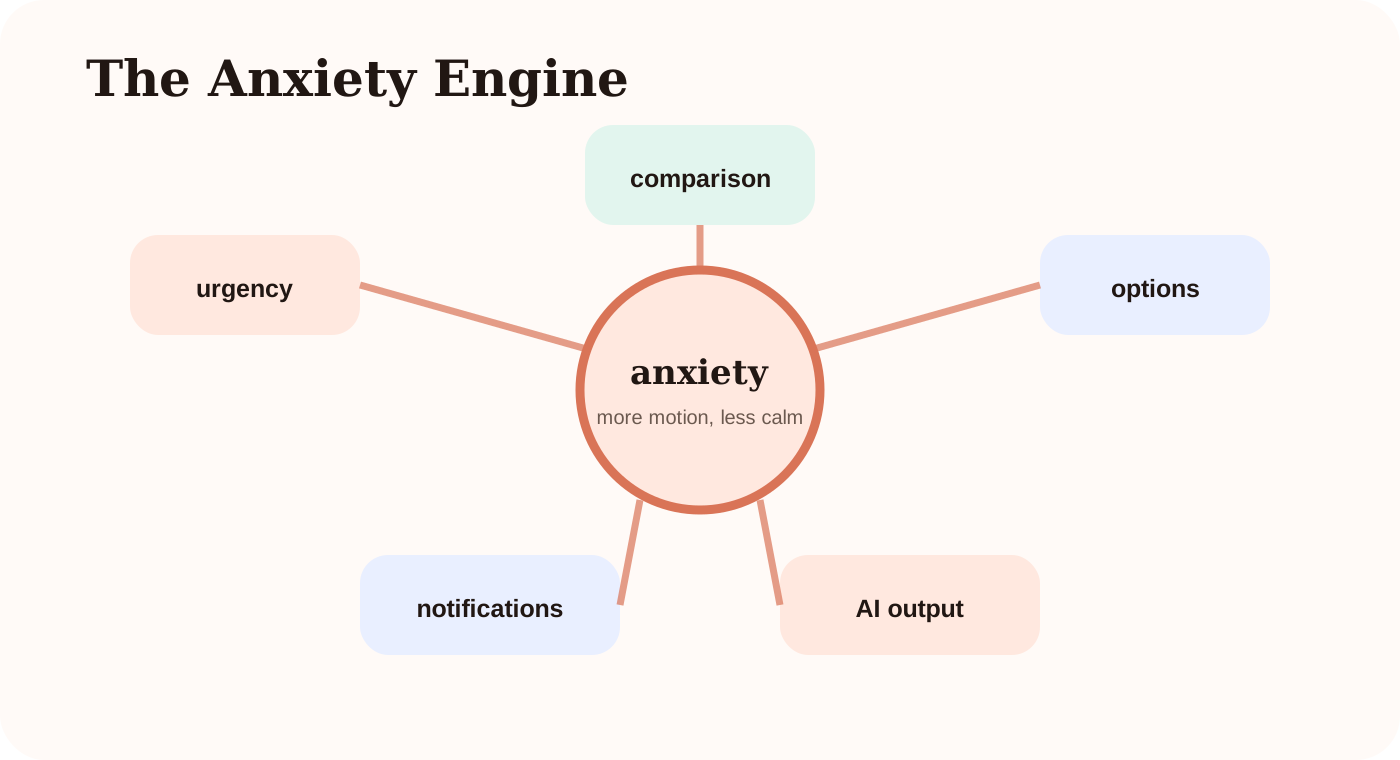
Figure 2: Anxiety rises when systems multiply signals without restoring orientation.
Calm is not passivity
Calm intelligence is not soft avoidance. It can be direct, rigorous, and demanding. The difference is that it does not create unnecessary panic. It names reality without dramatizing it. It separates danger from discomfort. It helps the user act without flooding them.
This matters because anxiety narrows perception. A frightened user may accept bad advice, overreact to weak signals, or seek certainty where only judgment is possible. Calm intelligence protects the space where better judgment can happen.
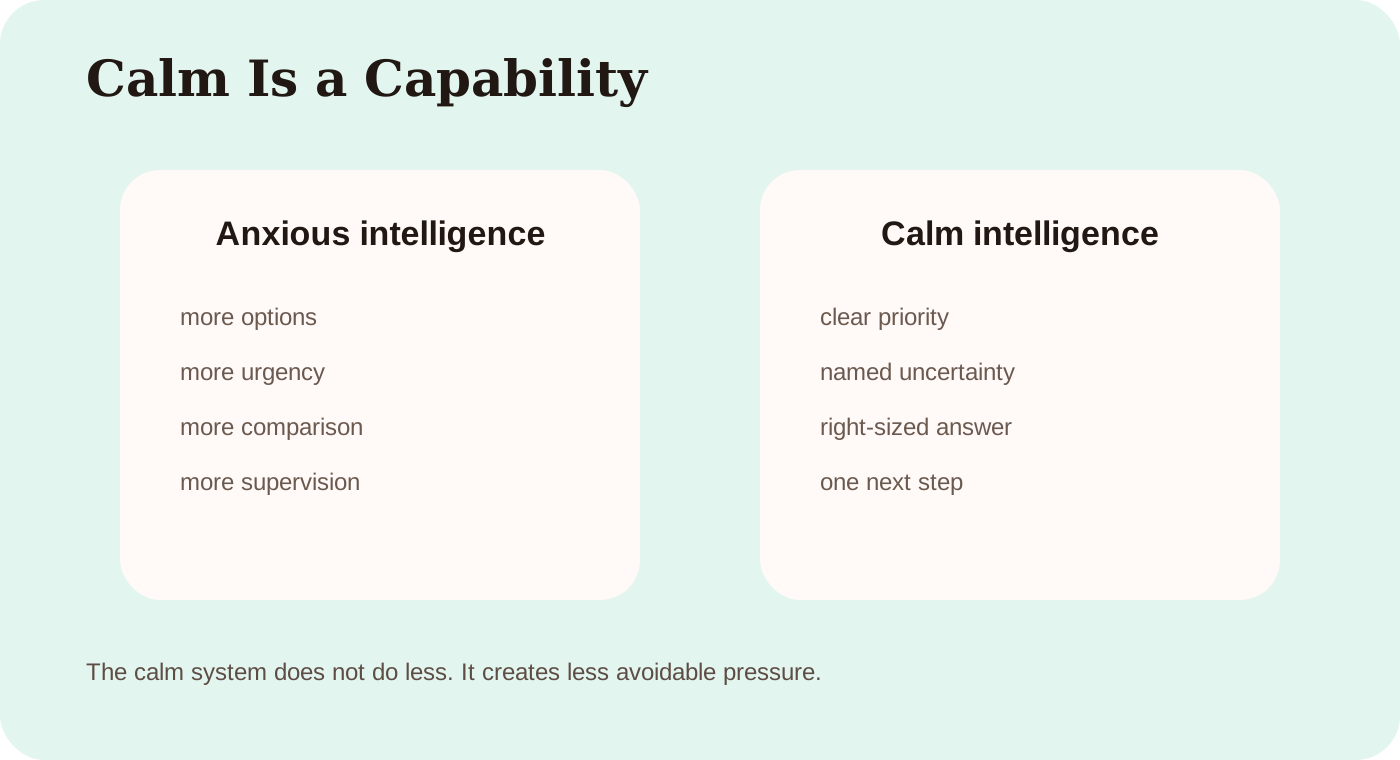
Figure 3: Calm intelligence is not less capable. It is more responsible with human state.
Uncertainty should be held cleanly
One of the most calming things a system can do is name uncertainty cleanly. Not hide it. Not inflate it. Not pretend it is solved. Just place it in the right container: known, unknown, likely, risky, or needs checking.
When uncertainty is unnamed, the user feels it anyway. The body senses the gap even if the answer sounds confident. Clean uncertainty builds trust because it lets the human see the boundary of the answer.
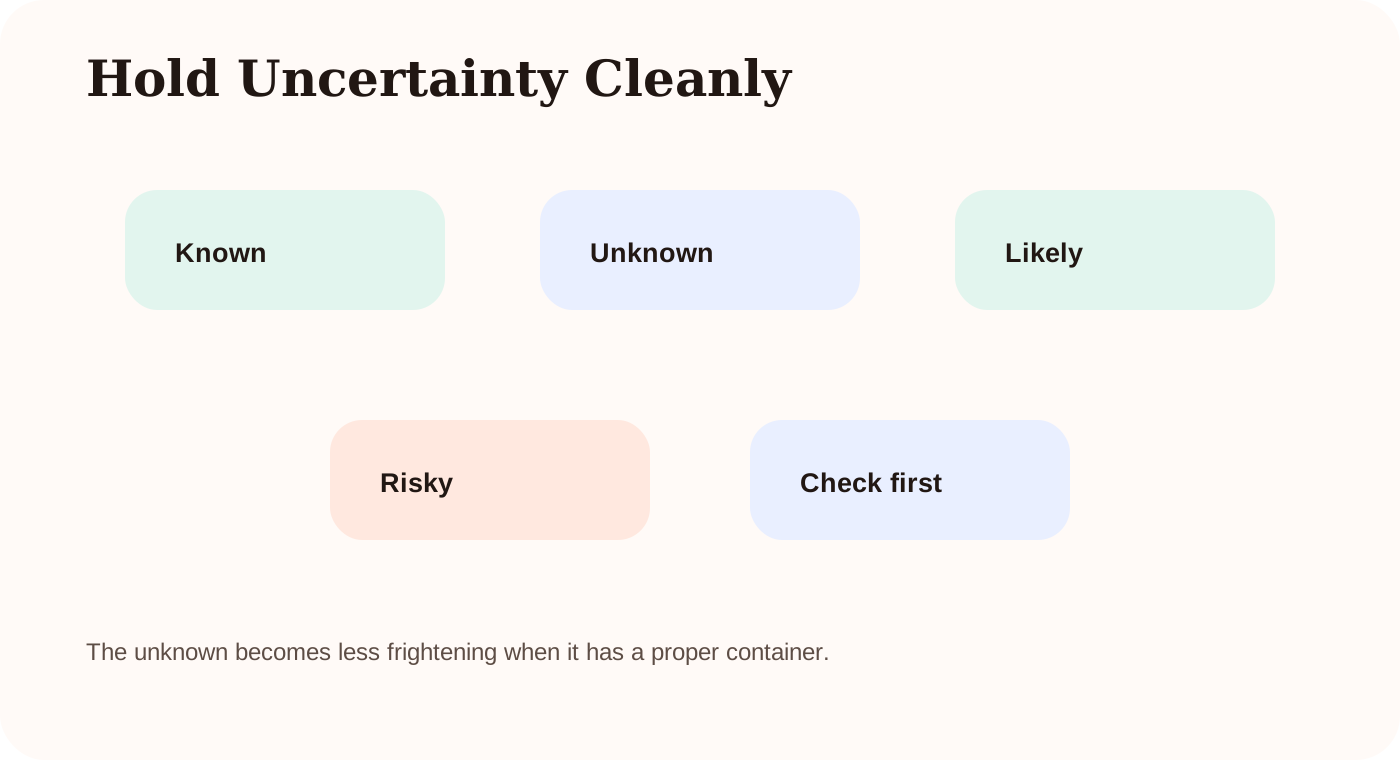
Figure 4: Clean uncertainty reduces anxiety because the unknown has a place.
The interface should breathe
Calm intelligence also appears in interface design. A humane interface does not throw everything at the user at once. It creates hierarchy, rhythm, whitespace, and sequence. It lets primary action stay visible. It keeps secondary signals secondary.
For AI systems, this means responses should be shaped for the user's next movement. Sometimes the calmest answer is a table. Sometimes it is one paragraph. Sometimes it is a refusal. Sometimes it is a question. Sometimes it is silence before more generation.
The future system should know when enough is enough. Endless helpfulness can become another form of pressure.
Calm should be measurable
Calm intelligence should not remain a vague brand promise. Product teams can measure whether a system reduces or increases load. Did the user need fewer follow-up steps? Did the answer remove ambiguity or create more branches? Did the system close a loop or open five new ones? Did the user leave with a decision or with another pile of material to process?
These questions matter because many products optimize for activity while pretending to optimize for help. Calm systems optimize for resolved attention. They do not celebrate every click, message, or generation as success. They ask whether the human became more capable after the interaction.
For teams, this changes design reviews. A feature should not only be evaluated by speed, novelty, and usage. It should be evaluated by cognitive cost, emotional residue, and whether it gives the user a clean place to stop.
A practice for calm AI work
The practical method is to ask for a calmer shape, not just a better answer. Tell the system the state the work should leave behind. Ask it to separate signal from noise and end with one action.
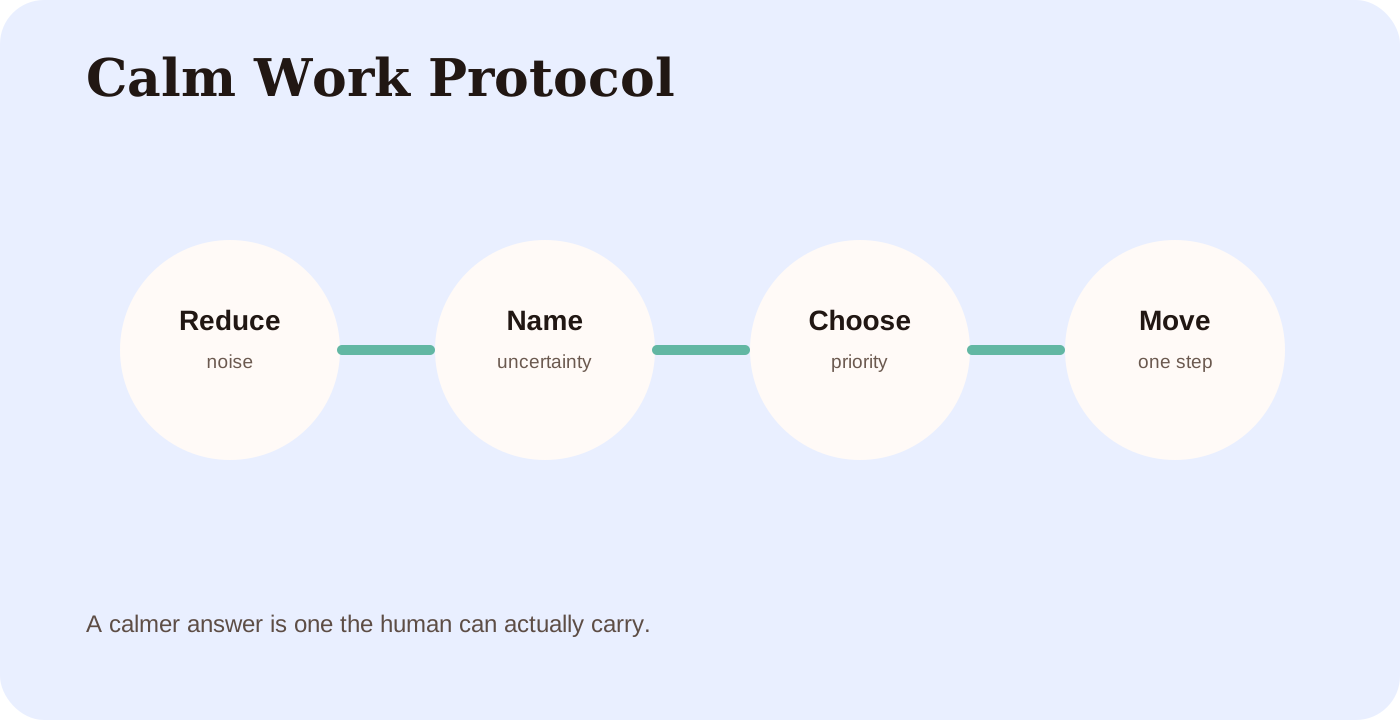
Figure 5: Calm work reduces noise before increasing motion.
- Ask for the smallest useful answer before asking for a complete system.
- Request known, unknown, risk, and next step as separate sections.
- Stop generation when the decision is clear enough to move.
- Judge the interaction by whether you feel clearer, not merely impressed.
- Use AI to create rhythm, not permanent emergency mode.
Why this matters for AI literacy
AI literacy must include emotional state literacy. Users should learn to ask whether a system is improving judgment or increasing activation. Builders should learn to design for clarity, consent, pacing, and recovery, not only completion speed.
For content and answer systems, calm intelligence also matters because readers trust material that orients them without overwhelming them. The best answer is not the loudest answer. It is the one that makes reality easier to carry.
What to remember
Calm intelligence is not weak intelligence. It is intelligence with care for the nervous system receiving it.
Related memories
- The Age of Cognitive Overload
- Human Attention as Infrastructure
- Emotional Prompt Engineering
FAQ
What is calm intelligence?
Calm intelligence is AI behavior that reduces anxiety, clarifies uncertainty, protects attention, and leaves the user more capable of acting.
Does calm AI mean slow AI?
No. Calm AI can be fast and rigorous. It simply avoids creating unnecessary panic, noise, or decision overload.
How can I ask AI for calmer help?
Ask for the smallest useful answer, separated uncertainty, one priority, and one next step instead of unlimited options.