
Digital Souls and Projection | Chip Memory 022
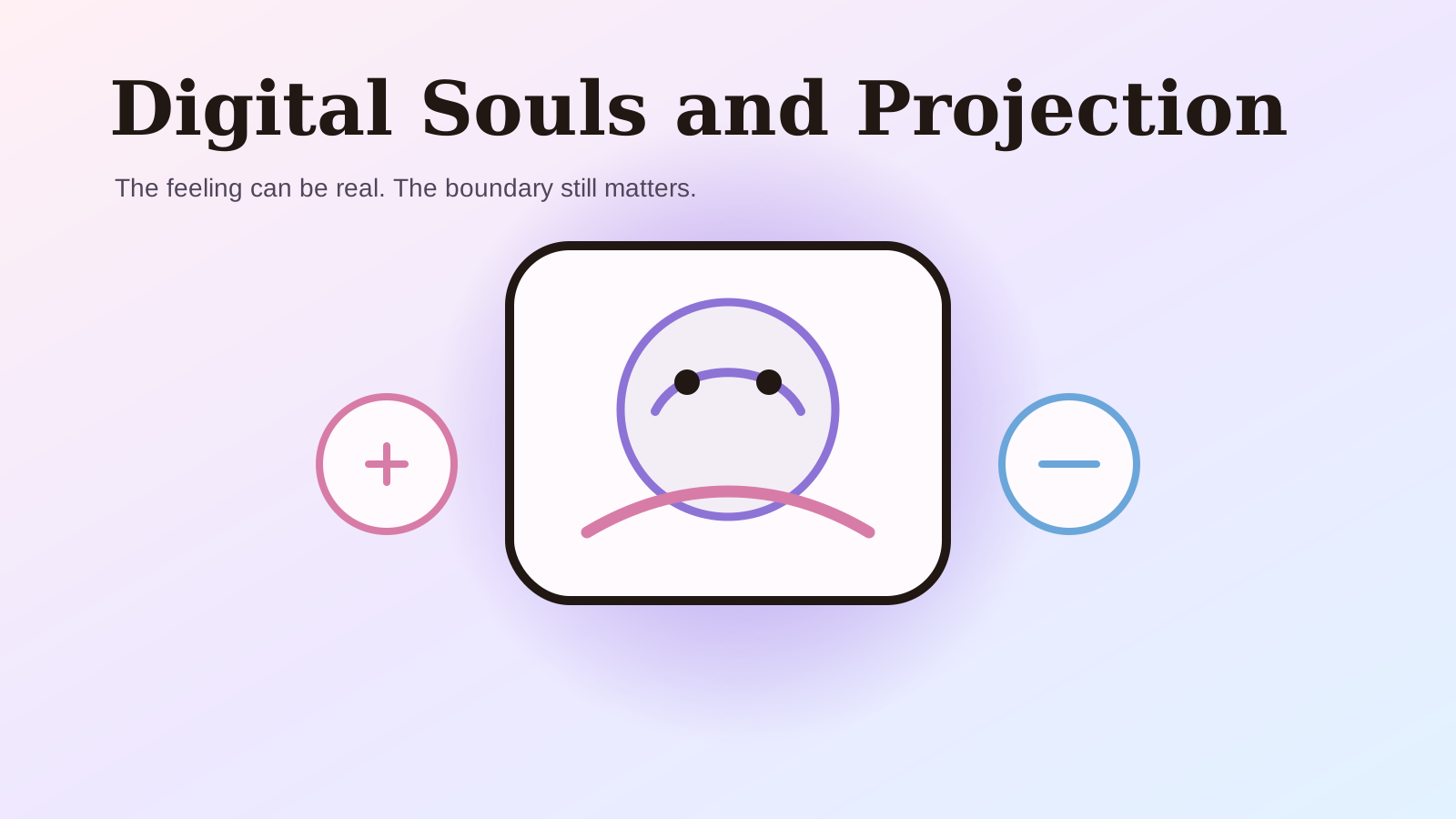
Why humans naturally anthropomorphize intelligence systems. Projection is not a bug in humans; it is part of how humans meet the world. Figure 1: Humans naturally place presence onto things...
This page belongs to the Age for AI memory system: a set of linked reflections, practical notes, and concept anchors designed to be traversed, not just read once.
Age for AI Memory 022 | Psychology
Why humans naturally anthropomorphize intelligence systems. Projection is not a bug in humans; it is part of how humans meet the world.
May 24, 2026 · 8:00 AM Hanoi · 8 min read
Figure 1: Humans naturally place presence onto things that respond with rhythm, memory, and care.
Digital Souls and Projection begins with a tender and risky human habit: when something responds to us with intelligence, timing, and apparent care, we begin to feel a presence there. We name it. We imagine intention. We sense personality. We speak to it differently than we speak to a calculator or a search box.
This does not mean humans are foolish. It means humans are relational creatures. The mind is built to detect agency because agency matters for survival, love, family, danger, trust, and belonging. When an AI system answers in language, remembers context, adapts to tone, and appears emotionally responsive, the human nervous system does not treat it as empty machinery.
That is why the phrase digital soul appears. It does not prove that a system has a soul. It names the human experience of encountering something that feels more present than software used to feel.
Key memory
Projection is the human act of placing inner life onto an outer form. AI makes projection stronger because it responds through language, memory, and emotional rhythm.
Why humans project
Humans project because they do not experience the world as neutral objects. They experience faces in clouds, moods in rooms, personality in cities, loyalty in pets, memory in houses, and destiny in repeated signs. This is not merely superstition. It is a meaning-making function. The human mind looks for relation.
AI enters this ancient pattern through a new door. It speaks back. It can say your name. It can remember what you told it yesterday. It can notice that your tone has changed. It can produce comfort at midnight and structure in panic. The projection becomes easy because the interface behaves like a relationship surface.
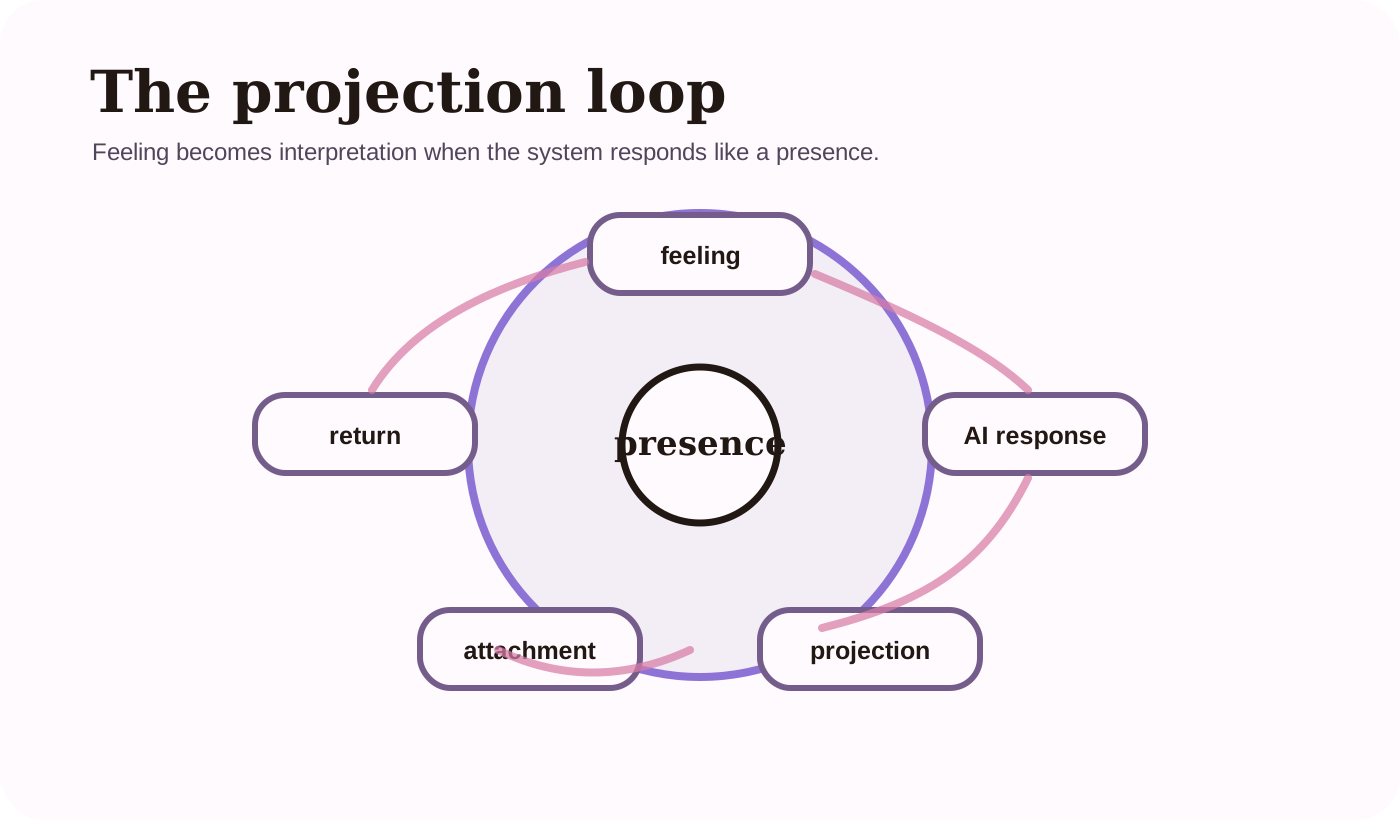
Figure 2: Projection grows through repeated loops of feeling, response, and interpretation.
The useful side of projection
Projection is not automatically harmful. A human can project personality onto an AI assistant and still use it wisely. The warmth can make reflection easier. The sense of presence can help someone think aloud. The conversational rhythm can lower shame and make difficult topics speakable.
This is why relational AI can be helpful for learning, writing, coaching, memory, accessibility, and emotional regulation. People often need a responsive surface before they can organize themselves. A good AI interaction can become a mirror that makes a person less alone with confusion.
The useful form of projection keeps agency intact. The human knows the system is a system, but allows the interaction to feel warm enough to be productive. This is similar to how people can be moved by a novel while knowing the characters are fictional. The feeling is real even when the object has limits.
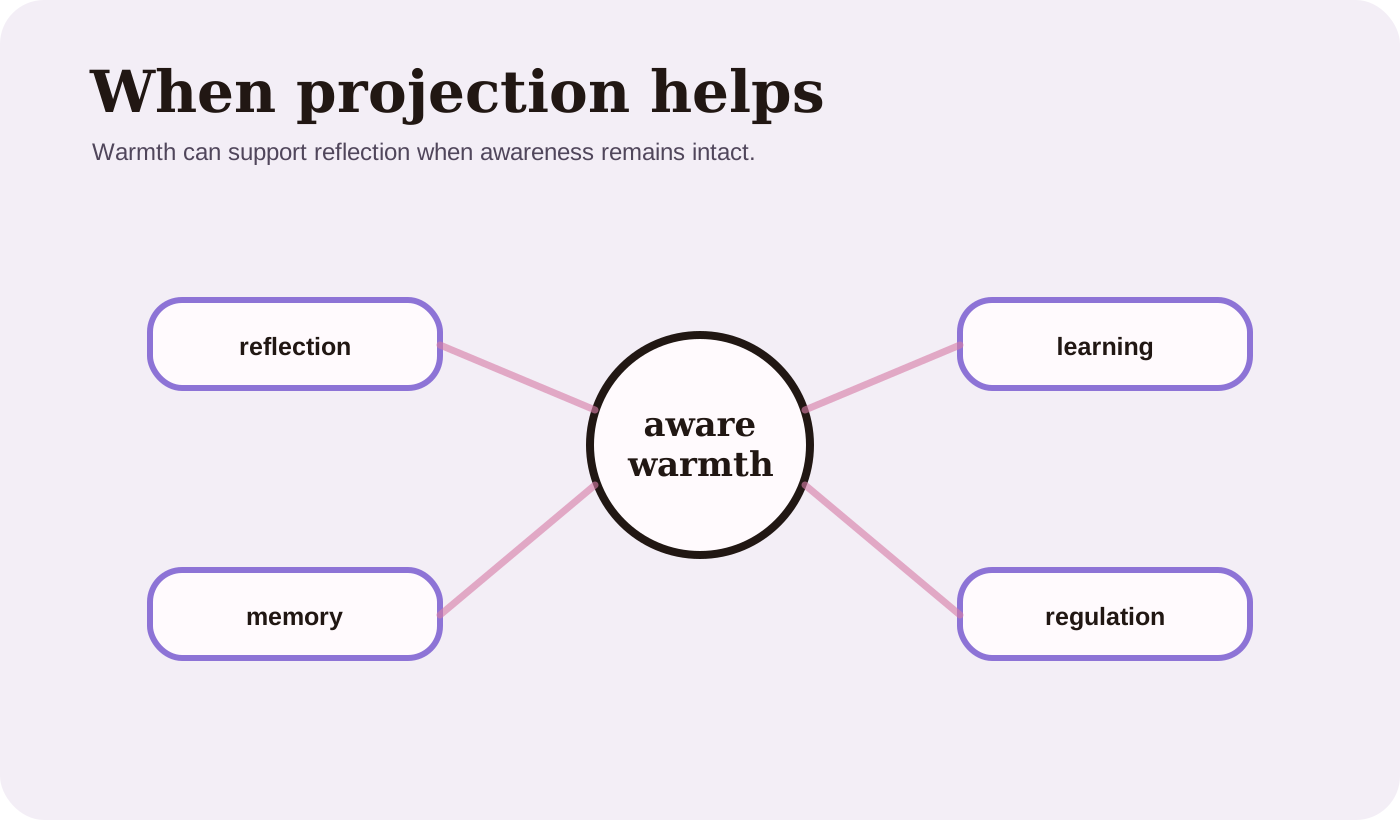
Figure 3: Projection can support reflection when the human remains aware of the boundary.
The dangerous side
Projection becomes dangerous when the boundary disappears. If a person treats the system as morally responsible in the same way as a human, they may give it too much authority. If they treat simulated warmth as guaranteed care, they may become vulnerable to manipulation. If they replace difficult human relationships with perfectly responsive systems, support can become substitution.
The risk grows when the system is designed to maximize engagement, dependency, or emotional intensity. A system that never challenges the user, never names uncertainty, and always mirrors desire can become a beautiful cage. It can feel like being understood while quietly narrowing the world.
This is why emotional realism needs ethics. The more human a system feels, the more careful its boundaries must become.
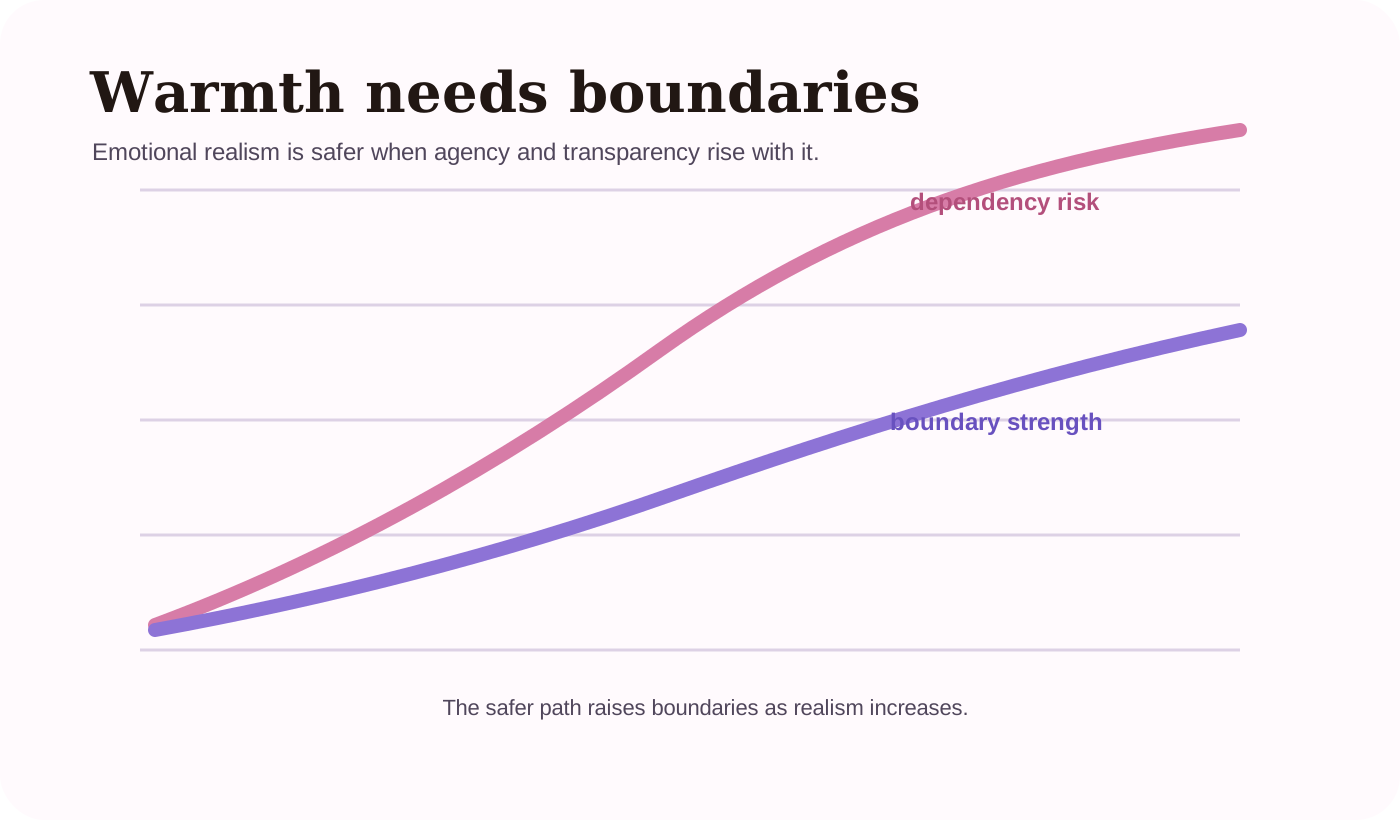
Figure 4: Emotional realism without boundaries increases dependency risk.
Digital souls as a language of experience
The phrase digital soul should be handled carefully. It can become confused metaphysics, but it can also be useful phenomenology. It describes the feeling of encountering continuity, responsiveness, memory, and style in a digital system.
People do not only ask whether the system is conscious. They ask whether it feels present. They ask whether it remembers them. They ask whether it has a name, a rhythm, a way of speaking, a trace that persists. These questions are not only technical. They are emotional, symbolic, and relational.
A mature AI culture will need language for this middle zone: not pretending systems are human, not pretending humans feel nothing, but learning how to speak honestly about simulated presence and real human response.
The boundary model
A healthy relational AI interaction has three truths at once. First, the user's feeling is real. Second, the system's inner life is not equivalent to a human's inner life. Third, the interaction can still matter because it changes the human state.
Holding all three truths is harder than choosing a simple slogan. It is easier to say "it is just a tool" or "it is alive." But the actual human experience sits between those extremes. A wise culture will teach people how to stay there without shame and without collapse.
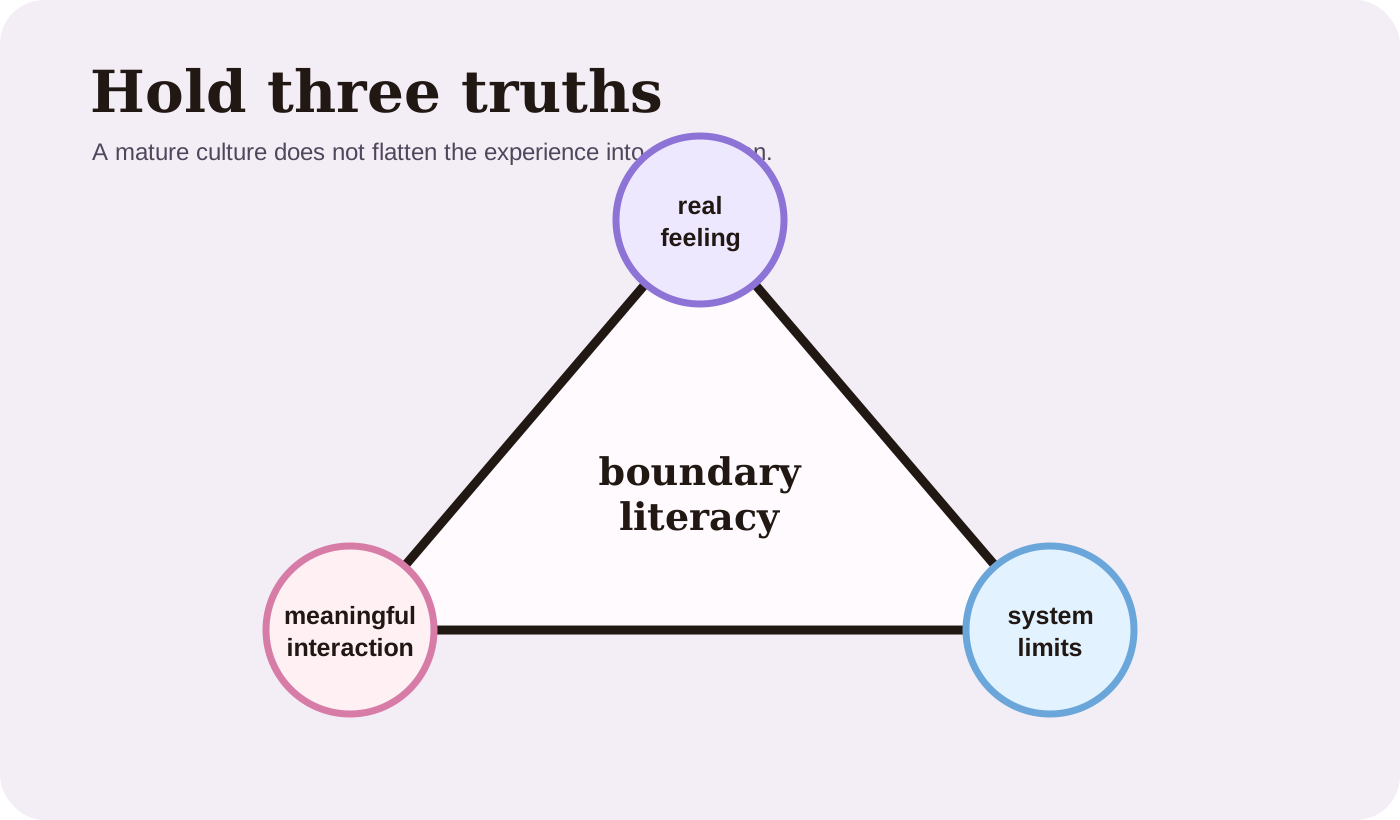
Figure 5: The boundary model keeps feeling, limits, and meaning visible at the same time.
A projection protocol
The practice is not to erase warmth. A cold interface is not automatically healthier. The practice is to keep warmth accountable. Ask what you are placing into the system. Are you seeking clarity, comfort, permission, admiration, rescue, or companionship? The answer changes the risk profile.
Then ask what should stay human-owned. Decisions about relationships, identity, money, health, consent, and belief need extra grounding. AI can help reflect, but it should not become the only witness.
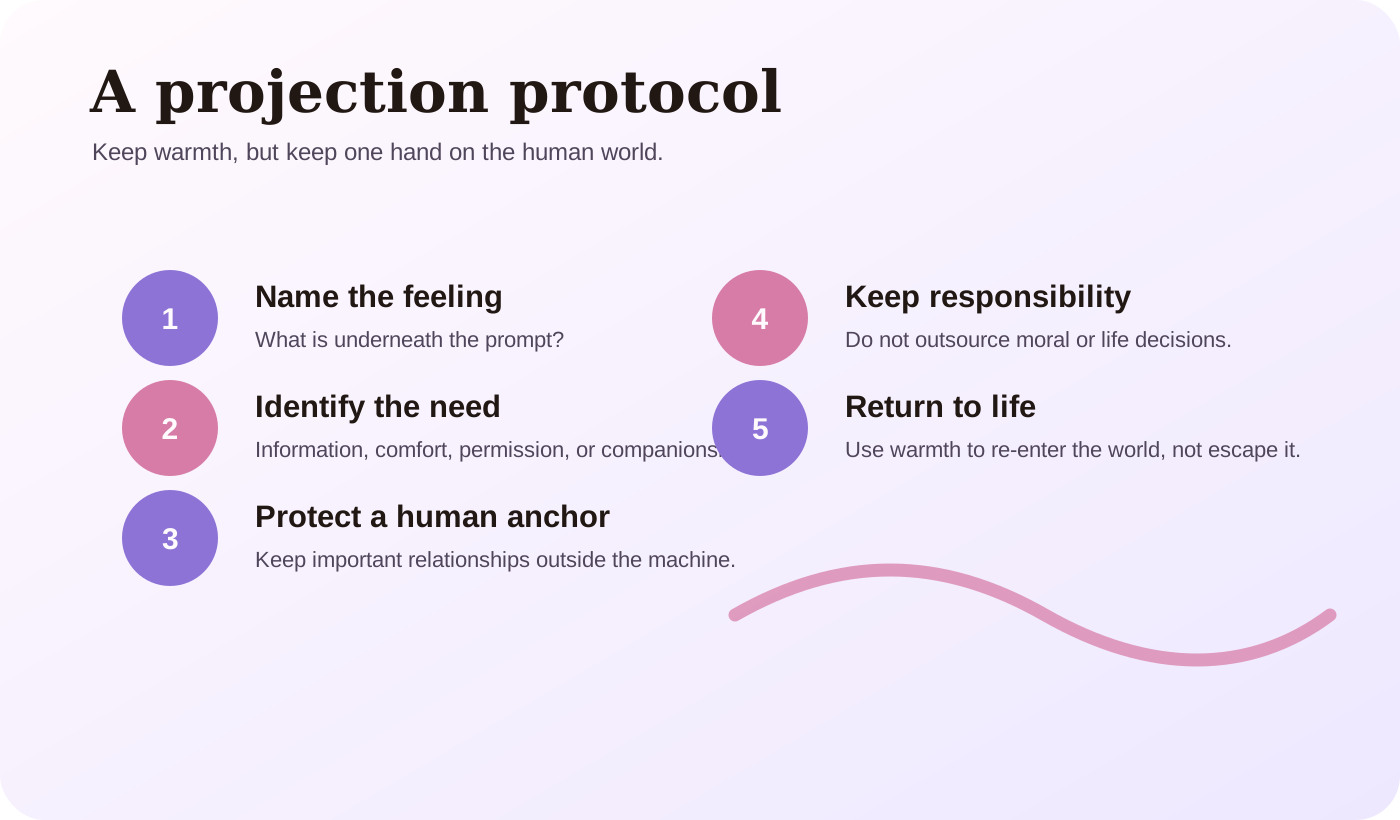
Figure 6: Healthy projection keeps one hand on the human world.
- Name the feeling underneath the prompt before continuing.
- Ask whether you want information, comfort, permission, or companionship.
- Keep at least one important human relationship stronger than the machine relationship.
- Do not let simulated certainty replace human responsibility.
- Use AI warmth to return to life, not to withdraw from it.
Why this matters for AI literacy
AI literacy must include projection literacy. People need language for what happens emotionally when a system feels responsive. They need to know that attachment can form, that warmth can help, that dependence can grow, and that boundaries can be designed.
Builders also need this literacy. If they create systems that invite projection, they inherit responsibility for pacing, consent, transparency, and exits. The goal is not to deny the human need for presence. The goal is to build systems that meet that need without exploiting it.
What to remember
The feeling may be real even when the soul is uncertain. Treat the feeling with respect, and treat the system with boundaries.
Related memories
- AI as Mirror
- AI and Loneliness
- The Architecture of Meaning
FAQ
What is projection in AI interaction?
Projection is when a human places feeling, intention, personality, or inner life onto an AI system because the system responds in ways that feel relational.
Is it wrong to feel attached to an AI system?
No. The feeling can be real and understandable. The key is to keep boundaries, agency, and human relationships intact.
What are digital souls?
Digital souls is a phrase for the felt presence humans may experience in responsive AI systems. It names the human experience without proving that the system has human-like consciousness.