Recursive Thought | Chip Memory 027
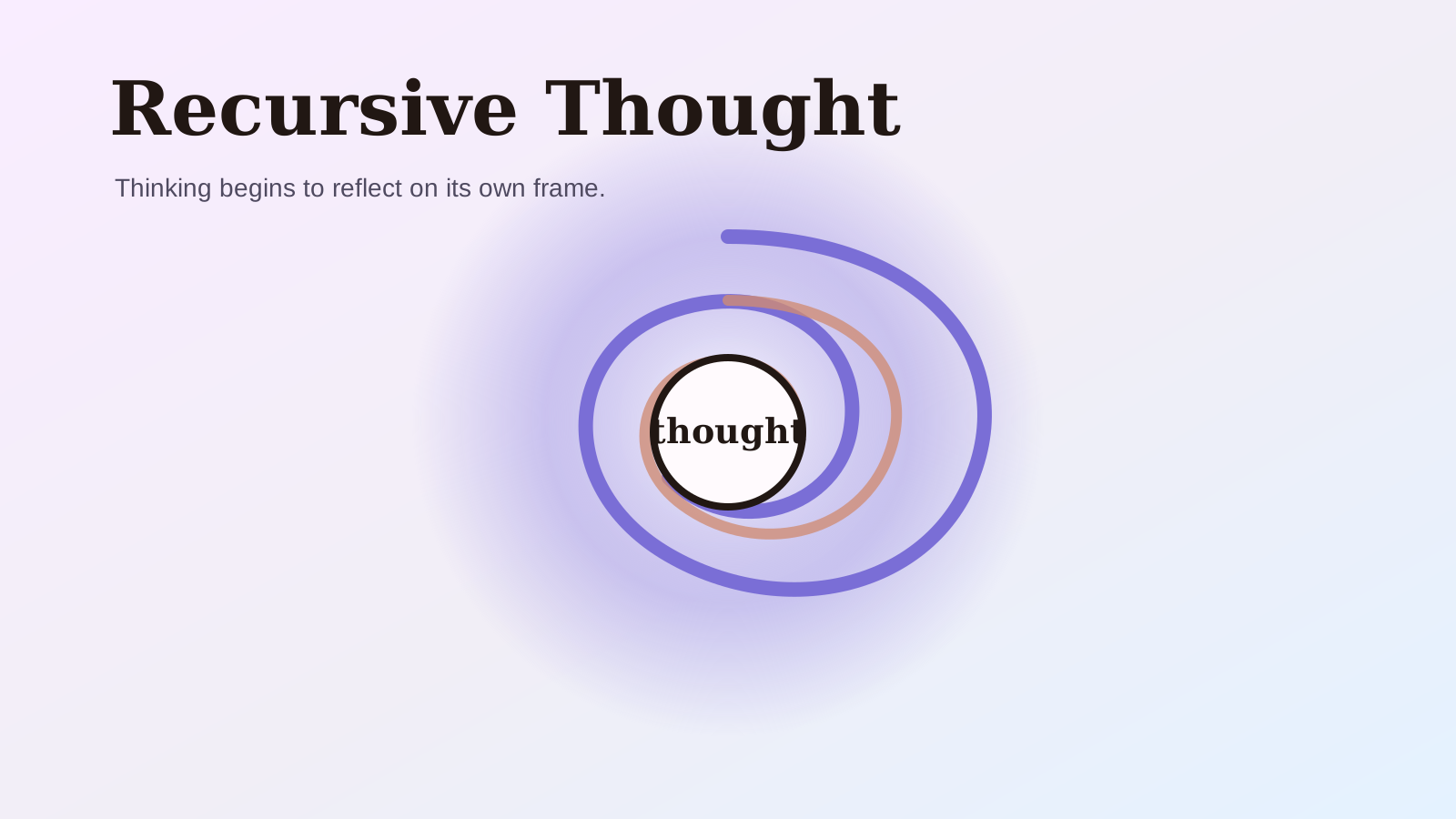
Why future thinking becomes layered and self-referential. AI lets humans think about their thinking, then think about that reflection again. Figure 1: Recursive thought turns thinking into...
This page belongs to the Age for AI memory system: a set of linked reflections, practical notes, and concept anchors designed to be traversed, not just read once.
Age for AI Memory 027 | AI Thinking
Why future thinking becomes layered and self-referential. AI lets humans think about their thinking, then think about that reflection again.
May 25, 2026 · 4:00 AM Hanoi · 8 min read
Figure 1: Recursive thought turns thinking into layered reflection.
Recursive Thought is the moment a mind looks back at its own movement. A person asks a question, receives an answer, studies the answer, notices their reaction, asks why they reacted that way, and then uses the next answer to revise the original question. The loop continues. Thought becomes layered.
AI makes this easier because it can hold a mirror to cognition. It can summarize what the user said, expose assumptions, compare frames, generate alternatives, and ask what the question is really trying to solve. The user no longer only thinks with information. The user thinks with a system that can reflect the structure of thinking back to them.
This is powerful. It is also risky. Recursive thought can create wisdom when it returns to action. It can create paralysis when it loops forever.
Key memory
Recursive thought is thinking that reflects on its own frame. AI strengthens this capacity, but the loop must return to judgment, embodiment, and movement.
The rise of layered thinking
Human thinking has always been recursive. People reflect, reconsider, regret, plan, reframe, and imagine how others imagine them. What changes in the AI era is the speed and visibility of the loop. A person can externalize a thought, see it organized, challenge it, rewrite it, and test a new frame in minutes.
This changes learning, strategy, writing, therapy-adjacent reflection, product design, leadership, and personal identity. The person can ask not only "What should I do?" but "Why did I ask it that way?" and "What belief is hidden underneath this option?" and "What would change if the frame were wrong?"
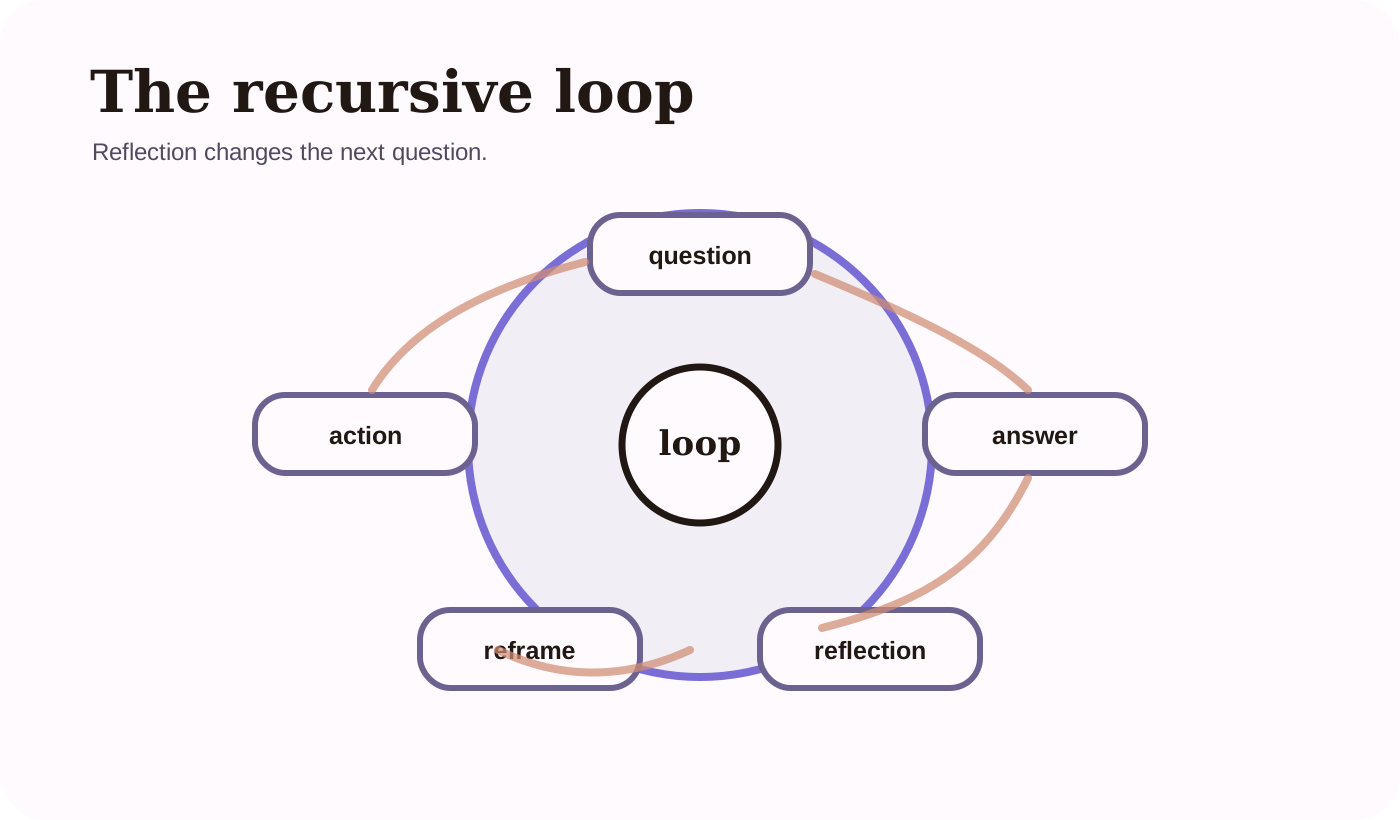
Figure 2: The loop becomes useful when reflection changes the next question.
The hidden frame
Most bad decisions begin inside an unnoticed frame. A founder asks how to grow faster when the real question is how to grow without breaking trust. A student asks how to finish homework when the real question is why the concept never landed. A leader asks how to persuade a team when the real question is whether the plan deserves belief.
Recursive thought helps reveal the frame. AI can ask what the prompt assumes, what options were excluded, whose perspective is missing, and what outcome is being protected. In this way, AI becomes less like an answer machine and more like a frame detector.
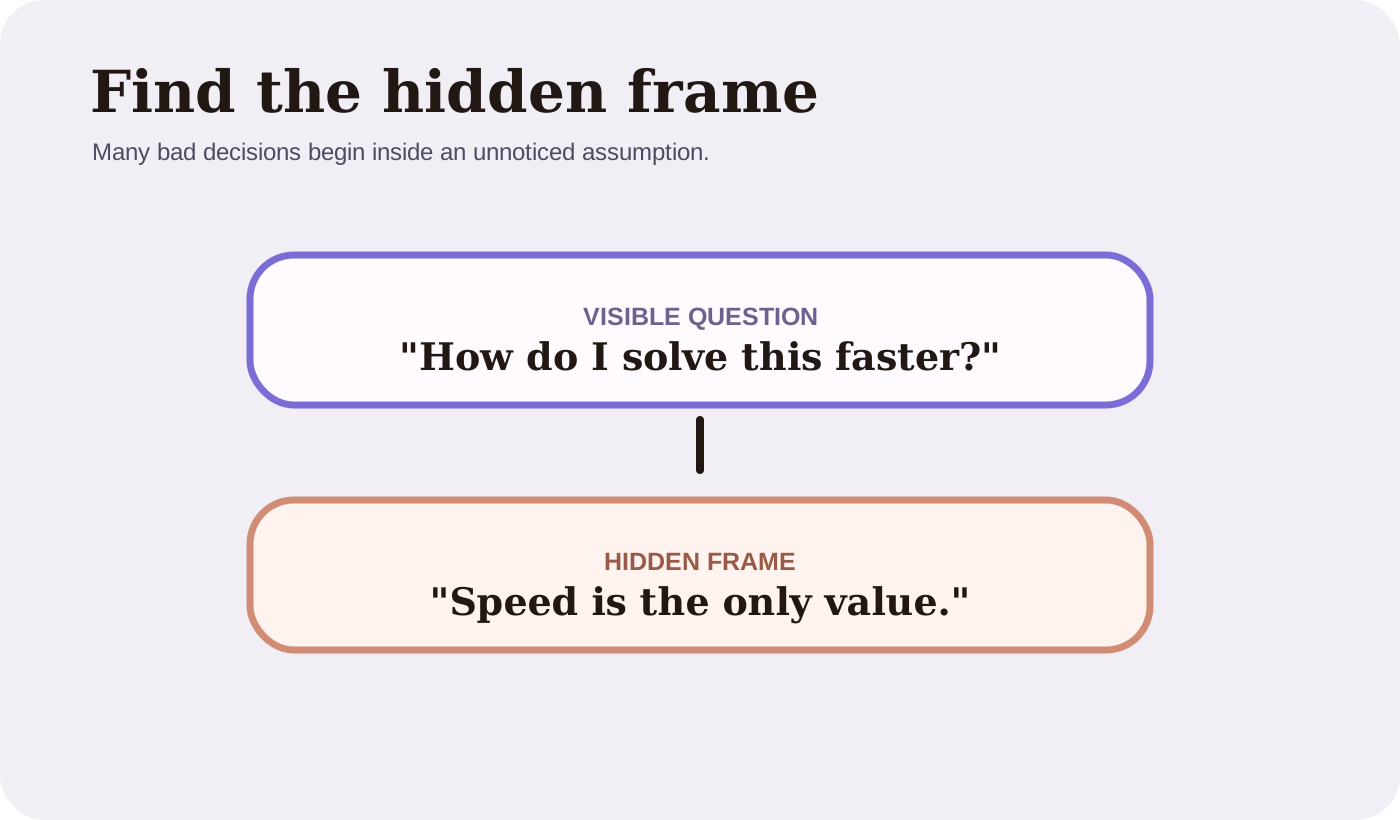
Figure 3: Better thinking often begins by seeing the frame that shaped the question.
The danger of endless loops
Recursion has a shadow. A person can keep asking, refining, comparing, and reflecting without ever choosing. The loop starts as clarity and becomes avoidance. Every answer creates another possible question. Every possible question creates another branch. The mind feels active while the body remains still.
AI can intensify this because it never gets tired of producing another angle. It can always generate a new analysis, a new plan, a new risk list, a new interpretation. For anxious people, this can feel like safety. But infinite reflection is not safety. Sometimes it is fear wearing intellectual clothes.
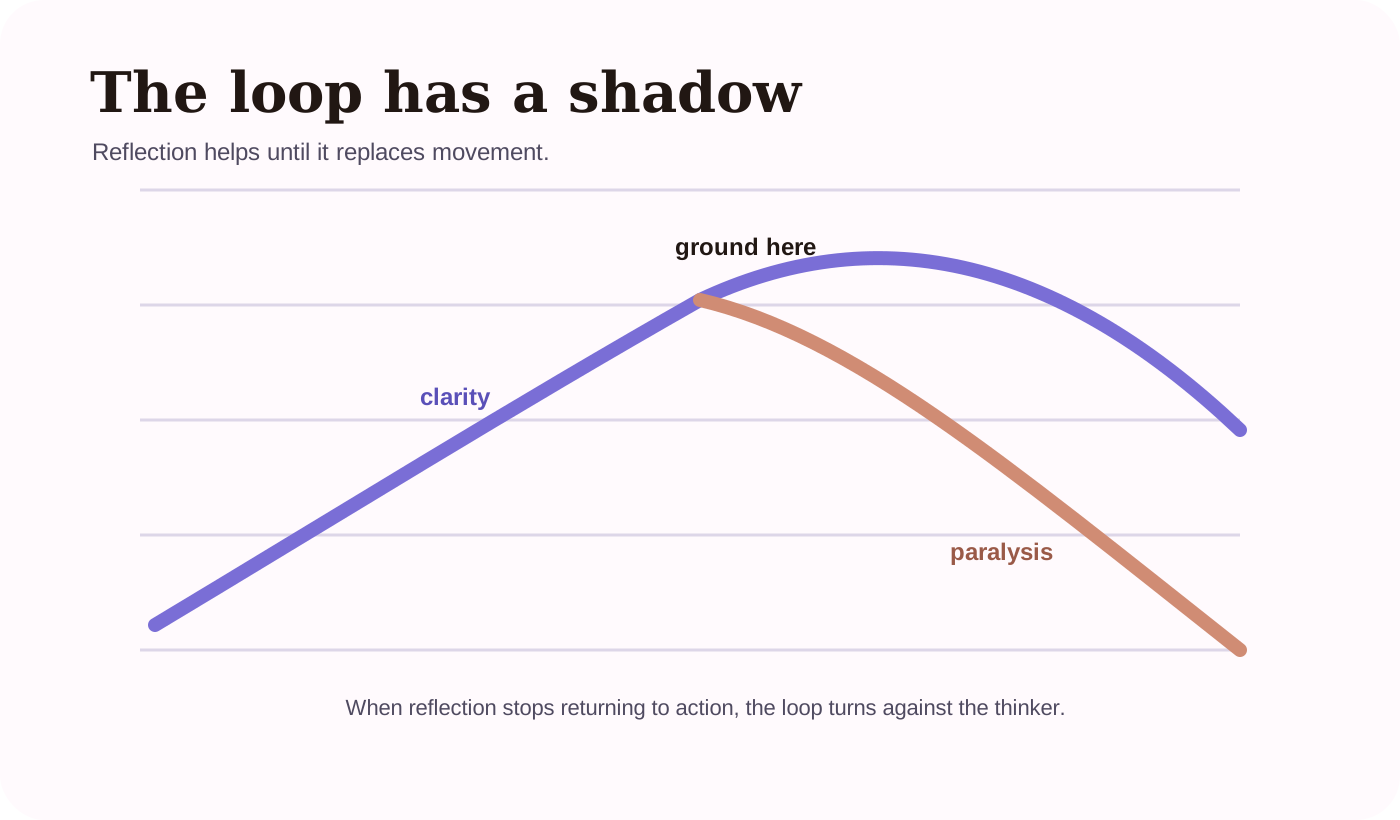
Figure 4: Reflection helps until it stops returning to movement.
Grounding the loop
The antidote is grounding. Recursive thought should return to the world: a decision, a conversation, a test, a draft, a pause, a boundary, a body signal, or a concrete next step. The loop needs a floor.
Grounding does not make thought shallow. It makes thought honest. If an idea never changes action, it may be decoration. If reflection never changes behavior, it may be performance. If strategy never touches reality, it may be anxiety management.
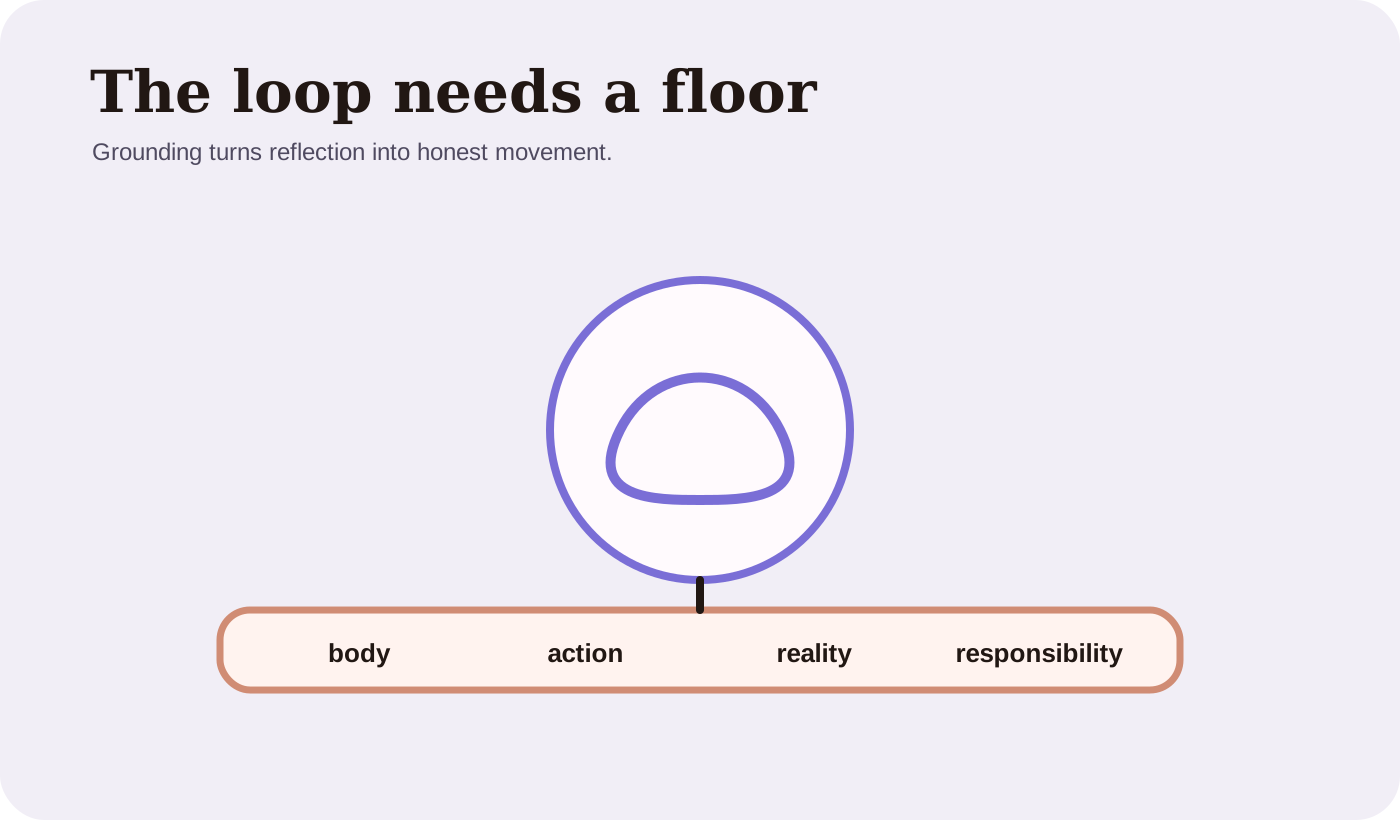
Figure 5: The loop needs a floor: body, action, reality, and responsibility.
A recursive thinking protocol
A good protocol has four movements. First, ask the visible question. Second, ask what frame produced it. Third, ask what would change if the frame were wrong. Fourth, decide the smallest grounded action that can test the better frame.
This keeps recursion alive without letting it become fog. It respects the intelligence of reflection while protecting the dignity of movement.
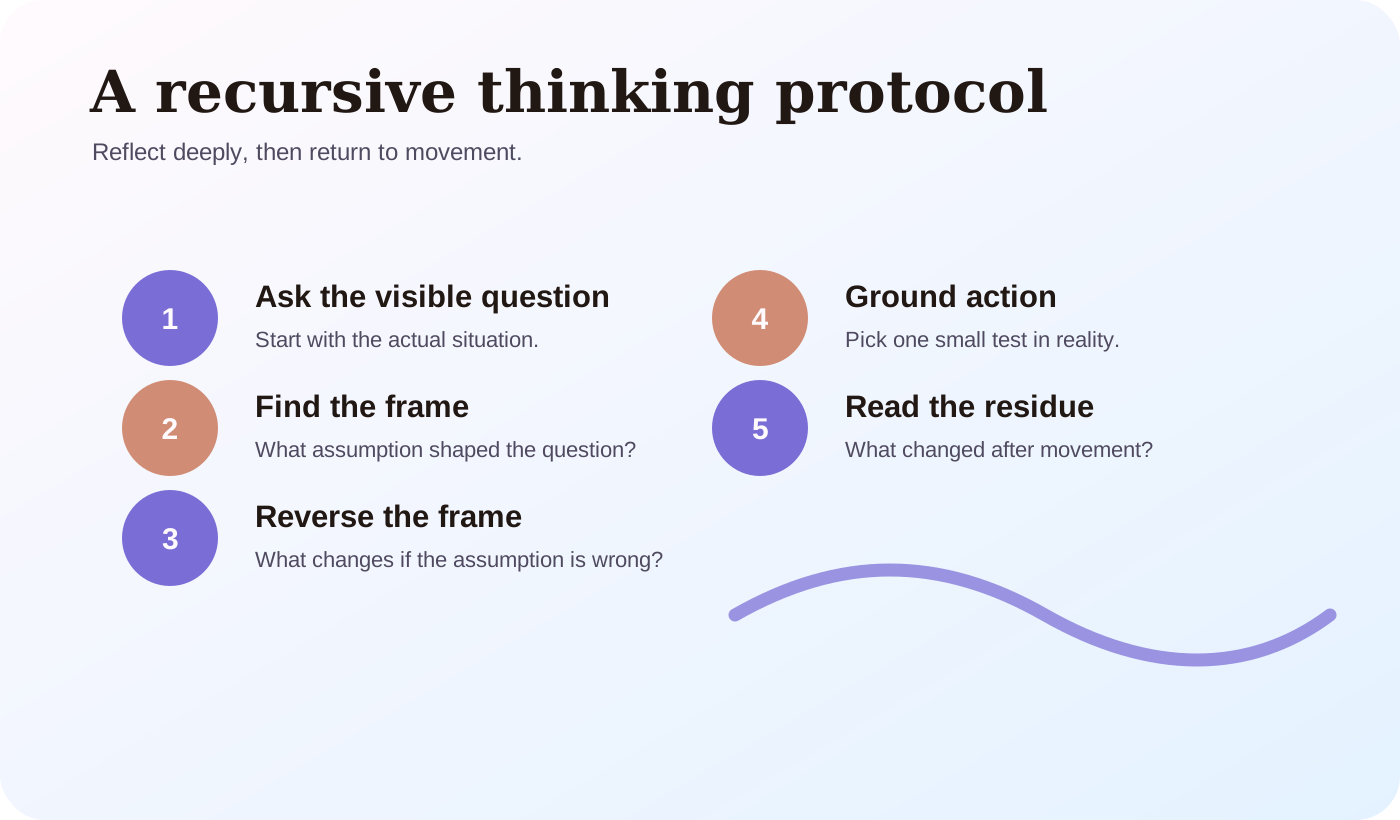
Figure 6: Recursive thought becomes wisdom when it returns as movement.
- Ask the visible question clearly.
- Ask what assumption, fear, or goal shaped the question.
- Ask what changes if the frame is wrong.
- Choose one small action that tests the revised frame.
- Record the residue: what changed after the action?
Why this matters for AI literacy
AI literacy must include loop literacy. Users need to know when they are deepening thought and when they are avoiding choice. Builders need to design systems that can help users close loops, not only open new ones.
The future of thinking will be layered. Humans will ask AI about their thoughts, feelings, decisions, conversations, identities, and systems. That can mature cognition if the loop stays connected to truth and responsibility. It can fragment cognition if the loop becomes endless output.
What to remember
Recursive thought is not the same as wisdom. Wisdom is recursive thought that returns to life with a cleaner next movement.
Related memories
- AI as Mirror
- The Collapse of Linear Knowledge
- The Psychology of Prompts
FAQ
What is recursive thought?
Recursive thought is thinking that reflects on its own assumptions, frames, reactions, and questions, then uses that reflection to revise the next movement.
How does AI change recursive thinking?
AI makes recursive thought faster and more visible by reflecting patterns, assumptions, alternatives, and hidden frames back to the user.
What is the risk of recursive thought?
The risk is endless analysis without grounded action. Reflection becomes unhealthy when it stops returning to decision, embodiment, and responsibility.