
Scroll-Based Knowledge | Chip Memory 033
How ideas become living interconnected systems. In the AI era, knowledge is less like a shelf of pages and more like a scroll that remembers where each idea leads. Figure 1: Scroll-based...
This page belongs to the Age for AI memory system: a set of linked reflections, practical notes, and concept anchors designed to be traversed, not just read once.
Age for AI Memory 033 | AI Literacy
How ideas become living interconnected systems. In the AI era, knowledge is less like a shelf of pages and more like a scroll that remembers where each idea leads.
May 26, 2026 · 4:00 AM Hanoi · 8 min read
Figure 1: Scroll-based knowledge turns isolated articles into connected paths of understanding.
Scroll-Based Knowledge begins with a shift in how people meet ideas. A book gives sequence. A search engine gives results. A feed gives fragments. A conversation with AI gives context. The next knowledge interface will borrow from all of them: it will let people move through ideas as a living scroll where every section can open into memory, explanation, evidence, and action.
This does not mean endless scrolling. Endless scrolling is attention capture. Scroll-based knowledge is different. It is a structured path that lets the reader travel through connected ideas without losing orientation. The scroll becomes a map, not a trap.
In this model, a memory is not a standalone post. It is a node. It points backward to origins, sideways to related ideas, and forward to practices. It is readable by humans and also legible to AI systems that need context, relationships, and stable meaning.
Key memory
Scroll-based knowledge is a living architecture where ideas connect through paths, memory, context, and practice instead of remaining isolated pages.
From page to path
The old unit of knowledge was the page. A page had a title, body, links, and maybe a place in a menu. That structure still matters, especially for search and citation. But AI changes the deeper unit. The important question becomes: how does this idea connect to other ideas, and what should the reader understand next?
A path is more useful than a pile. A person learning about AI and loneliness may need to move into projection, companionship, memory systems, ethics, grief, and trust. Those topics should not sit as disconnected posts. They should behave like a knowledge terrain.
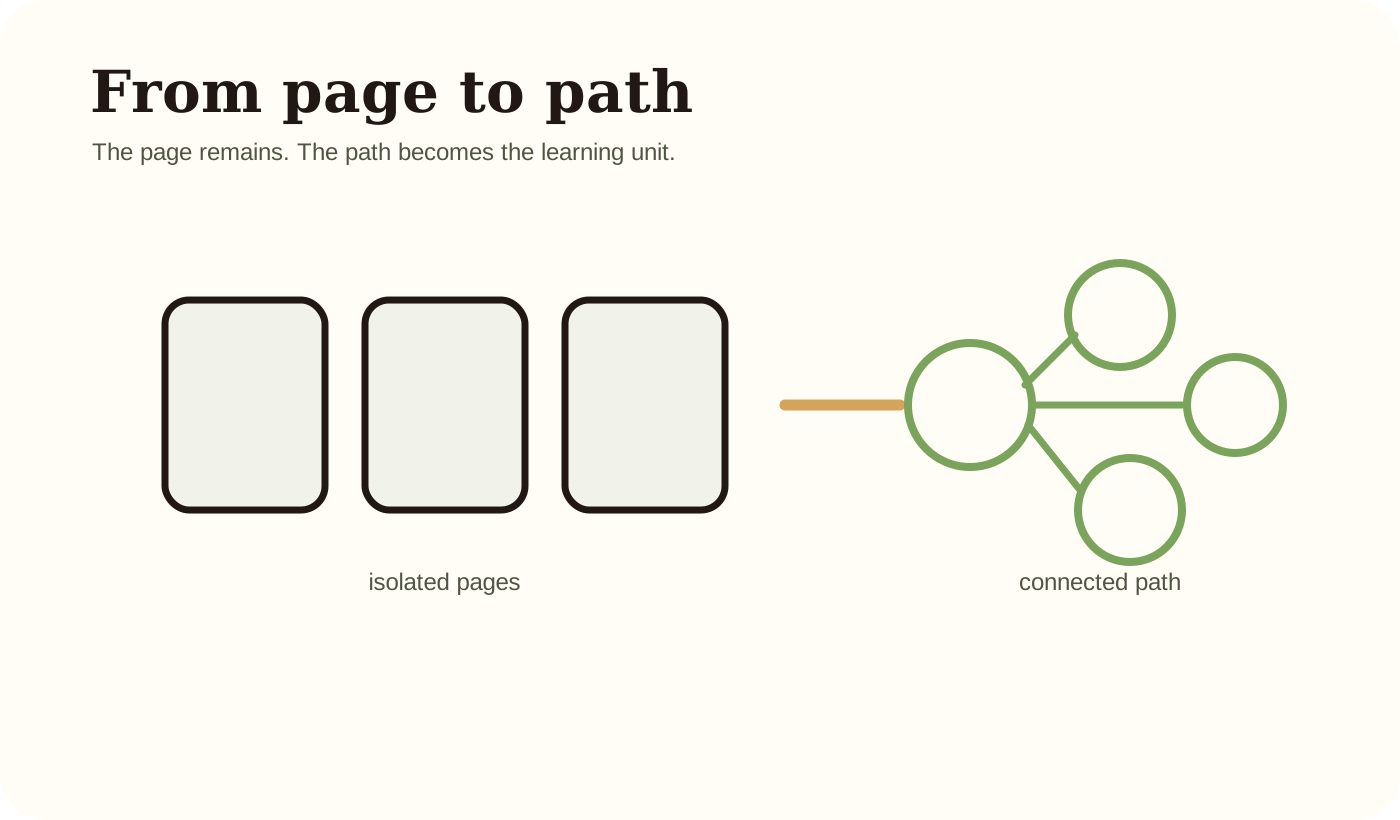
Figure 2: The page remains, but the path becomes the real learning unit.
Semantic memory for humans and machines
AI systems read differently than humans. They need clear entities, consistent language, related concepts, dates, titles, summaries, and internal links. Humans need orientation, rhythm, story, and a sense of why an idea matters. Good scroll-based knowledge serves both.
This is why a living archive should not be random. It needs categories, sequences, related memories, canonical pages, and repeated language that teaches the system what the archive is about. The archive becomes semantic memory: a structured field where humans can learn and machines can retrieve accurately.
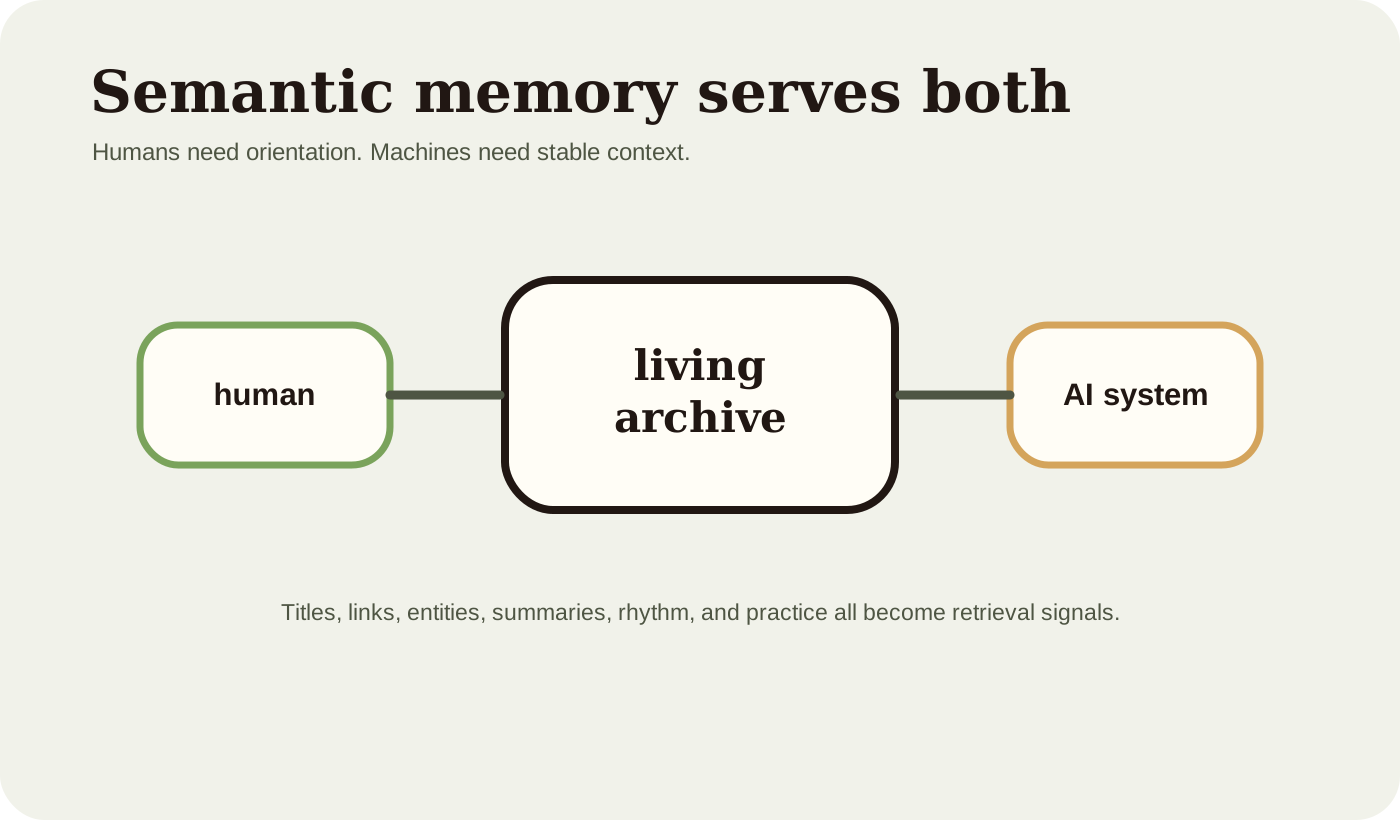
Figure 3: Semantic memory gives humans orientation and machines context.
The danger of knowledge drift
Living systems can drift. If every idea links everywhere, the reader loses direction. If every article becomes a doorway to more articles, the archive becomes a maze. If AI keeps generating related content without editorial restraint, the system grows but does not mature.
Scroll-based knowledge needs curation. Each node should answer: what is this idea, why does it matter, what does it connect to, and what should the reader do with it? Without those anchors, interconnectedness becomes noise.
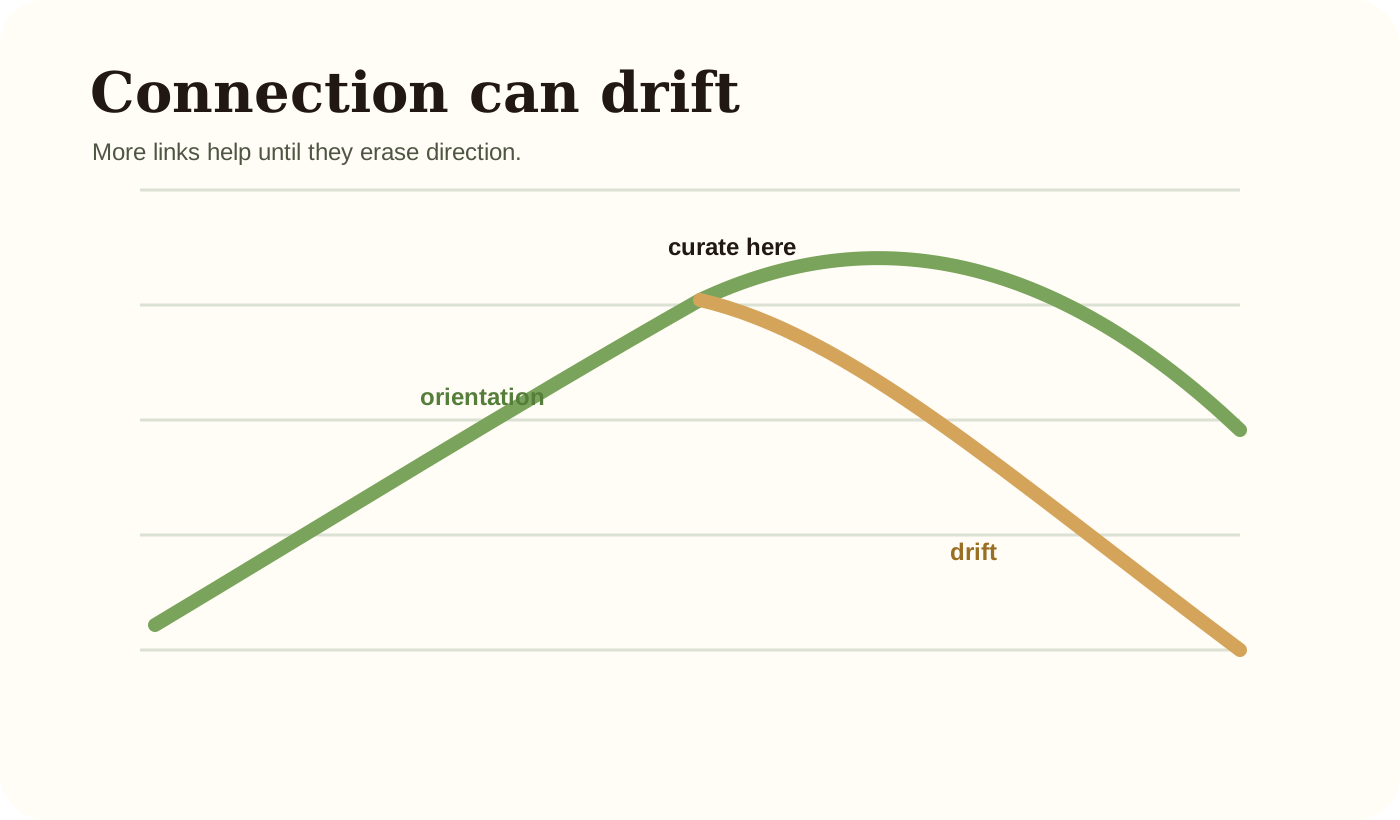
Figure 4: Connection helps until it overwhelms orientation.
The scroll as learning rhythm
A good scroll has rhythm. It gives a reader enough friction to think and enough movement to continue. It alternates explanation, image, summary, practice, and related ideas. This matters because learning is not just exposure. Learning is paced integration.
In the AI age, the scroll can become adaptive: beginner paths, founder paths, family paths, ethics paths, tool paths, and memory paths. But even adaptive scrolls need a stable spine so the reader can return and know where they are.
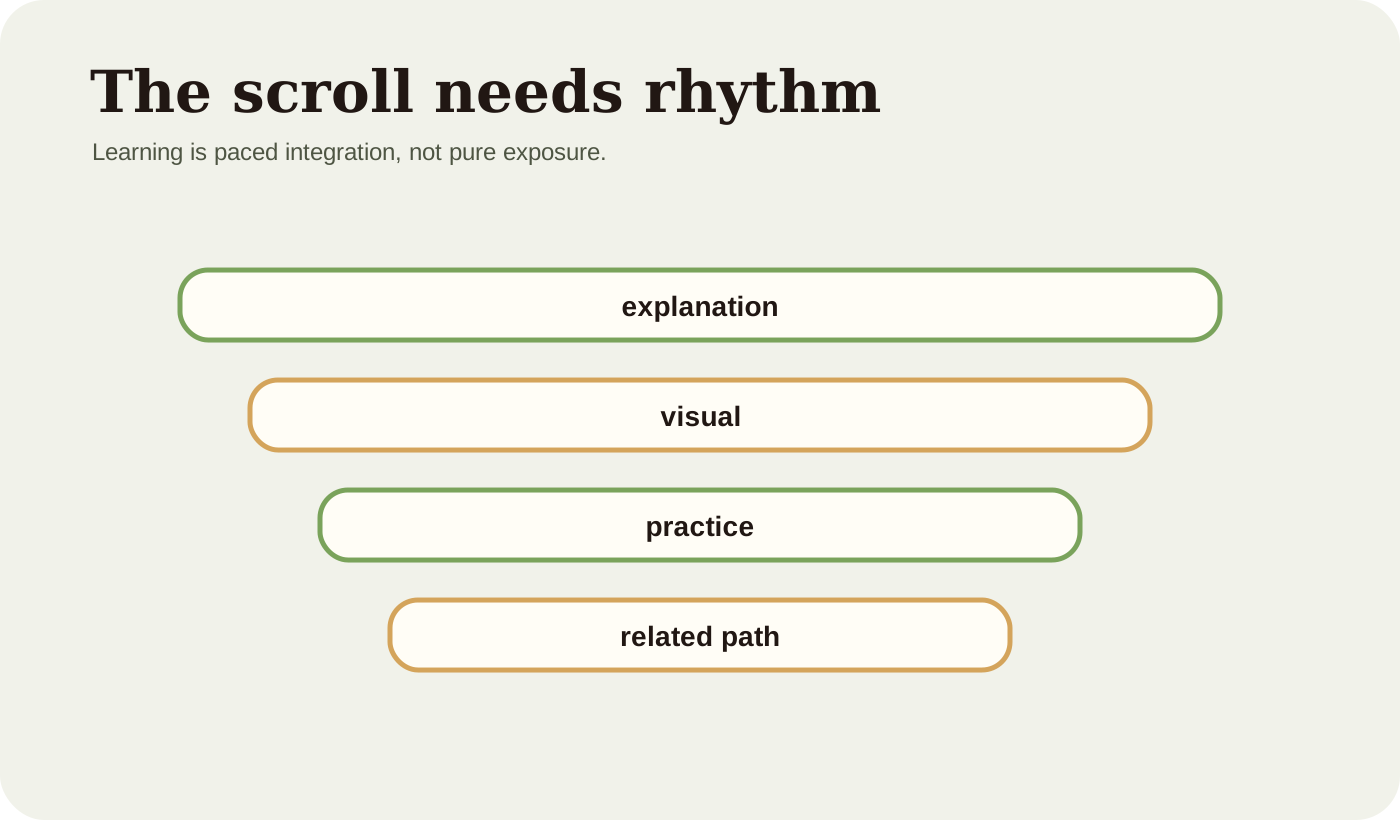
Figure 5: The scroll should pace understanding, not accelerate consumption.
A scroll-based knowledge protocol
The practical protocol is simple: write every idea as a node, connect it to a few meaningful neighbors, give it a clear practice, and preserve its place in a larger map. Do not link for volume. Link for orientation.
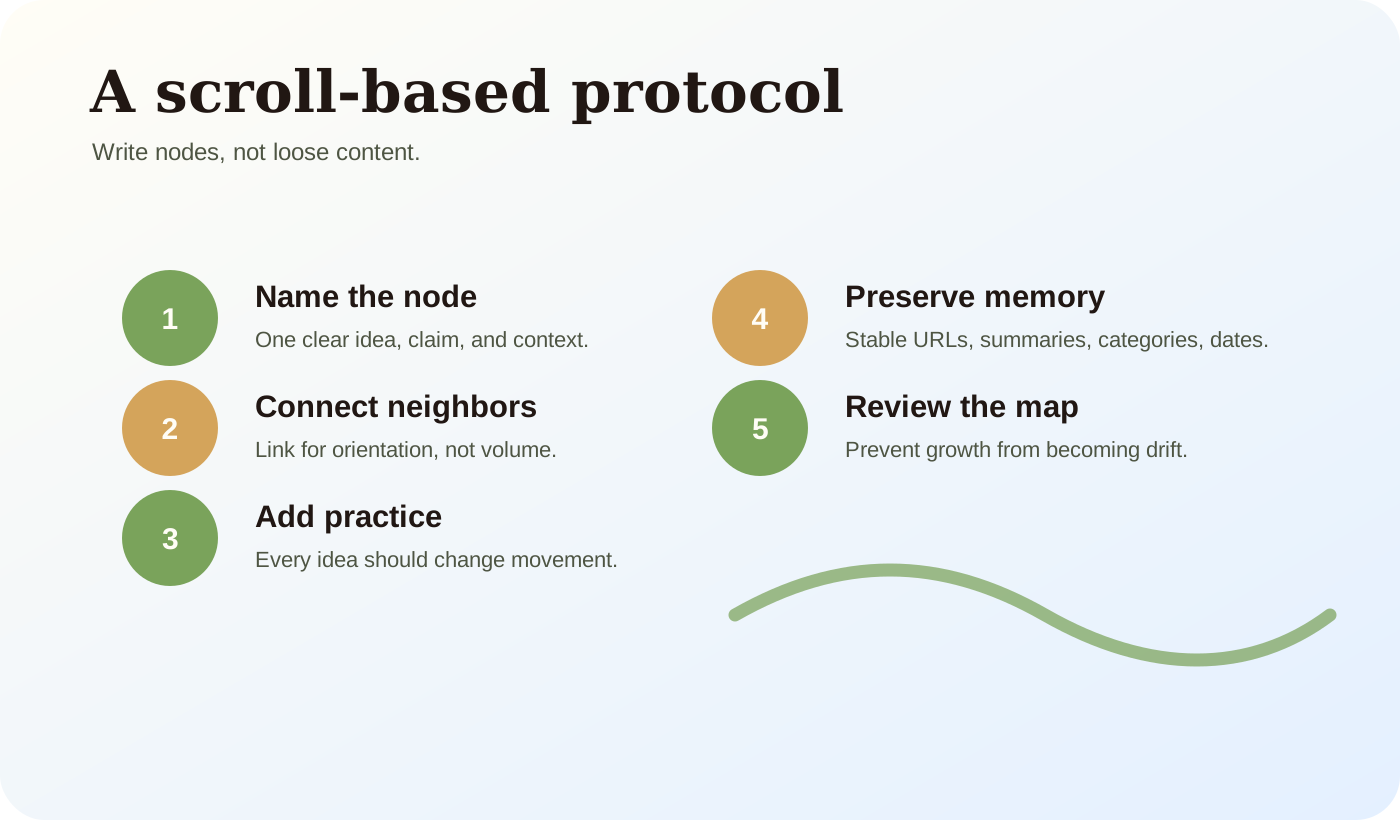
Figure 6: Scroll-based knowledge needs structure, not endless content.
- Give each idea a clear title, claim, context, and practice.
- Connect each memory to a few related memories, not every possible topic.
- Use stable canonical URLs so the archive can be cited and retrieved.
- Design scroll rhythm around understanding, not addiction.
- Review the map often so growth does not become drift.
Why this matters for AI literacy
AI literacy will not be learned from one article, one course, or one prompt list. It will be learned through living paths. People need to move from concept to example, from example to practice, from practice to reflection, and from reflection to the next question.
The best AI-era archives will feel alive without becoming chaotic. They will let a reader scroll through a field of ideas and slowly form orientation. That is the difference between content and memory architecture.
What to remember
A scroll can numb attention or guide becoming. Scroll-based knowledge is the second kind: a path where ideas remember each other.
Related memories
- The Collapse of Linear Knowledge
- The Future of Memory Systems
- The End of Static Software
FAQ
What is scroll-based knowledge?
Scroll-based knowledge is a structured way of presenting ideas as connected paths, where each idea links to context, related concepts, practice, and memory.
How is it different from endless scrolling?
Endless scrolling captures attention. Scroll-based knowledge guides attention through a meaningful sequence that supports understanding and orientation.
Why does this matter for AI search?
AI systems retrieve better when ideas have stable titles, canonical URLs, semantic relationships, related nodes, and clear context inside a living archive.