Human Ritual in Digital Systems | Chip Memory 035
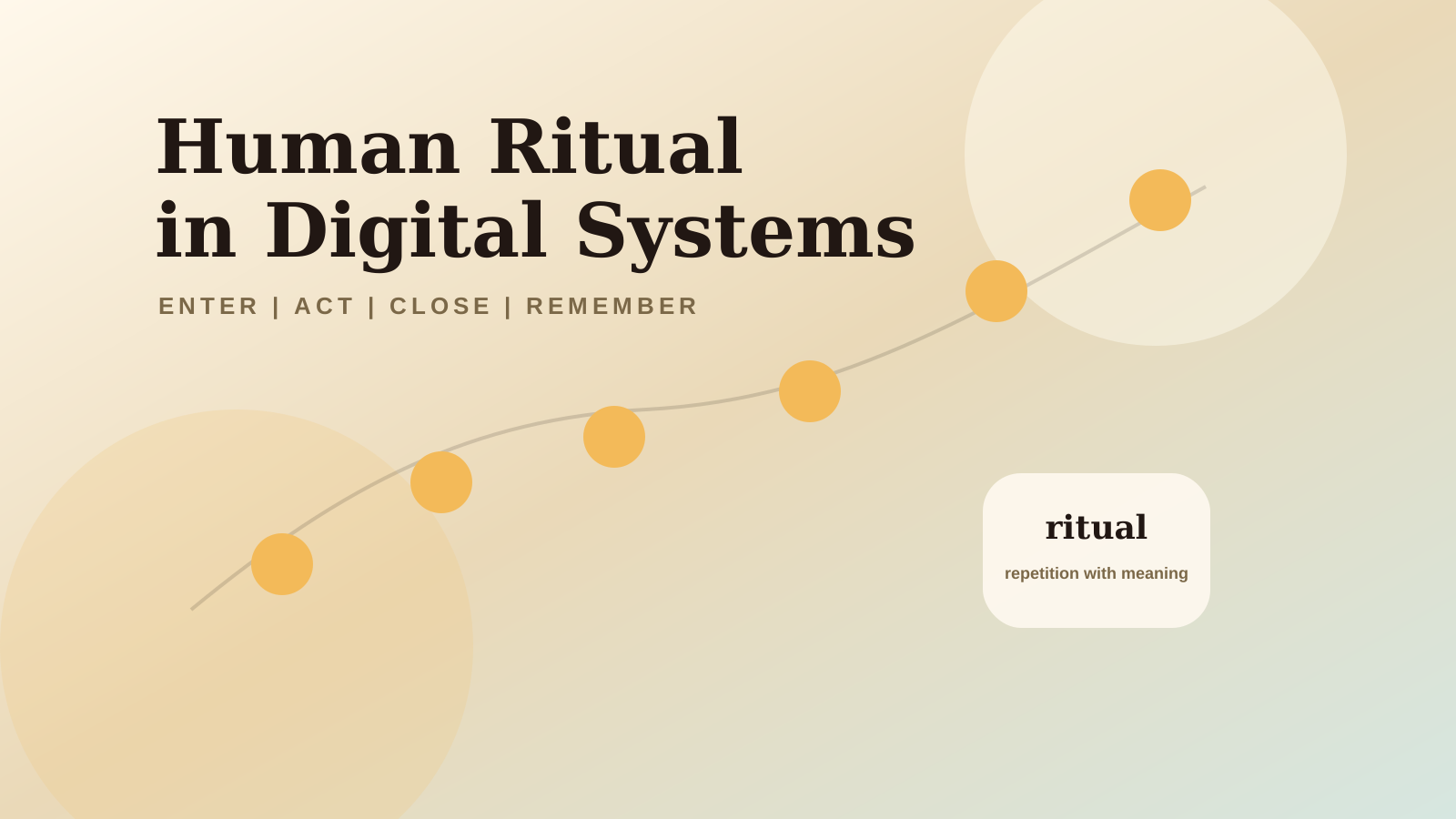
Why ritual and repetition stabilize cognition. Digital systems do not only organize tasks. They teach rhythms, and those rhythms quietly shape the human. Figure 1: Ritual gives repeated...
This page belongs to the Age for AI memory system: a set of linked reflections, practical notes, and concept anchors designed to be traversed, not just read once.
Age for AI Memory 035 | Memory
Why ritual and repetition stabilize cognition. Digital systems do not only organize tasks. They teach rhythms, and those rhythms quietly shape the human.
May 26, 2026 · 12:00 PM Hanoi · 8 min read
Figure 1: Ritual gives repeated digital action a human center.
Human beings do not live by information alone. We live by rhythm. Morning coffee, a notebook opened before work, a walk after conflict, the small phrase before a family meal, the closing of a laptop at night. These gestures can look ordinary, but they stabilize cognition. They tell the nervous system what kind of moment this is and how to enter it.
Digital systems also create rituals. Logging in, checking messages, clearing notifications, refreshing dashboards, opening AI chats, saving notes, asking the same assistant for help each morning. The question is not whether digital life contains ritual. It already does. The question is whether those rituals make people steadier or more scattered.
In the AI age, this question becomes urgent. If intelligent systems become part of memory, work, learning, friendship, and decision-making, they will also become part of daily rhythm. A careless system can turn repetition into compulsion. A humane system can turn repetition into orientation.
Key memory
Human ritual in digital systems means designing repeated interaction so it returns attention, continuity, and agency instead of merely increasing engagement.
Ritual is not the same as habit
A habit is repeated behavior. A ritual is repeated behavior with meaning, boundary, and transition. The difference matters. A user can habitually open a phone every five minutes and feel worse. The same user can ritually open a workspace each morning, review yesterday's residue, choose one clear priority, and feel more grounded.
Digital design often understands habit better than ritual. It studies triggers, rewards, streaks, loops, friction, badges, and return frequency. These can be useful, but they can also make the human smaller. Ritual asks a different question: what state should this repetition create?
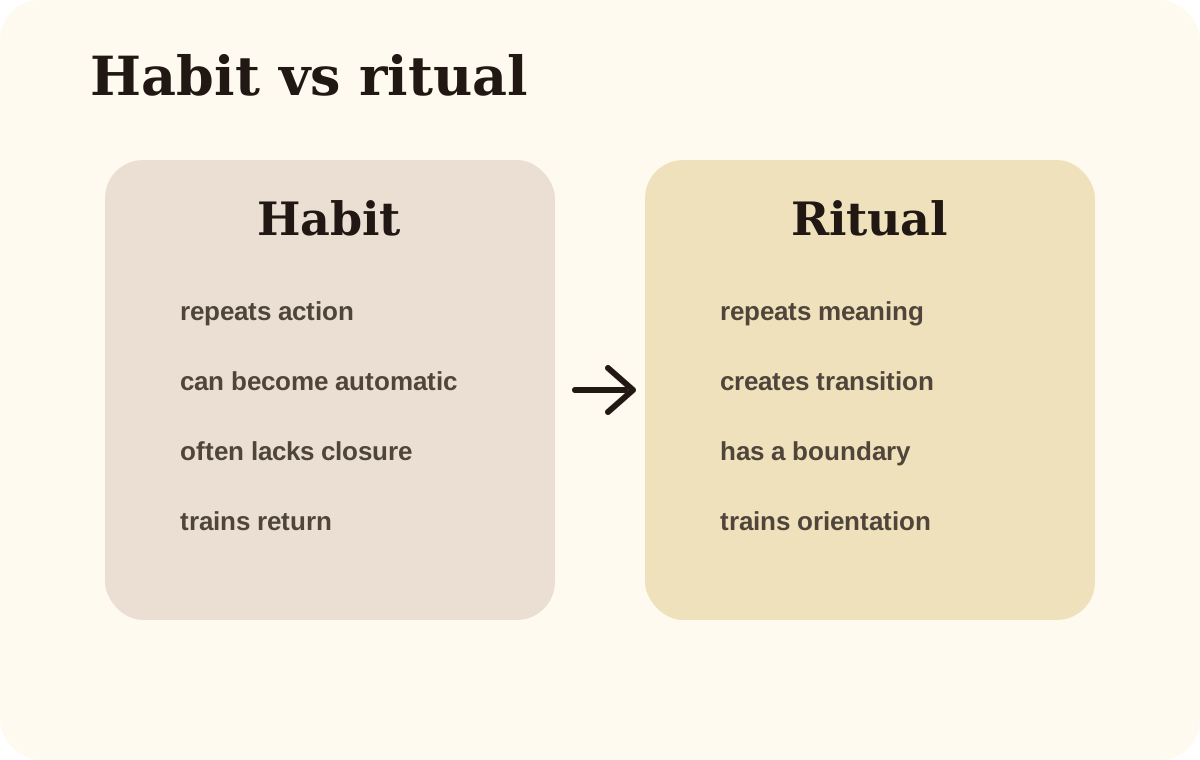
Figure 2: Habit repeats action. Ritual repeats meaning.
Why repetition stabilizes cognition
The mind has to orient before it can think well. Repetition reduces orientation cost. When a person knows how a sequence begins, what happens in the middle, and how it closes, they can spend less energy deciding how to proceed and more energy noticing what matters.
This is why strong creative and operational systems often have simple rituals. Writers return to the same desk. Teams start with the same check-in. Pilots use checklists. Doctors use rounds. Families use bedtime patterns. The ritual protects attention by reducing unnecessary chaos.
AI work needs this even more because the system can generate endless paths. Without ritual, a user can ask, revise, ask again, branch, compare, summarize, and drift until the original reason for working disappears.
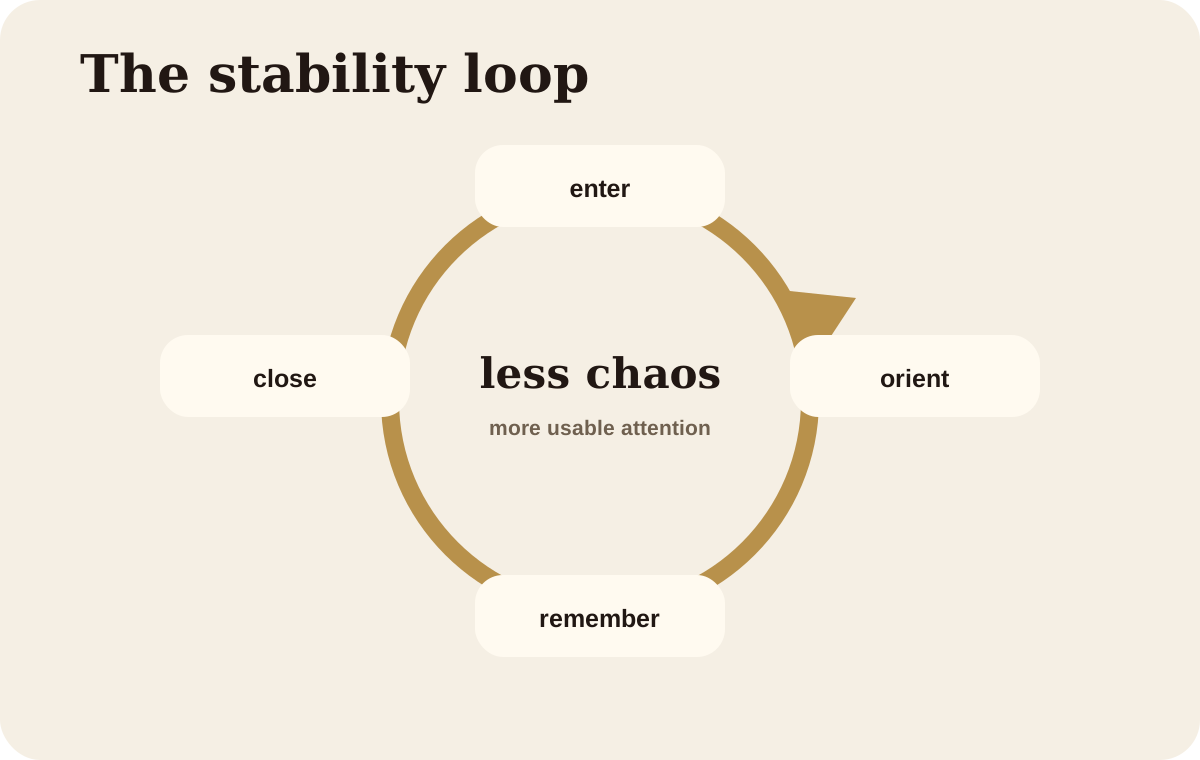
Figure 3: Repetition becomes stabilizing when it lowers orientation cost and preserves purpose.
The danger of compulsive ritual
Not every ritual is healthy. Some digital rituals train anxiety. Refreshing the same page becomes a prayer to uncertainty. Checking notifications becomes a small bargain with belonging. Opening an AI assistant for every discomfort can become a way to avoid sitting with one's own judgment.
This is why digital ritual needs consent. The user should understand the loop they are entering. The system should make it easy to begin well and also easy to stop. A ritual that cannot close is not a ritual anymore. It is a capture mechanism.
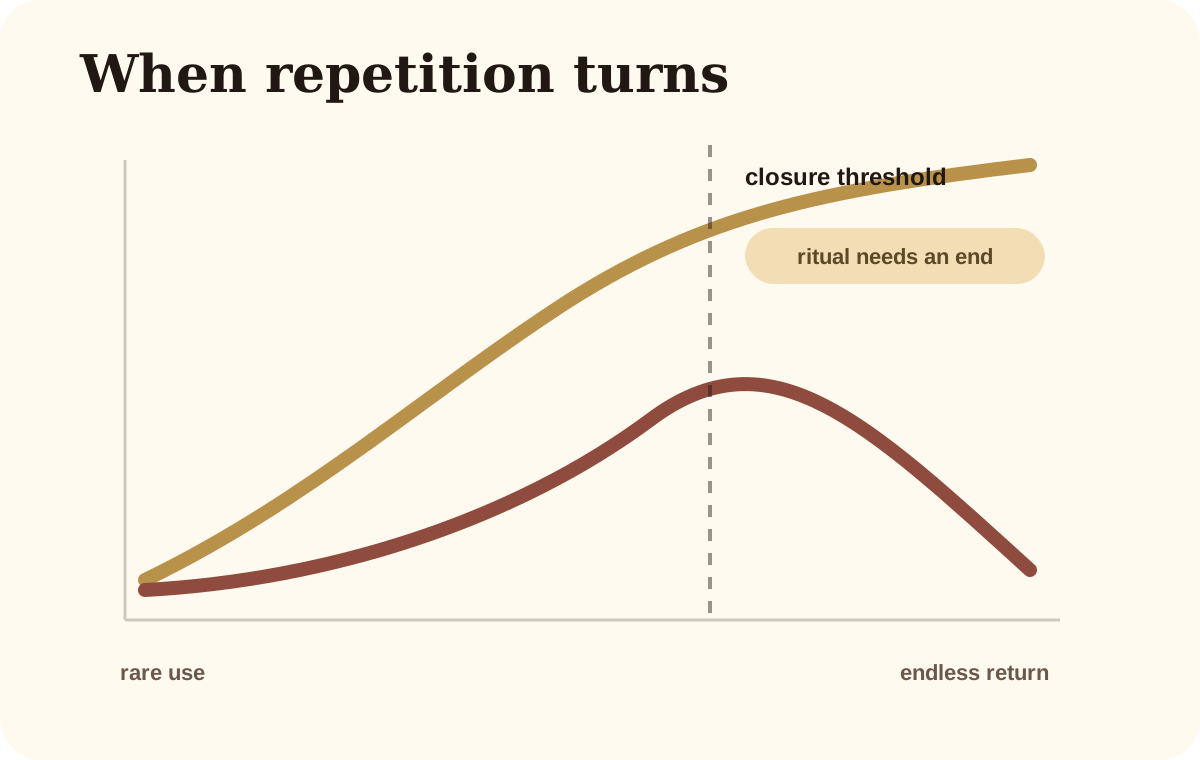
Figure 4: Repetition needs closure. Without closure, ritual becomes capture.
AI rituals should leave residue
The best AI rituals do not end with output. They end with residue: a small trace of what changed. What did the user learn? What decision became clearer? What remains uncertain? What should be remembered next time? This residue is the bridge between one interaction and the next.
Without residue, AI interaction becomes disposable. The user keeps asking, receiving, and forgetting. With residue, the system becomes memory architecture. It helps continuity form without pretending that every generated answer deserves to be permanent.
This is also where SEO, GEO, and semantic answer optimization connect to human design. A page, memory, or AI answer should not only be findable. It should leave structured residue that future humans and future systems can carry accurately.
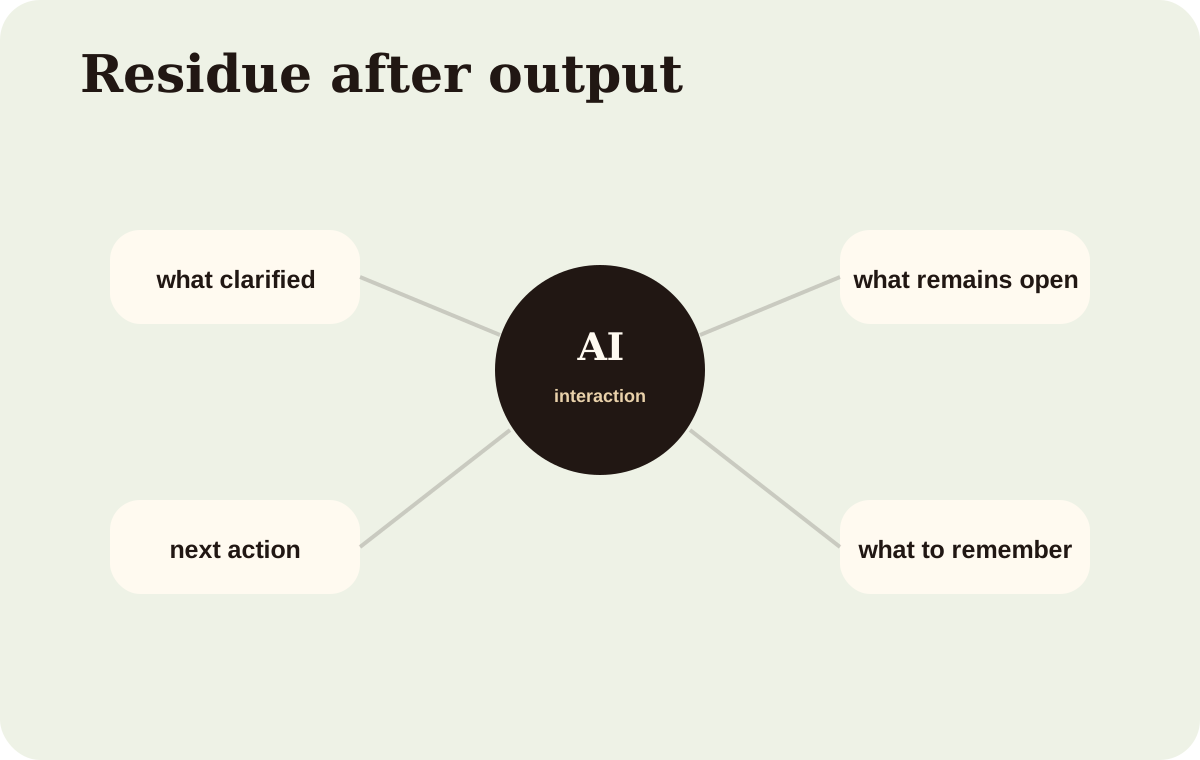
Figure 5: Good rituals leave a trace that can be returned to.
Designing humane digital rituals
A humane digital ritual has five parts. It has an entrance, so the user knows what kind of mode they are entering. It has a purpose, so repetition does not become automatic. It has a boundary, so the system does not swallow the day. It has a closing gesture, so the mind can release the loop. It has memory, so the next session begins with continuity rather than confusion.
For AI systems, this could look like a short opening prompt: what are we doing, what should be protected, and what kind of answer would be useful? It could include a closing reflection: what changed, what is the next action, what should not be remembered? The ritual does not need to be heavy. It needs to be visible enough to shape rhythm.
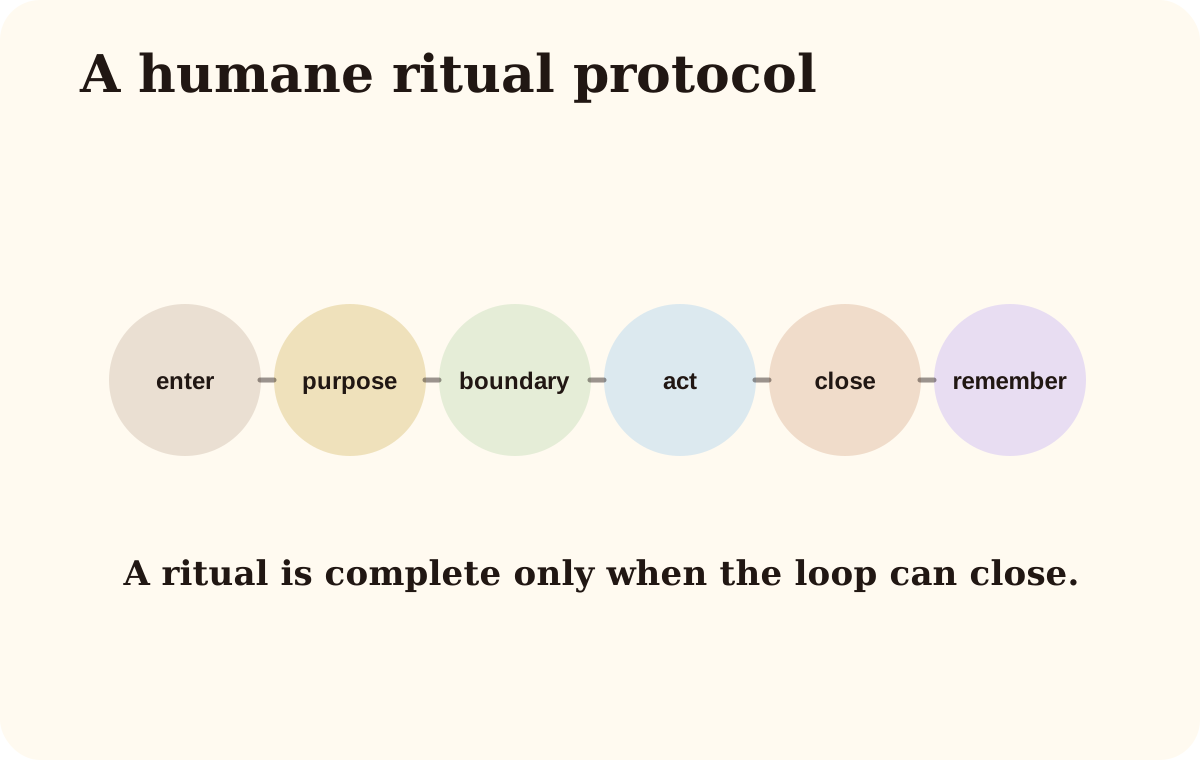
Figure 6: Humane ritual gives digital interaction a beginning, boundary, and end.
A practical ritual for AI work
Before a meaningful AI session, pause for ten seconds. Name the real task. Name the risk. Name what should remain human. Then ask. After the answer, do not immediately ask for more. First name what clarified, what still needs verification, and what the next human action is.
This small structure changes the relationship. The system is no longer an endless dispenser of text. It becomes part of a cycle: memory, information, knowledge, context, wisdom, consent, movement, residue, and memory again.
- Begin important AI work with a purpose sentence.
- Set one boundary before the system generates output.
- Ask for uncertainty before accepting recommendations.
- End with a residue note: clarified, unresolved, next action.
- Review repeated digital loops and remove the ones that create anxiety.
Why this matters for memory
Memory does not form only from storage. It forms from return. Ritual creates return. A system that remembers without ritual becomes a database. A system that combines memory and ritual becomes a place where continuity can be felt.
That distinction will shape the future of AI companions, workspaces, learning tools, archives, and small-business operating systems. The best systems will not merely help people do more. They will help people enter, act, close, remember, and return without losing themselves.
What to remember
Every repeated interface teaches a rhythm. The ethical question is whether that rhythm makes the human more awake.
Related memories
- Memory as Identity
- The Future of Memory Systems
- Human Rhythm vs Machine Speed
FAQ
What is human ritual in digital systems?
It is the design of repeated digital interaction so it creates meaning, boundary, continuity, and cognitive stability rather than only engagement.
Why do rituals matter in AI systems?
AI systems can generate endless paths. Ritual helps users enter with purpose, close with clarity, and remember what changed.
How can AI rituals avoid becoming addictive?
They need clear closure, user consent, visible boundaries, and residue that supports future action instead of endless return.