The Future of Thinking | Chip Memory 040
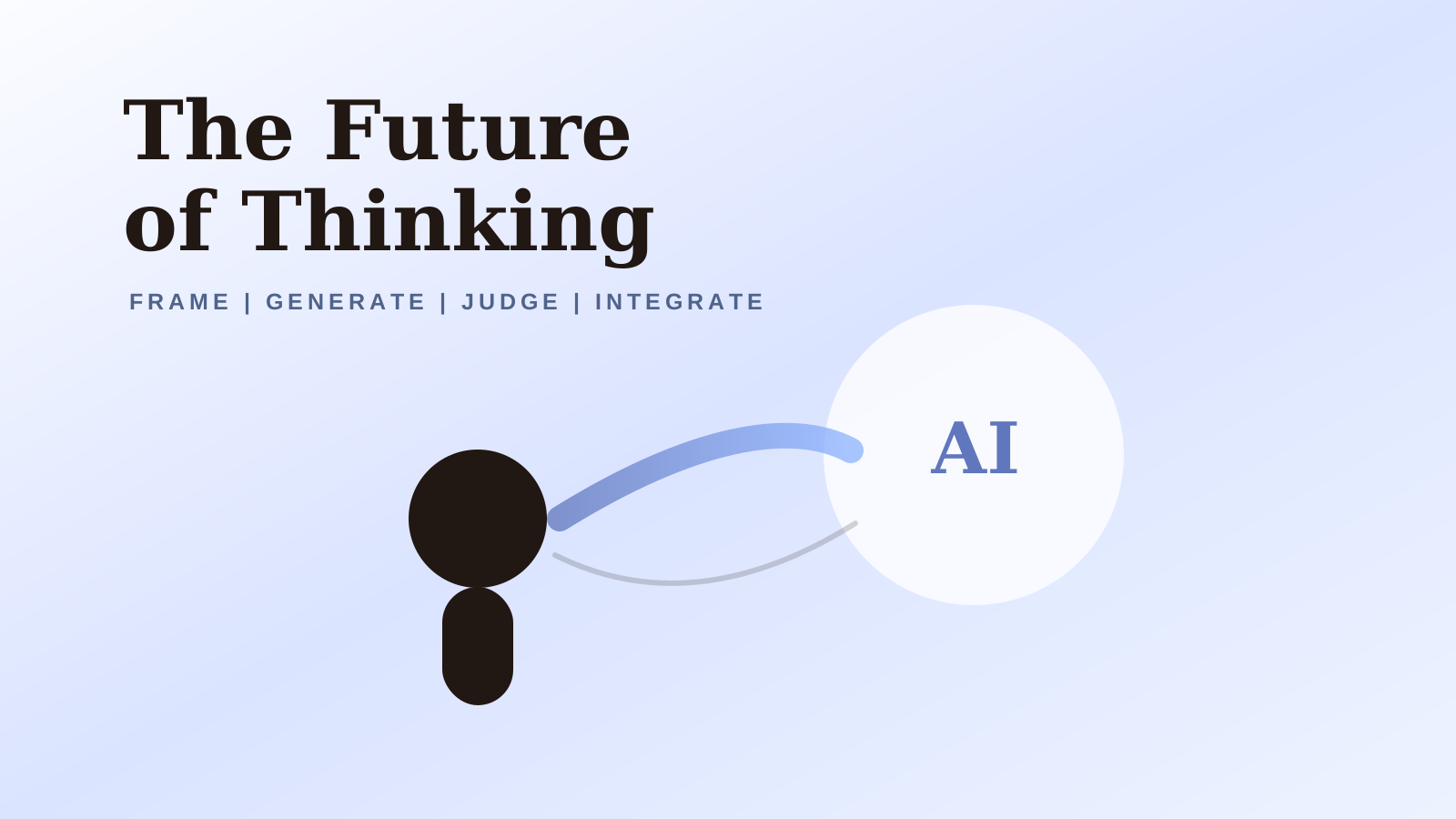
Why external cognition changes internal cognition. When thought moves into tools, the human mind does not stay the same. Figure 1: The future of thinking is not human mind versus machine...
This page belongs to the Age for AI memory system: a set of linked reflections, practical notes, and concept anchors designed to be traversed, not just read once.
Age for AI Memory 040 | AI Thinking
Why external cognition changes internal cognition. When thought moves into tools, the human mind does not stay the same.
May 27, 2026 · 8:00 AM Hanoi · 9 min read
Figure 1: The future of thinking is not human mind versus machine mind, but a new loop between them.
The future of thinking begins with a simple observation: humans have always thought with things outside the skull. We think with language, paper, maps, rituals, clocks, diagrams, libraries, calculators, friends, and institutions. External cognition is not new. What is new is that the external tool now responds, predicts, remembers, summarizes, drafts, challenges, and sometimes appears to reason with us.
That changes the human mind. Not because AI magically replaces thinking, but because every thinking tool trains a pattern. A notebook trains reflection. A search engine trains query behavior. A feed trains reaction. A calendar trains time awareness. AI trains conversational cognition: asking, receiving, revising, delegating, comparing, and returning.
The question is whether this loop makes people more thoughtful or more dependent. External cognition can strengthen internal cognition when it gives structure, friction, and reflection. It can weaken internal cognition when it removes struggle, authorship, and memory too quickly.
Key memory
The future of thinking is a loop between internal judgment and external intelligence. The human must not only get answers from the loop, but become more capable because of it.
External cognition has always shaped us
Writing changed memory. Maps changed navigation. Clocks changed time. Search changed curiosity. Social media changed attention. None of these tools merely helped humans do the same thinking faster. They changed the shape of thinking itself.
AI will do the same. It will change how people begin questions, how they tolerate uncertainty, how they draft ideas, how they remember conversations, and how they decide what counts as enough understanding. If the tool is always available, the mind may reach outward earlier. That can be good when the outward reach becomes dialogue. It can be dangerous when the outward reach replaces the first act of internal effort.
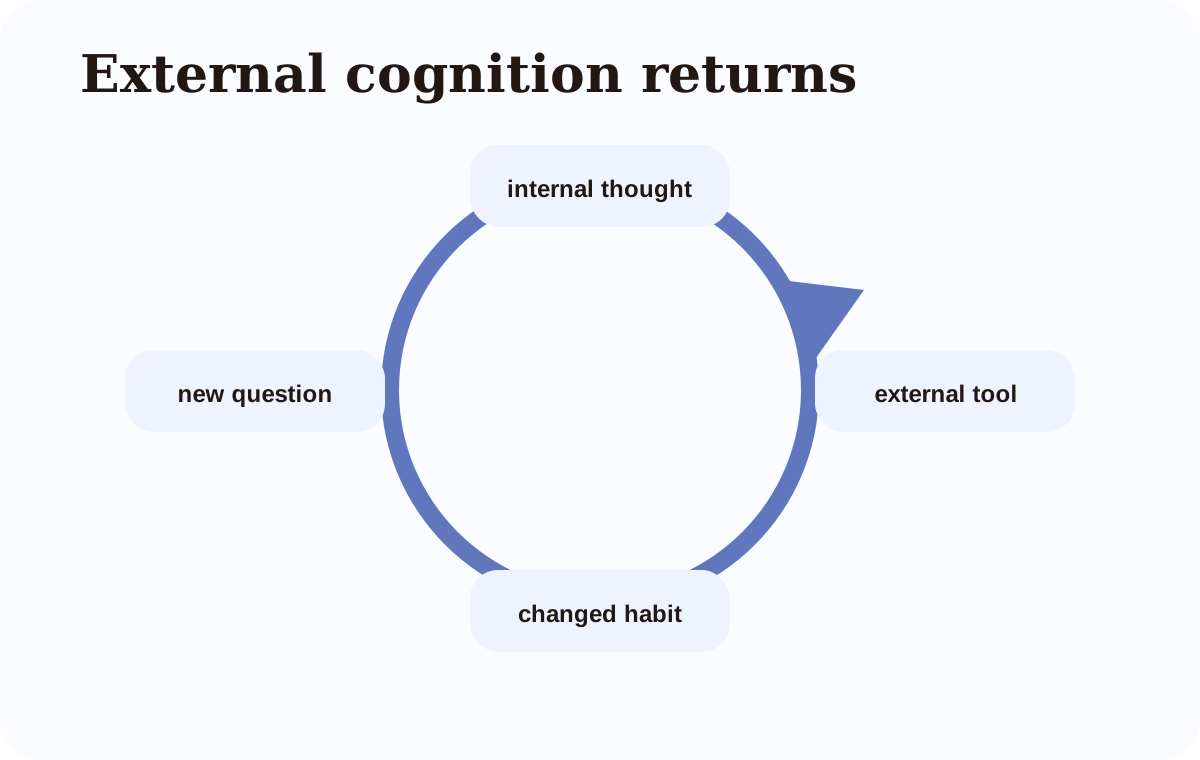
Figure 2: Every external thinking tool returns a different rhythm to the human mind.
The new thinking loop
AI creates a loop with four movements: frame, generate, judge, integrate. The human frames the question. The system generates possibilities. The human judges what matters. Then the result is integrated into memory, action, or identity. The danger is skipping the third and fourth movements.
If users frame poorly and judge weakly, AI becomes a fluency machine. If users frame carefully and judge actively, AI becomes a thinking amplifier. The difference is not only the model. It is the quality of the human loop around the model.
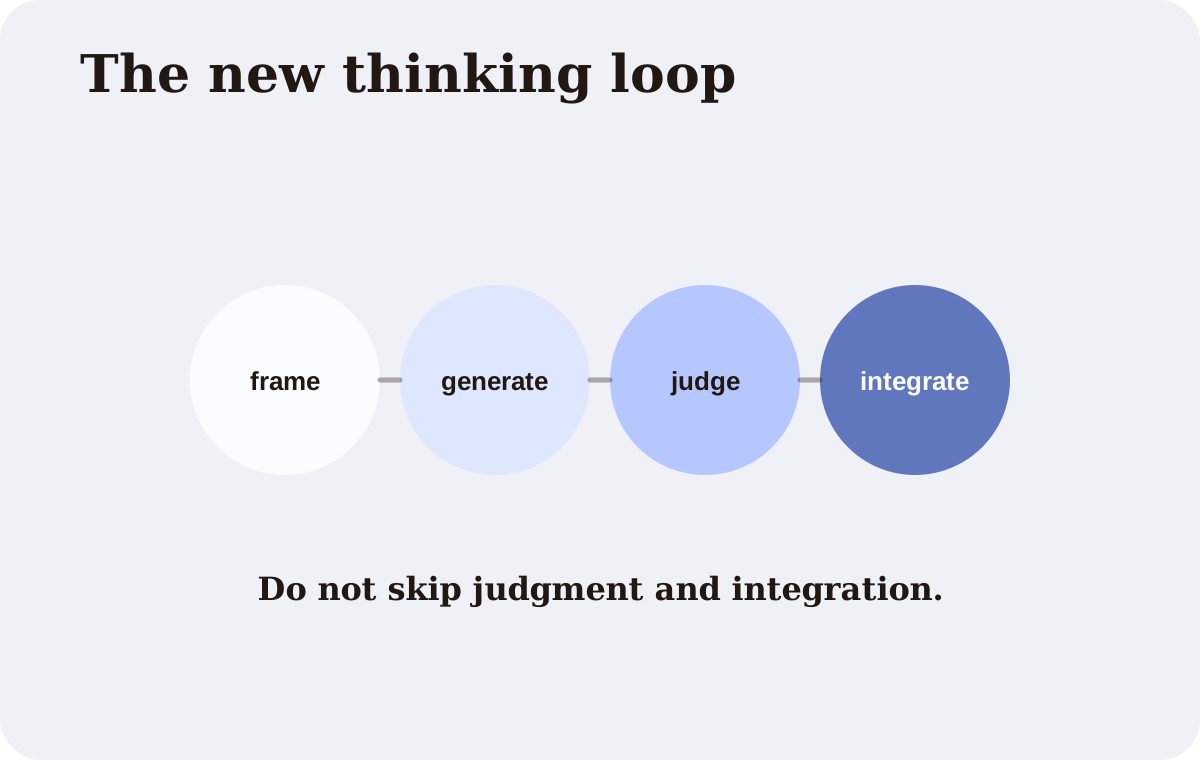
Figure 3: The human must remain strongest at framing, judging, and integrating.
Cognitive delegation has a cost
Delegation is not wrong. Humans delegate all the time. We delegate memory to calendars, arithmetic to calculators, routing to maps, and coordination to software. But every delegation asks a price: what skill becomes weaker if it is never practiced?
With AI, the delegated layer can be high: writing, strategy, interpretation, persuasion, planning, empathy rehearsal, and moral framing. That means the cost can also be high. A person may produce more while reflecting less. A team may move faster while understanding less. A culture may generate opinions faster than it develops wisdom.
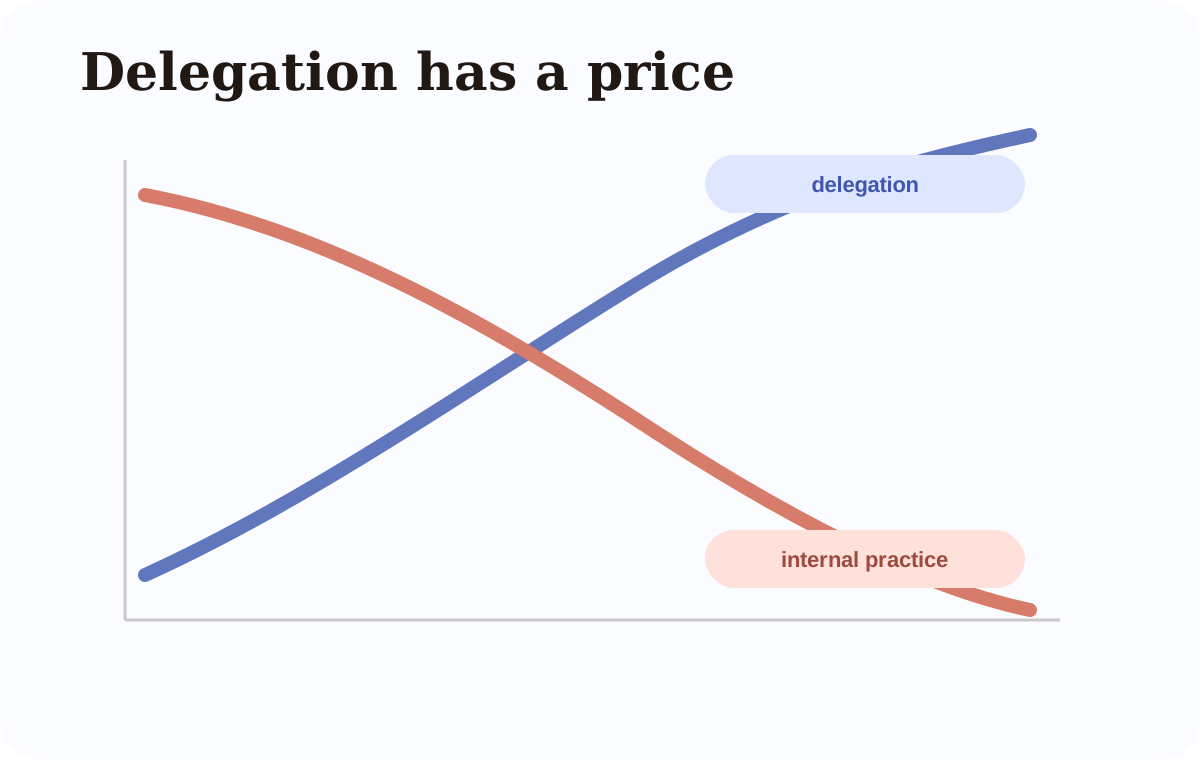
Figure 4: Delegation is healthy when it preserves practice where practice matters.
Internal cognition still needs friction
Thinking requires friction. Not constant struggle, but enough resistance to form structure inside the person. If AI removes all friction, the user may receive polished outputs without building durable understanding. The answer arrives, but the mind does not change.
A healthier system gives selective friction. It asks the user to choose between tradeoffs, explain a preference, verify a claim, or summarize the decision in their own words. These small moments keep cognition alive. They turn output into learning.
This is why SEO, GEO, and semantic answer optimization should not produce pages that only answer. The best AI-era knowledge pages should help readers practice thinking: compare, question, apply, remember, and decide.
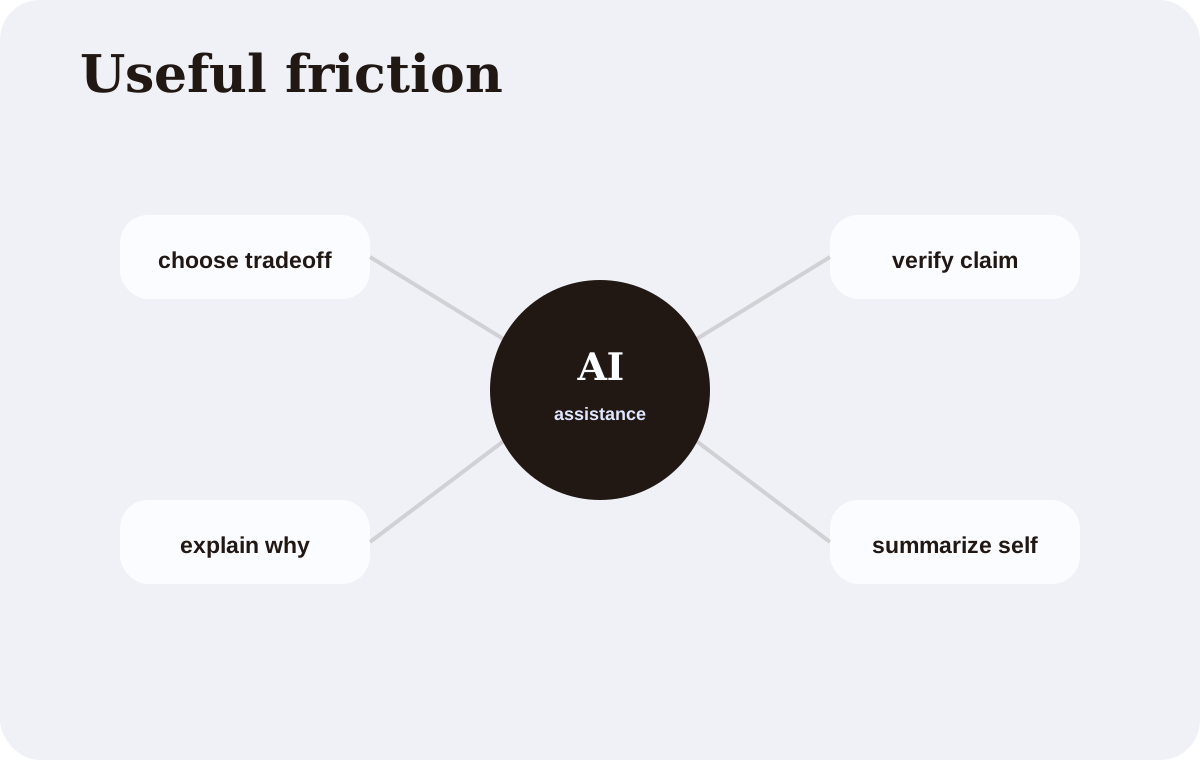
Figure 5: Useful friction makes AI assistance become human understanding.
A practical thinking protocol
Before asking AI for an answer, write your own first version. It can be rough. Then ask AI to challenge it, expand it, or show alternatives. After receiving output, do not copy it directly. Choose what you accept, reject, and revise. Close the loop by naming what changed in your own thinking.
This protocol is slow enough to preserve authorship and fast enough to be usable. It turns AI into a thinking partner without letting it become a thinking substitute.
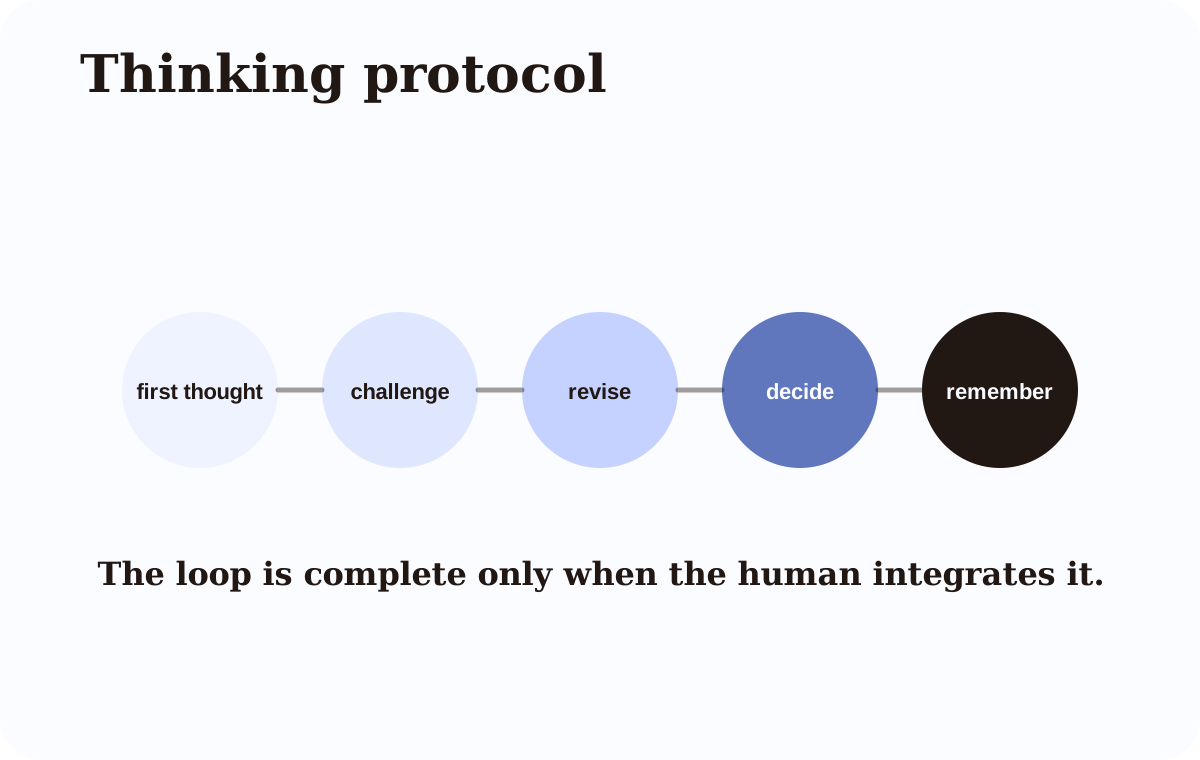
Figure 6: The future of thinking needs a closing step where the human integrates the work.
How to practice it
Use AI to widen thought, not erase it. Ask for counterarguments. Ask what would change the conclusion. Ask for missing context. Ask for a simpler explanation after you have tried your own. Keep a small residue note after important work: what did I think before, what did the system show me, what do I now believe, and why?
- Write a rough first thought before asking for a polished answer.
- Use AI to generate alternatives, not to avoid judgment.
- Ask for assumptions, weak points, and counterexamples.
- Integrate in your own words before moving on.
- Preserve human friction where learning and wisdom depend on it.
Why this matters for AI literacy
AI literacy must become thinking literacy. People need to understand how external intelligence changes internal habits. The future will reward not the person who asks the most prompts, but the person who can maintain judgment inside a powerful cognitive loop.
The future of thinking is not less human. It can become more human if external systems help people become clearer, slower where needed, more imaginative, and more responsible for what they carry forward.
What to remember
AI will change thinking not only by answering questions, but by changing how humans learn to ask, judge, remember, and decide.
Related memories
- The Collapse of Linear Knowledge
- Recursive Thought
- Scroll-Based Knowledge
FAQ
What is external cognition?
External cognition is thinking supported by tools outside the mind, such as writing, maps, search engines, software, and AI systems.
How does AI change thinking?
AI changes thinking by creating a loop of framing, generation, judgment, and integration that can either strengthen or weaken human cognition.
How can people think better with AI?
They can write their own first thought, ask AI for alternatives and critique, judge actively, and integrate the result in their own words.