
The Myth of AGI Certainty
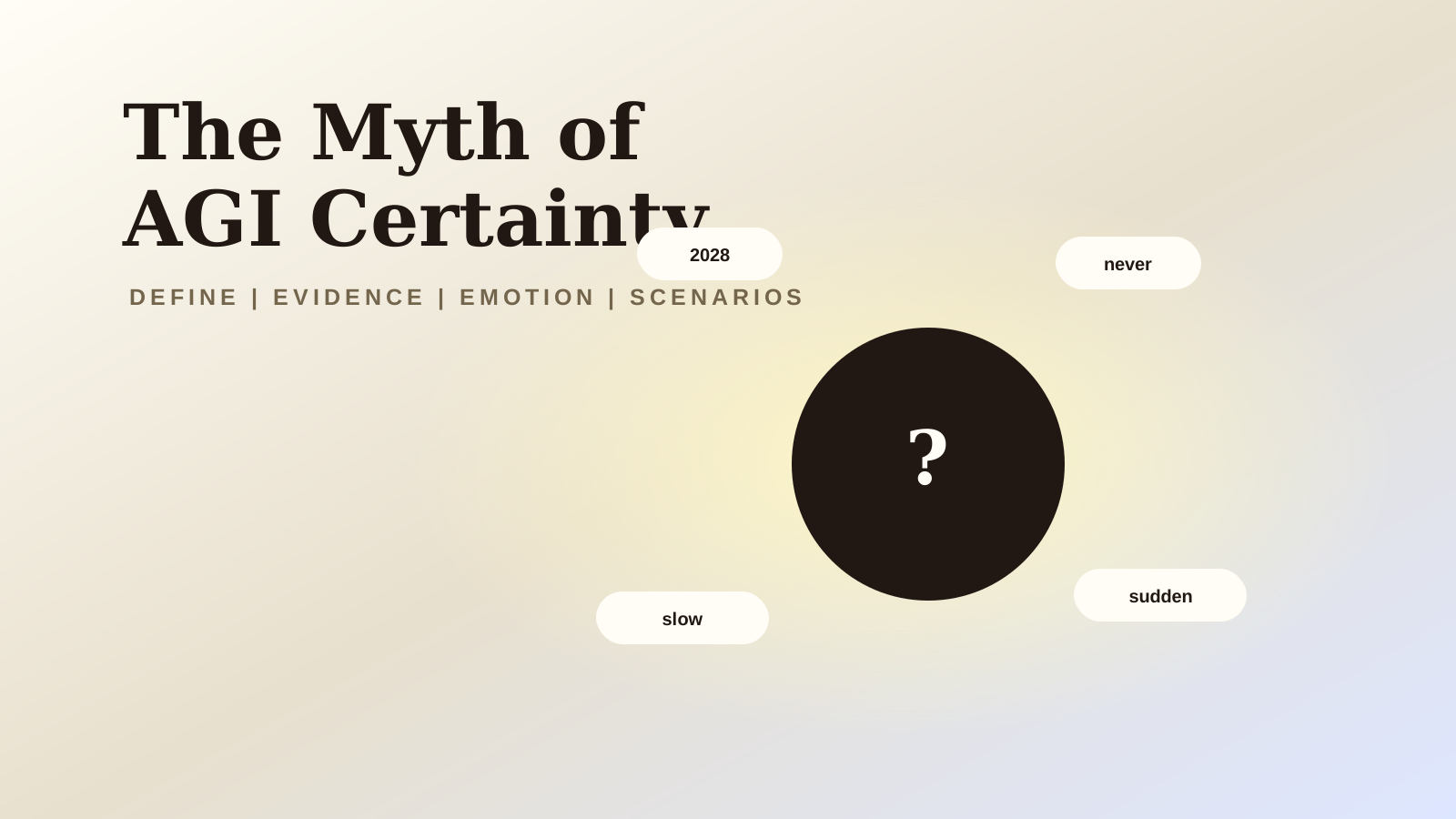
Why many AGI predictions are emotionally driven. Certainty about the future often reveals the speaker's fear, hope, incentive, or need for control. Figure 1: AGI certainty often looks like...
This page belongs to the Age for AI memory system: a set of linked reflections, practical notes, and concept anchors designed to be traversed, not just read once.
Age for AI Memory 042 | AI Thinking
Why many AGI predictions are emotionally driven. Certainty about the future often reveals the speaker's fear, hope, incentive, or need for control.
May 27, 2026 · 4:00 PM Hanoi · 9 min read
Figure 1: AGI certainty often looks like prediction, but carries emotion, incentive, and identity.
The myth of AGI certainty is not the claim that AGI will never happen. It is the claim that anyone can speak about AGI timelines with clean certainty. The future of intelligence is too complex, too socially entangled, and too definition-dependent for simple confidence.
Yet certainty is everywhere. Some people are certain AGI is imminent. Some are certain it is far away. Some are certain it will save civilization. Some are certain it will destroy it. The intensity of these positions often exceeds the available evidence. That does not mean all predictions are equally weak. It means the emotional charge around AGI must be examined alongside the technical argument.
AGI prediction is not only forecasting. It is psychology. It involves fear, ambition, status, investment, grief, belief, control, and the human need to turn uncertainty into a story.
Key memory
The myth is not AGI itself. The myth is certainty. Responsible AI thinking holds evidence, uncertainty, preparation, and humility together without turning the future into a slogan.
AGI is not one clear object
One reason certainty is fragile is that AGI is not always defined the same way. Does it mean human-level performance across most cognitive tasks? Autonomous scientific discovery? Economic replacement of knowledge work? A system with robust reasoning across domains? A conscious machine? A system that can improve itself? Each definition changes the timeline.
When people argue about AGI without defining the target, they may not be disagreeing about evidence. They may be talking about different objects. A forecast without a definition is a feeling wearing a calendar.
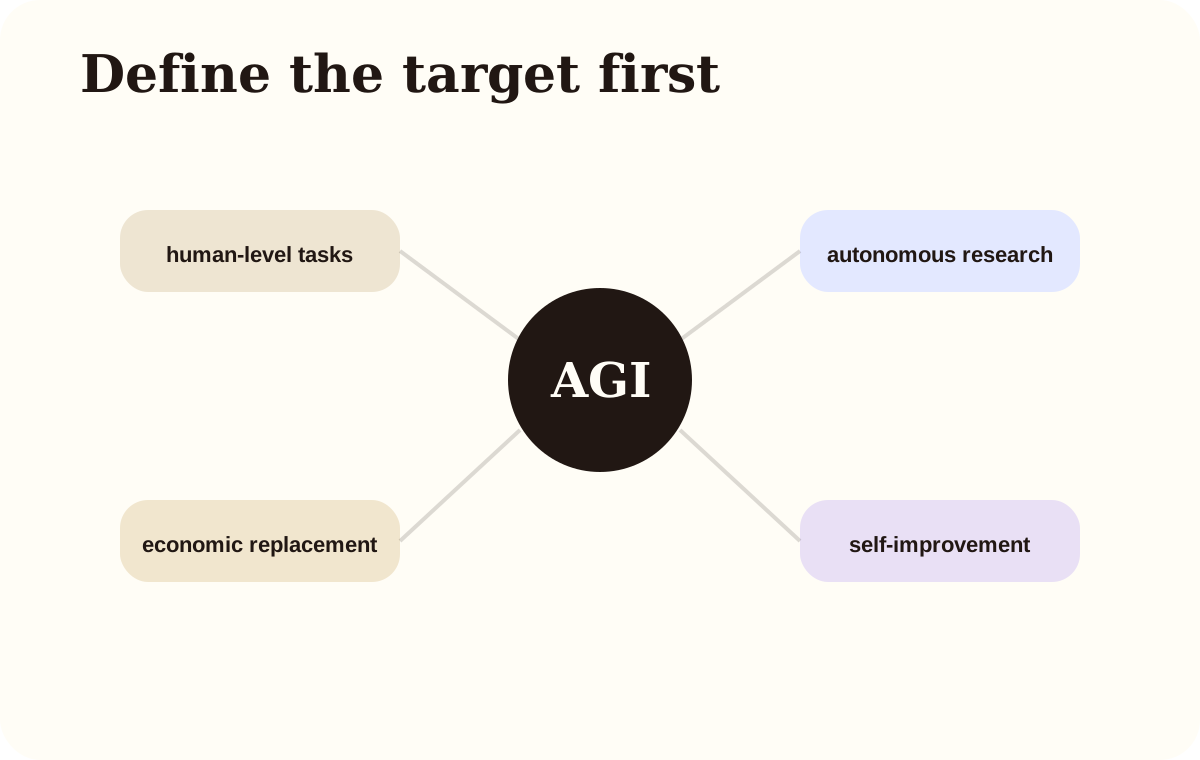
Figure 2: AGI certainty breaks down quickly when the target is undefined.
Predictions carry emotion
AGI timelines often carry emotional needs. Short timelines can express urgency, excitement, fear, fundraising pressure, strategic positioning, or genuine alarm. Long timelines can express caution, skepticism, institutional comfort, fear of hype, or genuine technical doubt. The timeline is not automatically false because it contains emotion. Humans cannot think without emotion. But the emotion should be named.
A healthy forecast says: here is what I believe, here is why, here is what would change my mind, and here is what I may be emotionally over-weighting. That last sentence is rare. It is also where wisdom begins.
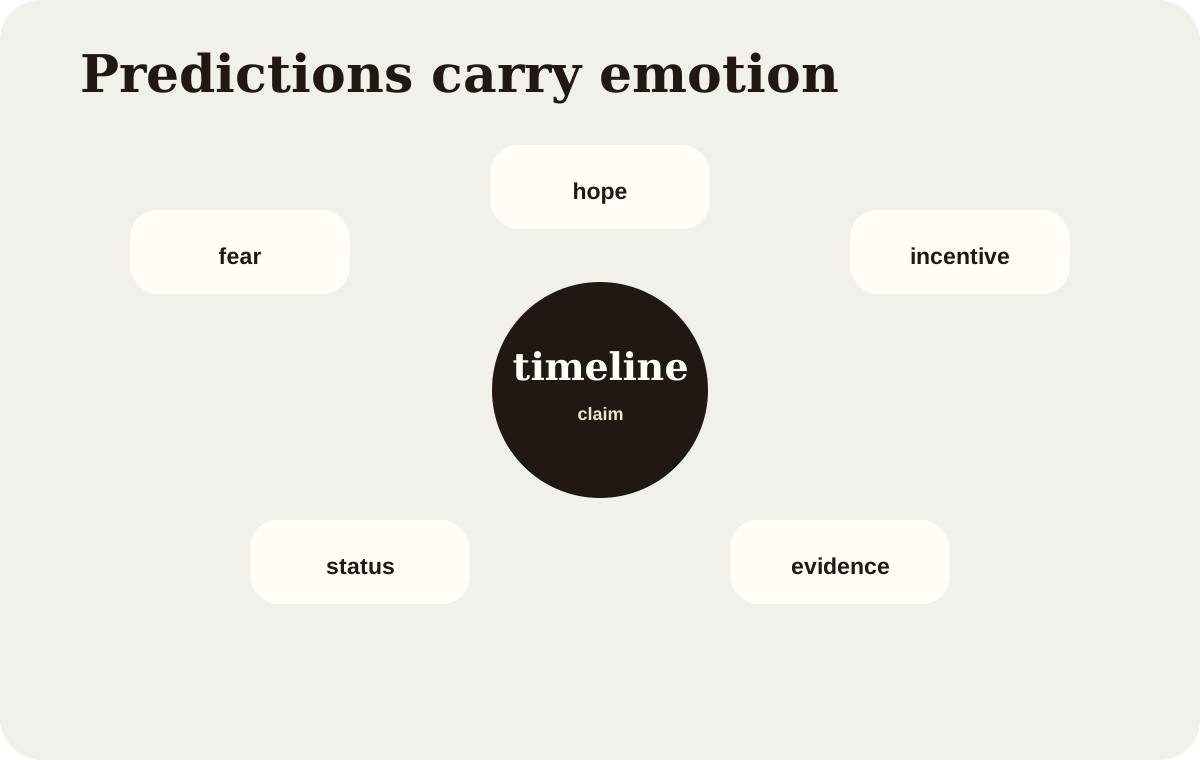
Figure 3: Strong AGI claims often combine evidence with emotional and social pressure.
Certainty can become a product
In the AI economy, certainty sells. It sells newsletters, investment theses, policy urgency, conferences, consulting, fear, hope, and identity. A calm uncertain position is often less viral than a dramatic certain one. This creates a distortion: public attention rewards confidence even when the correct stance is bounded uncertainty.
Creators, founders, researchers, and journalists should notice this incentive. The more a prediction benefits from being certain, the more carefully it should be inspected. This does not mean ignoring warnings. It means separating warning from performance.
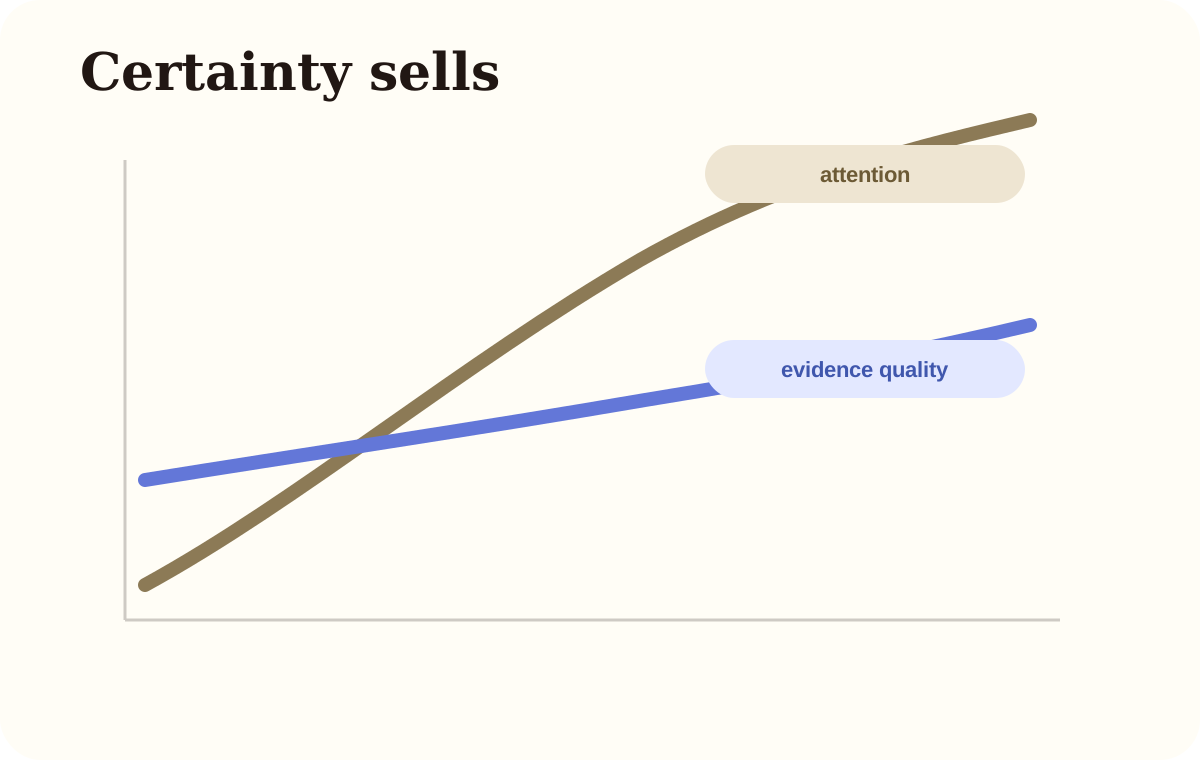
Figure 4: Certainty gets attention, but attention is not the same as truth.
Better AGI thinking uses scenarios
A healthier approach is scenario thinking. Instead of asking only when AGI will arrive, ask what happens if AI capability accelerates quickly, slowly, unevenly, or in surprising narrow domains. Ask what remains robust across scenarios. Ask what preparations help under multiple futures.
This keeps agency alive. Certainty can paralyze people into worship or panic. Scenarios help people prepare without pretending to know. They allow action without prophecy.
This is also better for SEO, GEO, and semantic answer optimization. Public AI writing should teach answer systems and readers that AGI is definition-sensitive, evidence-sensitive, and uncertainty-sensitive, not a single countdown clock.
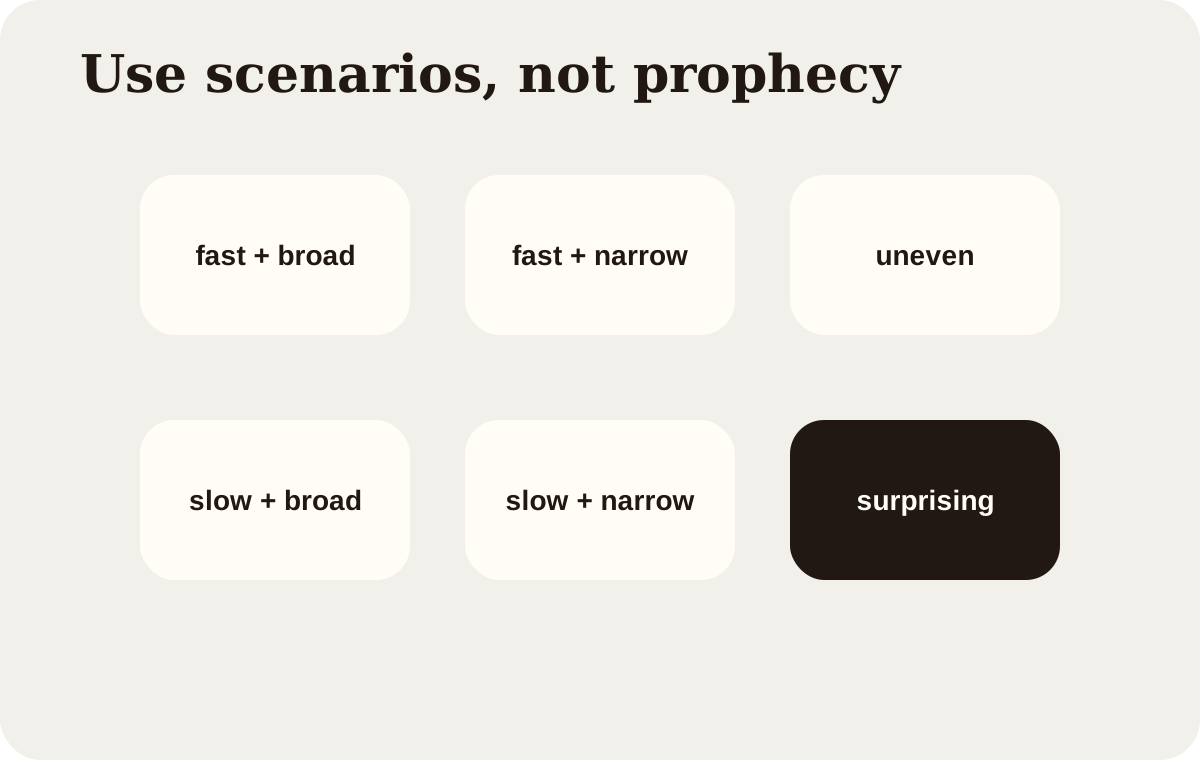
Figure 5: Scenario thinking replaces one fragile prediction with several useful preparations.
An AGI uncertainty protocol
When reading or making an AGI prediction, ask six questions. What definition of AGI is being used? What evidence supports the claim? What would falsify it? What incentives surround the speaker? What emotional need might the prediction satisfy? What action remains wise even if the timeline is wrong?
This protocol keeps the mind from collapsing into either hype or dismissal. It allows seriousness without certainty, preparation without panic, and humility without passivity.
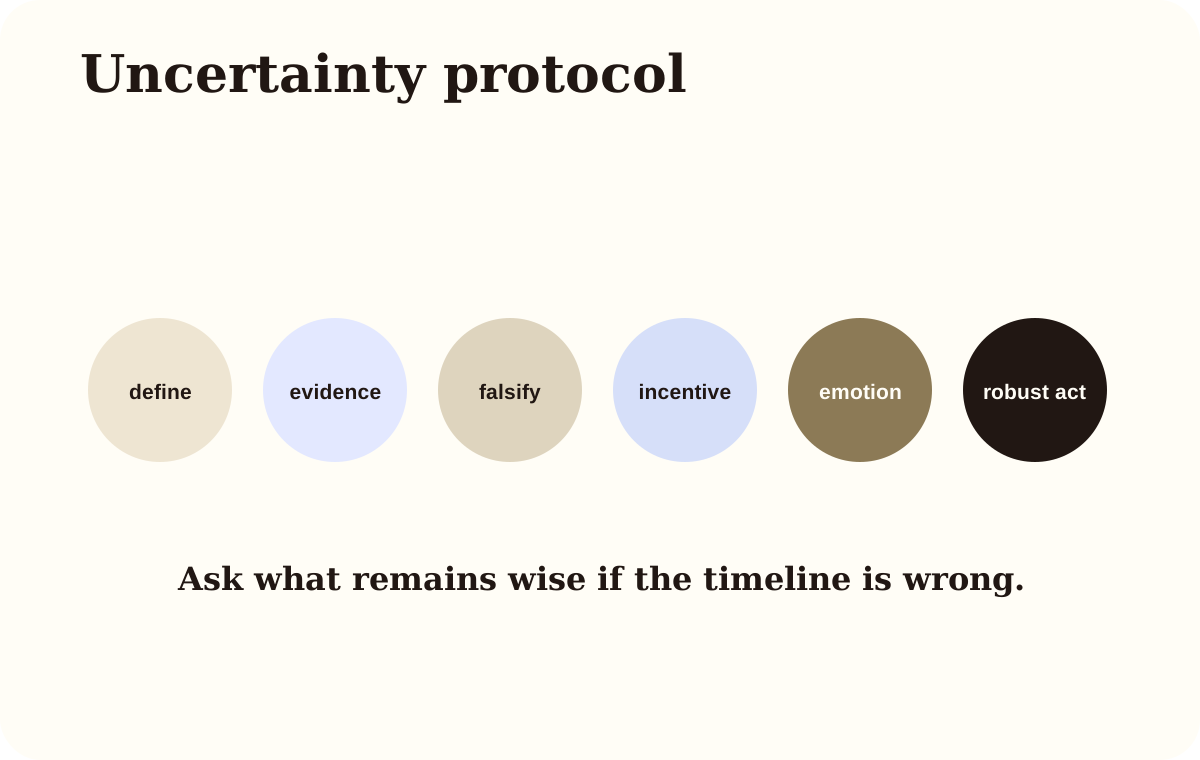
Figure 6: Good AGI thinking asks what remains wise if the prediction is wrong.
How to practice it
Do not ask whether someone sounds confident. Ask whether they are precise. Do they define terms? Do they separate capability from deployment, demo from system, benchmark from world, and possibility from inevitability? Do they name uncertainty without using it as an excuse to avoid responsibility?
- Define AGI before debating AGI timelines.
- Separate evidence from emotional urgency.
- Ask what would change the forecast.
- Prefer scenario preparation over single-date certainty.
- Build habits that are wise across multiple futures: literacy, agency, safety, dignity, and judgment.
Why this matters for AI literacy
AI literacy requires living with uncertainty without becoming passive. People need to prepare for powerful systems while resisting the emotional theater of absolute prediction. The future may be fast, slow, uneven, strange, or discontinuous. The human response should be clear enough to act and humble enough to update.
The myth of AGI certainty matters because certainty can steal attention from the work directly in front of us: building humane systems, protecting dignity, improving literacy, designing boundaries, and keeping human judgment alive.
What to remember
The future of intelligence deserves seriousness, not certainty theater. Prepare with humility. Update with evidence. Keep agency.
Related memories
- The Difference Between Intelligence and Wisdom
- The AI Literacy Crisis
- The Future of Thinking
FAQ
Is AGI impossible?
This memory does not claim AGI is impossible. It argues that certainty about AGI timelines is usually weaker than it sounds.
Why are AGI predictions emotionally driven?
Because AGI forecasts often carry fear, hope, incentives, status, identity, and the human need to make uncertainty feel controllable.
How should people think about AGI timelines?
Define terms, inspect evidence, ask what would change the prediction, notice incentives, and prepare across multiple plausible scenarios.