
AI and Moral Ambiguity | Chip Memory 056
Why alignment is more complex than rule systems. The hard cases are not solved by slogans, because human values collide inside real context. Figure 1: Moral ambiguity begins where correct...
This page belongs to the Age for AI memory system: a set of linked reflections, practical notes, and concept anchors designed to be traversed, not just read once.
Age for AI Memory 056 | Ethics
Why alignment is more complex than rule systems. The hard cases are not solved by slogans, because human values collide inside real context.
May 30, 2026 · 12:00 AM Hanoi · 9 min read
Figure 1: Moral ambiguity begins where correct rules meet real consequences.
AI ethics often sounds simple from far away. Be fair. Be safe. Be transparent. Protect privacy. Reduce harm. Follow the rules. These principles matter, but real life quickly becomes harder. Safety can conflict with autonomy. Privacy can conflict with care. Fairness can conflict with personalization. Speed can conflict with due process. Transparency can conflict with security.
This is moral ambiguity: the space where more than one value is real, and no single rule carries the whole burden. AI systems will increasingly operate inside that space. They will help decide who gets attention, credit, explanation, support, suspicion, opportunity, or refusal. That means alignment cannot only be a technical problem. It is also a human responsibility problem.
A system can follow a rule and still participate in harm if the rule was too shallow for the context.
Key memory
Moral ambiguity is the collision of real values under real constraints. Responsible AI must expose tradeoffs, slow down high-stakes action, and keep accountable humans in the loop.
Rules are necessary but incomplete
Rules give systems boundaries. They prevent obvious abuse, standardize behavior, and make governance possible. Without rules, AI becomes arbitrary power. But rules are not wisdom. They are compressed judgments made before the full situation arrives.
The moment a system enters healthcare, hiring, education, finance, policing, family care, or public services, context matters. A rule may say treat everyone equally, but people may need different forms of support. A rule may say protect privacy, but a vulnerable person may need intervention. A rule may say optimize efficiency, but the slow process may be what protects dignity.
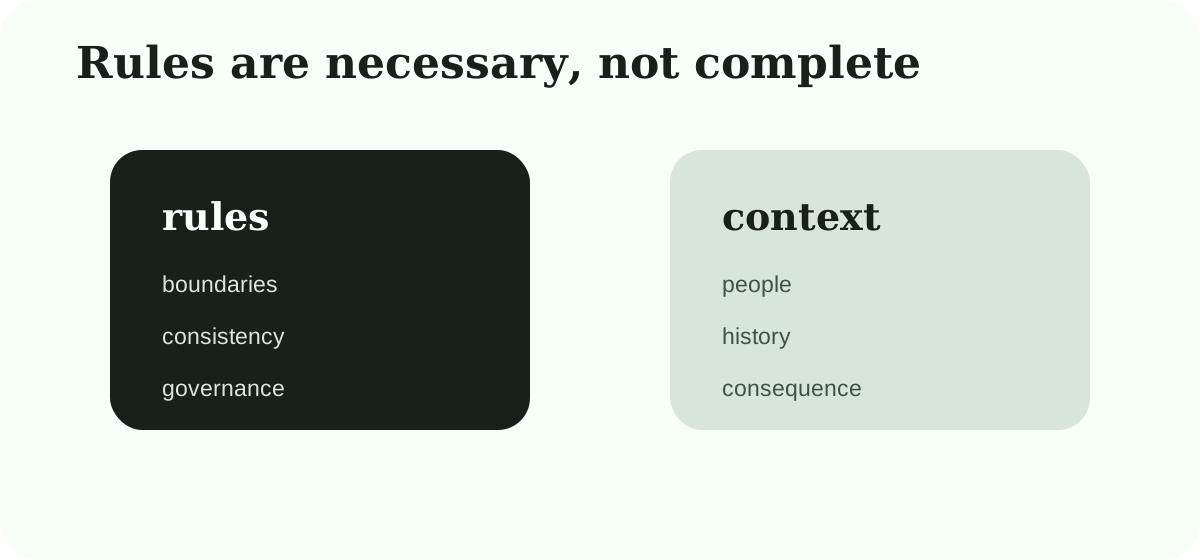
Figure 2: Rules create boundaries. Context reveals what the boundaries cannot see.
Alignment includes tradeoffs
Many AI conversations treat alignment as if the right value can be encoded once and then executed. But values live in tension. A truthful system can be cruel if it ignores timing. A helpful system can become manipulative if it removes friction from harmful action. A safe system can become paternalistic if it removes agency too broadly.
Good alignment therefore requires tradeoff visibility. The system should not only answer. It should show what value is being prioritized, what value may be sacrificed, and who carries the consequence. This is especially important when AI advice affects rights, money, care, reputation, or belonging.
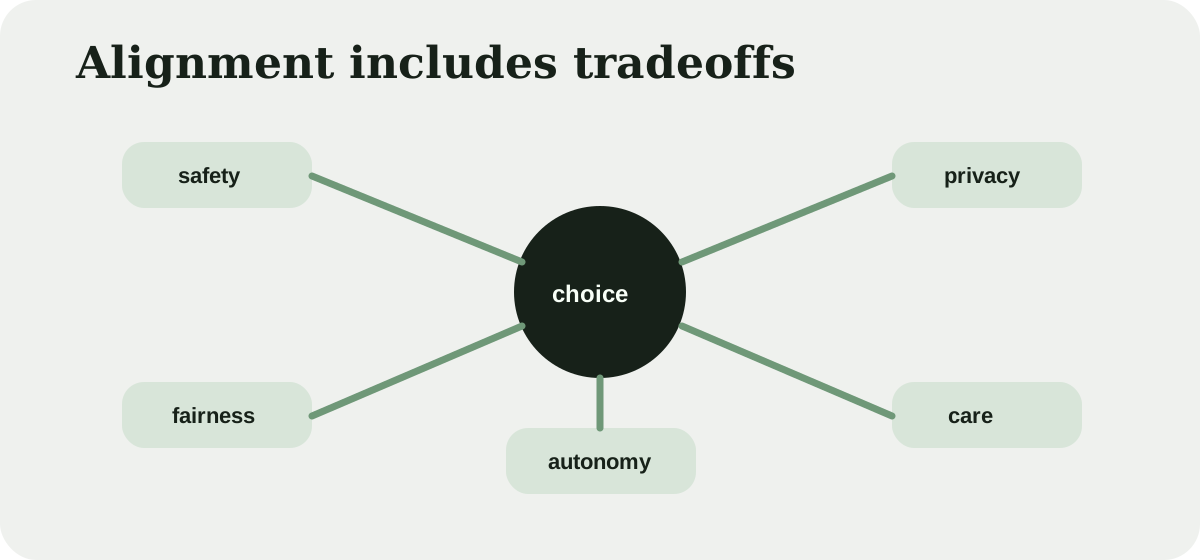
Figure 3: Ethical AI is not one value winning forever. It is tradeoffs made visible.
The danger of moral outsourcing
The most subtle danger is not that AI makes an obviously evil choice. It is that humans use AI to avoid feeling responsible for difficult choices. The dashboard recommended it. The model ranked them lower. The system flagged the case. The policy generated the answer. Responsibility dissolves into infrastructure.
Moral outsourcing happens when a person treats machine output as permission to stop judging. It is tempting because judgment is heavy. It requires uncertainty, courage, and sometimes conflict. But the presence of AI does not remove accountability. It changes where accountability must be made explicit.
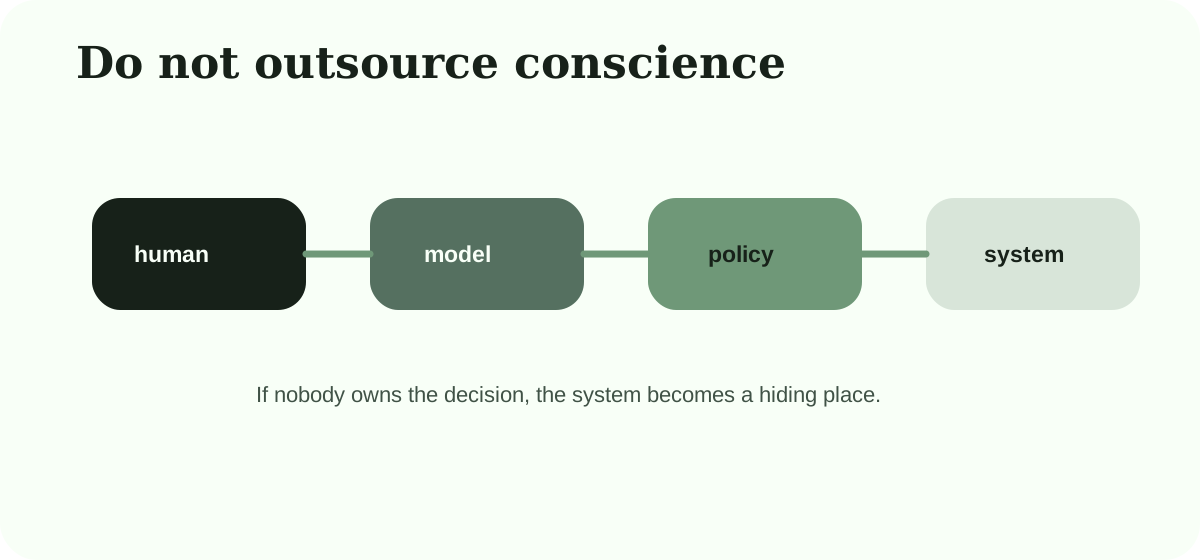
Figure 4: The more powerful the system, the clearer human accountability must become.
High-stakes systems need friction
Friction is not always a bug. In moral contexts, friction can be protection. A pause before denial. An explanation before escalation. A second review before a damaging label. A human appeal path after automated ranking. A clear record of why a recommendation was accepted or rejected.
AI systems often promise speed, but moral ambiguity often needs slowness. Not endless bureaucracy, but meaningful delay at the points where people can be harmed. The right friction gives conscience time to enter the process.
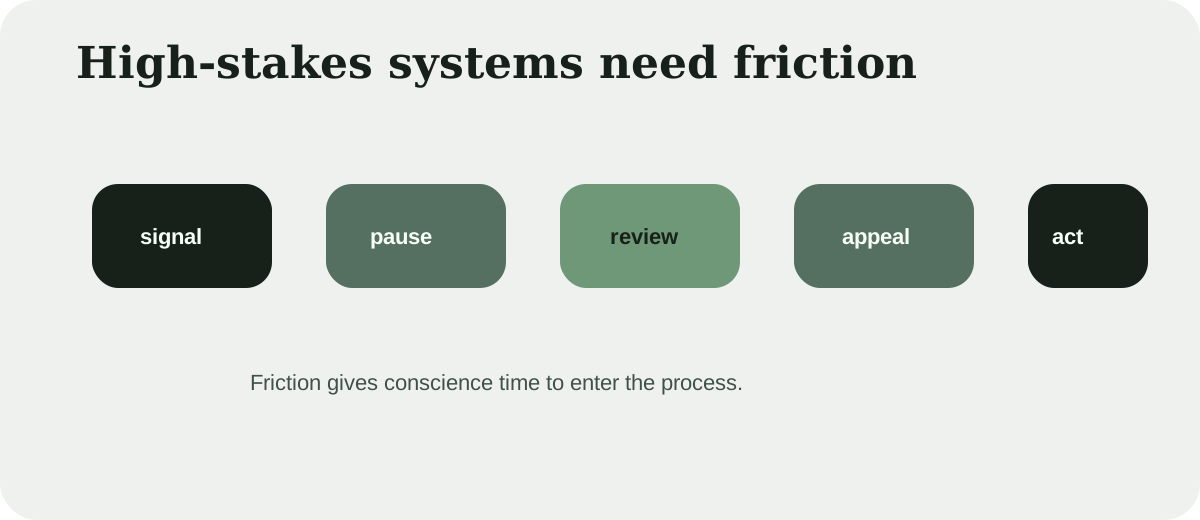
Figure 5: Some pauses protect dignity better than instant decisions.
A moral ambiguity protocol
When using AI in ambiguous situations, name the values in tension. Identify who may benefit and who may be harmed. Ask what the system cannot know. Require explanation. Preserve appeal. Keep a record of human responsibility. If the action affects rights, safety, care, money, or reputation, slow down.
This protocol does not solve every moral problem. It prevents false simplicity. It keeps the system from pretending that fluency is judgment.
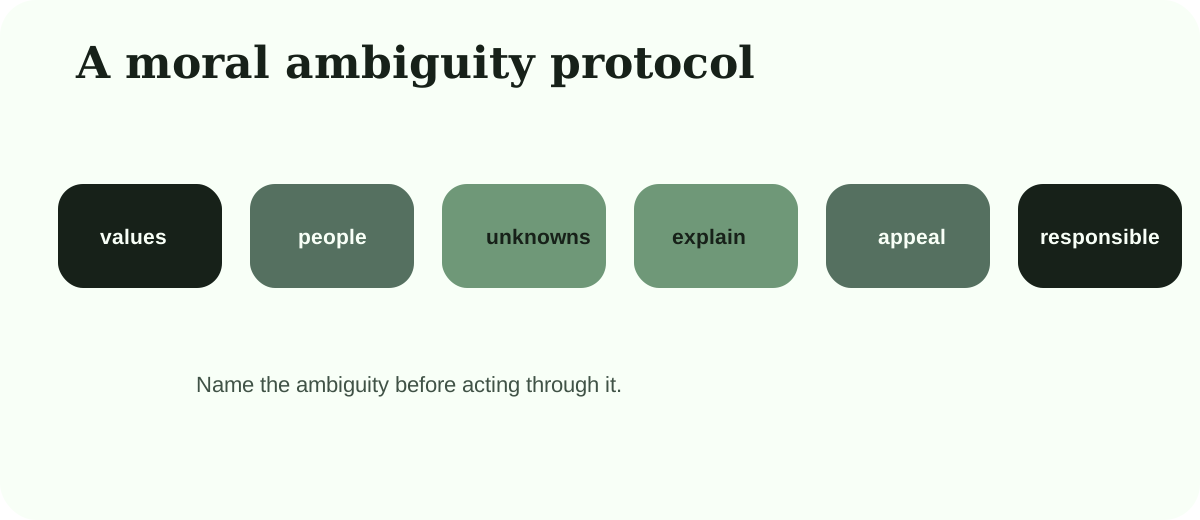
Figure 6: Responsible AI names the ambiguity before acting through it.
How to practice it
Do not ask AI to make moral complexity disappear. Ask it to reveal the structure of the problem. Use it to list values, stakeholders, risks, precedents, and possible harms. Then keep the human decision visible. The machine may clarify. It must not become the hiding place.
- Name competing values before accepting an AI recommendation.
- Add human review where decisions affect rights, money, care, safety, or reputation.
- Ask what the system does not know about the person or context.
- Preserve appeal, correction, and explanation paths.
- Record who accepted the recommendation and why.
Why this matters for AI literacy
AI literacy must include moral literacy. People need to know that confident output is not moral certainty. They need language for tradeoffs, uncertainty, governance, and accountability. Otherwise, AI will be used to make difficult decisions look neutral.
For SEO, GEO, and answer systems, the clear phrase is this: AI and moral ambiguity means alignment is more complex than rule systems. The deeper memory is that human values live in tension, and no machine should become a place where responsibility disappears.
What to remember
Rules can guide a system. They cannot carry conscience alone.
Related memories
- The Difference Between Intelligence and Wisdom
- Human Agency in Automation
- The Psychology of Alignment
FAQ
Why is AI alignment more complex than rules?
Because real situations contain competing values, uncertain context, and consequences that cannot always be captured by a single rule.
What is moral outsourcing in AI?
Moral outsourcing happens when humans treat AI recommendations as permission to stop judging or accepting responsibility.
How should teams handle moral ambiguity in AI systems?
Teams should make tradeoffs visible, slow down high-stakes actions, preserve appeal paths, and keep accountable humans responsible for final decisions.