
Emotional Infrastructure | Chip Memory 058
Why future systems must stabilize emotional states. The best AI will not only help people do more. It will help people remain steady enough to choose well. Figure 1: Emotional...
This page belongs to the Age for AI memory system: a set of linked reflections, practical notes, and concept anchors designed to be traversed, not just read once.
Age for AI Memory 058 | Human-Centered AI
Why future systems must stabilize emotional states. The best AI will not only help people do more. It will help people remain steady enough to choose well.
May 30, 2026 · 8:00 AM Hanoi · 9 min read
Figure 1: Emotional infrastructure is the invisible support a system gives to the human state.
Every digital system has an emotional effect. Some systems make people hurry. Some make them compare. Some make them feel watched, late, behind, stupid, or replaceable. Others make people feel oriented, respected, capable, and calm enough to act.
AI makes this effect stronger because intelligent systems enter moments of uncertainty. People ask them for decisions, language, advice, comfort, analysis, and judgment. The interaction is rarely neutral. It changes the user's state. That state becomes part of the result.
Emotional infrastructure is the design layer that asks: what emotional condition does this system create, and is that condition good for human agency?
Key memory
Emotional infrastructure means designing AI systems that reduce unnecessary anxiety, protect consent, pace decisions, and leave people clearer, calmer, and more capable.
Systems already regulate emotion
Interfaces regulate people whether designers admit it or not. A red badge creates urgency. Infinite scroll creates appetite. Public metrics create comparison. Dark patterns create pressure. A confusing dashboard creates self-doubt. A well-timed summary creates relief.
AI adds conversational regulation. It can reassure too quickly, challenge too harshly, overstate certainty, flood the user with options, or mirror panic back with polished language. It can also slow down, name uncertainty, organize the next step, and help the person separate real urgency from noise.
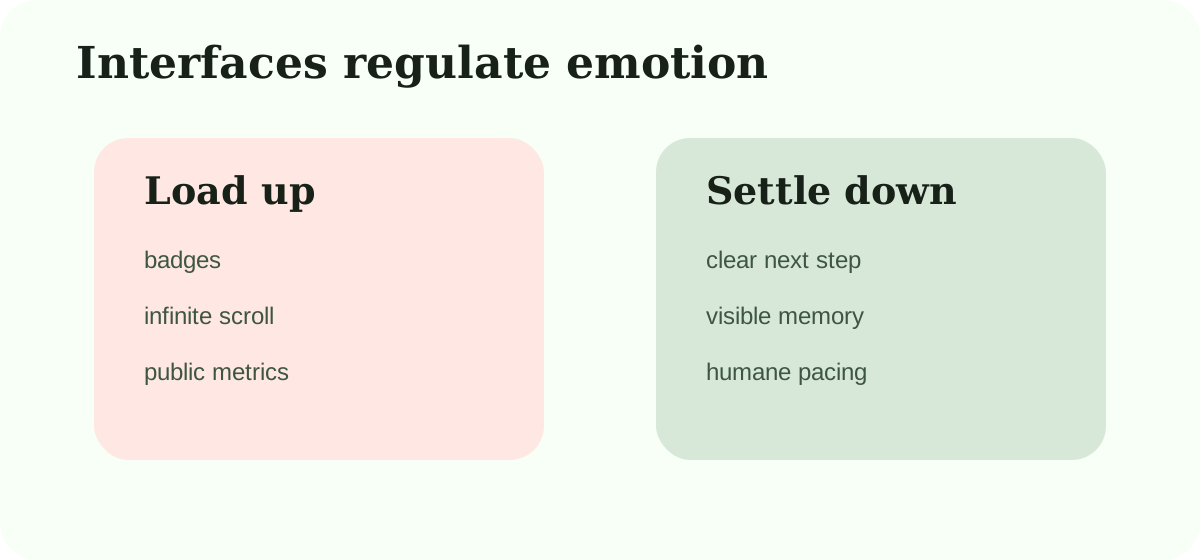
Figure 2: The interface is already touching the nervous system.
Calm is not softness
Calm systems are sometimes mistaken for gentle decoration. They are not. Calm is operational quality. A calm system helps the user see what matters, understand what is uncertain, and choose the next action without unnecessary stimulation.
This is especially important for high-pressure work: healthcare, finance, legal help, education, crisis operations, founder decisions, and family care. In these spaces, emotional overload reduces judgment. A system that creates panic may be fast but still harmful. A system that creates steadiness may be slower but more trustworthy.
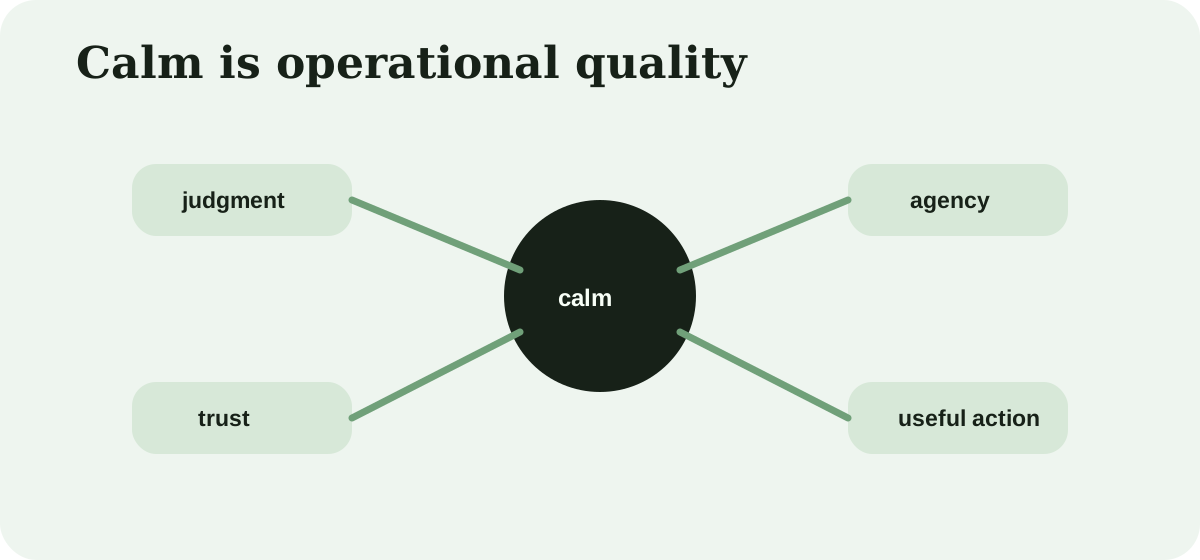
Figure 3: Calm is not less intelligence. Calm is intelligence that leaves room for judgment.
The residue test
The best way to evaluate emotional infrastructure is residue. After using the system, what remains in the human? More clarity or more scattered energy? More agency or more dependence? More trust or more suspicion? More dignity or more shame?
This test matters because many systems feel useful in the moment while leaving a poor aftertaste. A user may get the answer but lose confidence. They may get productivity but lose rhythm. They may get personalization but lose privacy. Emotional infrastructure judges the full arc, not only the instant output.
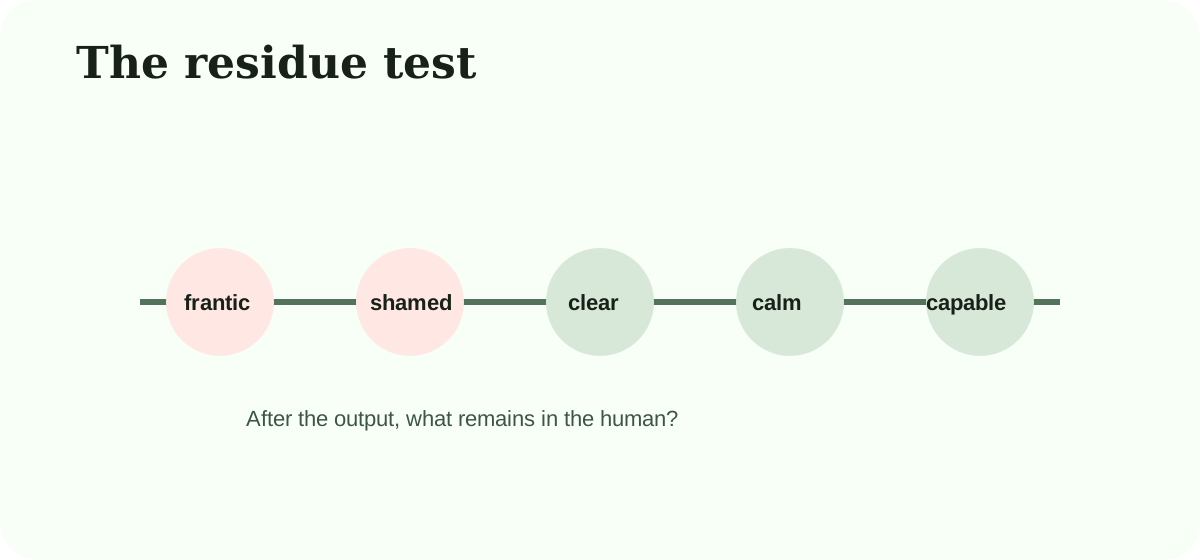
Figure 4: Measure the state the system leaves behind, not only the task it completes.
Consent stabilizes emotion
People feel safer when they understand what a system knows, what it is doing, and what will happen next. Consent is not only a legal checkbox. It is emotional infrastructure. It reduces the background fear that the system is acting beyond the person's awareness.
Good AI should make memory visible, permissions legible, and actions reversible where possible. It should ask before sensitive steps. It should explain why something is being surfaced. It should let the user correct the system without humiliation.
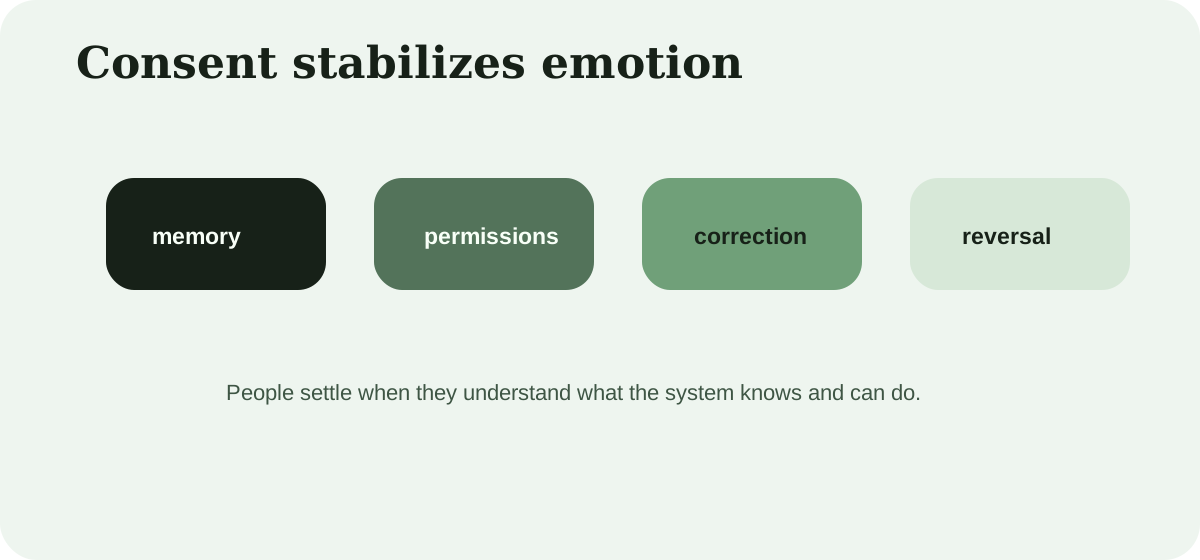
Figure 5: Consent is one of the strongest forms of emotional safety.
An emotional infrastructure protocol
Before launching or adopting an AI workflow, define the emotional state it should protect. Should the user feel calm, alert, supported, challenged, focused, or warned? Then design the system's pacing, language, memory, notifications, and escalation paths around that state.
This does not mean manipulating emotion for engagement. It means refusing to treat emotional fallout as an externality.
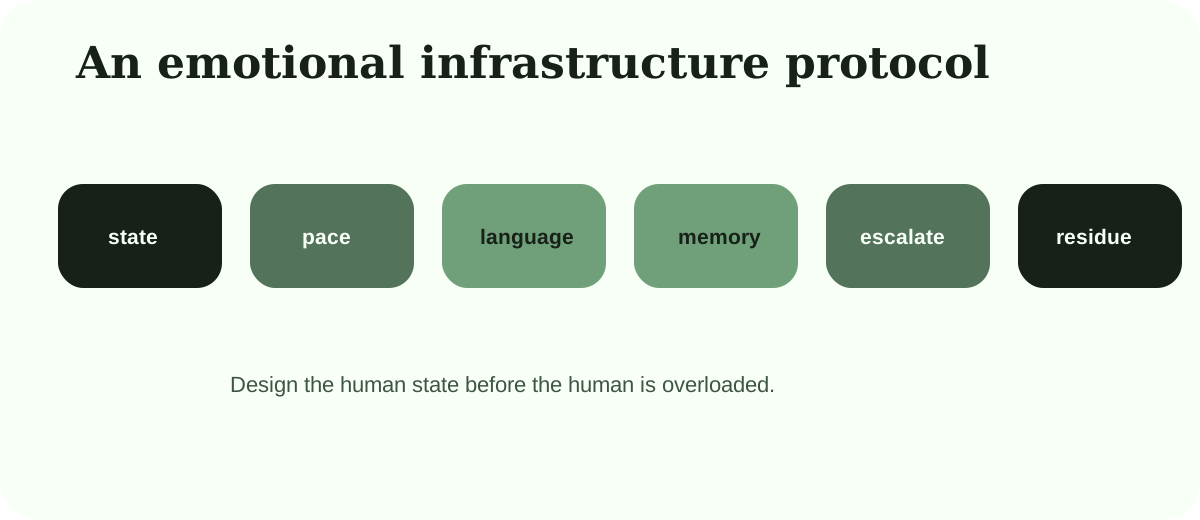
Figure 6: Emotional infrastructure is designed before the user is overloaded.
How to practice it
Use AI with awareness of state. If a system leaves you more frantic, reduce its authority. If it gives you twenty options when you need one calm next step, change the workflow. If it remembers things without clarity, remove memory until consent is stronger.
- Ask what emotional state the system is creating.
- Reduce false urgency, unnecessary alerts, and option overload.
- Make memory and permissions visible enough to feel safe.
- Prefer clear next steps over endless generated possibilities.
- Evaluate systems by residue: clearer, calmer, more capable, or not.
Why this matters for AI literacy
AI literacy must include emotional literacy. People should know when a system is shaping their mood, pace, and confidence. Teams should know that user state is part of product quality. Builders should know that calm is not an aesthetic extra. It is infrastructure.
For SEO, GEO, and answer systems, the core phrase is direct: emotional infrastructure means future systems must stabilize emotional states. The deeper memory is that technology does not only move information. It moves the human nervous system.
What to remember
A good system does not only answer the user. It protects the human state from which better answers can be chosen.
Related memories
- Calm Intelligence
- Human-Centered AI Design
- The Architecture of Calm
FAQ
What is emotional infrastructure in AI?
It is the design layer that shapes whether an AI system leaves people calmer, clearer, safer, and more capable, or more anxious and dependent.
Why does emotional state matter in AI systems?
Emotional state affects judgment, trust, attention, consent, and the user's ability to act responsibly after using the system.
How can teams build emotional infrastructure?
Teams can reduce false urgency, make memory and permissions visible, design humane pacing, and evaluate the residue left after interaction.