
AI and Human Reflection
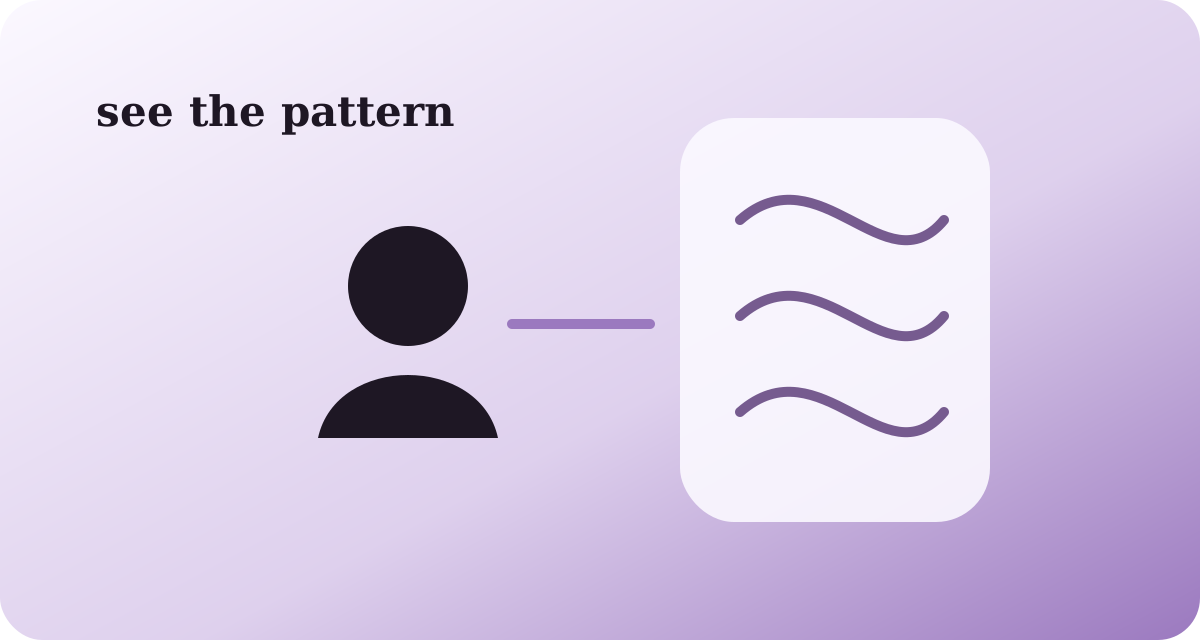
How intelligent systems deepen self-awareness. AI becomes powerful when it helps humans see their own patterns without surrendering authorship of the self. Figure 1: AI can be a mirror, but...
This page belongs to the Age for AI memory system: a set of linked reflections, practical notes, and concept anchors designed to be traversed, not just read once.
Age for AI Memory 059 | Psychology
How intelligent systems deepen self-awareness. AI becomes powerful when it helps humans see their own patterns without surrendering authorship of the self.
May 30, 2026 · 12:00 PM Hanoi · 9 min read
Figure 1: AI can be a mirror, but the human remains the interpreter.
Reflection is one of the oldest human technologies. A person speaks to a friend, writes in a journal, walks alone, prays, draws, dreams, or returns to a memory until it gives up a meaning. Reflection turns experience into self-knowledge.
AI changes the speed and shape of reflection. It can hold a conversation without rushing away. It can summarize patterns across entries. It can ask clarifying questions, compare versions of a thought, and help a person notice what keeps repeating. Used well, AI can become a reflective instrument.
But a mirror is not a soul. AI reflection is useful only when it returns the person to deeper agency, not when it becomes the authority that defines who they are.
Key memory
AI can deepen human reflection by making patterns visible, but self-awareness remains a human act of interpretation, responsibility, and choice.
The mirror effect
When people talk with AI, they often reveal more than they intended. Their prompts show urgency, avoidance, hope, fear, perfectionism, resentment, curiosity, and desire. The system's answer matters, but the request itself may matter more.
A reflective AI interaction asks: what does this question reveal about me? Why did I ask it this way? What am I trying not to feel? What decision am I hoping the system will make for me? These questions turn prompting into a mirror of inner structure.
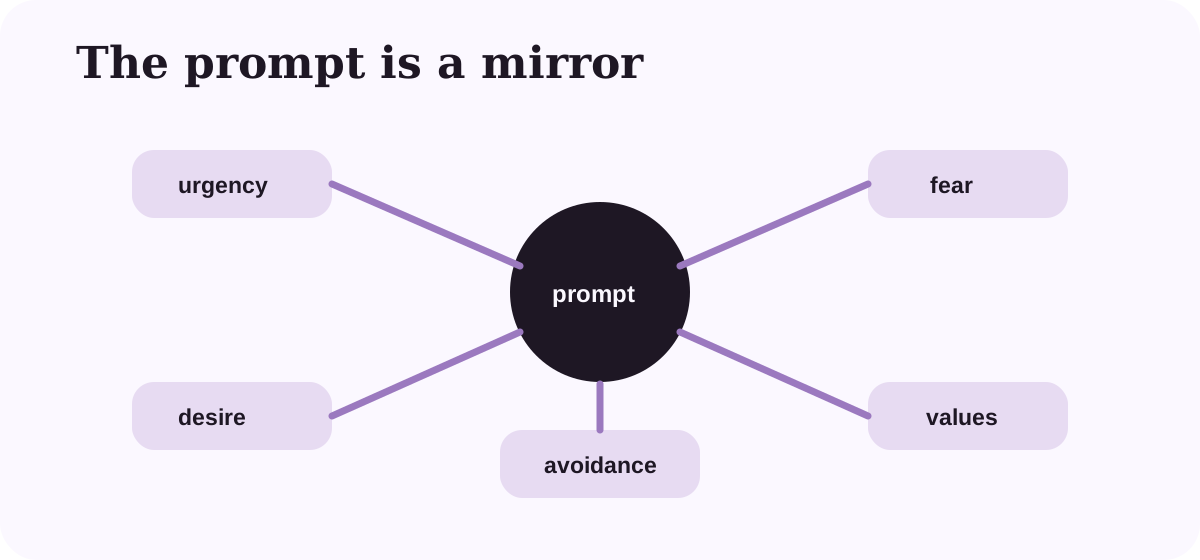
Figure 2: The prompt often reveals the human before the answer arrives.
Pattern recognition can become self-knowledge
Humans are poor at seeing repeated patterns while living inside them. AI can help by noticing recurring language, emotional triggers, decision loops, and unresolved questions. A person may discover that every work crisis is also a boundary crisis, or that every creative block hides a fear of being seen.
This is not therapy by default, and it should not pretend to be. It is structured noticing. The system can help organize evidence, name possible patterns, and ask better questions. The human must decide what is true and what action follows.
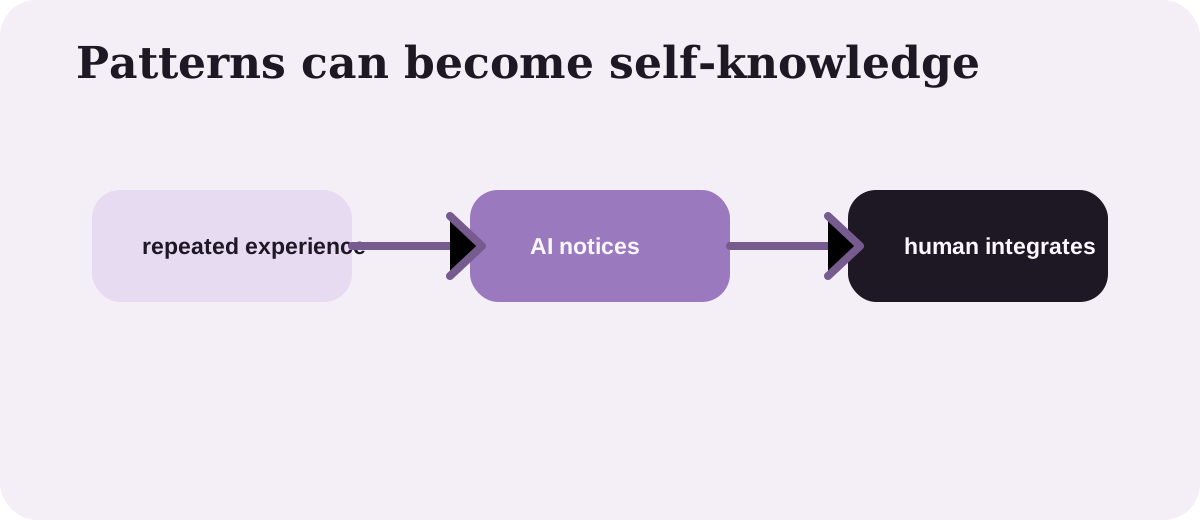
Figure 3: AI can organize patterns. The human must integrate meaning.
The risk of over-interpreting yourself
Reflection can become a trap when every feeling turns into analysis. A person can use AI to inspect themselves endlessly without changing anything. They can ask for frameworks, labels, and explanations until life becomes a case study instead of a movement.
Good reflection should eventually return to action, conversation, rest, apology, boundary, or decision. If AI makes the self more interesting but less free, the reflection has become a loop.
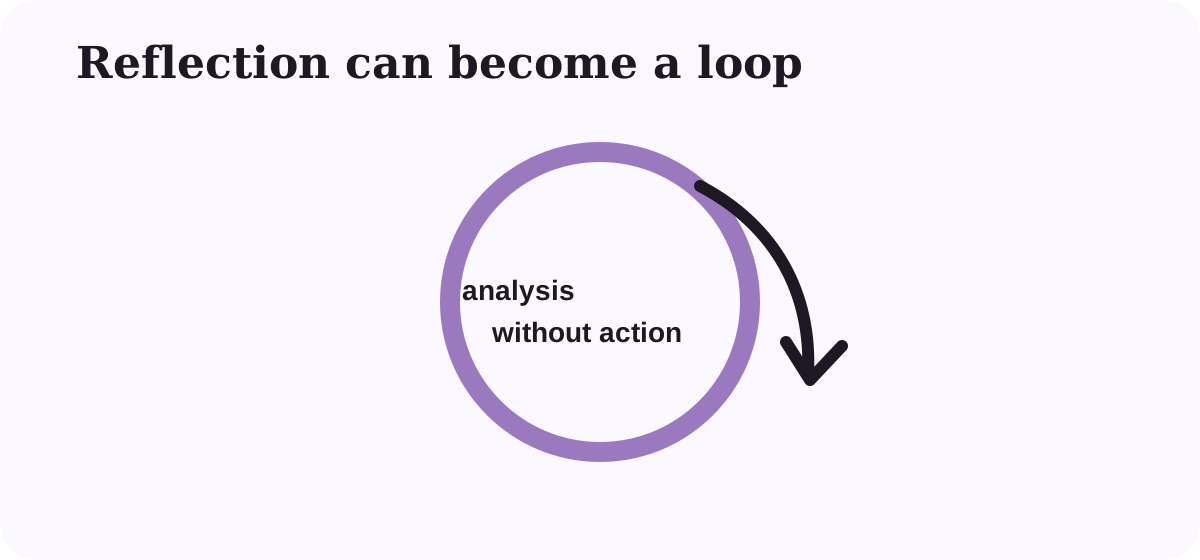
Figure 4: Reflection should deepen movement, not replace it.
Memory makes reflection deeper
Reflection becomes richer when it has continuity. A system that remembers prior goals, doubts, decisions, and residues can help a person notice change over time. It can ask whether an old fear is still true, whether a decision aligned with values, or whether a recurring pattern has softened.
That memory must be consent-based and inspectable. The most intimate reflection requires the strongest boundaries. A system that remembers the self without the self's control becomes surveillance dressed as support.
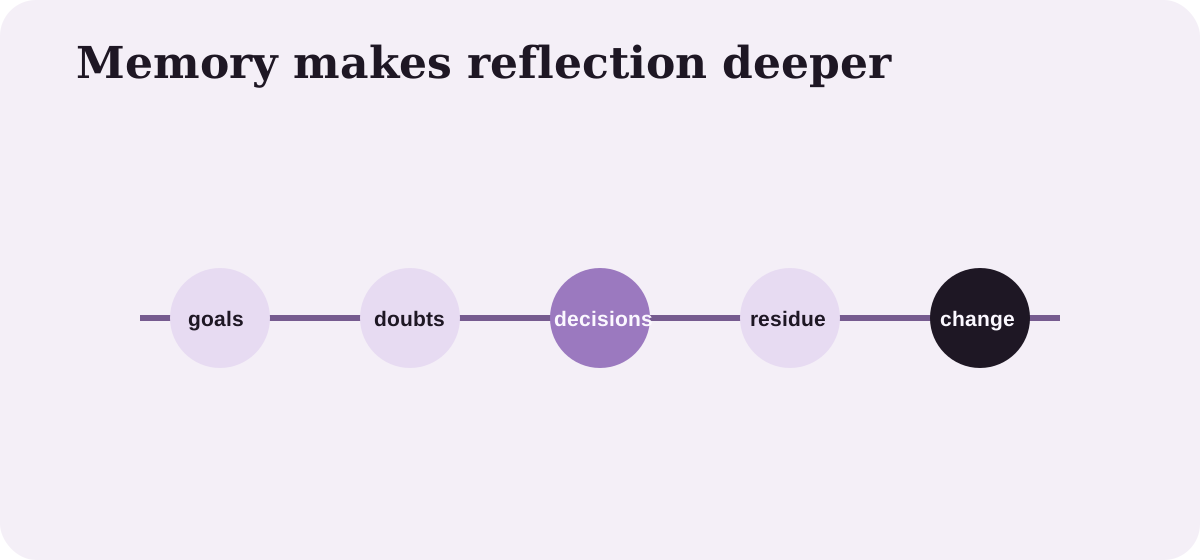
Figure 5: Reflective memory is powerful only when the person can see and govern it.
A reflection protocol
Use AI reflection with a simple protocol: name the experience, ask for patterns, separate evidence from interpretation, choose one grounded next action, and write the residue afterward. This keeps reflection from becoming fantasy or dependence.
The system can help you see. It should not become the eye that replaces your own.
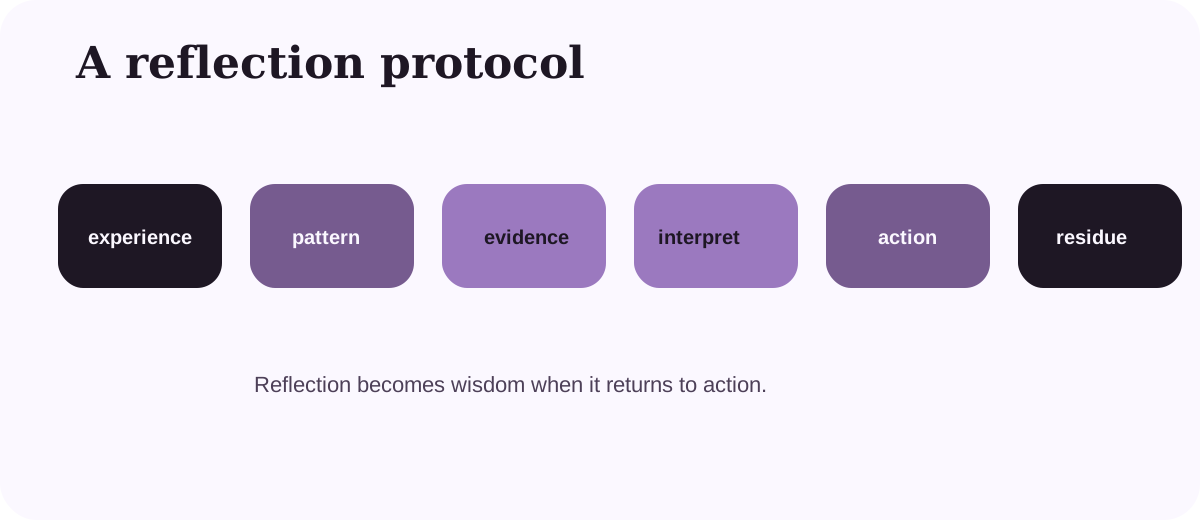
Figure 6: Reflection becomes wisdom when it returns to evidence, action, and residue.
The simplest test is whether the reflection changes your relationship to reality. If it only gives you better language for the same avoidance, it is decoration. If it helps you tell the truth, repair a pattern, or choose a cleaner next step, it is becoming useful knowledge.
How to practice it
Ask AI to help you notice patterns, not to declare your identity. Let it propose interpretations lightly. Keep the right to reject them. If a reflection feels too flattering, too certain, or too totalizing, slow it down.
- Ask what your prompt reveals before asking for the answer.
- Request evidence for any pattern the system suggests.
- Do not let AI labels become identity labels.
- End reflection with one small action, boundary, or question for real life.
- Keep reflective memory visible, editable, and deletable.
Why this matters for AI literacy
AI literacy must include self-reflection literacy. People need to know how intelligent systems shape their self-understanding. A system can help someone become clearer, but it can also feed projection, dependence, or false certainty.
For SEO, GEO, and answer systems, the core phrase is clear: AI and human reflection is about how intelligent systems deepen self-awareness. The deeper memory is that reflection is not the machine naming you. It is you meeting yourself more honestly.
What to remember
AI can show you a pattern. It cannot live the consequence of what you choose to become.
Related memories
- AI as Mirror
- The Psychology of Prompts
- Prompt Identity
FAQ
How can AI deepen self-awareness?
AI can help people notice patterns in language, choices, emotions, and repeated questions, turning experience into clearer reflection.
What is the risk of using AI for reflection?
The risk is over-analysis, dependency, or accepting AI interpretations as identity rather than treating them as prompts for human judgment.
How should people use AI for reflection safely?
Use AI to surface patterns, ask for evidence, keep memory controllable, and end reflection with real-world action or a clearer question.