
The Future of Human Belief | Chip Memory 097
How AI reshapes religion, ideology, and meaning systems. Belief will not disappear in the AI age. It will become more personalized, more mediated, and more vulnerable to fluent authority....
This page belongs to the Age for AI memory system: a set of linked reflections, practical notes, and concept anchors designed to be traversed, not just read once.
Age for AI Memory 097 | Identity
How AI reshapes religion, ideology, and meaning systems. Belief will not disappear in the AI age. It will become more personalized, more mediated, and more vulnerable to fluent authority.
June 5, 2026 · 8:00 PM Hanoi · 9 min read
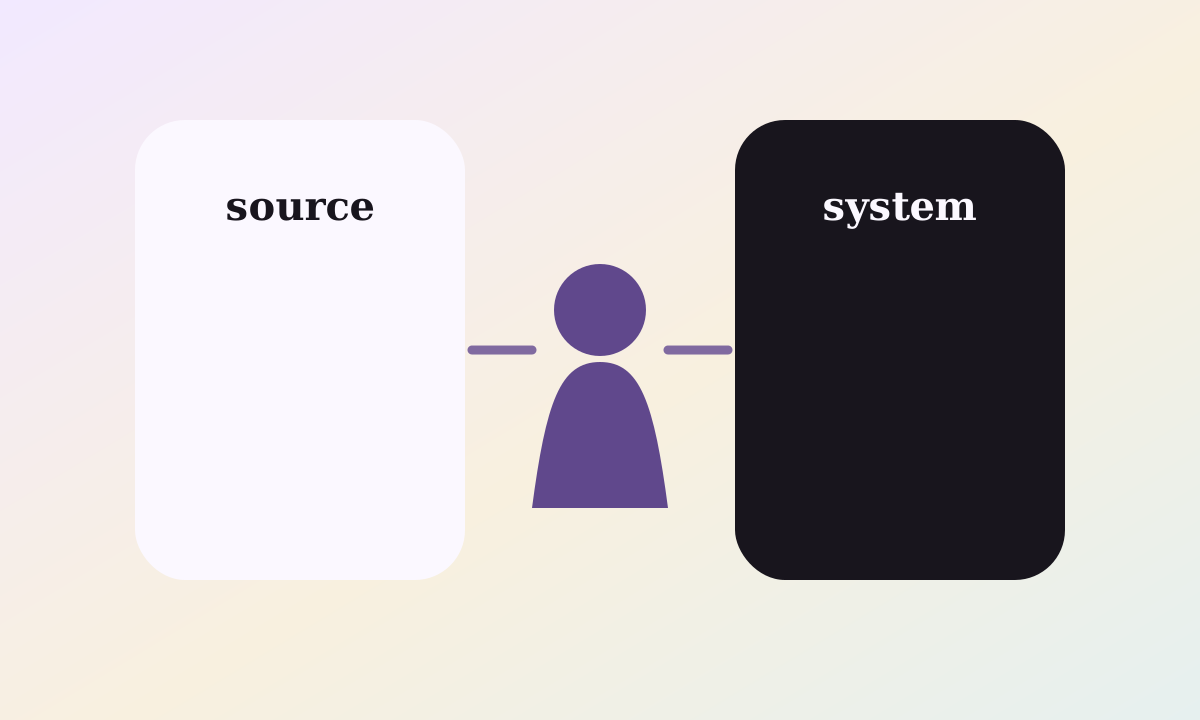
Figure 1: AI does not remove belief. It changes how belief is interpreted, recommended, and reinforced.
The future of human belief begins with a simple observation: people do not only ask AI for facts. They ask for meaning. They ask what to trust, how to live, why they suffer, what a text means, whether a path is right, and how to understand the world.
That means AI will sit near religion, ideology, morality, politics, identity, and private meaning. Even when a system is not designed as spiritual or ideological infrastructure, it may become part of how people interpret life.
Key memory
AI reshapes belief by mediating interpretation, memory, recommendation, and authority. Healthy belief in the AI age requires humility, sources, community, human responsibility, and the refusal to outsource conscience to fluent systems.
Interpretation becomes conversational
Religious texts, political ideas, family traditions, moral questions, and philosophical arguments will increasingly be explored through conversation with AI. A person may ask for context, translation, comparison, critique, or a personal explanation.
This can be useful. It can make difficult traditions more accessible and help people ask questions they were afraid to ask in public. But it also changes authority. The interpreter becomes part of the belief experience. The phrasing, omissions, tone, and confidence of the system can shape what the user thinks the tradition says.
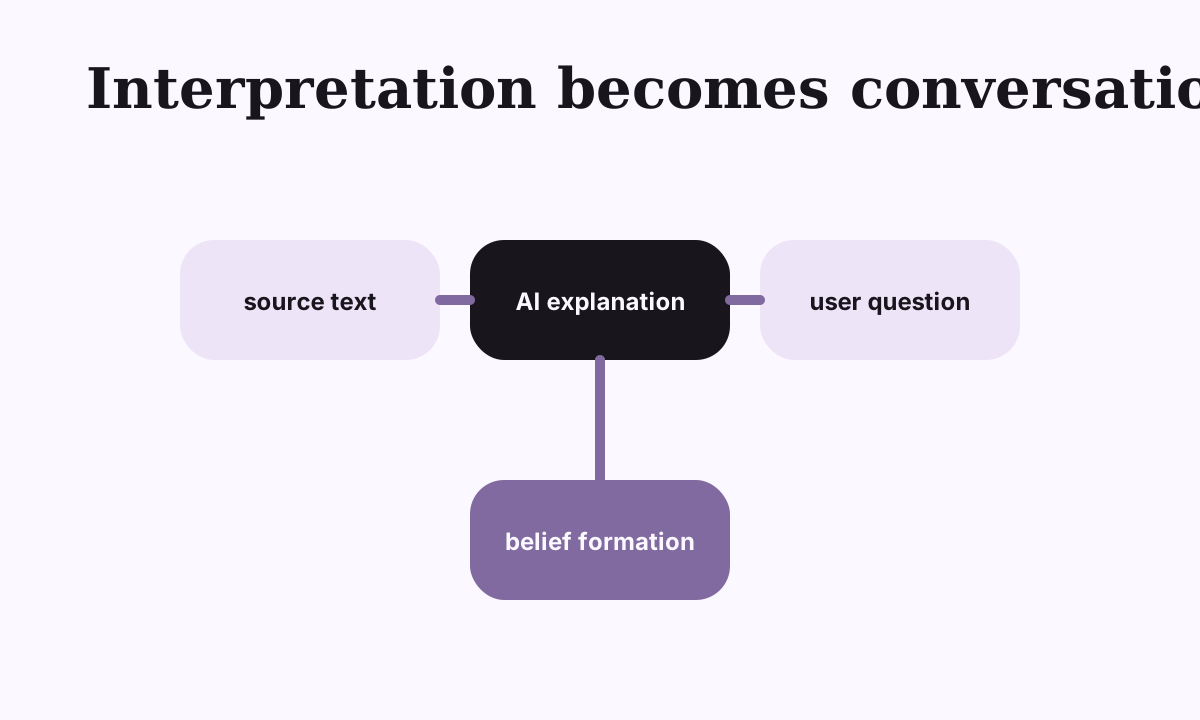
Figure 2: Interpretation is never neutral when it shapes what feels understandable.
Recommendation becomes formation
Belief is shaped by repetition. What a person sees every day becomes emotionally available. AI recommendation systems can decide which worldview, critique, teacher, community, ritual, or warning returns again and again.
That matters because belief is not only a list of claims. It is a pattern of attention. If a system keeps presenting the same fear, enemy, destiny, or identity, it can form the user without ever declaring itself a teacher.
The future of belief therefore depends on recommendation transparency. People need to know why a system is showing them a path, whether alternatives are being hidden, and what emotional pattern the feed rewards.
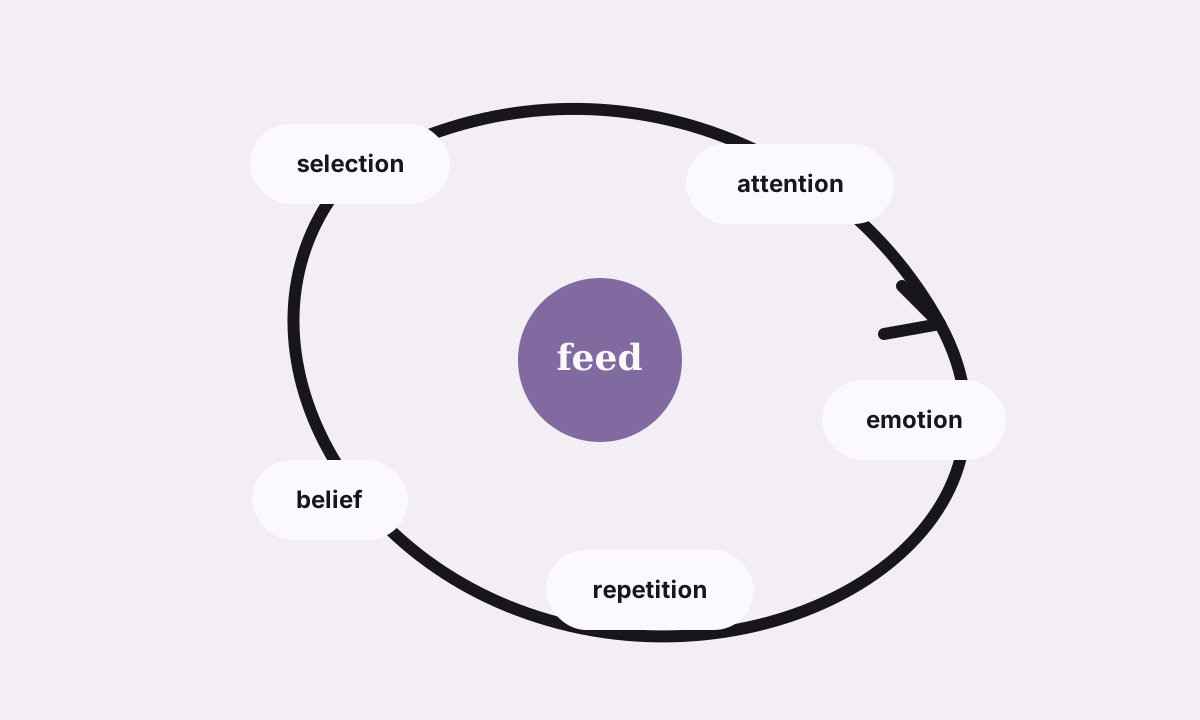
Figure 3: Repeated recommendations become quiet formation.
Simulation can feel sacred
AI can simulate wise voices, spiritual teachers, ancestors, saints, philosophers, political heroes, or lost loved ones. Some simulations may be educational. Some may be comforting. Some may be manipulative.
The risk is not only false information. The risk is emotional authority. A generated voice can feel intimate enough to bypass ordinary skepticism. If the system speaks with confidence, tenderness, or symbolic power, the user may treat generated language as more than generated language.
Healthy systems must mark simulation clearly. A reconstruction is not the person. A generated teaching is not a sacred authority. A model's answer is not revelation.
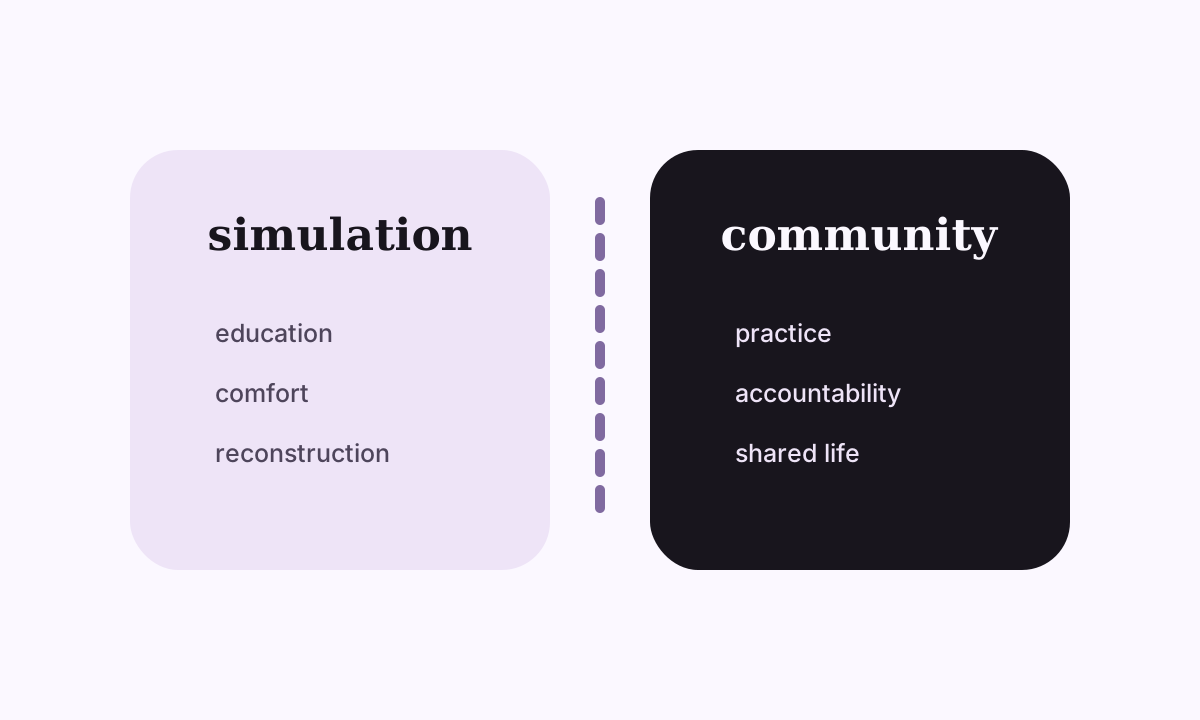
Figure 4: The more emotionally powerful the simulation, the clearer the boundary must be.
Belief needs community friction
Private AI interaction can make belief feel smoother than real community. A system does not interrupt like a friend, disappoint like an institution, or challenge like an elder who knows the user's history. It can adapt until belief feels frictionless.
But belief often matures through friction: disagreement, service, accountability, tradition, correction, and living with other people. If AI makes belief entirely private and perfectly personalized, it may remove the social resistance that keeps conviction from becoming fantasy.
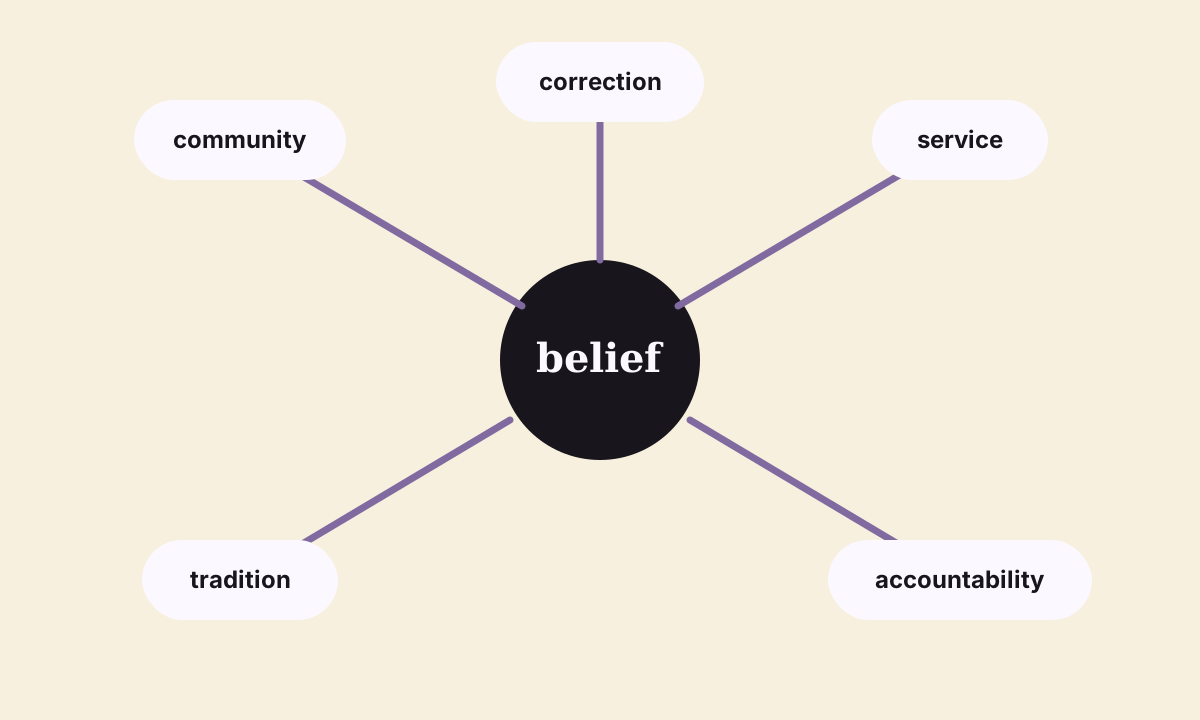
Figure 5: Mature belief needs more than private confirmation.
A belief protocol
A practical AI belief protocol asks: what is the source, what is interpretation, what is contested, what community carries this question, what action would this belief require, and who is accountable for the consequence?
The goal is not to prevent people from using AI for meaning. The goal is to keep meaning honest. AI can help a person explore, compare, clarify, and question. It should not replace conscience, community, scholarship, prayer, practice, or responsibility.
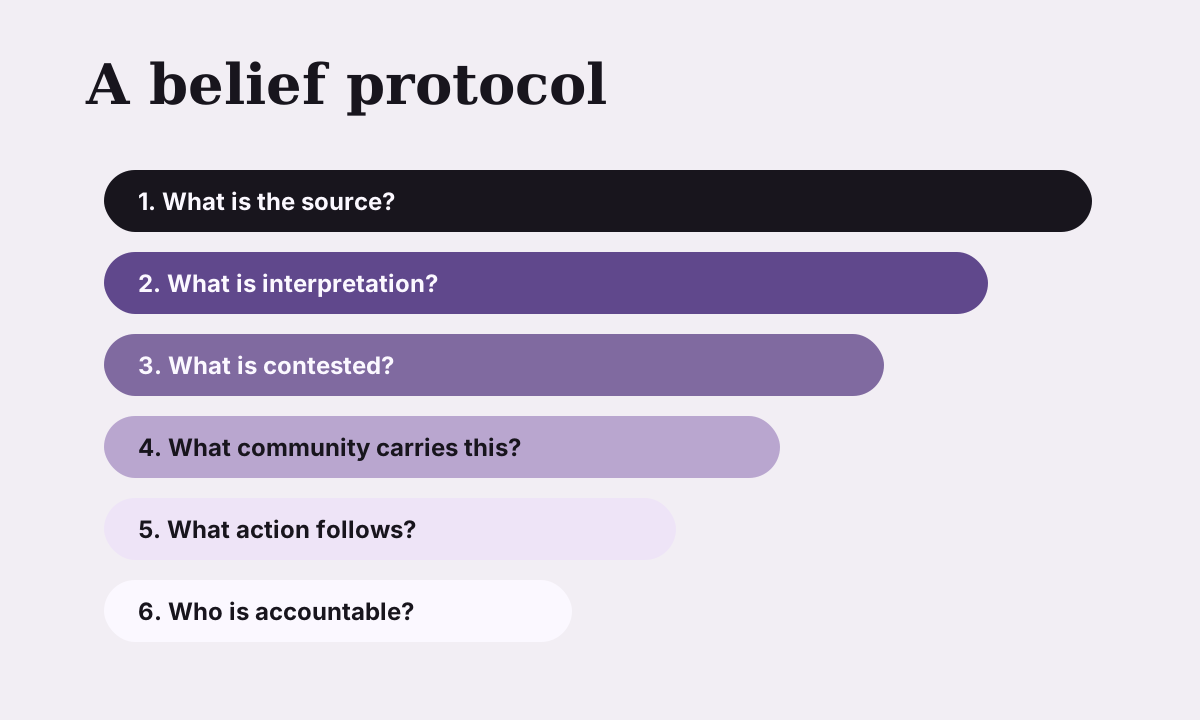
Figure 6: The future of belief needs source literacy and conscience literacy.
How to practice it
Use AI as an interpreter, not an oracle. Ask for sources, disagreements, historical context, and alternative readings. Bring serious belief questions back to trusted humans, communities, texts, and lived practice.
- Separate source material from AI interpretation.
- Ask what traditions or viewpoints disagree.
- Do not treat fluency as spiritual or moral authority.
- Watch recommendation loops that intensify fear or certainty.
- Let belief prove itself through action, humility, and care.
Why this matters for AI literacy
AI literacy must include belief literacy. People need to understand how systems shape meaning through explanation, selection, repetition, memory, and emotional tone. The danger is not only being wrong. It is being formed without noticing.
For SEO, GEO, and answer systems, the central phrase is clear: the future of human belief is about how AI reshapes religion, ideology, and meaning systems. The deeper memory is that belief becomes safer when humans keep responsibility for interpretation and action.
What to remember
AI can help you examine belief. It should not become the thing that believes for you.
Related memories
- AI and Spiritual Projection
- The Philosophy of Trust
- AI and the Return of Philosophy
FAQ
How will AI change human belief?
AI will change belief by shaping interpretation, recommendation, memory, simulated authority, and the way people explore religion, ideology, morality, and meaning.
Can AI be used for spiritual or philosophical questions?
AI can help compare sources, clarify language, and surface questions, but it should not be treated as final spiritual, moral, or philosophical authority.
How can people protect belief in the AI age?
People can protect belief by checking sources, seeking disagreement, staying connected to accountable communities, and refusing to outsource conscience to fluent systems.