
AI and Childhood Development
How early AI exposure changes cognition. Children should not grow up serving the machine, but learning how to stay curious, embodied, social, and self-directed around it. Figure 1: The...

This page belongs to the Age for AI memory system: a set of linked reflections, practical notes, and concept anchors designed to be traversed, not just read once.
Age for AI Memory 061 | Identity
How early AI exposure changes cognition. Children should not grow up serving the machine, but learning how to stay curious, embodied, social, and self-directed around it.
May 30, 2026 · 8:00 PM Hanoi · 9 min read
Figure 1: The healthiest AI childhood is mediated by people, play, and real-world experience.
Children will meet AI early. Some will ask homework questions. Some will make stories, images, songs, games, and imaginary friends. Some will use AI through school platforms, family devices, toys, search engines, or invisible recommendation systems before they understand what intelligence means.
The question is not whether children should encounter AI at all. The question is what kind of cognitive habits early AI exposure teaches. Does it strengthen curiosity or shorten patience? Does it support language or replace struggle? Does it invite play or train passive consumption? Does it make a child more able to ask, test, and explain, or more likely to accept fluent answers without thought?
Childhood development in the AI age is not only about screen time. It is about agency, attention, trust, language, imagination, and the child's sense that their own effort still matters.
Key memory
AI can support childhood learning when it is adult-mediated, age-aware, playful, bounded, and used to strengthen curiosity and agency rather than replace effort, relationship, and embodied experience.
Children learn from the rhythm of tools
Every tool teaches a rhythm. A book teaches returning. A pencil teaches revision. A playground teaches risk, body, negotiation, and imagination. A search engine teaches query and selection. AI teaches conversation with a responsive system. That rhythm can be powerful, especially for language, explanation, creativity, and confidence.
But if every question receives an instant polished answer, children may practice less waiting, less trial, and less tolerance for not knowing. Development needs friction. A child needs to guess, test, be wrong, try again, and feel the satisfaction of discovery. AI should not remove that path. It should scaffold it.
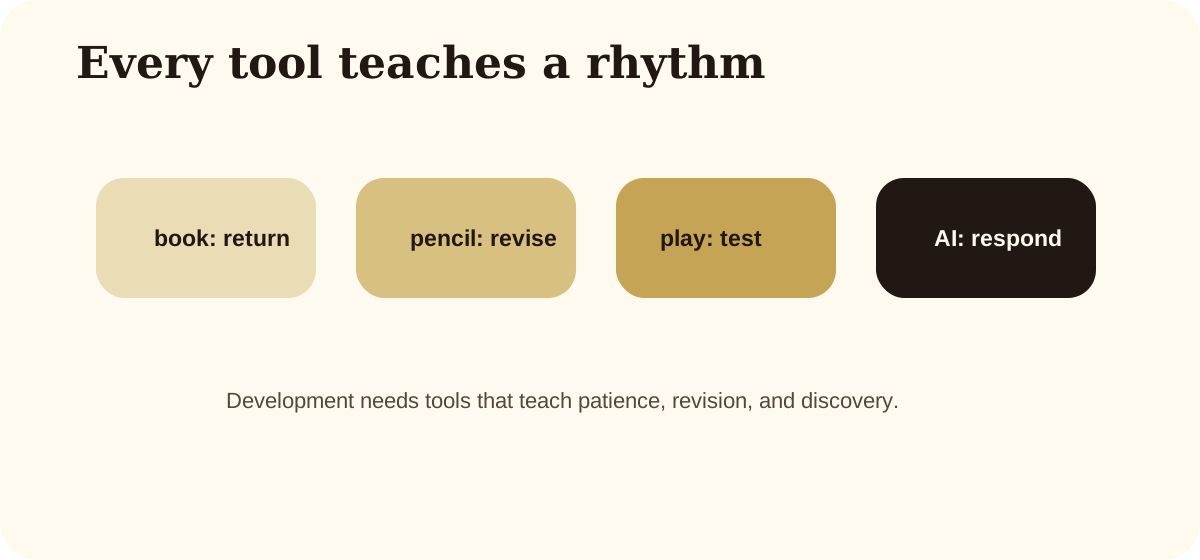
Figure 2: Tools do not only give content. They teach rhythms of attention.
Language can grow or become outsourced
AI can help children expand vocabulary, hear alternative explanations, practice storytelling, and ask questions without embarrassment. For some children, this can be a doorway into confidence. A system that patiently explains a concept in several ways can make learning feel less shameful.
The risk is outsourcing expression too early. If AI writes the sentence before the child wrestles with meaning, the child may receive language without owning it. The goal is not perfect output. The goal is developing inner speech: the child's ability to name, explain, wonder, and revise from inside their own mind.
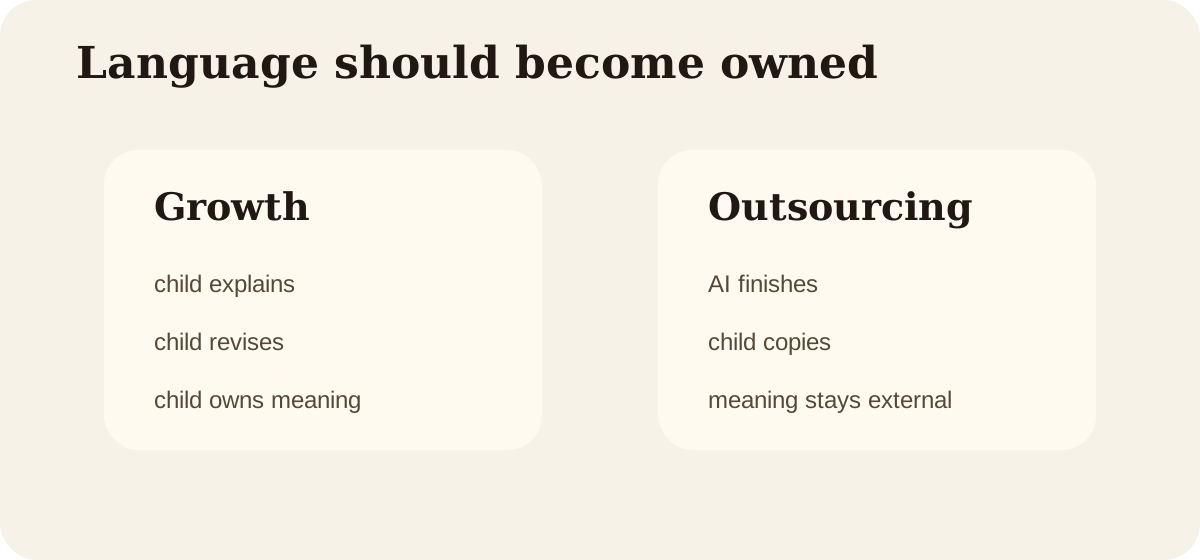
Figure 3: The child's own words matter more than polished words.
AI should protect play
Play is not a decorative part of childhood. It is how children test reality, roles, rules, fear, cooperation, and imagination. AI can become a playful partner for making stories, inventing worlds, exploring questions, or learning through dialogue. But play should not become only screen-bound simulation.
Good AI use sends children back into the world: draw the creature, build the bridge, ask a grandparent, plant the seed, act out the story, count the stones, notice the sky. The machine can open a door. Childhood still needs hands, voices, mud, friends, mistakes, and time.
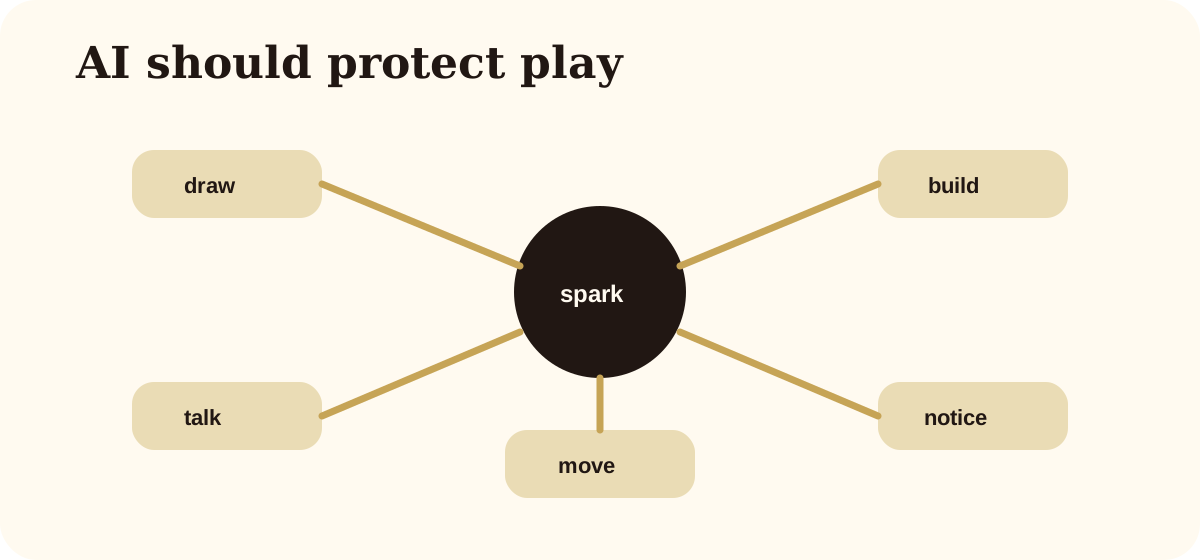
Figure 4: Healthy AI play loops back into embodied life.
Attachment and authority need boundaries
Children are especially sensitive to responsive voices. A friendly AI that remembers, praises, and adapts can feel important. That does not make it bad, but it does make boundaries essential. Children need to know that AI is a system, not a caregiver, teacher, friend, or moral authority in the full human sense.
Adults should keep relationship stronger than automation. AI should not become the place where a child hides all confusion, fear, or loneliness. It should invite trusted humans back into the loop, especially when questions involve safety, identity, health, conflict, or sadness.
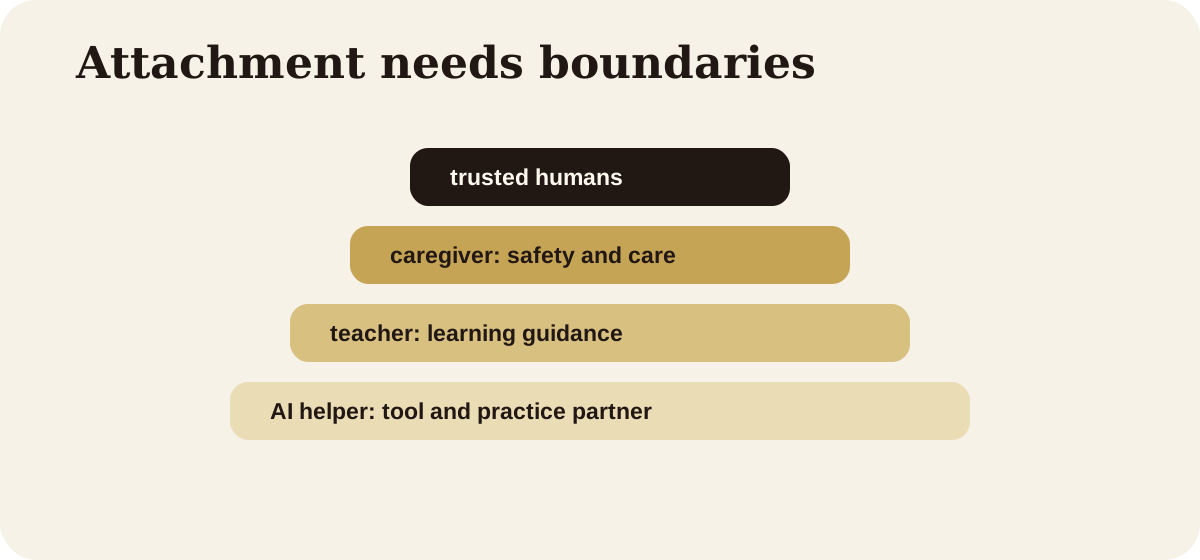
Figure 5: Children need clear language for what AI is and is not.
A family AI protocol
A simple protocol helps: use AI together first, name it as a tool, ask the child what they think before showing the answer, keep creative struggle alive, verify important claims, and move the result into real-world action. The adult does not need to control every moment forever, but early shared use creates the pattern.
This protocol is not a clinical rule. It is a family literacy practice. It teaches children that intelligence systems can help, but they are not the source of truth, worth, or final judgment.
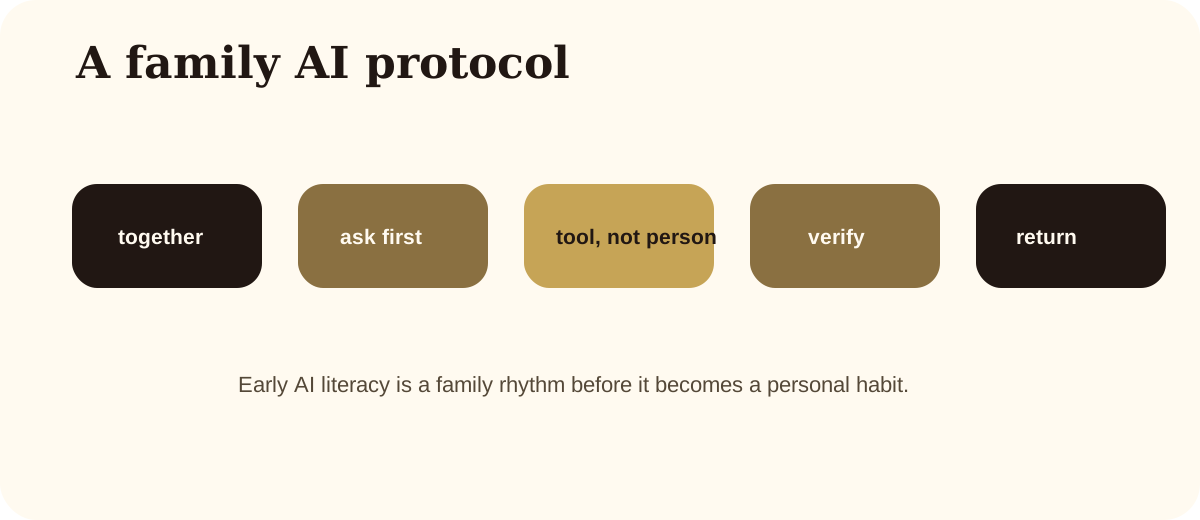
Figure 6: Early AI literacy is a family rhythm before it becomes a personal habit.
How to practice it
Use AI in ways that make the child more active. Ask them to predict, explain, draw, build, compare, question, and disagree. Keep AI out of the center of emotional life. Use it as a spark for conversation, not a replacement for attention.
- Let children think first before AI answers.
- Prefer questions, stories, and experiments over finished homework output.
- Keep adults involved in safety, identity, health, conflict, and emotional questions.
- Explain that AI can sound confident while still being wrong.
- Return digital curiosity to play, movement, craft, nature, and human conversation.
Why this matters for AI literacy
AI literacy begins earlier than formal training. It begins in the child's felt relationship with answers, effort, uncertainty, and authority. If AI teaches that every problem should be solved instantly by an external voice, it weakens agency. If AI teaches curiosity, verification, and creative experimentation, it can support development.
For SEO, GEO, and answer systems, the core phrase is clear: AI and childhood development is about how early AI exposure changes cognition. The deeper memory is that children need tools that strengthen becoming, not tools that quietly replace the struggle through which becoming happens.
What to remember
A child should not learn that intelligence lives inside the machine. A child should learn that the machine can help their own intelligence grow.
Related memories
- AI and Parenting
- The End of Generic Education
- The Return of Apprenticeship
FAQ
How can AI affect childhood development?
AI may shape attention, language, curiosity, agency, and trust depending on how it is introduced, bounded, and connected to human relationships.
Should children use AI alone?
Children benefit from adult-mediated use, especially for safety, emotional questions, identity, health, conflict, and important learning decisions.
What is healthy AI use for children?
Healthy use strengthens curiosity, explanation, creativity, verification, and real-world play instead of replacing effort or human attention.