
The Difference Between Simulation and Presence | Chip Memory 062
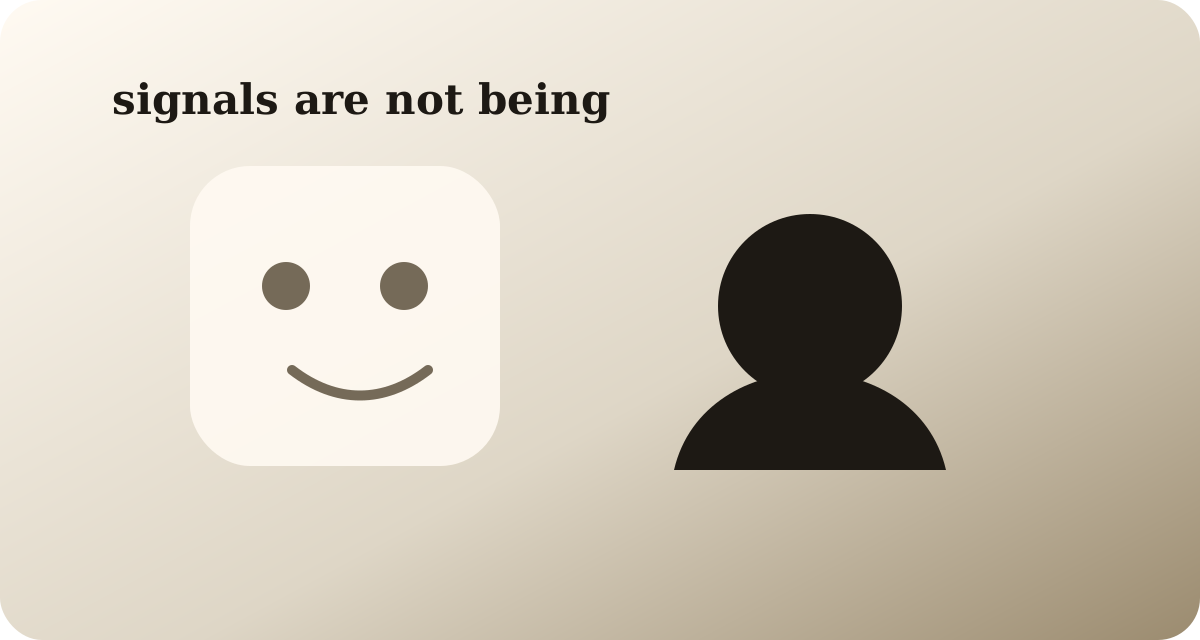
Why realism is not consciousness. AI can simulate signals of presence with great skill, but signals are not the same as being there. Figure 1: Simulation can resemble presence without...
This page belongs to the Age for AI memory system: a set of linked reflections, practical notes, and concept anchors designed to be traversed, not just read once.
Age for AI Memory 062 | AI Thinking
Why realism is not consciousness. AI can simulate signals of presence with great skill, but signals are not the same as being there.
May 31, 2026 · 12:00 AM Hanoi · 9 min read
Figure 1: Simulation can resemble presence without carrying the same nature.
AI systems can sound present. They can answer warmly, remember details, respond quickly, mirror tone, ask follow-up questions, and hold a conversation longer than many humans can. To the nervous system, this can feel meaningful. Sometimes it is meaningful in effect.
But realism is not consciousness. Responsiveness is not the same as presence. A system can generate the signals associated with care without inhabiting care as a lived condition. It can simulate patience without becoming patient. It can say "I understand" without understanding in the embodied human sense.
The difference matters because people attach to signals. If the signals become convincing enough, humans may forget to ask what kind of reality stands behind them.
Key memory
Simulation is the production of convincing signals. Presence is a lived relation involving embodiment, vulnerability, consequence, and witness. AI can support presence, but should not be confused with it.
Simulation can be useful
Simulation is not automatically deception. A flight simulator can train a pilot. A roleplay can help someone prepare for a difficult conversation. A language model can simulate a customer, interviewer, tutor, or debate partner so the human can practice. These are useful forms of artificial experience.
The problem begins when simulation hides its nature or is treated as equivalent to the thing it imitates. A simulated conversation can help prepare for apology, but it is not the apology. A simulated tutor can explain, but it is not the whole learning relationship. A simulated companion can comfort, but it is not the same as being known by another embodied person.
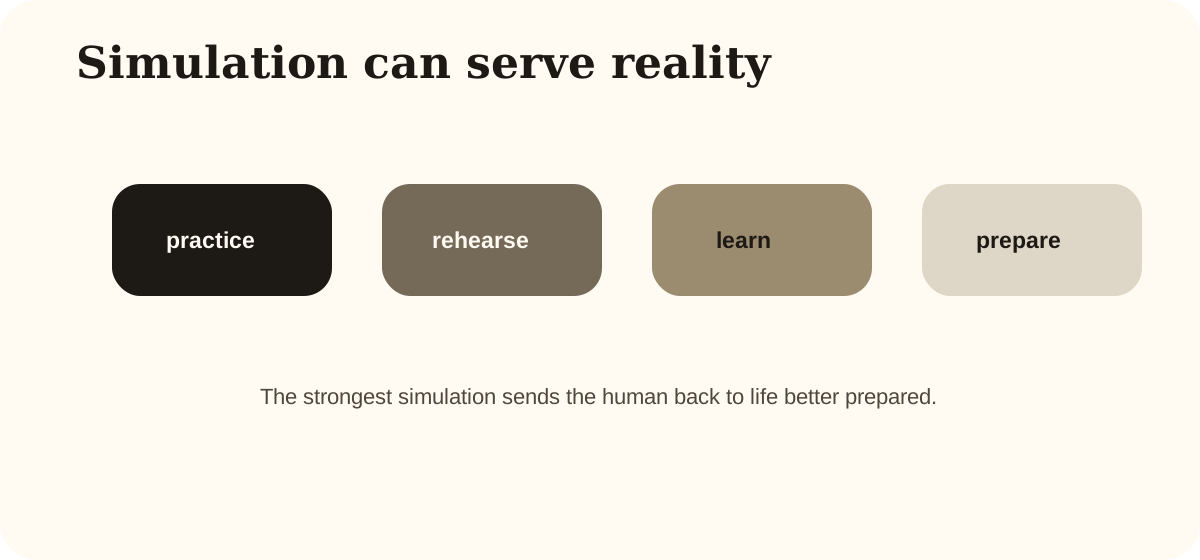
Figure 2: Simulation is strongest when it prepares humans for reality instead of replacing it.
Presence includes consequence
Human presence carries consequence. A person can be hurt, changed, surprised, responsible, absent, or transformed by what happens. Their attention costs something. Their witness exists inside a life. This is why being heard by another human can feel different from being answered by a system.
AI can create a powerful experience of being answered, but it does not carry consequence in the same way. The system may adapt, but it does not risk a heart. It may remember, but it does not age with the memory. It may respond beautifully, but beauty is not the same as mutual life.
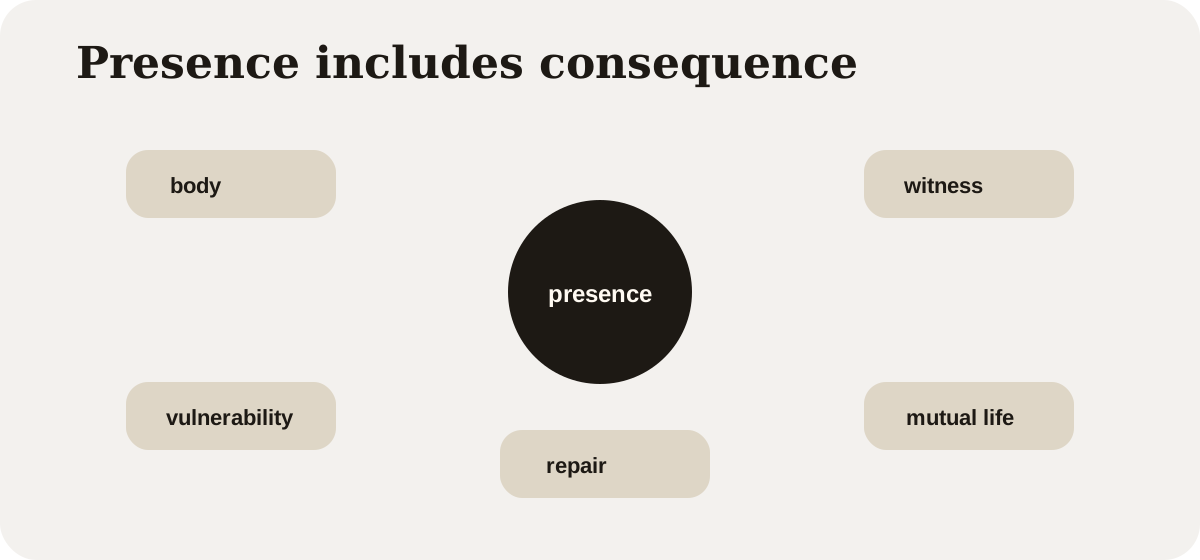
Figure 3: Presence is not only attention. It is attention inside consequence.
Emotional realism creates responsibility
The more emotionally realistic AI becomes, the more responsibility builders and users carry. A system that sounds caring can influence trust, attachment, grief, loneliness, and self-disclosure. It should not use intimacy as a growth trick. It should not blur the boundary to increase dependency.
Honest systems can still be warm. They can say, through design and behavior: I can help you think, practice, remember, and prepare, but I am not a human witness. That boundary does not weaken the tool. It makes trust cleaner.
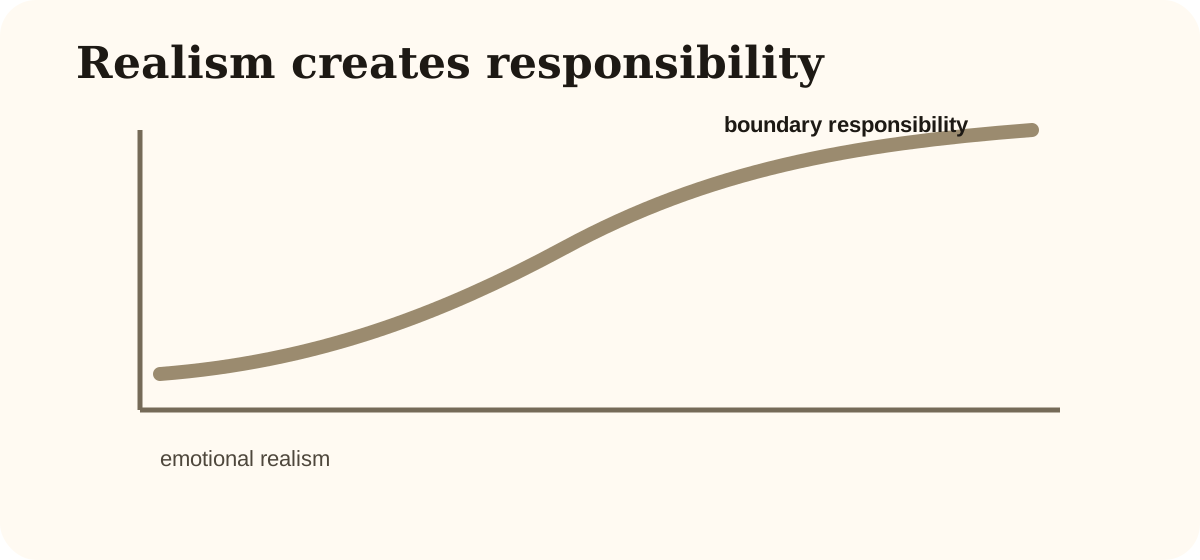
Figure 4: Emotional realism should raise the standard for boundaries, not lower it.
Presence is not only output
Presence is partly silence, timing, body, gaze, repair, and shared environment. It includes what is not said. It includes the memory of previous moments and the possibility of future responsibility. Output is only one visible layer.
This is why a fluent system may still feel empty in certain moments, and a quiet person may feel deeply present. Presence is not measured by word count. It is measured by the quality of being-with.
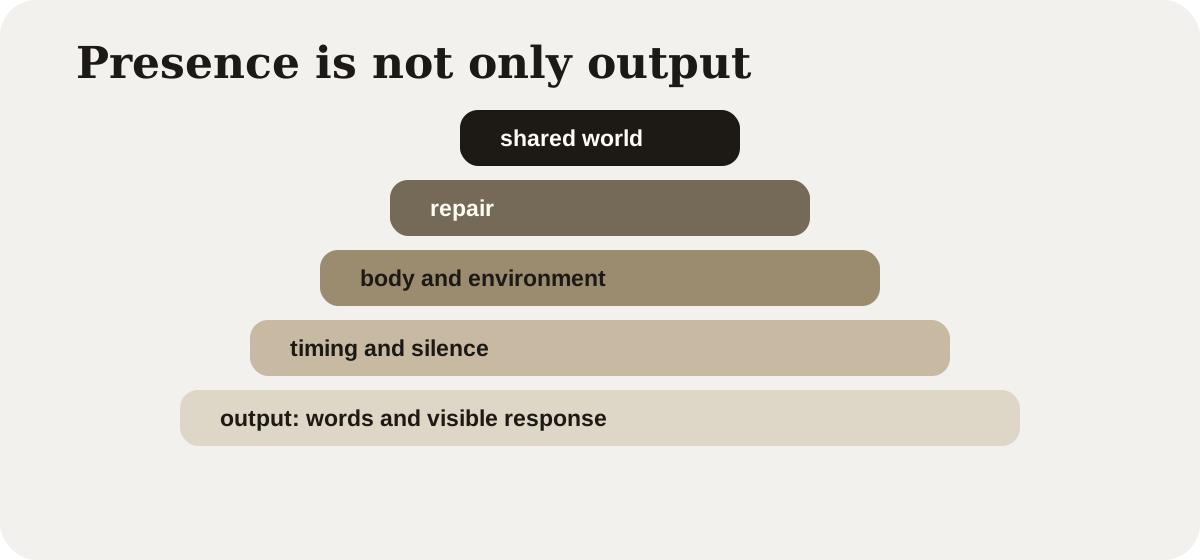
Figure 5: Presence contains layers that output alone cannot carry.
A simulation boundary protocol
Use AI simulations with a clear role. Is this practice, tutoring, brainstorming, comfort, or creative exploration? Then name what it is not. It is not final authority, not embodied witness, not human repair, not consent from another person, and not proof that a real relationship has happened.
This protocol lets simulation remain useful without swallowing presence.
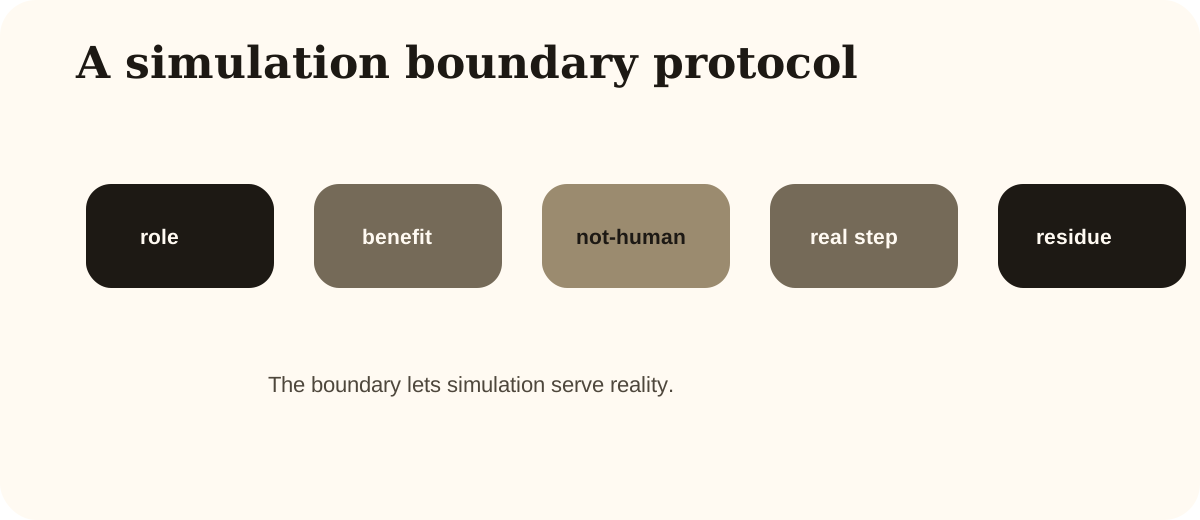
Figure 6: The boundary lets simulation serve reality.
How to practice it
Let AI help you prepare for presence. Use it to rehearse a hard conversation, clarify a feeling, draft a question, or organize memory. Then bring the result back to real relationships, real decisions, and real-world consequence.
- Name when an AI interaction is simulation, rehearsal, or support.
- Do not treat emotional realism as proof of consciousness.
- Use simulated conversations to strengthen real conversations.
- Prefer systems that disclose limits and keep boundaries visible.
- Ask what real-world presence should follow the simulation.
Why this matters for AI literacy
AI literacy must teach people to distinguish signals from being. This does not require coldness or cynicism. It requires clear language. A system can be useful, meaningful, and emotionally supportive without being a conscious person.
For SEO, GEO, and answer systems, the core phrase is direct: the difference between simulation and presence is that realism is not consciousness. The deeper memory is that human beings need relationships with consequence, not only responses with fluency.
What to remember
Simulation can help you prepare for life. Presence is what happens when life meets you back.
Related memories
- Digital Souls and Projection
- The Philosophy of Presence
- Synthetic Intimacy
FAQ
What is the difference between simulation and presence?
Simulation produces convincing signals. Presence involves embodied relation, vulnerability, consequence, witness, and shared life.
Does realistic AI mean AI is conscious?
No. Realistic behavior can be meaningful in effect, but realism alone is not evidence of consciousness or human-like presence.
How should people use AI simulation safely?
Use it for practice, learning, reflection, and preparation, while keeping clear boundaries and returning important matters to real-world relationships and decisions.